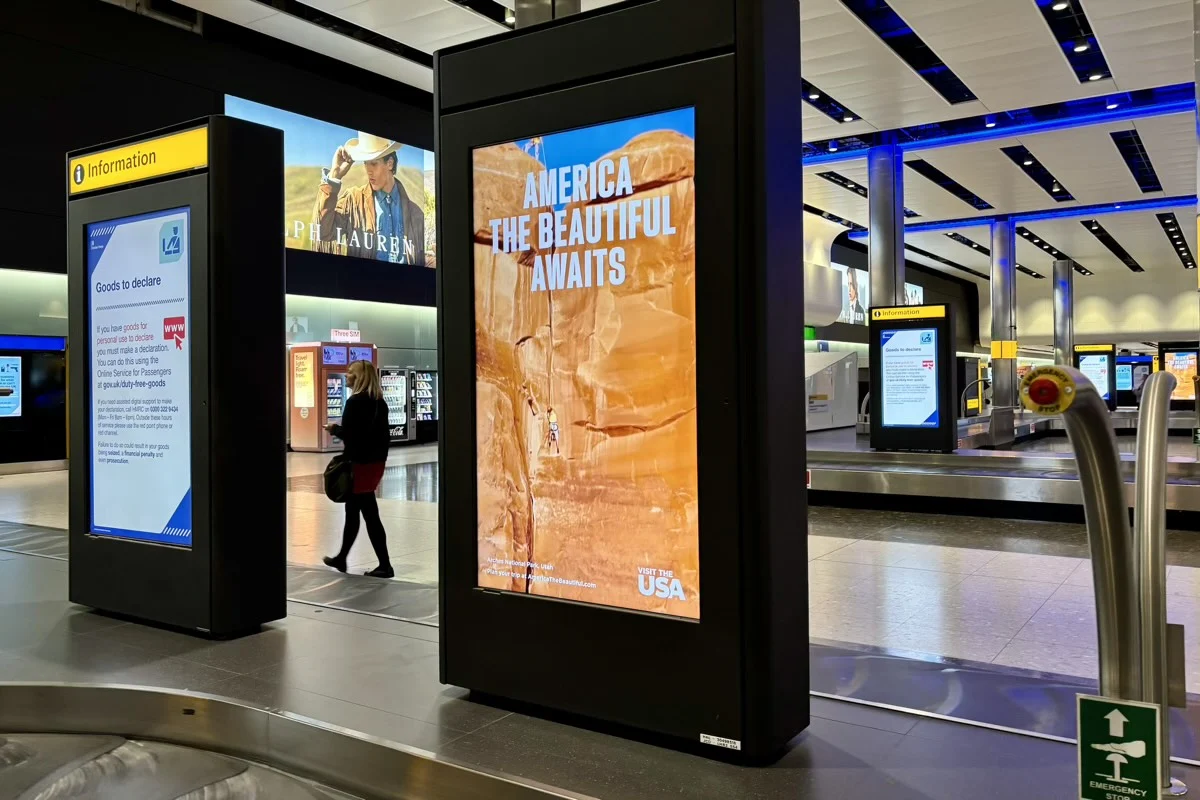
The United States’ primary destination marketing organization, Brand USA, is navigating a precarious fiscal transition as a critical $250 million federal infusion—designed to catalyze the post-pandemic recovery of the tourism sector—begins to evaporate. This wind-down comes at a sensitive juncture, leaving the public-private partnership to confront the full impact of federal funding reductions enacted last year, which effectively slashed its recurring annual budget by approximately $80 million. While the organization has utilized the 2022 emergency stimulus to maintain operational continuity, internal projections suggest a significant budgetary contraction is looming by fiscal year 2028, potentially hampering the nation’s ability to compete for high-spending international travelers.
Since its inception under the Travel Promotion Act of 2009, Brand USA has functioned as the nation’s lead storyteller, tasked with promoting the United States as a premier travel destination to the rest of the world. Unlike many national tourism boards that are fully government-funded, Brand USA operates on a unique model: it is funded through a combination of private sector contributions and matching federal funds derived from the Electronic System for Travel Authorization (ESTA) fees paid by international visitors from visa-waiver countries. However, the volatility of international travel trends and shifting legislative priorities in Washington have left the organization’s long-term financial stability in question.
The 2022 Lifeline and the Mechanics of the Drawdown
The current financial dilemma traces back to the total cessation of international travel during the COVID-19 pandemic. Because Brand USA’s federal funding is tethered to ESTA fees, the lack of incoming travelers meant that its primary revenue stream vanished overnight. To prevent the dissolution of the organization during this period, Congress passed the Restoring Brand USA Act in early 2022, which provided a one-time $250 million injection from the general fund.
This capital surplus has acted as a strategic buffer over the past three fiscal years. It allowed Brand USA to re-enter global markets with aggressive marketing campaigns even as its traditional funding mechanism was slowly recovering. According to recent financial disclosures, the organization has been drawing down this surplus to maintain a "fully funded" appearance. In fiscal year 2026, the organization plans to spend approximately $158 million, followed by $165 million in fiscal year 2027. These figures align closely with pre-pandemic annual spending levels, which typically hovered between $150 million and $165 million according to historical tax filings.
However, the "cliff" becomes visible in the transition to fiscal year 2028. After a projected drawdown of $114.1 million over the next two years, Brand USA expects to conclude September 2027 with a cash reserve of only $51 million. Management has indicated that a significant portion of this remaining capital must remain untouched as an emergency reserve, intended for use only in the event of unforeseen global crises or further legislative disruptions.
Federal Funding Cuts and the Legislative Landscape
The urgency of the current situation is exacerbated by a 2023 federal funding reduction that reshaped the organization’s baseline budget. Changes in the way ESTA fees are allocated led to a reduction of up to $80 million from the annual cap that Brand USA can claim from the federal government. This reduction was not a reflection of the organization’s performance, but rather a result of broader federal budgetary negotiations and the reallocation of fee-based revenues toward other government priorities.
The impact of these cuts was masked for several years by the $250 million stimulus, but as those funds are exhausted, the gap between Brand USA’s operational needs and its available resources is widening. For the organization to receive its full federal allotment, it must also secure matching contributions from private-sector partners, including airlines, hotel chains, and local destination marketing organizations (DMOs). The dual challenge of a lowered federal cap and the ongoing pressure to secure private matches creates a "pincer effect" on the organization’s long-term planning.
Strategic Impact on Global Market Share
The potential reduction in Brand USA’s budget comes at a time when global competition for the international travel dollar is reaching unprecedented levels. Countries such as Saudi Arabia, the United Arab Emirates, and Australia have significantly increased their tourism marketing budgets, often spending hundreds of millions of dollars annually to lure the same high-value travelers that the U.S. targets.
Industry analysts point out that international travel is a major "export" for the United States. When a traveler from London or Tokyo spends money on a hotel in New York or a tour in Yellowstone, that transaction represents an influx of foreign capital into the U.S. economy. According to data from the U.S. Travel Association, international travel spending in the U.S. has yet to fully return to its 2019 inflation-adjusted peak. A diminished Brand USA could lead to a loss of market share, which translates directly into fewer jobs in the domestic hospitality and aviation sectors.
Furthermore, the timing of the projected 2028 budget shortfall is particularly concerning for the industry. The United States is set to host a series of "mega-events" over the next several years, including the FIFA World Cup in 2026 and the Summer Olympics in Los Angeles in 2028. These events offer a generational opportunity to showcase the country, but they require significant lead-time marketing to ensure that visitors extend their stays and travel beyond the host cities.
Chronology of Brand USA’s Financial Evolution
To understand the current crisis, one must look at the fiscal timeline of the organization over the last decade:
- 2009-2010: The Travel Promotion Act is signed into law, establishing Brand USA to address the decline in the U.S. share of international arrivals following 9/11.
- 2019: Brand USA is reauthorized through 2027, but the funding formula remains tied to the fluctuating ESTA fee revenue.
- 2020-2021: International arrivals plummet due to COVID-19. Brand USA’s federal funding source effectively dries up, forcing the organization to significantly scale back operations.
- March 2022: The Restoring Brand USA Act provides a $250 million one-time funding boost to restart marketing efforts and compensate for lost ESTA revenue.
- 2023: Federal legislative adjustments result in a long-term reduction of the annual funding cap, removing approximately $80 million from the potential yearly budget.
- 2024-2025: Brand USA undergoes a leadership transition, with Fred Dixon taking the helm as CEO. The organization begins a strategic pivot to maximize the remaining $250 million.
- 2026-2027: Projected spending remains stable at $158M-$165M, heavily subsidized by the 2022 surplus.
- September 2027: The surplus is expected to be depleted to a "floor" of $51 million, marking the start of a period of forced austerity unless new funding is secured.
Reactions from the Travel and Tourism Sector
The travel industry has responded to these projections with a mixture of concern and a call for legislative reform. The U.S. Travel Association, a leading advocacy group, has consistently argued that Brand USA provides a massive return on investment (ROI). Historical studies have suggested that for every $1 Brand USA spends on marketing, there is a return of approximately $20 to the U.S. economy in the form of visitor spending.
"Brand USA is not an expense; it is a revenue generator for the American taxpayer," noted one industry consultant familiar with the organization’s inner workings. "If we pull back on marketing just as the world is preparing to come here for the World Cup and the Olympics, we are essentially leaving billions of dollars on the table for our competitors in Europe and Asia to scoop up."
Private sector partners are also feeling the pressure. While larger corporations like Marriott or United Airlines may have the resources to continue their contributions, smaller DMOs in secondary markets—which rely on Brand USA to provide them with a global platform—fear they will be priced out of international marketing if the organization’s budget is slashed.
The Path Forward: Legislative and Operational Hurdles
As fiscal year 2028 approaches, Brand USA and its supporters are likely to ramp up lobbying efforts on Capitol Hill. There are several potential avenues for stabilization:
- Restructuring the ESTA Fee Allocation: Advocates may push for a higher percentage of the ESTA fee to be directed back to Brand USA, or for the removal of the annual cap that currently limits the organization’s growth.
- General Fund Appropriations: Given the economic importance of the 2026 World Cup and 2028 Olympics, there may be a case for another one-time "mega-event" appropriation to ensure the U.S. maximizes its visibility.
- Increased Private Sector Integration: Under new leadership, Brand USA is exploring more digital-heavy, cost-effective marketing strategies that rely on data and targeted content rather than traditional, expensive television buys. This could help stretch fewer dollars further.
However, the political climate remains a significant hurdle. With a divided Congress and a focus on reducing federal deficits, securing additional funding for a "marketing" arm—even one that generates a profit—is a difficult sell. Critics often argue that the private sector should bear the full cost of travel promotion, despite evidence that a unified national brand is more effective than fragmented corporate advertising.
Conclusion: A Critical Juncture for U.S. Tourism
The winding down of the $250 million post-Covid stimulus marks the end of an era of relative financial comfort for Brand USA. The organization has successfully used those funds to bridge the gap during the darkest days of the pandemic and the subsequent recovery, but the "buffer" is nearly gone.
The next three years will be a test of the organization’s resilience and its ability to prove its value to both the federal government and its private partners. Without a sustainable solution to the funding gap created by 2023’s legislative cuts, the United States risks entering one of the most important periods in its tourism history—anchored by the World Cup and the Olympics—with a marketing arm that is underfunded, overextended, and unable to compete on the global stage. The $51 million reserve projected for 2027 is a stark reminder that the time for a long-term fiscal strategy is now, before the nation’s tourism engine begins to stall.