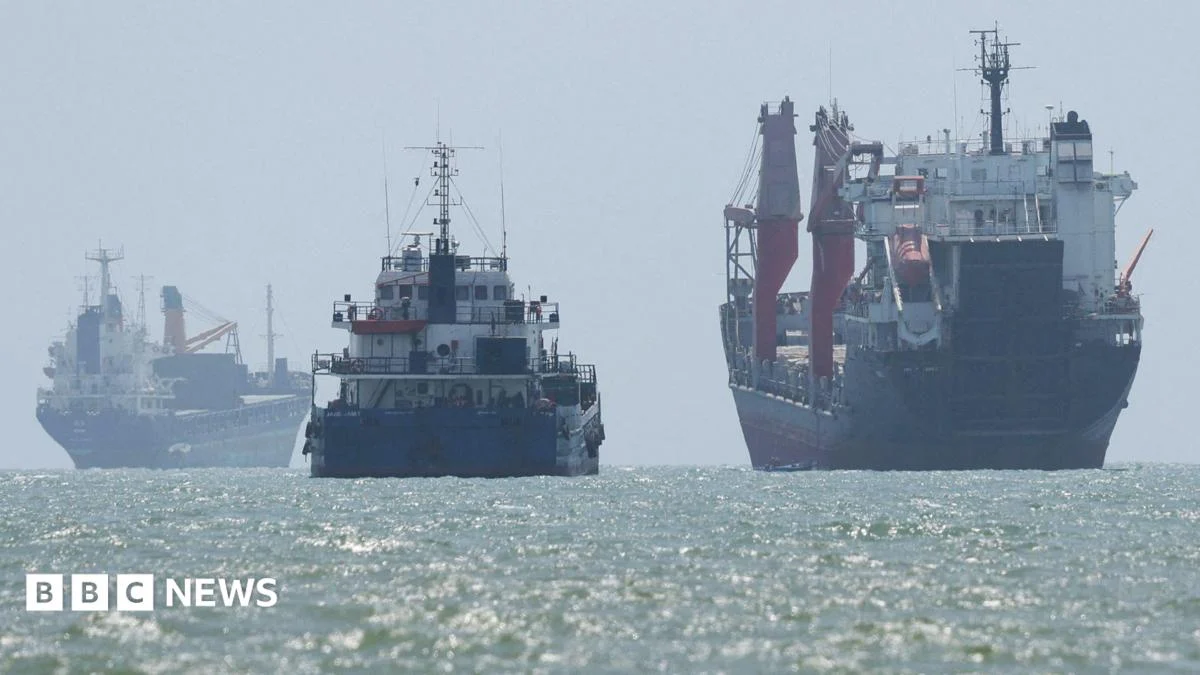
China has declared its firm resolve to protect its national interests following the United States’ announcement of expanded economic sanctions targeting Iran and its global trading partners, a move that directly implicates Beijing. The pronouncement from Washington, dubbed "Operation Economic Outcast" and likened to an "economic D-Day" against the Islamic Republic, marks a significant escalation in an already volatile geopolitical landscape, casting a long shadow over the global economy and international relations, particularly between the world’s two largest economies.
Washington’s Unprecedented Financial Offensive
The latest punitive measures were unveiled on Monday by US Treasury Secretary Scott Bessent, who outlined plans for what he termed "the single greatest financial offensive ever" against Iran. Bessent issued a stark warning to nations worldwide: any entity, bank, or business engaging in financial partnerships with Iran would face isolation. While refraining from naming specific countries, Bessent underscored the universality of US sanctions, stating unequivocally that "no one was above the reach of US sanctions" when pressed on the potential impact on Chinese banks. He revealed that President Donald Trump would personally engage world leaders with "specific requests to cease their interactions with the regime."
This aggressive stance comes nearly six months after the onset of a significant conflict involving Iran, a period that has seen global oil prices surge dramatically. Tehran, in response to the ongoing hostilities, has effectively disrupted exports through the Strait of Hormuz, a critical chokepoint for global energy supplies, through which approximately 20% of the world’s total petroleum liquids pass daily. Concurrently, the US has also maintained its own naval blockade, further impeding maritime traffic in the region. Recent diplomatic efforts to de-escalate the conflict have faltered, with a 60-day ceasefire formally expiring last week without any tangible progress towards a lasting settlement.
Secretary Bessent asserted that America was "no longer managing the Iranian threat, we are ending it," signalling a dramatic shift in policy. The new sanctions, he explained, go beyond previous measures, having been meticulously crafted after the Treasury Department mapped out the intricate financial channels, facilitators, and networks employed by Iran to circumvent existing sanctions and facilitate oil trade. As part of this sweeping offensive, nearly 60 entities, individuals, and vessels have already been designated for sanctions.
China’s Defiant Stance and Economic Lifeline to Iran
In a swift and sharp rebuke, Chinese Foreign Ministry spokesman Lin Jian articulated Beijing’s "firm opposition" to what it characterized as "illegal unilateral sanctions." Lin vowed that China would take "all necessary measures" to safeguard its legitimate rights and interests. He emphasized that "cooperation between China and Iran has always been conducted within the framework of international law and should not be interfered with or disrupted."
China is by far the largest purchaser of Iranian oil, a relationship that has persisted despite previous rounds of US sanctions. While the volume of this trade has inevitably seen fluctuations under the US blockade of Iran’s ports, Beijing’s continued engagement remains a crucial economic lifeline for Tehran. For years, China has demonstrated a pragmatic approach to US extraterritorial sanctions, often finding alternative mechanisms to maintain trade flows, particularly for vital energy imports. This history suggests that despite the escalated rhetoric, China is unlikely to easily yield to Washington’s demands, especially given its own strategic energy needs and its broader geopolitical competition with the United States.
Iran’s Preparedness and Defiance
On the Iranian front, Economy Minister Ali Madanizadeh expressed Tehran’s "full preparedness" for the expanded sanctions, confidently predicting that they would lead to "another defeat" for the United States. Speaking on state television, Madanizadeh affirmed, "The government is and was ready and has a two-year plan to manage these events." He added a defiant note, stating, "We also have our own tools and know how to play the game," implying that Iran has developed sophisticated strategies to mitigate the impact of sanctions, having anticipated such moves for a considerable period. This readiness stems from decades of experience operating under various international and unilateral sanctions, fostering a resilient, albeit constrained, economic infrastructure designed to endure external pressures.
A History of Sanctions and Regional Dynamics
The current escalation is rooted in a complex history of US-Iran relations, marked by periods of intense hostility. A pivotal moment occurred in 2018 when the Trump administration unilaterally withdrew from the Joint Comprehensive Plan of Action (JCPOA), commonly known as the Iran nuclear deal, which had been forged in 2015 between Iran and several world powers. The US withdrawal led to the re-imposition of sanctions that had been lifted under the deal, severely crippling Iran’s economy, particularly its vital oil sector. These previous sanctions caused significant inflation, currency depreciation, and a contraction of Iran’s GDP, demonstrating the potential, albeit often limited, impact of such measures.
The current "Iran war," now in its sixth month, has amplified these tensions, raising the stakes considerably. The conflict has not only pushed up global oil prices, impacting consumers and businesses worldwide, but has also seen strategic waterways like the Strait of Hormuz weaponized. The failure of recent diplomatic overtures and the lapse of a 60-day ceasefire highlight a dangerous stalemate, where military and economic pressures are increasingly seen as the primary tools of statecraft.
Expert Skepticism Regarding Sanctions Efficacy
Even before China’s official response, analysts had expressed considerable skepticism regarding the likely effectiveness of the latest US measures. David Oxley, Chief Climate and Commodities Economist at Capital Economics, told the BBC that the direct impact on Iran’s energy revenues would likely be "somewhat of a damp squib." He elaborated, "We suspect that the new package will have only a limited direct impact on Iranian energy flows in the short term."
Oxley pointed to China’s dominant role in Iran’s oil exports, accounting for approximately 90% of Tehran’s crude shipments. He noted China’s historical refusal to recognize US unilateral sanctions and its unlikelihood to be "cowed this time either." This perspective is echoed by Ali Vaez, Deputy Director of the Middle East and North Africa Program at the International Crisis Group, who explained that "Generally, the Chinese are against unilateral sanctions. They would comply with multilateral or international sanctions, but unilateral sanctions just imposed by the US – they have always seen that as illegitimate."
Vaez also highlighted the precarious position of Iran’s immediate neighbours, such as Pakistan, Turkey, and Iraq. While these nations strive to maintain positive relations with the US, they "can’t really afford to cut off ties with Iran" due to deep-seated economic, cultural, and geopolitical linkages. He further argued that imposing economic pressure on Tehran "doesn’t work" in achieving a change in regime behaviour, as the Iranian government has consistently demonstrated a willingness to "absorb any pain" and pass its consequences onto its populace, prioritizing national resilience over compliance with external demands.
Broader Geopolitical Ramifications and High-Stakes Diplomacy
The US announcement comes at a particularly sensitive juncture, ahead of planned talks between President Trump and Chinese President Xi Jinping next month. These discussions were already anticipated to be fraught, given ongoing trade disputes and broader strategic competition between the two powers. The addition of Iran sanctions to the agenda is likely to further complicate these negotiations, potentially escalating the trade war into a more comprehensive economic confrontation.
Washington is acutely aware of the potential for retaliation from Beijing. China’s near-monopoly on the processing of rare earths and other critical minerals – essential components in a vast array of high-tech products, from smartphones and electric vehicles to advanced military systems – provides Beijing with significant leverage. China has previously demonstrated its willingness to tighten export controls on rare earths as a negotiating tactic in past trade disputes with the US, signaling a potent economic weapon it could wield if pushed too far. Such a move could send shockwaves through global supply chains, severely impacting US manufacturing and technological development.
Beyond China, other significant trade partners of Iran, including India and Russia, could also be impacted by the widened US sanctions. Both nations have substantial economic ties with Iran and have historically adopted independent foreign policies regarding US unilateral measures. Their responses, yet to be formally declared, will be closely watched, as they could further fragment international consensus on sanctions and underscore the limits of Washington’s global economic influence.
The "Operation Economic Outcast" is more than just a set of financial restrictions; it is a declaration of economic warfare with far-reaching implications. It tests the boundaries of US unilateral power, challenges the economic sovereignty of nations like China, and places immense pressure on an already embattled Iranian regime. As the world watches, the unfolding diplomatic and economic confrontations threaten to reshape global trade flows, accelerate de-dollarization efforts in some quarters, and intensify the great power competition, with potentially destabilizing consequences for the global order. The stakes are undeniably high, and the path forward remains fraught with uncertainty and the potential for unintended escalation.