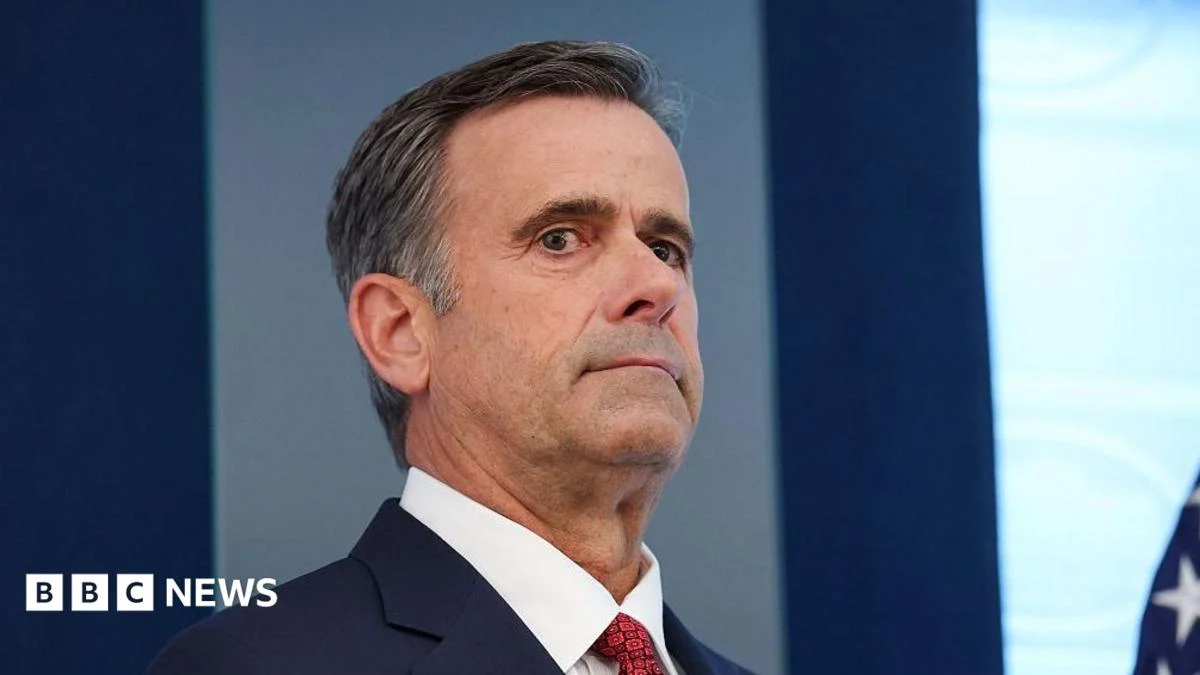
The head of the United States Central Intelligence Agency (CIA), John Ratcliffe, undertook an unannounced and highly significant visit to Moscow earlier this week, engaging in rare in-person talks with Russian officials. The clandestine nature of the trip, confirmed by flight tracking data and reports from CBS, the BBC’s US news partner, underscores the extreme sensitivity of current US-Russia relations and highlights the critical role of intelligence channels in managing complex geopolitical challenges. Neither Washington nor Moscow has officially confirmed the purpose of Ratcliffe’s visit or the specific individuals he met, maintaining a veil of secrecy typical of such high-stakes intelligence diplomacy.
Chronology of a Covert Diplomatic Mission
The itinerary of Director Ratcliffe’s journey was meticulously tracked through publicly available flight data, offering a rare glimpse into the mechanics of high-level, undeclared engagement between adversarial powers. A large US military aircraft, specifically a C-17 transport plane, was observed traveling from the United States to Russia on Tuesday, transiting via Latvia. Data from FlightRadar24 indicated the aircraft’s departure from Riga airport at approximately 05:50 GMT. It subsequently landed at Moscow’s Vnukovo international airport around 07:04 GMT, completing a journey that bypassed conventional diplomatic routes and protocols.
Social media footage, rapidly disseminated and analyzed, corroborated the flight tracking information, showing the distinctive C-17 transport plane approaching and landing at Vnukovo. Further posts purported to show a diplomatic motorcade traveling through the Russian capital, suggesting the prompt and secure transfer of the high-ranking US delegation. The aircraft remained on the ground for several hours before departing Moscow and returning to Riga shortly before 17:00 GMT on the same day, indicating a compressed but intensive schedule for the talks. The swift arrival and departure underscored the urgency and discrete nature of the mission.
Adding another layer of detail to the unfolding narrative, a senior Ukrainian official informed CBS that the United States had notified Kyiv of the impending high-level delegation’s travel to Moscow. Crucially, the US requested Ukraine to temporarily suspend any offensive strikes until the delegation had safely departed Russia. This extraordinary request suggests that the discussions in Moscow were not only sensitive but potentially involved topics with immediate implications for the ongoing conflict in Ukraine, necessitating a temporary de-escalation to facilitate the talks. The BBC News has reached out to the CIA, the White House, and the Pentagon for official comments regarding the visit and its specifics, but as of reporting, no confirmations or details have been provided.
Background of US-Russia Relations: A Deep Freeze
John Ratcliffe’s visit marks a profoundly unusual occurrence, given the severely strained state of US-Russia relations since Russia’s full-scale invasion of Ukraine in February 2022. The unprovoked aggression fundamentally reshaped the global geopolitical landscape, plunging relations between Washington and Moscow to their lowest point in decades, often likened to the darkest periods of the Cold War.
Since the invasion, Russia has faced an unprecedented array of international economic sanctions imposed by the US, the European Union, the UK, and numerous other allies. These measures target key sectors of the Russian economy, including finance, energy, and technology, aimed at crippling its war machine and isolating it on the world stage. Diplomatic channels have largely atrophied, with formal high-level engagements becoming exceedingly rare and often unproductive. The US embassy in Moscow operates with a significantly reduced staff, and public communication between the two governments is typically confrontational.
Previous attempts at high-level engagement have yielded limited results. President Donald Trump’s meeting with Russian President Vladimir Putin at a summit in Alaska last year, for instance, failed to produce any significant breakthroughs or de-escalation of tensions. Subsequent US-led efforts to facilitate peace talks between Russia and Ukraine have largely stalled, with both sides entrenched in their positions and showing little willingness for compromise. In this context of pervasive hostility and diplomatic paralysis, an unannounced visit by the CIA director, who traditionally operates outside the conventional diplomatic spotlight, signals a recognition of urgent, perhaps existential, issues that cannot be addressed through ordinary channels. Ratcliffe’s visit is thought to be his first trip to Russia as CIA director, though he has reportedly maintained contact with his intelligence counterparts in Moscow, indicating the existence of a continuous, albeit covert, line of communication.
Potential Agendas: Escalation Management and Strategic Stability
Analysts are pointing to several critical issues that could have prompted such a high-stakes, unannounced visit. One primary theory revolves around "escalation management," a concept gaining increasing currency amidst the volatile geopolitical climate. John Foreman, who served as a British military attaché to Moscow between 2019 and 2022, emphasized this perspective during an appearance on Radio 4’s PM programme. He stated, "The Americans don’t normally send such a high ranking official to Moscow unannounced at short notice unless something is up."
Foreman’s assessment aligns with growing concerns over recent developments that could inadvertently or intentionally trigger a broader conflict. Speculation has been rife regarding potential Russian involvement in recent drone activity observed in Germany, which, if confirmed, would represent a significant escalation of hybrid warfare tactics against NATO member states. Such incidents underscore the urgent need for direct communication to prevent miscalculation, clarify intentions, and establish "red lines" that, if crossed, could lead to unpredictable and dangerous outcomes. The lack of reliable formal diplomatic mechanisms makes intelligence channels indispensable for conveying sensitive messages and ensuring that both sides understand the other’s thresholds for response.
In a climate where direct military confrontations are avoided but proxy conflicts and cyber warfare are prevalent, the risk of an unintended escalation is ever-present. Discussions on escalation management would likely involve identifying potential flashpoints, establishing mechanisms for de-confliction, and clarifying strategic doctrines to prevent either side from misinterpreting the other’s actions. This could encompass discussions on nuclear doctrines, space warfare, or even the deployment of certain advanced weapon systems. The CIA director, as the head of the principal foreign intelligence agency, is uniquely positioned to engage in such sensitive discussions, possessing access to classified intelligence and the authority to convey high-level messages directly to counterparts without the public scrutiny and political baggage associated with traditional diplomatic envoys.
Potential Agendas: Prisoner Diplomacy and Humanitarian Concerns
Another significant agenda item for Director Ratcliffe’s Moscow visit could have been the sensitive issue of US detainees currently held in Russia. Foreman specifically highlighted this possibility, noting the CIA’s proven track record in facilitating complex prisoner swaps. The release of American citizens held abroad, particularly in adversarial nations, is a perennial priority for the US government, often requiring intricate negotiations conducted away from the public eye.
The CIA has been directly involved in such delicate negotiations in the recent past. For instance, Director Ratcliffe played a role in the discussions for the release of Russian-American citizen Ksenia Karelina. Karelina was jailed in Russia for over a year after being accused of providing support to Ukraine, a charge that the US deemed politically motivated. Her case garnered international attention and became a symbol of the broader crackdown on dual nationals and perceived dissidents within Russia.
More broadly, the CIA was a key player in a significant 2024 prisoner swap deal with Russia. This complex exchange saw the release of several high-profile American detainees, including Wall Street Journal reporter Evan Gershkovich, who was arrested on espionage charges widely denied by the US and his employer. Also released were former US marine Paul Whelan, held for years on similar charges, and Russian-American journalist Alsu Kurmasheva. These cases illustrate the intricate nature of prisoner diplomacy, which often involves protracted negotiations, reciprocal concessions, and the utilization of covert channels to achieve humanitarian outcomes amidst broader geopolitical tensions. The presence of other American citizens currently detained in Russia, whose cases are less publicized, could also have been a central focus of the discussions, with Ratcliffe potentially seeking updates on their conditions or negotiating frameworks for their eventual release. Such exchanges, while primarily humanitarian, also carry significant symbolic and political weight for both nations.
The Role of Intelligence Channels in Covert Diplomacy
The decision to deploy the CIA director for such a mission underscores the unique role that intelligence channels play in periods of severe diplomatic frost. When official government-to-government contacts are either non-existent, unproductive, or politically infeasible, intelligence agencies often serve as critical back channels. These channels allow for direct, candid, and often deniable communication between adversaries, bypassing the public rhetoric and political constraints that hamstring traditional diplomacy.
Intelligence chiefs, by virtue of their positions, command unique credibility and access. They are privy to the most sensitive information and can convey messages with an authority that transcends that of conventional diplomats. Furthermore, the inherent secrecy surrounding intelligence operations allows for flexibility in negotiations, permitting discussions on topics that might be too contentious or premature for public discourse. Director Ratcliffe’s reported maintenance of contact with his Russian intelligence counterparts even prior to this visit suggests that a discreet line of communication already existed, which this in-person meeting likely intensified and formalized for specific, pressing issues. This type of engagement facilitates a crucial exchange of perspectives, reduces the risk of misinterpretation, and can lay the groundwork for future, more formal diplomatic efforts, however distant they may seem.
Official Silence and Broader Diplomatic Implications
The complete lack of official confirmation from both Washington and Moscow regarding Ratcliffe’s visit is highly instructive. This silence is not merely an oversight but a deliberate strategy, designed to preserve deniability, protect the confidentiality of the discussions, and avoid public scrutiny that could derail sensitive negotiations. For the US, acknowledging such a high-level visit to an adversarial nation could invite criticism from allies or domestic political opponents. For Russia, acknowledging direct contact with a top US intelligence official could be perceived as a sign of weakness or a deviation from its defiant posture against Western sanctions and intervention in Ukraine.
The request to Ukraine to suspend strikes further highlights the delicate nature of the talks and implies that the US initiated this direct engagement with Moscow. This suggests that the issues discussed were of such immediate and profound importance that Washington felt compelled to open a direct, high-level channel, even if covertly. The willingness of both sides to engage in such a clandestine manner, despite their overt animosity, signals a shared, albeit unstated, recognition that certain critical issues cannot be left unaddressed.
The visit, while secret, inevitably sends signals to various global actors. To US allies, it might be interpreted as an indication of Washington’s proactive approach to de-escalation and crisis management, even if it raises questions about transparency. To Ukraine, the request to suspend strikes could be a mixed signal, simultaneously reassuring them of US engagement on their behalf while also potentially causing unease about the nature of discussions held without their direct involvement. To other adversaries, it might signal the US’s pragmatic approach to national security, prioritizing direct communication when deemed necessary.
Precedents and Historical Context
While rare, such high-level, secret engagements between US and Russian intelligence chiefs are not entirely without precedent, particularly during periods of intense geopolitical rivalry. During the Cold War, secret back channels between Washington and Moscow were often essential for managing crises, preventing escalation, and even negotiating arms control agreements. These "Track Two" diplomatic efforts, often involving intelligence officials or trusted intermediaries, provided crucial conduits for communication when official diplomatic relations were frozen or hostile.
The visit of a CIA director to Moscow is a stark reminder of the enduring necessity of these covert lines of communication, even in an era of unprecedented transparency and global interconnectedness. It underscores that despite the public rhetoric and the diplomatic isolation, fundamental security interests compel both Washington and Moscow to maintain a discreet capacity for direct, high-level engagement. Ratcliffe’s status as one of the highest-ranking US officials to visit Russia during President Donald Trump’s second term (following Trump’s own meeting with Putin in Alaska) further amplifies the significance of this event, positioning it as a potentially pivotal moment in the ongoing, complex relationship between the two nuclear powers.
Broader Geopolitical Ramifications and Outlook
The unannounced visit by CIA Director John Ratcliffe to Moscow, though shrouded in secrecy, carries profound geopolitical ramifications. It signals that despite the public acrimony and the near-collapse of formal diplomatic relations, both the United States and Russia acknowledge the imperative of maintaining a direct, high-level channel for managing immediate crises and preventing catastrophic miscalculations.
Whether the talks centered on the critical issue of escalation management amidst regional tensions, the humanitarian imperative of securing the release of detained American citizens, or a combination of these and other undisclosed matters, the fact of the meeting itself is a powerful indicator. It suggests that even in an environment defined by deep distrust and overt hostility, there are underlying shared interests – primarily the avoidance of direct conflict and the management of strategic stability – that compel communication at the highest, most sensitive levels.
The long-term impact of Ratcliffe’s visit remains to be seen. It is unlikely to herald a dramatic thaw in US-Russia relations or lead to an immediate breakthrough in the Ukraine conflict. Rather, it should be viewed as a tactical engagement aimed at addressing immediate, pressing concerns. However, it underscores the enduring importance of intelligence diplomacy as a vital tool in the arsenal of foreign policy, capable of operating in the shadows to prevent crises and mitigate risks when conventional diplomacy has reached its limits. Future developments, particularly regarding prisoner exchanges or any subtle shifts in de-escalation rhetoric, may eventually shed more light on the true nature and success of this extraordinary, unannounced mission.