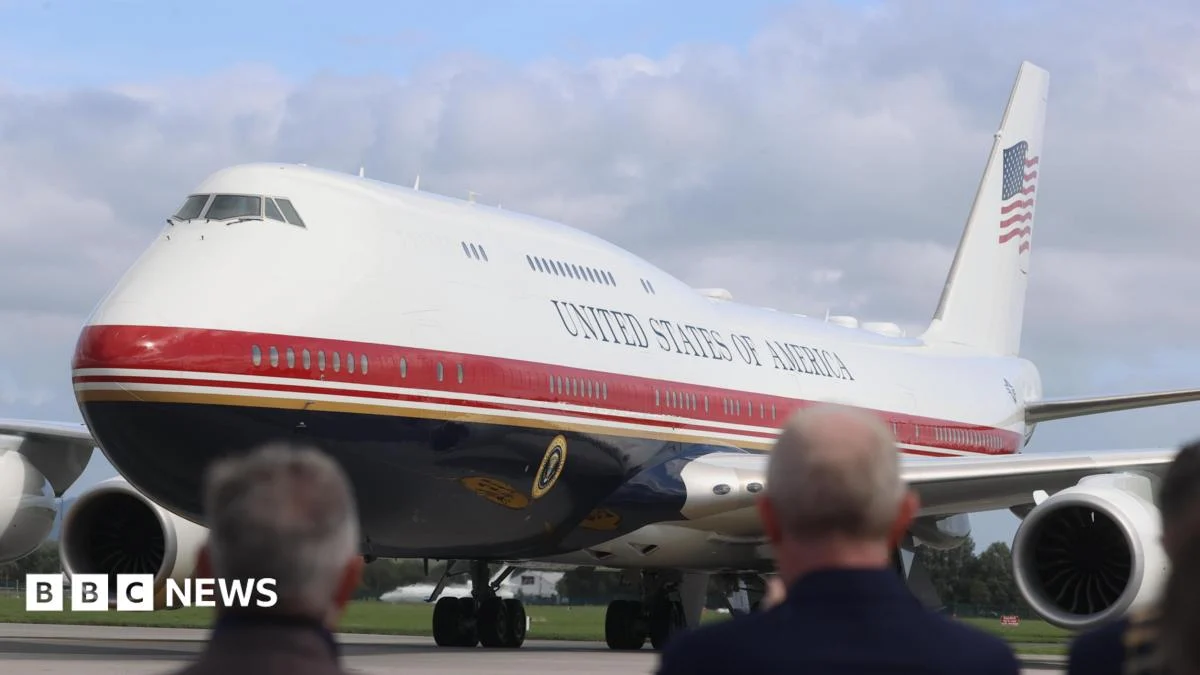
Washington D.C. – In a significant escalation of the ongoing friction between the White House and certain news organizations, US broadcaster CNN was notably excluded from the media pool accompanying President Donald Trump on Air Force One for a scheduled trip to Tennessee on Saturday. The decision marks the latest flashpoint in a contentious relationship, occurring just days after a federal judge intervened to compel the administration to restore access to some news outlets previously barred from White House grounds. This move, widely interpreted as a targeted punitive action, underscores the administration’s persistent efforts to control media narratives and access, even in the face of legal challenges and widespread condemnation from press freedom advocates.
The exclusion of CNN from the presidential flight for a routine trip to cover President Trump’s attendance at a college American football game in Knoxville, Tennessee, carries symbolic weight far beyond mere transportation logistics. Access to Air Force One is a coveted position for journalists, signifying direct proximity to the President and his inner circle, allowing for immediate reporting on presidential movements, statements, and engagements. Traditionally, a rotating "pool" of journalists from various outlets travels with the president to ensure continuous coverage, sharing their reports with the broader press corps. CNN was scheduled to be part of this elite pool for the Tennessee trip, a standard assignment for one of the four major television networks that rotate daily White House coverage. However, a revised media schedule released by the White House on Friday night conspicuously omitted CNN, with no other outlet listed as a direct replacement in the president’s tentative itinerary, suggesting a deliberate and isolated exclusion rather than a logistical oversight.
A Pattern of Restricted Access: The Broader Conflict
This latest incident is not an isolated event but rather a continuation of a protracted battle between the Trump administration and what the President frequently labels "fake news" media. The administration has consistently sought to delegitimize news organizations it deems critical of its policies or leadership, employing a strategy that often involves public denouncements, direct attacks on individual journalists, and, increasingly, the restriction of access. This approach has sparked serious concerns among media watchdogs and constitutional scholars who argue that such actions undermine the fundamental principles of a free press, a cornerstone of democratic governance. The First Amendment of the U.S. Constitution guarantees freedom of speech and of the press, principles that media organizations argue are directly challenged by the White House’s selective access policies.
Historically, while tensions between presidents and the press are not uncommon, the scale and nature of the current administration’s confrontational stance are widely considered unprecedented. Previous administrations, regardless of their frustrations with media coverage, generally adhered to established protocols for press access, understanding the vital role of an independent press in informing the public and holding power accountable. The current administration, however, has often framed critical reporting as politically motivated opposition, blurring the lines between journalism and partisan activism. This narrative forms the bedrock of its justification for imposing restrictions, asserting that certain outlets are engaged in biased reporting rather than objective journalism.
Chronology of Escalation: From Ban to Court Order
The Air Force One exclusion follows a rapid succession of events that have defined the volatile relationship between the White House and the press over the past week. Just days prior, the White House had taken the extraordinary step of banning journalists from CNN, Politico, and MS NOW from attending a series of events and briefings. President Trump himself publicly accused these outlets of publishing "fiction or lies" about his administration, a charge he has frequently leveled against media organizations whose reporting he dislikes. While specific reports leading to the ban were not always explicitly detailed by the White House, the broad accusation served as the stated rationale for denying access to several reporters assigned to cover the White House beat.
This move immediately drew sharp condemnation from the affected media outlets, who swiftly announced their intention to pursue legal action. They asserted that the administration’s actions constituted a clear violation of their constitutional rights to free speech and freedom of the press. The White House Correspondents’ Association (WHCA), an organization dedicated to advocating for press access and upholding journalistic standards, also voiced strong objections, emphasizing the importance of an unhindered press in a democratic society.
In a powerful display of industry solidarity, four other major television networks that share the daily rotation of White House coverage with CNN – ABC, CBS, Fox News, and NBC – temporarily paused their broadcasts of presidential events. This unprecedented collective action signaled a unified front against what was perceived as an attack on press freedom for all. By withholding their live coverage, these networks aimed to highlight the critical role of unrestricted access and the potential dangers of a White House that unilaterally decides which journalists are allowed to report. This act of solidarity was a significant moment, demonstrating that even competing news organizations recognize the shared threat posed by attempts to muzzle the press.
In a move that further exacerbated tensions and was widely seen as an attempt to bypass traditional media entirely, the White House then launched its own streaming channel, dubbed "Trump TV." This platform, unveiled ahead of the United Nations General Assembly in New York, was presented as a direct conduit for the administration to communicate its message without the perceived filter or bias of established news outlets. Critics, however, immediately branded it as a propaganda channel, designed to circumvent independent scrutiny and control the flow of information directly to the public.
Judicial Intervention and Administrative Pushback
The escalating conflict reached a critical juncture when a federal judge intervened. In a landmark ruling, the judge determined that the Trump administration’s practice of selectively barring news outlets from the White House was likely unconstitutional. The ruling, while not a final judgment on the full constitutionality of such bans, issued a temporary injunction, compelling the administration to reinstate access for the previously banned journalists, at least for the time being. The legal reasoning behind the judge’s decision centered on concerns about viewpoint discrimination and prior restraint, arguing that the government cannot selectively grant or deny access based on the content or perceived bias of a news organization’s reporting. This judicial order was seen as a significant victory for press freedom and a temporary check on the administration’s power to dictate media access.
However, the administration’s response to the judicial ruling demonstrated its continued defiance. Despite the court order, the White House still denied entry to some CNN and MS NOW reporters who were assigned to cover arrivals for a state dinner held for Chinese leader Xi Jinping on Thursday. This selective denial, occurring immediately after the judge’s ruling, underscored the administration’s resolve to push the boundaries of press access, even when facing legal challenges. It suggested a strategy of finding new avenues to restrict access, such as the Air Force One exclusion, while technically complying with the letter, but not the spirit, of the judicial order regarding White House grounds.
A White House communications account on X (formerly Twitter) further articulated the administration’s position, posting: "contrary to what the Fake News wants you to believe, they don’t just get to have free rein into every part of the White House, every event, and every press call." This statement reiterated the administration’s view that press access is a privilege, not an inherent right, and that the White House retains the authority to manage and restrict that access as it sees fit. It also reinforced the "fake news" narrative, positioning the administration as battling against a biased media establishment.
Following the initial period of restricted access and the subsequent judicial intervention, regular US television coverage of the White House largely resumed on Friday after White House officials reluctantly allowed reporters entry, albeit with lingering tensions and a palpable sense of unease. The Air Force One ban for CNN, however, signifies a new front in this ongoing battle, moving beyond physical access to White House grounds to the highly symbolic and practically important arena of presidential travel.
The Significance of the Presidential Pool
The exclusion from Air Force One is particularly impactful due to the unique nature of presidential travel coverage. The "pool" system, comprising a small group of journalists representing print, wire services, radio, and television, travels with the president everywhere, providing immediate updates and direct observations. Being part of this pool is not merely a convenience; it ensures that there is always an independent journalistic witness to the president’s activities, capable of reporting firsthand on unexpected developments or official statements made while traveling. When a major outlet like CNN is excluded from this pool, it impacts not just that specific organization but also the broader media ecosystem, as other outlets rely on pool reports for comprehensive coverage. It raises questions about the administration’s commitment to transparency and its willingness to allow independent scrutiny of its actions, even during routine engagements.
President Trump is scheduled to attend a highly anticipated college football game between the University of Tennessee and the University of Texas College at Neyland Stadium in Knoxville from midday on Saturday. The game itself is a significant public event, and the President’s attendance offers numerous opportunities for public statements, interactions, and policy announcements. The absence of CNN’s direct reporting from this event, while other outlets may still be present, creates a gap in the diverse journalistic perspectives that typically inform the public.
Reactions and Industry Solidarity
The BBC has formally requested comment from the White House regarding the Air Force One ban, reflecting the international attention and concern generated by these developments. While an official statement from the White House regarding this specific incident remains pending, their previous communications and actions suggest a continued commitment to their stance against certain media outlets. CNN, for its part, is expected to reiterate its commitment to fair and objective reporting and to continue challenging what it views as unconstitutional restrictions on press freedom. The White House Correspondents’ Association is likely to issue another strong statement, reaffirming the importance of unfettered access for all credentialed journalists and condemning any attempts to use access as a tool for punishment or political leverage.
The broader media landscape will be watching closely to see if other news organizations continue to show solidarity with CNN or if this latest incident leads to further fragmentation within the press corps. The effectiveness of collective action, as demonstrated by the temporary halt in broadcasts, highlights the power of a united front in pushing back against governmental attempts to control the flow of information.
Implications for Press Freedom and Public Discourse
The cumulative effect of these actions — from "fake news" accusations and outright bans to judicial battles and selective exclusions from presidential travel — has profound implications for press freedom and public discourse in the United States. It erodes public trust in independent journalism, creating an environment where citizens may struggle to discern factual reporting from politically motivated attacks. When the highest office in the land consistently denigrates and restricts the press, it risks normalizing such behavior and setting a dangerous precedent for future administrations.
Furthermore, these actions make it significantly harder for journalists to fulfill their constitutional duty to inform the public and hold those in power accountable. Logistically, CNN’s exclusion means it will have to rely on pool reports from other outlets or secondary sources, potentially delaying or complicating its ability to provide immediate, firsthand coverage of the President’s activities. Strategically, it signals a White House willing to employ every tool at its disposal to shape its public image and bypass critical reporting.
The ongoing saga also highlights the fragility of established norms and protocols in the face of a determined challenge to the traditional role of the press. It forces a re-evaluation of the mechanisms in place to protect press freedom and underscores the importance of a robust, independent judiciary willing to defend constitutional rights.
Looking Ahead: The Future of White House-Media Relations
As the Trump administration continues its tenure, the relationship between the White House and the media remains one of constant contention. The Air Force One ban is unlikely to be the final chapter in this escalating conflict. It signals a willingness by the administration to employ new tactics to control access and punish perceived adversaries in the press. The legal battles are likely to continue, setting important precedents for the balance of power between the executive branch and the Fourth Estate. The outcome of these disputes will not only shape the immediate future of White House press coverage but also leave a lasting legacy on the understanding and practice of press freedom in the United States. The challenge for journalists, constitutional lawyers, and civil liberties advocates will be to uphold the principles of a free and independent press, ensuring that the public remains informed and that those in power are held accountable, regardless of the political climate.