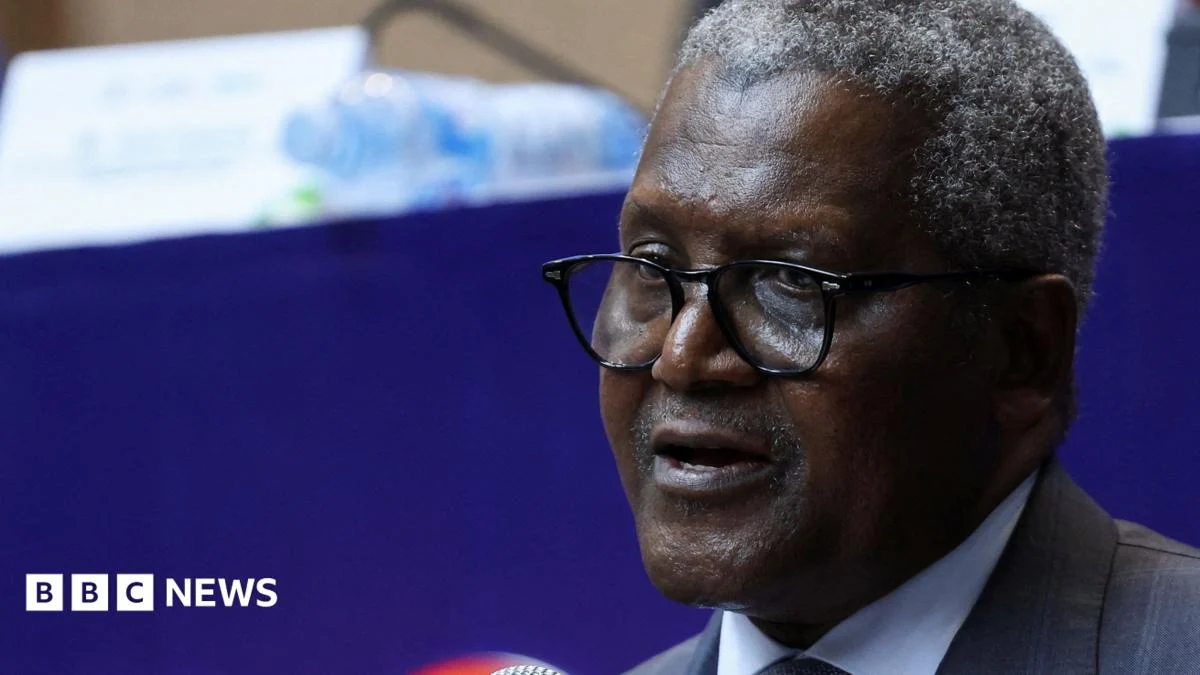
Nigerian industrialist Aliko Dangote, Africa’s wealthiest individual, has embarked on an unprecedented capital raise, launching what is set to be the continent’s largest-ever initial public offering (IPO). The offering, which seeks to divest approximately 3% of his colossal Dangote Refinery to the general public, aims to generate as much as $2.1 billion (£1.6 billion). This monumental move not only signifies a strategic financial maneuver but also represents a profound social commitment by Dangote to enable ordinary Nigerians to partake in the success and future prosperity of a project widely hailed as a cornerstone of the nation’s energy independence. The refinery, which commenced operations in early 2024 after more than a decade of development, now provides over 70% of Nigeria’s domestic energy consumption, fundamentally reshaping the country’s economic landscape.
A New Dawn for Nigeria’s Energy Sector
The Dangote Refinery, situated in the Lekki Free Zone near Lagos, is not merely a processing plant; it is a symbol of Nigeria’s aspirations for self-sufficiency and industrialization. With a processing capacity of 650,000 barrels per day (bpd), it stands as the world’s largest single-train refinery and the seventh-largest overall. Its commissioning marks a critical turning point for Nigeria, a nation that, despite being Africa’s largest crude oil producer, has historically relied almost entirely on imported refined petroleum products due to dilapidated and inefficient state-owned refineries. This paradox has been a significant drain on the nation’s foreign exchange reserves, contributing to economic instability and making the populace vulnerable to global price fluctuations and supply chain disruptions. The refinery’s operational status is poised to reverse this trend, promising substantial foreign exchange savings, job creation, and enhanced energy security.
The public offering of shares in such a pivotal national asset has generated immense excitement across Nigeria. Many citizens, like Isah Salisu, who withdrew 50,000 naira (£28; $37) from his savings to invest, view this as a unique opportunity. "My hope is that my small money will one day grow big. I don’t want to miss out as many I know are also investing," Salisu shared with the BBC, encapsulating the widespread optimism and desire for financial participation. The IPO, which will run for a month, has set an accessible entry point, with a minimum purchase of just 10 shares, costing approximately $4, making it attainable for a broad spectrum of retail investors.
The Genesis of a Megaproject: A Decade of Vision and Perseverance
The journey to establish the Dangote Refinery has been arduous and characterized by sheer scale and ambition. The project was first announced by Aliko Dangote in 2013, with an initial estimated cost of around $19 billion. However, construction did not officially commence until 2017. The intervening years and the construction phase itself were fraught with challenges, including significant logistical hurdles, the sheer complexity of engineering such a massive facility, and global disruptions such as the COVID-19 pandemic, which caused delays in supply chains and workforce mobilization.
The chosen site, within the expansive Lekki Free Zone, necessitated massive environmental engineering efforts. A staggering 65 million cubic meters of sand were moved for land reclamation, transforming a swampy coastal area into a robust industrial complex capable of housing the refinery, a fertilizer plant, and a petrochemical complex. The vision behind locating it within a free trade zone was to leverage tax incentives, streamlined regulatory processes, and access to port facilities, thereby enhancing its operational efficiency and competitive edge. The refinery is designed to process various grades of crude oil, primarily Nigerian crude, into a full range of refined products, including gasoline, diesel, aviation fuel, and polypropylene, catering to both domestic and potential export markets across West Africa.
Strategic Implications and Economic Transformation
The successful operation and public listing of the Dangote Refinery carry profound implications for Nigeria’s economy. The immediate and most significant impact is the drastic reduction in the country’s reliance on imported refined petroleum products. Historically, Nigeria has spent billions of dollars annually on fuel imports, a heavy burden on its foreign exchange reserves and a major contributor to the depreciation of the Naira. The refinery is expected to save Nigeria an estimated $10 billion to $15 billion annually in foreign exchange, providing much-needed stability to the national currency and bolstering the country’s trade balance.
Furthermore, the refinery’s existence offers a path to alleviating the contentious issue of fuel subsidies. For decades, the Nigerian government has spent trillions of Naira subsidizing imported fuel, a practice that was fiscally unsustainable and prone to corruption. While the government has recently moved to eliminate these subsidies, leading to initial price hikes, a stable and abundant supply of locally refined products from the Dangote Refinery is expected to stabilize domestic fuel prices in the long run, reducing inflationary pressures and providing greater predictability for consumers and businesses.
Beyond macroeconomic indicators, the project is a significant engine for job creation. During its construction phase, the refinery employed tens of thousands of workers, both skilled and unskilled. Its operational phase continues to generate thousands of direct jobs in engineering, operations, and maintenance, and many more indirect jobs across ancillary industries such as logistics, transportation, and services. The integration of the refinery with a petrochemical complex also creates opportunities for downstream industries, fostering local manufacturing and adding value to Nigeria’s natural resources. This aligns with the government’s broader industrialization agenda and its push for local content development.
Navigating the Investment Landscape: Opportunities and Risks
The launch of the IPO has been met with widespread acclaim, with economy and business expert Dr. Abdulrazak Ibrahim Fagge describing it as a "historic" event. However, Dr. Fagge also issued crucial warnings to prospective investors, particularly first-time buyers. He emphasized the inherent risks associated with stock market investments, including the potential for share prices to fall, leading to financial losses.
"What prospective buyers, especially first-time buyers, should know is that they shouldn’t invest all their money or money they would need in a couple of months," Dr. Fagge advised. "They should invest something they could do without for the next three, four, five years." This guidance underscores the importance of a long-term investment horizon, particularly in volatile emerging markets, and the need for investors to only commit discretionary capital.
Another critical warning from Dr. Fagge concerned the prevalence of scammers who might seek to exploit individuals unfamiliar with the investment process. He strongly advised potential investors to "only deal with the institutions that have been listed," referring to authorized brokers and financial institutions registered with the Nigerian Exchange Group (NGX) and regulated by the Securities and Exchange Commission (SEC) of Nigeria. This vigilance is paramount to protect retail investors from fraudulent schemes.
Financial analysts watching the IPO closely generally view the Dangote Refinery as a promising long-term investment due to its strategic importance and strong fundamentals. However, they also highlight potential risks such as global oil price volatility, domestic macroeconomic instability, and operational challenges inherent in a facility of this scale. The success of the IPO and the subsequent performance of the shares will also be influenced by broader market sentiment, investor confidence in Nigeria’s economic trajectory, and the refinery’s ability to consistently meet its production and profitability targets. The funds raised from this share offer are explicitly intended to help double the refinery’s capacity, indicating aggressive expansion plans that could further enhance its value proposition.
Aliko Dangote: The Architect of an African Industrial Empire
At the heart of this transformative project is Aliko Dangote, a figure synonymous with African industrial prowess. Born in Kano, Nigeria, 67-yearold Dangote has built an empire from humble beginnings in trading. With a net worth estimated around $28 billion by Forbes magazine, his business acumen spans diverse sectors. He initially made his fortune in cement and sugar, establishing Dangote Cement as Africa’s largest cement producer, before expanding into salt, flour, and other commodities. His conglomerate, Dangote Group, operates across 16 other African countries, demonstrating a consistent vision for pan-African industrialization and import substitution.
The refinery represents the pinnacle of Dangote’s long-standing philosophy: to add value to Africa’s raw materials within the continent, thereby creating jobs, fostering economic growth, and reducing reliance on imports. His commitment to such mega-projects, often at significant personal and financial risk, reflects a deep-seated belief in Africa’s potential to industrialize and compete on a global scale. The refinery’s successful launch and public offering are not just a personal triumph for Dangote but a beacon of hope for industrial development across the continent.
Looking Ahead: Nigeria’s Role in Regional Energy Security
With the Dangote Refinery fully operational and its shares now accessible to the public, Nigeria is poised to transform from a net importer of refined petroleum products to a potential net exporter. This shift could reposition Nigeria as a regional energy hub, supplying fuel to neighboring West African countries that also grapple with inadequate refining capacities. Such a role would not only generate additional foreign exchange earnings for Nigeria but also enhance regional energy security, fostering greater economic integration and stability within the ECOWAS bloc.
The long-term implications extend to the development of a robust petrochemical industry, leveraging the refinery’s output to produce essential raw materials for plastics, fertilizers, and other industrial applications. This diversification away from crude oil exports into higher-value refined products and petrochemicals is crucial for Nigeria’s economic resilience in a world transitioning towards cleaner energy sources.
The Dangote Refinery IPO is more than just a financial transaction; it is a moment of national significance, offering Nigerians a tangible stake in their country’s economic future. While expert advice on cautious investment is prudent, the overwhelming enthusiasm reflects a deep-seated belief in the project’s potential to usher in a new era of prosperity and self-reliance for Africa’s most populous nation. The world watches as Nigeria embarks on this pivotal journey, propelled by the vision of one man and the collective aspirations of a nation.