Australia is rapidly emerging as a global nexus for data centres, attracting unprecedented levels of investment and positioning itself at the forefront of the artificial intelligence (AI) revolution. However, this digital boom is sparking significant debate and concern among communities, environmental experts, and policymakers regarding its profound implications for energy grids, water resources, and local environments. The sheer scale and operational demands of these facilities are challenging Australia’s sustainability goals and raising questions about the true cost of becoming a data centre superpower.
The Unseen Infrastructure’s Audible Impact
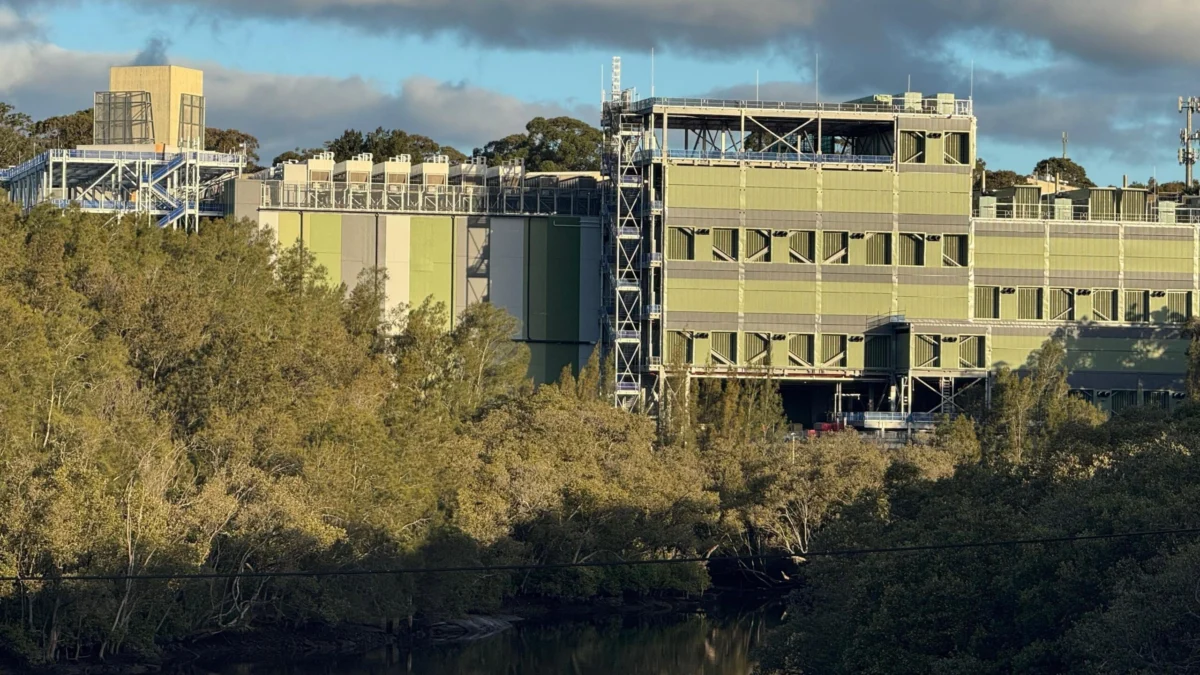
For residents like Lucy* in Sydney’s affluent lower north-shore suburb of Lane Cove, the presence of a data centre is not an abstract concept but a constant, low-frequency hum. "I’ll hear it and think, ‘What is that? What is going on?’," she describes, referring to the persistent noise emanating from a facility just 350 metres from her home. This auditory intrusion is a common complaint, with some likening the sound to a jet engine in perpetual idle or a high-pitched whine. In Lane Cove alone, four additional data centres are slated for construction within the local industrial park, intensifying local anxieties.
These massive, windowless structures, filled with racks of whirring servers and intricate cabling, are becoming increasingly common across the Australian landscape. From bustling urban fringes to previously quiet industrial zones, their footprint is expanding at an exponential rate. The visible signs, often nondescript, belie the immense energy and cooling infrastructure contained within, which are the root causes of both the noise and the broader environmental concerns.

Australia’s Allure: A Global Hub in the Making
Australia’s appeal as a prime location for data centre investment is multifaceted. Global tech giants and investors are drawn to the nation’s perceived abundance of clean energy potential, its significant natural gas reserves, and readily available land for large-scale development. These factors, combined with a stable political environment, a skilled workforce, and a robust energy grid, present an attractive proposition for housing critical digital infrastructure.
Earlier this year, OpenAI CEO Sam Altman notably suggested that Australia possesses the foundational elements to become a "data centre capital of the world," should it choose to lean into this opportunity. The nation appears to be doing just that. Currently, Australia hosts 162 operational data centres, with plans for an additional 90 facilities in various stages of development or approval. This expansion is backed by an estimated A$155 billion (£80 billion) in investment money, underscoring the enormous financial commitment to this sector.
Sydney, in particular, is at the epicentre of this boom. Western Sydney is earmarked for one of the world’s largest proposed data centres, a colossal one-gigawatt facility projected to become Australia’s single biggest energy consumer upon completion. Further west, in Marsden Park, construction is already underway on what will be the Southern Hemisphere’s largest data centre, situated a mere 100 metres from an existing residential community. These projects highlight the rapid pace and scale of development, often bringing these industrial-scale facilities into close proximity with established neighbourhoods.
The Digital Imperative: Why Data Centres are Deemed Essential
The foundational role of data centres in the digital economy is undeniable. Since the advent of the internet, they have served as the backbone for storing and processing data essential for everyday activities such as email communication, online banking, and cloud services. However, a significant shift occurred in late 2022 with the public launch of ChatGPT, triggering an unprecedented surge in demand for computational power to fuel the rapidly expanding field of artificial intelligence. This "AI race" has dramatically accelerated the need for more, and more powerful, data centres globally.

The physical location of these facilities has also gained critical importance due to "latency" – the indispensable speed at which data travels from its source to its destination. Belinda Dennett, CEO of Data Centres Australia, emphasizes the intolerance for delays in modern applications. "Delays for things like air traffic control, robotic surgery or even Netflix would not be tolerated today," she states, highlighting the critical nature of proximate data infrastructure for real-time applications.
Australia’s growing digital footprint further underscores this need. The country boasts approximately 13.6 million monthly AI users, making it the sixth most active nation globally in AI engagement. Experts argue that establishing robust local data centre infrastructure is crucial for nurturing Australia’s own AI industry. "If we think about it in reverse, what happens if we don’t build infrastructure here," Dennett posits. "We get none of the value chain, we are just importing tools from someone else and we become just a user."
Beyond the technological imperative, Australia’s attractive market for foreign investment is bolstered by its geopolitical standing, including its membership in the Five Eyes security alliance. Jon Whittle, a former director of the digital research centre at the country’s national science agency CSIRO and a prominent voice in AI and business, suggests that the data centre boom has been a critical factor in staving off a potential recession. He contends that the government has little choice but to embrace this investment path. "There’s some very serious considerations around this, but my main message would be we need to lean into it," Whittle advises.
Mounting Environmental and Resource Concerns
Despite the economic and technological benefits, the rapid proliferation of data centres in Australia has ignited intense scrutiny over their environmental footprint, particularly concerning energy and water consumption. Leading energy and environmental experts warn that Australia’s existing infrastructure may be ill-equipped to meet the colossal demands of these new facilities without significant strain.

The Australian Energy Market Operator (AEMO) projects that national data centre energy demands could triple by 2030. This surge is predicted to have substantial consequences for the energy market. The Climate Council, an independent non-profit providing expert advice on climate change, estimates that without a dramatic increase in renewable generation and storage capacity, data centres could drive power prices up by 26% in New South Wales (NSW) by 2035.
A primary concern stems from the nature of data centre operations: they require an uninterrupted power supply at a scale and speed that intermittent renewable sources like wind and solar currently struggle to provide consistently. This reliability requirement fuels fears that the data centre boom could inadvertently trigger a new wave of investment in coal and gas-fired power plants, undermining Australia’s commitments to reducing carbon emissions. A recent report by Greenpeace Australia Pacific found that no data centre operator they analysed could adequately substantiate claims of actively driving the country’s renewable energy growth. This contrasts sharply with trends observed in the United States, where some data centres, finding it cheaper than developing new renewables, have opted to construct new gas-fired power stations to secure their energy supply.
An alarming example of this trend is emerging just 90 minutes from Sydney’s central business district, where Australian-owned data group Cloud Carrier plans to build three gas-fired power stations. These facilities are intended to power an existing data centre and two more planned for the future, directly illustrating the potential for fossil fuel reliance. Furthermore, in the event of grid pressure or power outages, data centres, including the one in Lane Cove, depend on large backup diesel generators, contributing to local air and noise pollution.
NSW Treasurer Daniel Mookhey offers a counter-narrative, asserting that the data centre investment boom is intrinsically linked with a parallel boom in renewable energy. "We don’t see the two [as] unrelated," he stated to the BBC. "We see data centres allowing us to replace a lot of our old coal-fired power with clean, green renewable energy with the private sector picking up a large amount of the tab because otherwise households would." Mookhey argues that this private investment will foster renewable energy development and create "new industries that are likely to employ future generations."

Beyond energy, water consumption presents another critical challenge for a drought-prone continent. Data centres require vast quantities of water for cooling their servers, preventing overheating. Some facilities can consume up to 40 million litres of water daily, equivalent to the daily usage of approximately 80,000 households. This demand places immense pressure on existing water supplies, particularly in metropolitan areas like Sydney, which already faces the need to increase its drinking water supply over the next five to ten years to accommodate population growth, according to the Water Services Association of Australia (WSAA). Sydney Water, Australia’s largest water utility, has warned that data centres could account for up to 25% of Sydney’s drinking water consumption by 2035, a staggering figure that could necessitate costly alternatives like desalination, with the burden ultimately falling on household consumers.
Government Response and Regulatory Gaps
In July, Prime Minister Anthony Albanese announced forthcoming legislation aimed at regulating the burgeoning data centre sector. The new legal obligations, slated for introduction in 2027, will require "large-scale" data centres to underwrite power supplies, limit water usage, and fund any necessary additional water infrastructure. While this signals a recognition of the sector’s impact, a significant caveat remains: the legislation will only apply to new proposals, exempting projects already built or under construction. This loophole has drawn sharp criticism from environmental and community groups, who are advocating for an immediate pause on all data centre development to allow for comprehensive planning and impact assessment.
Rochelle Flood, Deputy Mayor of Lane Cove, articulates the frustration felt by many local communities. "We’ve got the government rolling out the red carpet saying we want to be the data centre capital of the world," she remarks. "But can we actually do that sustainably or is it going to set us back in terms of net zero and our water storage targets?" Her concerns echo a broader sentiment that economic ambition might be outpacing environmental prudence and social licence.
Community Fallout: Noise, Displacement, and Disputed Benefits
The human dimension of the data centre boom is equally contentious. At a recent town hall meeting in Lane Cove, organised by Greenpeace Australia Pacific, residents expressed profound dissatisfaction over the perceived lack of consultation regarding their area’s transformation into a data centre hub. The proposed proximity of one new centre to local residences – just 16 metres from the nearest home and 160 metres from a primary school – exemplifies the direct impact on quality of life and safety concerns.

Beyond environmental impacts, the economic benefits touted by proponents are also under scrutiny at the local level. Deputy Mayor Flood warns that if the four additional data centres in the Lane Cove industrial park are approved, up to 50% of existing local businesses will be forced to relocate, resulting in significant job losses. Felipe Tanaka, 40, a manager of a business within the industrial park, is one of those facing forced relocation. "We never knew that something like this would happen," Tanaka told the BBC, lamenting the potential loss of "thousands of jobs from this area in the next few years."
While large data centre construction projects can employ over a thousand workers during their build phase, research indicates that the number of operational jobs typically drops to around 100 once facilities are complete. "Most of our 300 to 400 workers here are locals," Tanaka states. "Having to move will probably see half of my employees gone." This contrasts with Treasurer Mookhey’s assertion that the jobs created by data centres are not necessarily within the facilities themselves but rather in the broader industries that utilise them, such as Microsoft and Amazon’s skilled operations. However, the exact nature and quantity of these "skilled jobs" that would directly benefit local communities remain largely undefined and contested.
Critics also question the ultimate purpose and societal value of the data being processed. As some have pointed out, a significant portion of AI usage currently involves generating "cat GIFs" or other non-essential content, consuming energy equivalent to running a microwave for an hour per query. "They’re telling us this is essential… that we need to have these centres in our neighbourhood but they’re not saying what it’s for," Flood observes. "When our drinking water, energy and land is being used for generative AI slop, that is not giving any value back." This sentiment encapsulates a growing unease about the trade-offs involved in hosting this new wave of digital infrastructure.
The Path Forward: Balancing Innovation and Sustainability
Australia stands at a critical juncture, balancing the undeniable economic allure and technological imperative of the data centre boom with pressing environmental and social responsibilities. The current trajectory promises to cement Australia’s position as a digital powerhouse, attracting foreign investment and fostering domestic AI innovation. However, this path is fraught with challenges related to energy security, water scarcity, and community well-being.

The effectiveness of future regulatory measures, such as the legislation proposed by Prime Minister Albanese, will be paramount. Critics argue that delaying implementation until 2027 and exempting existing projects creates a significant window for unchecked development. A more proactive and comprehensive national strategy, integrating renewable energy expansion, water conservation technologies, and robust community engagement, appears essential.
The debate in Australia mirrors a global discussion about the sustainability of the digital age. As AI continues its explosive growth, the physical infrastructure supporting it demands careful consideration. For Australia, the question is not merely whether to participate in the AI race, but how to do so responsibly, ensuring that the benefits of digital advancement do not come at an irreversible cost to its environment and its people. The humming sound outside Lucy’s window, and the placards reading "No data centre" in Lane Cove, serve as potent reminders of this complex and evolving challenge.
*Names have been changed to protect identities