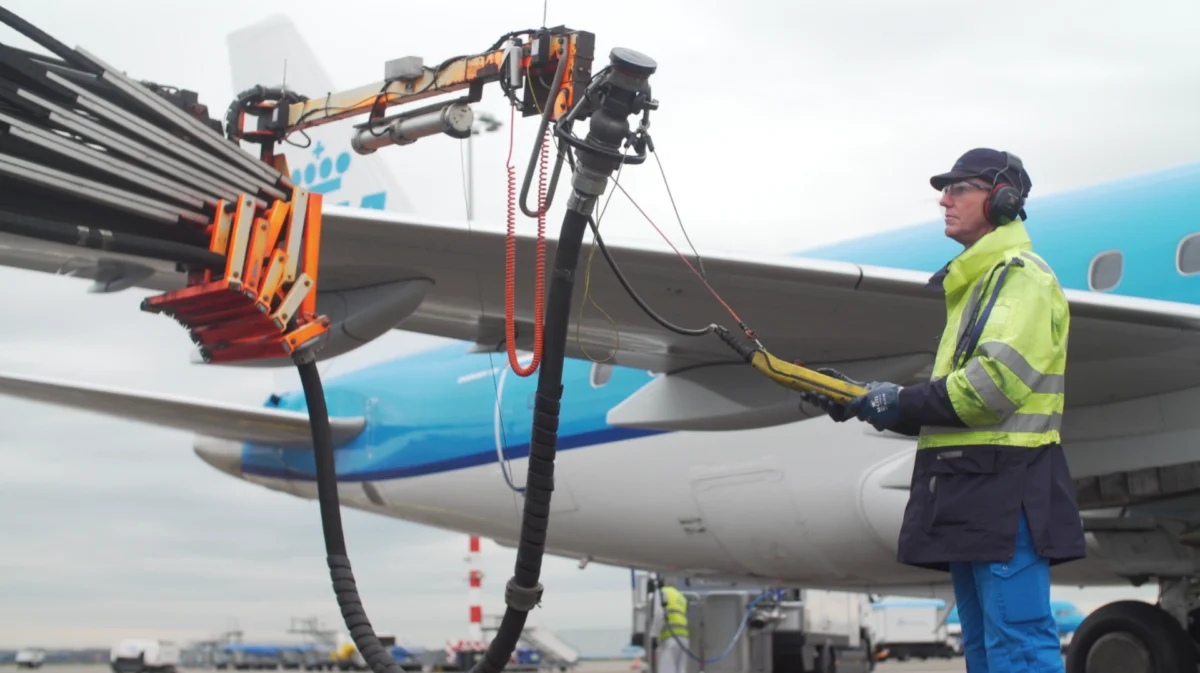
The European Commission has officially confirmed a significant escalation in its financial commitment to the decarbonization of the aviation sector, announcing that support for the adoption of Sustainable Aviation Fuel (SAF) reached €430 million ($494 million) over the past year. This figure represents a fourfold increase compared to the previous year’s disbursements, signaling an aggressive acceleration in the European Union’s strategy to mitigate the environmental impact of air travel. According to data released by the Commission on Wednesday, the funding was distributed through the allocation of free carbon emissions allowances under the EU Emissions Trading System (ETS), a cornerstone of the bloc’s climate policy.
The mechanism saw 130 airlines receive these allowances as a financial incentive to bridge the substantial price gap between traditional fossil-based kerosene and more sustainable alternatives. The Commission reported that these incentives facilitated the use of over 530,000 tonnes of SAF, which resulted in a verified reduction of approximately 1.7 million tons of carbon dioxide (CO2) emissions. This milestone is viewed as a critical step toward the EU’s broader "Fit for 55" goals, which aim to reduce net greenhouse gas emissions by at least 55% by 2030.
The Financial Mechanism of the EU Emissions Trading System
The European Union Emissions Trading System (ETS) operates on a "cap-and-trade" principle, setting a limit on the total amount of greenhouse gases that can be emitted by sectors covered by the system. While the aviation sector has been part of the ETS since 2012, recent reforms have pivoted toward using the system as a proactive tool for industrial transition rather than merely a punitive measure for pollution.
The €430 million in support provided last year was executed through "SAF allowances." These are specific credits granted to aircraft operators to help offset the additional costs incurred when purchasing sustainable fuels. Because SAF currently costs between three and ten times more than conventional jet fuel, the financial burden on airlines is a primary barrier to adoption. By granting free allowances—which airlines would otherwise have to purchase on the open market to cover their emissions—the EU effectively subsidizes the "green premium" of the fuel.
In 2024, approximately €100 million worth of allowances have already been distributed, part of a larger €1.5 billion fund specifically earmarked for SAF promotion through 2026. The European Commission has proposed further expanding this pot as part of ongoing ETS reforms, recognizing that the current scale of production and consumption must increase exponentially to meet upcoming legislative mandates.
A Chronology of Aviation Decarbonization in Europe
The journey toward the current funding levels began in earnest with the introduction of the European Green Deal in 2019, but the specific trajectory for aviation has sharpened over the last three years:
- July 2021: The "Fit for 55" package is introduced, including the ReFuelEU Aviation proposal, which seeks to mandate SAF blending targets for all flights departing from EU airports.
- January 2023: The EU begins phasing out free emission allowances for the aviation sector. Under the revised ETS rules, free allowances for standard fossil fuel use will be completely eliminated by 2026, forcing airlines to pay for every ton of CO2 they emit.
- April 2023: The European Parliament and Council reach a political agreement on the ReFuelEU Aviation rules, setting a mandatory target of 2% SAF blending by 2025, rising to 6% by 2030 and 70% by 2050.
- Late 2023: The Commission implements the SAF allowance mechanism, allowing airlines to claim credits for the CO2 savings achieved through sustainable fuels used in the prior reporting year.
- Wednesday’s Announcement: The Commission reveals that 130 airlines successfully utilized the mechanism, leading to a 400% increase in financial support compared to the pilot phases of the program.
Quantitative Impact and the Scale of the Challenge
The reported reduction of 1.7 million tons of CO2 is a significant achievement in the context of sectoral decarbonization, yet it highlights the magnitude of the task ahead. For perspective, total CO2 emissions from international aviation globally exceeded 1 billion tons annually prior to the pandemic. The 530,000 tonnes of SAF used under the EU scheme represents a fraction of total European jet fuel consumption, which typically exceeds 50 million tonnes per year.
However, the growth rate is what policymakers find encouraging. The leap from approximately €100 million in support to €430 million in a single year suggests that the infrastructure for SAF delivery and the willingness of airlines to integrate it into their operations are maturing. The 130 airlines involved range from major flag carriers like Lufthansa, Air France-KLM, and IAG (the parent company of British Airways and Iberia) to low-cost giants and regional operators.
The primary constraint remains the supply side. Sustainable aviation fuel is produced from various sources, including used cooking oil, agricultural residues, and municipal waste. More advanced versions, known as synthetic fuels or e-kerosene, are produced using captured CO2 and green hydrogen. While these "drop-in" fuels require no modifications to existing aircraft engines or airport infrastructure, the production facilities required to create them at scale are currently limited and capital-intensive.
Industry Responses and Stakeholder Perspectives
The aviation industry has generally welcomed the increase in financial support, though many executives argue that more is needed to maintain global competitiveness. International aviation bodies, such as the International Air Transport Association (IATA), have long advocated for government incentives rather than mandates or taxes.
"The quadrupling of support via ETS allowances is a positive signal that the European Commission recognizes the financial hurdles of the energy transition," a spokesperson for a major European airline group noted in a preliminary reaction to the data. "However, as free allowances for conventional fuel are phased out by 2026, the cost of compliance will rise. We need a robust domestic SAF production industry in Europe to ensure that we are not simply importing expensive fuels from other regions."
Environmental advocacy groups, such as Transport & Environment (T&E), have expressed cautious optimism but emphasize the need for strict criteria on what constitutes "sustainable" fuel. There are ongoing concerns regarding the use of food-based biofuels, which can lead to indirect land-use changes and deforestation. The EU’s current regulations prioritize "advanced" biofuels and synthetic fuels to avoid these pitfalls, a stance that T&E and similar organizations have championed.
Economic Implications and the Global Context
The economics of the aviation transition are complicated by the global nature of the business. European carriers have expressed concern that if EU regulations make flying from European hubs significantly more expensive than flying through hubs in the Middle East or Asia, carbon leakage could occur—where passengers choose longer routes through unregulated regions, potentially increasing overall global emissions.
To counter this, the EU is looking at the SAF allowance system as a way to maintain a level playing field during the transition period. By subsidizing the cost of green fuel, the Commission aims to prevent a sharp spike in ticket prices that could dampen demand or drive traffic away from European airports.
Furthermore, the EU is closely watching the United States, which has taken a different approach to SAF. Under the Inflation Reduction Act (IRA), the U.S. provides significant tax credits for SAF production rather than using a cap-and-trade system. This has led to concerns in Brussels that investment in SAF production might migrate to the U.S. to take advantage of more straightforward subsidies. The expansion of the EU’s €1.5 billion pot is, in part, a competitive response to ensure that Europe remains a leader in green aviation technology.
Analysis of Future Implications
The jump to €430 million in support is a harbinger of a broader economic shift. As the 2025 mandate for 2% SAF blending approaches, the demand for these fuels will become a legal requirement rather than an optional sustainability goal. This transition from voluntary to mandatory adoption will fundamentally change the financial landscape of the airline industry.
Several key implications emerge from the Commission’s latest data:
- Investment Certainty: The fourfold increase in funding provides a clear signal to fuel producers and investors that there is a guaranteed market for SAF in Europe. This is essential for securing the billions of euros in capital needed to build new biorefineries.
- Technological Maturity: The fact that 130 different airlines were able to source and use 530,000 tonnes of SAF indicates that the logistics of SAF—from refinery to wing—are becoming standardized.
- Pressure on Synthetic Fuels: While current SAF is largely derived from waste oils (HEFA-SAF), the Commission is expected to shift future support toward e-kerosene. These synthetic fuels have a higher potential for scaling without competing with food crops, but they are currently even more expensive than bio-based SAF.
- Ticket Price Sensitivity: As airlines exhaust the €1.5 billion in allowances and the 2026 phase-out of free credits for fossil fuels arrives, the cost of decarbonization will likely begin to reflect in passenger fares. The industry will need to balance its climate obligations with the necessity of maintaining affordable air travel.
The European Commission’s announcement on Wednesday serves as both a progress report and a warning. While the 1.7 million tons of CO2 saved represents a tangible victory for environmental policy, it also underscores the massive financial and industrial scaling required to reach the EU’s 2050 goal of net-zero aviation. The quadrupling of support to €430 million is a significant milestone, but in the context of a multi-trillion-dollar global industry, it is merely the opening chapter of a long and costly transition toward sustainable flight.