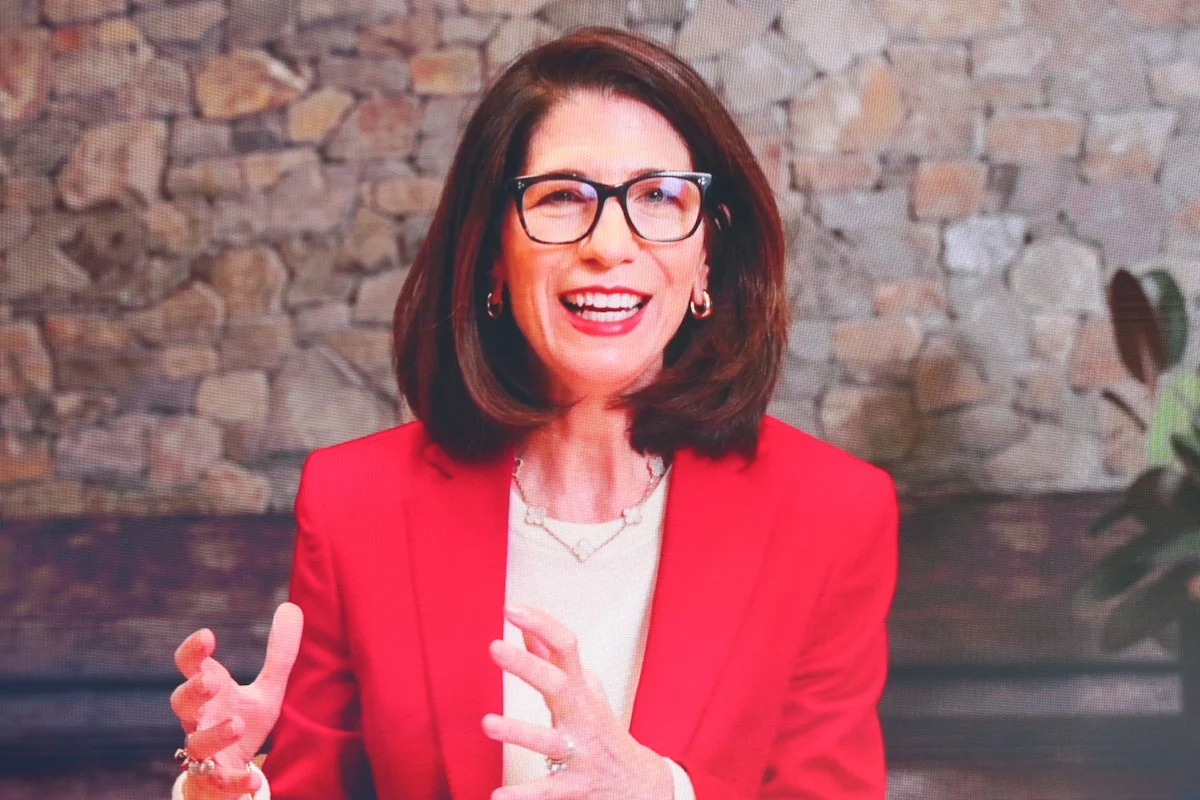
During a high-stakes executive session at the annual Skift Global Forum, Expedia Group CEO Ariane Gorin announced that the travel technology giant would officially integrate its services with Meta’s newly launched AI agent, Muse. The announcement comes as the travel industry grapples with the rapid emergence of "agentic AI"—autonomous systems capable of planning, booking, and managing complex itineraries with minimal human intervention. Moderated by Skift’s founding editor Dennis Schaal, the discussion highlighted a pivotal shift in how Online Travel Agencies (OTAs) view third-party platforms. Rather than viewing emerging AI ecosystems solely as threats to their direct-to-consumer channels, Expedia is adopting a philosophy of presence and experimentation. Gorin’s confirmation that Expedia will be active on Muse, which the Wall Street Journal recently characterized as an "instant hit" following its debut, signals a broader industry trend where established players prioritize being "at the table" during the formative stages of next-generation search and discovery tools.
The Strategic Calculus of AI Integration
The decision to join Meta’s Muse highlights the perennial dilemma facing travel companies with robust direct-booking channels: the tension between maintaining control over the customer relationship and ensuring visibility on the platforms where users increasingly spend their time. For Expedia Group, which operates brands including Expedia, Hotels.com, and Vrbo, the risk of being "left out" of the next evolution of the internet currently outweighs the risks associated with platform dependency.
Gorin emphasized that Expedia’s approach to these partnerships is both case-by-case and highly experimental. The company is currently engaging in multi-faceted collaborations with the dominant forces of the generative AI era, including Google, OpenAI, Anthropic, and Meta. This strategy is rooted in the belief that the architecture of travel search is shifting from a keyword-based query system to a conversational, agent-led model. By embedding Expedia’s inventory and data into Muse, the company ensures that its listings remain accessible to the millions of users interacting with Meta’s ecosystem across Instagram, WhatsApp, and Facebook.
Contextualizing the Rise of Meta’s Muse
Meta’s Muse represents a significant leap in social-commerce and utility-based AI. Launched only weeks prior to the Skift Global Forum, the agent leverages Meta’s Llama 3 large language models to provide users with a seamless interface for planning life events, including travel. Unlike traditional search engines that provide a list of links, Muse aims to act as a concierge, synthesizing user preferences and social data to offer personalized recommendations.
The "instant hit" status of Muse is attributed to its integration within Meta’s existing social infrastructure. For a traveler, the ability to transition from viewing a friend’s vacation photo on Instagram to asking an AI agent to "find a similar hotel and book it using my Expedia rewards" represents a collapse of the traditional marketing funnel. For Expedia, being the engine behind those bookings is a strategic necessity, even if it means sharing the user interface with a tech behemoth like Meta.
Chronology of Expedia’s Technological Evolution
To understand Gorin’s current AI strategy, it is necessary to look at the timeline of Expedia Group’s technological transformation over the last five years. Under the previous leadership of Peter Kern, the company underwent a massive, multi-year project to consolidate its various brand silos—Expedia, Hotels.com, and Vrbo—onto a single, unified technology stack. This "One Expedia" initiative was completed shortly before Ariane Gorin took the helm as CEO in May 2024.
- 2021–2023: Expedia migrates multiple legacy back-end systems into a single platform, enabling faster deployment of features across all brands.
- Early 2023: Expedia becomes one of the first travel companies to launch a plugin for OpenAI’s ChatGPT, allowing users to plan trips conversationally.
- Late 2023: The company introduces "Romie," its own internal AI assistant designed to help travelers within the Expedia app.
- May 2024: Ariane Gorin officially succeeds Peter Kern as CEO, inheriting a streamlined tech stack ready for large-scale AI integration.
- September 2024: Meta launches Muse; two weeks later, Gorin confirms Expedia’s participation at the Skift Global Forum.
This timeline suggests that the technical heavy lifting performed over the previous three years has provided Expedia with the agility required to plug into new platforms like Muse, Google’s Gemini, or Anthropic’s Claude with minimal friction.
Supporting Data: The Economic Stakes of AI in Travel
The financial implications of these AI partnerships are substantial. Expedia Group reported a total revenue of approximately $12.8 billion in 2023, with a significant portion of its expenses dedicated to performance marketing on platforms like Google. As AI agents begin to displace traditional search engine result pages (SERPs), the efficiency of this marketing spend is under scrutiny.

Market research from organizations like McKinsey and Gartner suggests that generative AI could add between $2 trillion and $4 trillion in annual value to the global economy, with the travel and hospitality sector being one of the primary beneficiaries. Specifically, AI-driven personalization is expected to increase conversion rates by as much as 15% to 25% for companies that successfully integrate these tools into the booking flow.
Furthermore, Expedia’s data reveals a shifting consumer appetite. Internal metrics shared in recent earnings calls indicate that users who engage with conversational AI tools on their platform tend to have higher retention rates and a higher lifetime value (LTV) than those who use traditional filter-and-scroll methods. By expanding this capability to Meta’s Muse, Expedia is effectively fishing where the fish are, targeting a younger, mobile-first demographic that may bypass traditional search engines entirely.
Official Responses and Industry Sentiment
The industry’s reaction to Gorin’s "at the table" philosophy has been one of cautious pragmatism. While some smaller travel players fear that AI agents will become "walled gardens" that demand high commissions for visibility, Gorin’s stance reflects the confidence of a market leader.
"You don’t have to understand where it might end up to know you should be watching it every step of the way," Gorin noted during the session. This sentiment echoes the broader consensus among C-suite executives in the travel space: the technology is moving too fast for a "wait and see" approach.
Moderator Dennis Schaal pushed on the risks of disintermediation—the possibility that Meta or Google could eventually handle the entire booking process, rendering the OTA obsolete. In response, the prevailing logic from Expedia is that their value lies in the "unsexy" parts of travel: the complex plumbing of global inventory, real-time pricing, customer service for canceled flights, and the management of millions of hotel relationships. While an AI agent can provide the interface, the back-end fulfillment remains a moat for companies like Expedia.
Broader Impact and Implications for the Future of Travel
The integration of Expedia into Meta’s Muse is more than just a partnership; it is a bellwether for the "Agentic Era" of the internet. Several key implications emerge from this development:
- The End of the "Search" Era: We are moving away from a world where travelers spend hours browsing dozens of tabs. If agents like Muse can reliably handle the heavy lifting of comparison and logistical coordination, the primary point of contact for the consumer will shift from the website to the assistant.
- Data as the New Currency: For Expedia to be effective on Muse, it must share high-quality, real-time data. This creates a feedback loop where the most data-rich companies become the most visible on AI platforms, potentially further consolidating the market around a few giant OTAs.
- The Evolution of Loyalty: If a user books an Expedia hotel through Meta’s Muse, who does the customer "belong" to? Expedia is betting that its "One Key" loyalty program—which spans Expedia, Hotels.com, and Vrbo—will be the glue that keeps customers coming back, regardless of which interface they use to book.
- Platform Volatility: By engaging with Google, Meta, OpenAI, and Anthropic simultaneously, Expedia is hedging its bets. In the volatile landscape of AI, today’s "instant hit" can become tomorrow’s legacy software. A diversified platform strategy mitigates the risk of a single tech provider changing its algorithm or fee structure.
Conclusion: A New Frontier in Travel Distribution
Ariane Gorin’s remarks at the Skift Global Forum clarify Expedia Group’s vision for the future: a world where travel is ubiquitous and frictionless, embedded into the social and digital fabric of daily life. By embracing Meta’s Muse and other agentic platforms, Expedia is positioning itself not just as a destination website, but as a foundational layer of the global travel infrastructure.
As AI agents continue to evolve from simple chatbots into sophisticated personal assistants, the success of companies like Expedia will depend on their ability to balance the loss of direct channel control with the massive reach and personalization capabilities of these new platforms. For now, the verdict is clear: in the race to define the future of travel, being "at the table" is the only way to ensure you aren’t on the menu.