The global travel industry is witnessing a significant shift in its structural landscape as private equity-backed Flagship Group announces the simultaneous acquisition of three prominent tour operators: Amigo Tours, WalksDevour, and Askos Tours. This strategic move marks the official launch of a major "roll-up" strategy within the highly fragmented tours and experiences sector, a segment of the travel market that has long been considered the "final frontier" of digital and operational consolidation. By integrating these three entities, Flagship Group establishes an immediate and robust footprint across North America, Europe, and Japan, signaling a new era of institutional investment in the ground-level experience economy.
The consolidation effort is led by Flagship Group managing partner Charaf El Mansouri, who identified a critical inefficiency in how local experiences are managed and distributed globally. The initiative comes at a time when the travel industry has moved past the immediate disruptions of the pandemic, with corporate profit and loss statements showing the necessary resilience to support large-scale mergers and acquisitions. Industry analysts suggest that this move is not merely a play for scale but a strategic positioning of "human-centric" experiences as a counter-narrative to the increasing automation and artificial intelligence integration within the broader travel tech ecosystem.
The Genesis of the Roll-up Strategy
The impetus for Flagship Group’s formation and its subsequent acquisitions can be traced back to a logistical realization during the operation of Dharma, a travel startup also led by El Mansouri. While organizing the official "Emily in Paris" tours in the French capital and later expanding into Rome, the management team sought to identify local operators to facilitate the ground-level execution of the themed itineraries. Expecting a manageable shortlist of six to eight potential partners, the team was instead confronted with a list of over 120 individual operators in a single city.
This hyper-fragmentation revealed a systemic challenge: while the demand for high-quality, curated tours was skyrocketing, the supply side remained decentralized, often lacking the technological infrastructure and marketing reach to compete on a global scale. This fragmentation often results in inconsistent guest experiences, complicated distribution for Online Travel Agencies (OTAs), and limited bargaining power for the operators themselves. Flagship Group was conceived to solve these friction points by providing a centralized corporate structure that supports localized expertise with global resources.
Profiling the Acquired Entities
The initial portfolio of Flagship Group represents a diversified mix of geographic reach and thematic specialization, ensuring the group can capture various segments of the traveler demographic.
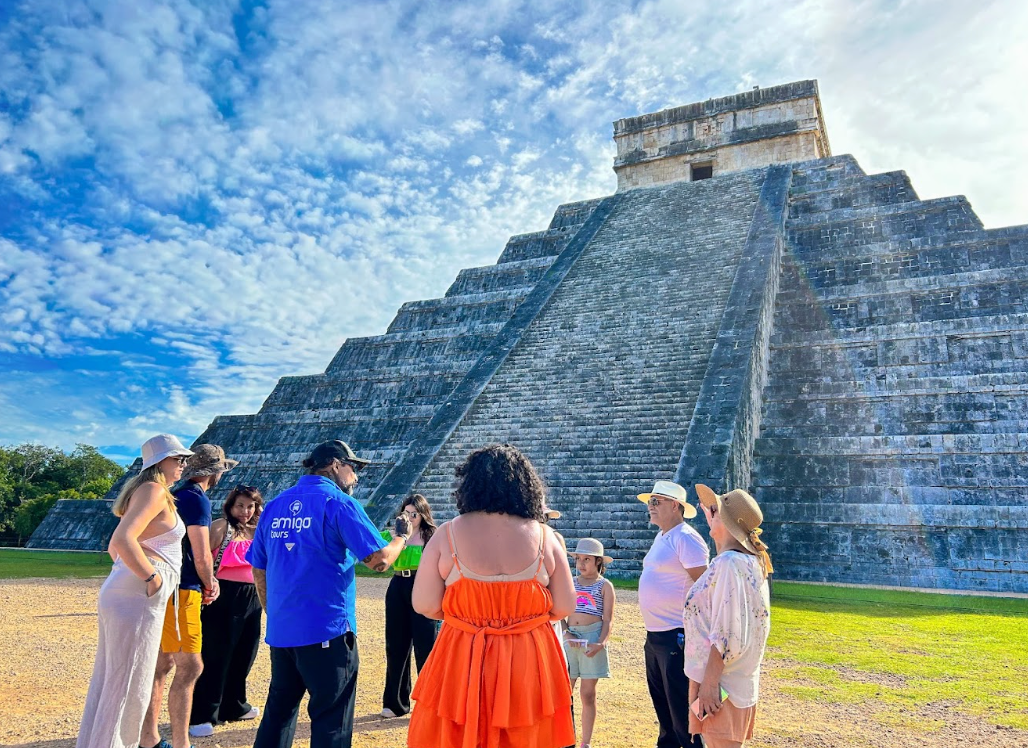
Amigo Tours is a significant addition to the group, known for its high-volume day tours and excursions. With a strong presence in Spanish-speaking markets and a growing footprint in the United Kingdom and Mexico, Amigo Tours provides the operational backbone for large-scale sightseeing. Their model relies on efficiency and accessibility, making them a preferred partner for major distribution platforms.
WalksDevour represents the merger of two well-known brands: Walks (formerly Walks of Italy) and Devour Tours. This entity specializes in food, culture, and walking tours, focusing on storytelling and deep-tissue immersion into local heritage. Walks gained international recognition for its exclusive access tours, such as early-entry visits to the Vatican Museums, while Devour Tours established itself as a leader in the culinary tourism space across Europe and North America.
Askos Tours rounds out the initial trio with a specialized focus on cultural and archaeological excursions. Based largely in Italy and specializing in sites like Pompeii and Herculaneum, Askos Tours utilizes professional archaeologists and historians as guides. This acquisition ensures that Flagship Group can cater to the "educational" and "luxury-intellectual" segments of the market, which have shown high resilience to economic fluctuations.
The Economic Context of the Experience Economy
The timing of Flagship Group’s entry into the market is backed by compelling data regarding consumer behavior. According to the "Experience Economy" reports by various financial institutions, global spending on experiences has outpaced spending on physical goods by a significant margin over the last three years. Research from the Mastercard Economics Institute indicates that travelers are increasingly prioritizing "moments over things," with spending on specialized tours and activities rising by double digits in major tourist hubs.
The global tours and activities market is estimated to be worth approximately $250 billion. However, unlike the airline or hotel sectors—which saw massive consolidation in the late 20th and early 21st centuries—the experiences sector remains 80% to 90% unbranded and small-scale. Flagship Group’s strategy mimics the successful "roll-up" models seen in the dental, veterinary, and HVAC industries, where private equity firms buy small, independent businesses to create a national or international brand that benefits from shared services such as human resources, legal, and advanced digital marketing.
Strategic Implications and the "Counter-AI" Play
One of the most notable aspects of Flagship Group’s positioning is the focus on the human element as a hedge against the rise of generative AI. As artificial intelligence becomes the primary interface for travel planning, booking, and customer service, the physical, in-person experience remains the one aspect of travel that cannot be digitized.
Industry experts argue that as the "digital" part of travel becomes a commodity, the "physical" part—the tour guide, the local storyteller, the tactile experience of a cooking class—becomes the premium product. By professionalizing the management of these human-led experiences, Flagship Group aims to create a "gold standard" of reliability. If a traveler knows that a tour operated by a Flagship-owned company will have a certain level of quality regardless of whether they are in Tokyo, Rome, or New York, the group builds brand equity that transcends the individual local operator.
Furthermore, the consolidation allows for better integration with OTAs like Viator, GetYourGuide, and Klook. These platforms often struggle with the "long tail" of thousands of small operators who may not use real-time booking software. Flagship Group can implement a unified tech stack across all its acquisitions, ensuring real-time availability and seamless API integration, which in turn drives higher conversion rates and better placement on search engines.
Chronology of Market Recovery and Investment
The path to this roll-up was paved by the specific trajectory of the travel industry’s post-pandemic recovery:
- 2021-2022: The Rebound Phase. As travel restrictions lifted, the "pent-up demand" or "revenge travel" phenomenon led to record-breaking summers for European and North American operators. However, many were still hampered by debt incurred during 2020.
- 2023: Stabilization of P&Ls. Tour operators began to show "clean" profit and loss statements, making them attractive targets for private equity valuation. The volatility of the previous years smoothed out into predictable growth patterns.
- Late 2023 – Early 2024: The Strategic Pivot. Institutional investors began looking for sectors that offered high margins and fragmented competition. Flagship Group finalized the negotiations for Amigo, WalksDevour, and Askos during this window.
- Present: Integration and Expansion. The current phase involves the integration of back-office functions while maintaining the unique "local flavor" of each brand.
Official Reactions and Industry Sentiment
While official statements from the individual founders of the acquired companies have focused on the benefits of scale, the broader industry sentiment is one of cautious optimism. Distributors have welcomed the move, noting that working with a single corporate entity that manages multiple high-quality brands reduces administrative overhead.
"The fragmentation of the tours and activities sector has always been its greatest strength and its greatest weakness," noted one industry consultant. "It provides the diversity of experience that travelers crave, but it creates a nightmare for quality control and distribution. If Flagship can maintain the soul of these small operators while providing the muscle of a global corporation, they will have a winning formula."
Charaf El Mansouri’s vision emphasizes that the roll-up is not about erasing the identity of local operators but about empowering them. By removing the burden of digital marketing, software procurement, and high-level financial planning from the local founders, those founders can return to focusing on the actual guest experience—the very thing that made their businesses successful in the first place.
Future Outlook for Flagship Group
Flagship Group’s current portfolio, covering North America, Europe, and Japan, is likely just the beginning. The group has indicated that the "thread" discovered during the Emily in Paris tours is a global phenomenon. Significant gaps remain in markets such as Southeast Asia, South America, and the Middle East, all of which are seeing rapid growth in international arrivals.
The success of this roll-up will ultimately be measured by the group’s ability to achieve "synergies"—a term often used in M&A that, in this context, means lowering the cost of customer acquisition through cross-selling. For example, a customer who has a positive experience with a WalksDevour food tour in Rome may be more likely to book an Amigo Tours excursion in Mexico City if they perceive them as part of the same trusted ecosystem.
As the travel industry continues to evolve, the move by Flagship Group suggests that the future of tours and experiences lies in a hybrid model: local in execution, but global in scale. The "experience roll-up" is no longer just a theoretical possibility; it is a functioning business reality that will likely prompt competitors and other private equity firms to look more closely at the treasures hidden within the world’s fragmented local tour markets.