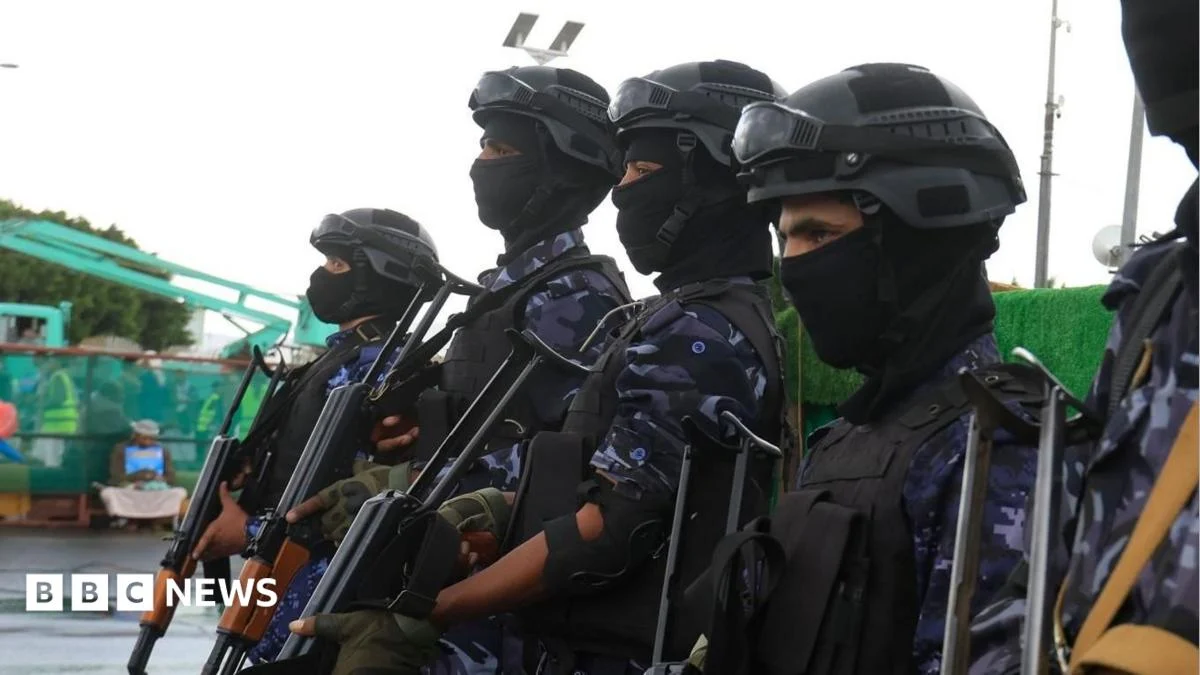
Foreign ministers from the Group of Seven (G7) nations have issued a forceful joint statement, unequivocally calling upon Iran to cease its alleged arming and support of Houthi rebels in Yemen. This urgent plea comes as the conflict in the war-torn nation witnesses a dangerous escalation, marked by renewed Houthi territorial gains along the strategically vital Red Sea coastline and a corresponding surge in attacks on Saudi Arabia. The G7, comprising the UK, Canada, France, Germany, Italy, Japan, and the United States, further condemned the Houthi aggressions "in the strongest terms," warning that the recent intensification of hostilities against Saudi-backed forces poses a significant threat to both regional and global energy security.
The pronouncement from the G7, delivered on the sidelines of the annual United Nations General Assembly (UNGA) in New York, underscores the international community’s profound alarm over the protracted Yemeni civil war and its expanding implications. Senior Iranian officials are slated to address the UNGA, making the timing of the G7 statement particularly pointed, effectively placing the issue of Iran’s role in the Yemen conflict firmly on the diplomatic agenda.
Mounting Crisis Along the Red Sea and Global Shipping Lanes
The recent Houthi advances have been particularly concerning due to their proximity to the Bab al-Mandab Strait, a narrow yet critical chokepoint connecting the Red Sea to the Gulf of Aden and the Arabian Sea. This strait is one of the world’s most vital maritime passages, through which an estimated 10-12% of global seaborne trade, including a substantial portion of the world’s oil supply, transits daily. Any disruption to shipping in this area has immediate and far-reaching consequences for international commerce, supply chains, and energy markets.
Reports indicate that thousands of refugees have been displaced from their homes in recent days, fleeing the advancing Iran-backed Houthi forces. The seizure of territory along the Red Sea coastline, particularly near the Bab al-Mandab Strait, not only exacerbates an already dire humanitarian crisis within Yemen but also presents a tangible threat to the safety and security of civilian shipping. The G7 ministers explicitly called "on the Houthis to immediately cease all military actions, all threats and attacks against civilian shipping, and to return to the political process in good faith." They articulated that these "reprehensible actions constitute a dangerous pattern of escalation that risks further exacerbating the conflict, undermining international trade and creating global economic instability."
Chronology of Escalation and International Responses
The current surge in hostilities is the latest chapter in a conflict that began in late 2014 when the Houthis seized control of the capital, Sanaa, prompting a Saudi-led coalition to intervene in March 2015 to restore the internationally recognized government.
- Late 2014: Houthi rebels, a Zaydi Shia group, seize Sanaa, triggering the civil war.
- March 2015: A Saudi-led coalition, backed by the US, UK, and France, launches military operations against the Houthis to support the legitimate Yemeni government.
- Ongoing: The conflict becomes a brutal proxy war, resulting in what the UN has described as one of the world’s worst humanitarian crises.
- Recent Weeks: Houthi forces launch a renewed offensive, gaining significant ground along Yemen’s Red Sea coastline, including strategic areas near the Bab al-Mandab Strait.
- Simultaneous Attacks: The Houthis intensify their cross-border drone and missile attacks against Saudi Arabian cities and infrastructure, including the capital Riyadh, targeting oil facilities, airports, and other vital sites.
- Saudi Retaliation: Saudi Arabia responds with hundreds of retaliatory air strikes across Yemen, exacerbating the cycle of violence.
- September [Current Year]: Amidst the escalating conflict, Saudi Arabia formally requests military assistance from international partners.
- September [Current Year]: The G7 foreign ministers convene on the sidelines of the UNGA, issuing their joint statement condemning Houthi actions and calling on Iran to end its support.
- September [Current Year]: The UK, France, and the US publicly consider or pledge support to Saudi Arabia, signaling a coordinated international response to bolster regional defenses.
International Support and Defensive Postures
In response to Saudi Arabia’s direct appeal for military support, several key international players have begun to outline their contributions. British Prime Minister Andy Burnham announced that the UK would provide "defensive air-to-air refuelling" support for Saudi Arabia. This aid involves the deployment of a single British Voyager aircraft, strategically based out of RAF Akrotiri in Cyprus. Burnham clarified that this decision was made following a formal request from Saudi Arabia for "military support," a request he approved on the advice of Defence Secretary Wes Streeting and Foreign Secretary Ed Miliband. This support is framed as a measure to enhance Saudi Arabia’s defensive capabilities against Houthi aerial threats, underscoring a commitment to regional stability without direct offensive involvement.
France has also indicated its readiness to contribute. A diplomatic source, speaking to AFP, confirmed that France has pledged support and is prepared to work on "securing" Saudi energy infrastructure through a "strictly defensive approach." This aligns with the broader international objective of protecting critical infrastructure and ensuring the unimpeded flow of global energy supplies. The emphasis on "defensive" measures by both the UK and France highlights a careful balancing act: providing assistance to an ally while seeking to avoid deeper entanglement in the offensive aspects of the Yemeni conflict.
Meanwhile, US media outlets have reported that Saudi Crown Prince Mohammed bin Salman has also sought military support from President Donald Trump. The New York Times reported that President Trump had been deliberating for weeks over the Saudi request for assistance in combating the Houthis. Earlier, President Trump had publicly stated on Fox News that he was in "deciding mode" as he weighed various options for the next steps in what he characterized as the "war against Iran," reflecting the broader geopolitical context of US-Iran tensions that often play out in proxy conflicts like Yemen. On Sunday, US embassies across the Middle East issued new security alerts, a clear indication of the heightened tensions and perceived threat posed by the intensified fighting between the Houthis and the Saudi-backed coalition.
The Iran Connection and the "Axis of Resistance"
A central theme of the G7’s statement, and indeed the broader international discourse surrounding the Yemen conflict, is the alleged role of Iran. The Houthis openly declare themselves to be an integral part of the "Iranian-led ‘axis of resistance’" against Israel, the US, and the wider West. This "axis" is a loose alliance of regional non-state and state actors, including groups such as Hamas in Palestine and Lebanon’s Hezbollah movement, who share an anti-Western and anti-Israeli ideology and are perceived to receive varying degrees of support from Tehran.
While the G7 and its allies point to substantial evidence of Iranian arms transfers and logistical support to the Houthis, Tehran has consistently denied supplying weapons to the group. Iran maintains that its support for the Houthis is purely political and spiritual, emphasizing shared ideological opposition to perceived Western hegemony and regional adversaries. However, reports from UN panels of experts, independent watchdogs, and Western intelligence agencies have frequently detailed the transfer of advanced weaponry, including ballistic missiles, drones, and anti-ship munitions, from Iran to the Houthis, in clear violation of UN Security Council resolutions. This discrepancy between Iranian denials and international accusations remains a significant point of contention and complicates efforts to de-escalate the conflict.
Humanitarian Catastrophe and Regional Stability
The humanitarian impact of the ongoing conflict in Yemen is nothing short of catastrophic. The UN estimates that millions of Yemenis face severe food insecurity, with a significant portion of the population on the brink of famine. The recent Houthi advances and retaliatory airstrikes have only worsened an already dire situation, leading to new waves of displacement. The country’s infrastructure, including healthcare facilities, water systems, and transportation networks, has been decimated, making access to basic necessities incredibly challenging. The G7’s reaffirmation of their "strong commitment to the unity, sovereignty, independence, and territorial integrity of Yemen" underscores the recognition that a stable and unified Yemen is essential for any lasting peace and the alleviation of human suffering.
Beyond Yemen’s borders, the conflict has profound implications for regional stability. The Red Sea and the Gulf region are critical arteries for global trade and energy, and any prolonged disruption or escalation risks wider regional conflagration. The proxy nature of the conflict, with Saudi Arabia and Iran supporting opposing sides, fuels a broader geopolitical rivalry that impacts security dynamics from the Arabian Peninsula to the Levant. The G7’s explicit concern for "regional and global energy security" is not merely rhetorical; it reflects a tangible fear of oil price spikes, supply chain disruptions, and increased insurance costs for shipping, all of which could have ripple effects on the global economy.
Outlook and Diplomatic Challenges
The G7’s unified stance sends a clear message to both the Houthis and Iran: the international community views the current escalation with extreme gravity and demands an immediate cessation of hostile actions and a return to diplomacy. The call for the Houthis to engage "in good faith" with the political process highlights the desire for a negotiated settlement, which has proven elusive despite numerous UN-led peace efforts.
The upcoming UN General Assembly provides a crucial platform for diplomatic engagement, though the prospects for a swift breakthrough remain challenging. Iran’s steadfast denial of direct military support to the Houthis, coupled with the Houthis’ emboldened military position, complicates mediation efforts. For a lasting peace to be achieved, all parties must commit to de-escalation, respect international law, and prioritize the well-being of the Yemeni people. The G7’s intervention aims to apply sustained pressure, signaling that the international community will not passively observe the further deterioration of the conflict and its broader consequences. The path forward will undoubtedly require persistent diplomacy, robust humanitarian aid, and a concerted effort to curb external interference, ultimately paving the way for a comprehensive political solution to Yemen’s prolonged agony.