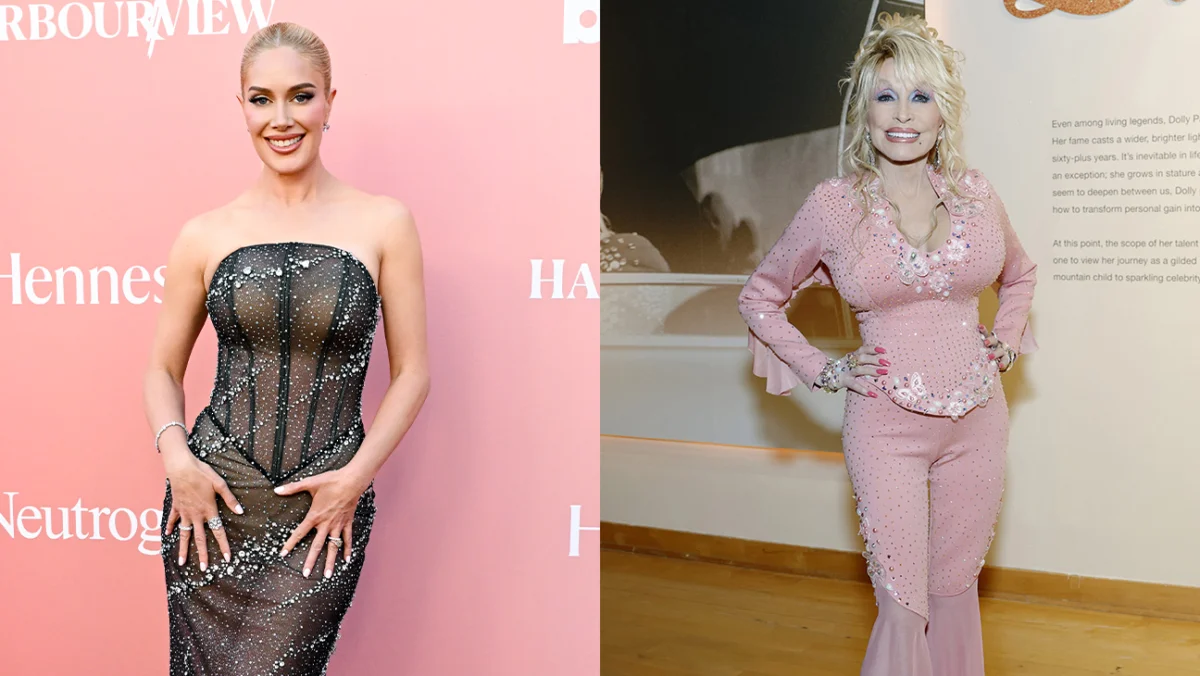
The passing of country music icon Dolly Parton has evoked a wave of tributes from across the entertainment spectrum, with many recalling her unique brand of warmth and wisdom. Among those sharing their poignant memories is Heidi Montag, the former star of MTV’s reality series The Hills, who has revealed a deeply personal anecdote about Parton’s kindness during one of the most challenging and heavily criticized periods of her own life. In a heartfelt post on X (formerly Twitter) on Friday night, Montag detailed how Parton offered her support and understanding when the reality television personality faced a torrent of public backlash following extensive plastic surgery procedures.
Montag’s recollection highlights a stark contrast to the often harsh and judgmental environment of the entertainment industry, particularly for public figures undergoing significant physical transformations. She stated that Parton was "one of the only people in the industry who didn’t take the opportunity to drag me down" during her post-surgery ordeal. This statement underscores the pervasive nature of criticism directed at individuals, especially women, who choose to alter their appearance, a phenomenon amplified in the age of social media and constant public observation.
The specific incident that Montag refers to occurred after she famously underwent ten plastic surgery procedures in a single day in 2009. The procedures included breast augmentation, a revision rhinoplasty (nose job), and a chin reduction, among others. At the time, Montag was at the height of her The Hills fame, and her physical changes were extensively documented on the show, leading to widespread media attention and intense public debate about her choices. The emotional toll of this scrutiny was palpable, even depicted in a particularly raw scene on the series where she revealed her altered appearance to her mother, eliciting a visibly pained reaction.
Montag’s memory of Parton’s specific words offers a profound insight into the country legend’s empathetic perspective. Parton, according to Montag, had remarked, "I had probably done the same thing if I was her age and could afford it, if I thought I needed it." This statement, delivered with Parton’s characteristic candor and lack of judgment, provided Montag with a crucial source of validation and comfort. It suggested a recognition of personal autonomy and the complex motivations that can drive individuals to seek cosmetic enhancements, particularly when coupled with the pressures of a highly visual industry.
Beyond this specific interaction, Montag also shared a much earlier and equally impactful memory of Parton’s presence in her life. She recalled an encounter from her childhood, stating, "Thank you Dolly. I remember when she came to my small town when I was seven years old, ate at my family restaurant, sang happy birthday to my Grammy, and it changed my life." This anecdote paints a picture of Parton as not just a celebrated artist, but as a figure who could profoundly touch the lives of ordinary people with her warmth and genuine engagement. For a young Montag, witnessing such a beloved national figure interact so personally with her family would undoubtedly have been a formative experience, cementing Parton as an enduring inspiration.
Dolly Parton, who passed away on Tuesday at the age of 80 after a battle with cancer, was known for her outspokenness and progressive views on a variety of topics, including plastic surgery. Throughout her illustrious career, she was refreshingly candid about her own cosmetic procedures. In her autobiography, Dolly: My Life and Other Unfinished Business, she famously wrote, "I have nips and tucks and trims and sucks, boobs and waist and butt and such, eyes and chin and back again, pills and peels and other frills, and I’ll never graduate from collagen." Her pragmatic philosophy was further articulated in the same passage: "Whatever you are comfortable with and can afford, you should do. Having had plastic surgery is something I am not embarrassed about." This open embrace of her choices, and her endorsement of others’ autonomy in making similar decisions, positioned her as a unique voice of acceptance in an often-judgmental world.
The Broader Context of Celebrity and Cosmetic Surgery
Heidi Montag’s experience with the intense scrutiny following her 2009 plastic surgery is emblematic of a larger cultural conversation surrounding cosmetic procedures, particularly among celebrities. In the late 2000s, the reality television boom brought unprecedented access into the lives of public figures, often magnifying their personal choices and subjecting them to relentless media dissection. Montag’s procedures, occurring at a time when such extensive, single-day transformations were less common and more stigmatized, placed her at the center of a media storm. The visual documentation on The Hills amplified the public’s perception and reaction, turning her physical appearance into a focal point of discussion and criticism.
Data from the American Society of Plastic Surgeons indicates a steady rise in the number of plastic surgery procedures performed annually in the years leading up to and following Montag’s surgeries. In 2009, over 10 million cosmetic surgical and minimally invasive procedures were performed in the United States, a number that has continued to grow, reaching over 15 million in recent years. This trend highlights a societal shift towards greater acceptance of cosmetic enhancements, yet the stigma, particularly for public figures, has persisted. Celebrities often face accusations of "unrealistic beauty standards," "vanity," or "self-mutilation," regardless of their personal motivations or satisfaction with the results.
Dolly Parton’s Legacy of Empathy and Autonomy
Dolly Parton’s response to Heidi Montag’s situation offers a compelling case study in celebrity influence and the power of empathetic engagement. Parton, a figure who herself has faced public commentary on her appearance over decades, chose to extend grace and understanding rather than judgment. Her statement, "I had probably done the same thing if I was her age and could afford it, if I thought I needed it," is remarkable for several reasons. Firstly, it humanizes the decision-making process behind cosmetic surgery, acknowledging that financial and age-related factors can play a role, alongside personal desire. Secondly, it implicitly validates Montag’s agency in making choices about her own body, a principle that Parton consistently championed throughout her life.
Parton’s consistent advocacy for personal choice and her candidness about her own journey with plastic surgery created a unique platform for destigmatization. She understood the pressures of maintaining a public image and the potential for self-consciousness. By openly discussing her own procedures and framing them as personal decisions, she offered a counter-narrative to the often-judgmental discourse surrounding cosmetic enhancements. This approach not only resonated with fans but also provided a model for how public figures could navigate these sensitive topics with honesty and self-acceptance.
The Lasting Impact of Parton’s Kindness
Heidi Montag’s decision to share this memory of Dolly Parton, particularly in the wake of the music legend’s death, speaks volumes about the enduring impact of such compassionate gestures. In an industry often characterized by competition and superficiality, Parton’s willingness to offer genuine support to someone undergoing immense public pressure was a rare and powerful act. It underscores the idea that true influence extends beyond artistic achievements to encompass the ability to uplift and support others.
Montag’s childhood memory of Parton’s visit to her hometown further illustrates the deep and long-standing connection she felt to the artist. The image of Parton singing "Happy Birthday" to her grandmother in a small-town restaurant humanizes the global superstar and emphasizes her ability to connect with individuals on a personal level. This early positive interaction likely laid the groundwork for Parton’s later ability to offer comfort during Montag’s most vulnerable moment.
The broader implications of Parton’s stance on plastic surgery and her interaction with Montag suggest a progressive approach to body positivity and personal autonomy. By framing cosmetic procedures as personal choices, she challenged societal norms that often dictated how women, in particular, should look and feel about their bodies. Her approach encouraged self-acceptance and the pursuit of personal comfort, rather than adherence to external ideals.
In conclusion, Heidi Montag’s tribute to Dolly Parton serves as a poignant reminder of the country music icon’s profound impact, not just through her music, but through her character and her unwavering commitment to kindness and empathy. Parton’s willingness to offer support and understanding during a period of intense public scrutiny for Montag highlights the transformative power of compassion. It also reinforces Parton’s legacy as a figure who consistently championed personal autonomy and challenged societal judgments, leaving an indelible mark on countless lives, both personally and through her public platform.