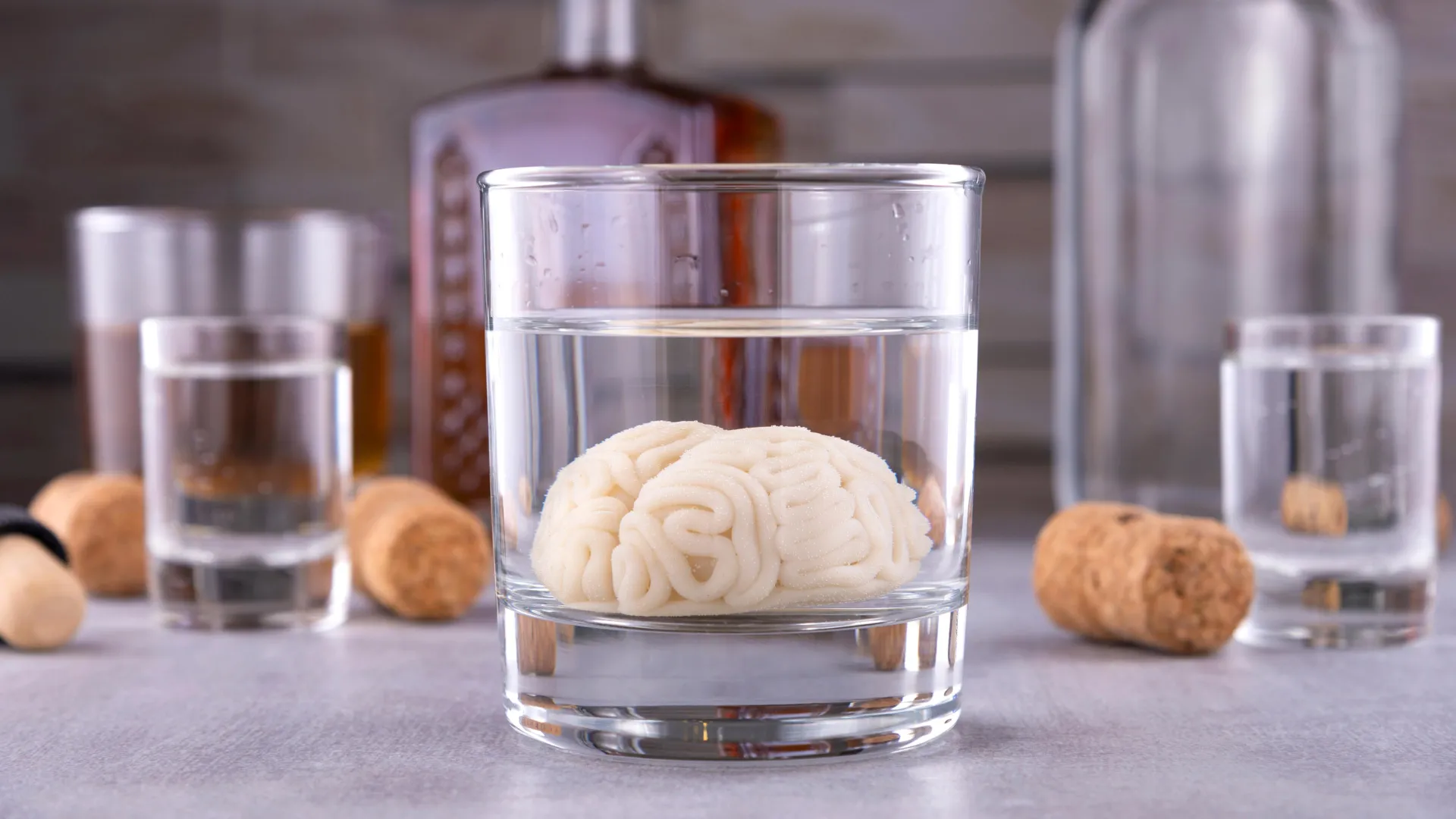
New research sheds light on the complex neurobiological processes that may underlie relapse in individuals struggling with alcohol use disorder (AUD), suggesting that even beneficial periods of abstinence could inadvertently heighten vulnerability. A study employing rodent models has identified specific brain activity patterns, particularly within the bed nucleus of the stria terminalis (BNST), that correlate with an increased propensity to resume drinking, even under aversive conditions. This discovery holds significant implications for understanding the persistent challenges of AUD treatment and for developing more targeted interventions.
For decades, alcohol abstinence has been unequivocally linked to improved health outcomes. However, addiction researchers have long posited that the neurobiological adaptations occurring during sobriety might paradoxically increase an individual’s risk of relapse. This theory suggests that the brain, having adapted to the presence of alcohol, may undergo changes that amplify craving and reward pathways when alcohol is reintroduced, or even when stimuli associated with alcohol are encountered. This study provides compelling evidence to support this hypothesis, moving beyond theoretical postulation to observable brain activity.
The research team embarked on a rigorous experimental design, exposing mice to a prolonged period of voluntary alcohol consumption, mimicking patterns seen in human AUD. This was followed by a mandatory abstinence phase. During this abstinence period, a subset of the mice exhibited a striking phenomenon termed "aversion-resistant alcohol intake." This means these mice continued to consume alcohol even when it was deliberately made unpalatable by the addition of quinine, a substance known for its intensely bitter taste. More concerningly, these same mice consumed significantly larger quantities of the bitter alcohol compared to control groups that did not undergo forced abstinence. These findings strongly indicate that periods of abstinence, while clinically desirable, may precipitate internal physiological challenges that contribute to the powerful drive for relapse in AUD.
The investigation then delved into the neural underpinnings of this observed behavior. Researchers meticulously monitored the activity of a specific cluster of neurons within the bed nucleus of the stria terminalis (BNST). This region of the brain, a small but critical structure, has previously been implicated in a spectrum of AUD-related symptoms, including heightened anxiety and depressive states, which often co-occur with and exacerbate alcohol dependence. The BNST is known to be a nexus for processing stress, reward, and aversion, making it a prime candidate for mediating the complex interplay between abstinence and relapse.
A pivotal observation emerged when the abstinent mice were reintroduced to the environment where alcohol had previously been accessible. Even though the dispensing spout now contained only plain water, these mice exhibited attempts to drink, a behavior directly linked to heightened activity within the BNST. This suggests that environmental cues associated with past alcohol consumption can trigger a powerful conditioned response, mediated by this specific brain region. Crucially, abstinent mice that had developed a preference for the bitter alcohol displayed a more than twofold increase in BNST activity compared to their counterparts who had not experienced forced abstinence. This stark difference underscores the significant neurobiological alterations that can occur during prolonged abstinence in susceptible individuals.
Perhaps the most significant finding is the observation of elevated BNST activity even before the abstinent mice were given access to the bitter alcohol. This proactive neural signaling suggests a potential predictive capability. It raises the possibility that monitoring BNST activity could serve as a valuable screening tool, identifying individuals at a higher risk of relapse when exposed to alcohol-related cues or opportunities. Such a predictive marker could revolutionize how clinicians approach AUD treatment, allowing for personalized interventions tailored to an individual’s specific neurobiological vulnerability.
The Public Health Imperative of Alcohol Use Disorder
The findings of this study arrive at a critical juncture in public health discourse. Alcohol misuse represents one of the most significant and persistent public health challenges in the United States. The detrimental health effects associated with excessive alcohol consumption are wide-ranging, impacting nearly every organ system and contributing to a substantial burden of disease. Despite the well-documented and severe consequences, public perception often underestimates the seriousness of alcohol-related harms, a phenomenon exacerbated by its pervasive presence in social and cultural settings.
The statistics paint a stark picture of the scale of the problem. In 2024, deaths directly attributed to alcohol use were an alarming 4.5 times higher than those linked to opioid overdoses. While harm reduction strategies, a cornerstone of opioid use disorder treatment, are increasingly being explored for AUD, abstinence remains the dominant and often singular therapeutic goal in many treatment paradigms. This emphasis on abstinence, while understandable given its association with positive health outcomes, may overlook the underlying neurobiological hurdles that make sustained sobriety exceptionally challenging for many.
The prevalence of alcohol consumption and AUD is substantial. Over 80% of Americans aged 12 and older report consuming alcohol at some point in their lives. Of these, approximately 10% develop alcohol use disorder, a figure that translates to nearly 30 million individuals in the U.S. requiring treatment. The chronic nature of AUD, characterized by compulsive alcohol seeking and use despite harmful consequences, necessitates ongoing support and effective treatment strategies.
However, the current clinical landscape faces significant limitations in predicting who will develop AUD and, crucially, who is at the highest risk of relapse. While the Food and Drug Administration has approved several medications to aid in AUD treatment, the number of individuals diagnosed with this condition has remained stubbornly high, and in fact, has effectively doubled in the U.S. since 1999. This escalating trend underscores the urgent need for more nuanced and effective approaches. Developing improved strategies for identifying individuals at risk and supporting them through various treatment pathways, rather than solely focusing on abstinence as an immediate end goal, could significantly enhance treatment outcomes.
Unraveling the BNST’s Role in Alcohol Dependence
Despite the compelling evidence linking BNST activity to relapse-like behaviors in mice, several critical questions remain unanswered. The precise role of the BNST in the multifaceted behaviors associated with AUD is not fully elucidated. Researchers are still striving to understand the specific neurochemical and electrical signals that drive the observed increase in activity within this brain region during periods of abstinence and relapse. Furthermore, identifying which distinct populations of neurons within the BNST encode these specific activities is a key area of ongoing investigation. Unlocking these precise mechanisms could pave the way for novel therapeutic targets, potentially leading to pharmacological or neuromodulatory interventions that specifically address the heightened vulnerability associated with abstinence.
The Path Forward: From Mouse Models to Clinical Application
The advent of advanced neuroscience tools has empowered researchers to precisely manipulate the activity of specific neuronal populations in animal models. Leveraging these cutting-edge techniques, the research team is actively working to decipher the intricate role the BNST plays in the compulsion to drink alcohol, even when faced with detrimental consequences. This line of research aims to establish a clearer cause-and-effect relationship between BNST function and relapse-associated behaviors.
In parallel, ongoing research by Jennifer Blackford and her colleagues offers a promising bridge to human application. This research is investigating BNST activity in individuals with AUD who are currently in early stages of abstinence. If similar patterns of elevated BNST activity are observed in human subjects, it would represent a significant validation of the mouse model findings and a substantial step towards translating this discovery into clinical practice. A subsequent critical step would involve rigorously testing the potential of BNST activity as a screening method within clinical trials. Such trials could explore whether identifying individuals with heightened BNST activity allows for the implementation of tailored interventions, potentially including enhanced relapse prevention strategies or adjusted medication regimens, thereby improving the likelihood of sustained recovery. The ultimate goal is to move from understanding the biological underpinnings of relapse to developing actionable clinical tools that can prevent it, offering a renewed sense of hope to millions affected by alcohol use disorder.