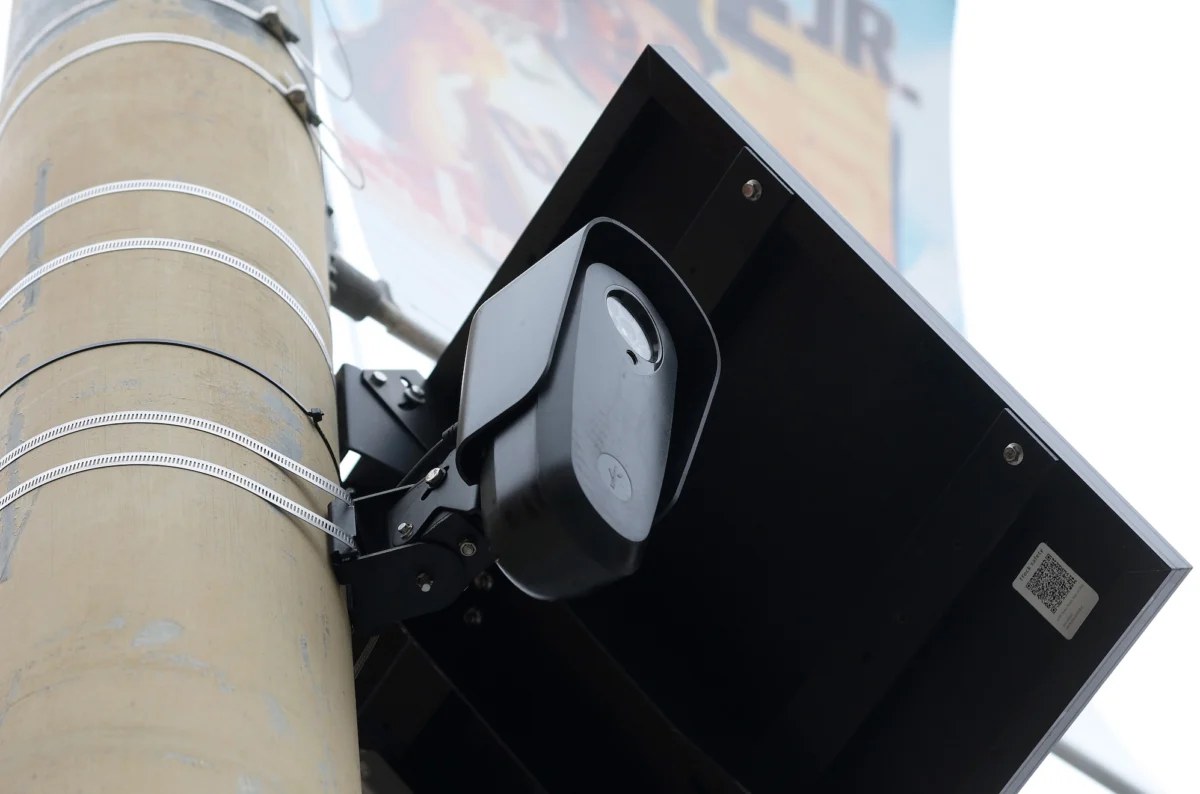
The landscape of public sentiment regarding mass surveillance technology has undergone a significant reversal, with a new national survey revealing that more Americans now oppose the presence of license plate reader (LPR) cameras in their communities than support them. This pivotal shift, documented in an exclusive YouGov survey shared with The Washington Post, marks a critical juncture for companies like Flock Safety, which operates a vast network of automated surveillance systems across the United States, and for the broader debate on privacy versus public safety.
The comprehensive YouGov survey, which polled 20,000 individuals across the U.S., found that 46% of respondents expressed opposition to the deployment of Flock Safety’s surveillance cameras in their local areas, while only 38% indicated support. This represents a stark departure from just a year prior, when a majority of respondents had voiced approval for such technologies. The eight-point margin of opposition underscores a burgeoning public unease, signaling a potential tipping point in the widespread adoption and acceptance of ubiquitous surveillance tools. Furthermore, the survey highlighted a crucial disconnect between the perceived benefit and actual feeling of security, with a greater number of respondents stating that the presence of these surveillance systems would not, in fact, make them feel any safer. This finding directly challenges a core justification often presented by proponents of LPR technology – that it enhances community safety and reduces crime.
The Rise of Flock Safety and its Pervasive Network
Flock Safety has emerged as one of the most prominent and visible players in the burgeoning surveillance industry, distinguishing itself through the extensive deployment of its AI-powered automated license plate recognition cameras. The company boasts an operational footprint exceeding 120,000 LPRs across the United States, a network that continuously scans and records vehicle license plates, along with other distinguishing characteristics such as vehicle make, model, and color. These cameras are strategically placed on street poles, at intersections, and within residential areas, often contracted by local law enforcement agencies, homeowners’ associations, and private businesses.
The core function of Flock’s technology involves capturing images of passing vehicles, converting license plate numbers into text, and cross-referencing them against various databases, including law enforcement hotlists for stolen vehicles, Amber Alerts, and vehicles associated with known suspects. This data is then stored and made accessible to subscribing entities, typically for a period of 30 days, although the specifics can vary by contract and jurisdiction. The company markets its systems as a critical tool for deterring crime and assisting in investigations, providing law enforcement with real-time alerts and forensic evidence to track vehicles and apprehend suspects. The sheer scale of Flock’s network means that a vehicle could potentially be tracked across multiple cities and states, creating a detailed digital trail of its movements. This extensive reach, while pitched as a crime-fighting advantage, has simultaneously become the focal point of intense privacy concerns.
A Chronology of Growing Backlash and Shifting Fortunes
The current wave of public opposition is not an isolated event but rather the culmination of a series of controversies and critical developments that have steadily eroded public trust and challenged the unchecked expansion of surveillance technology.
- Early 2020s: Flock Safety experiences rapid growth, capitalizing on rising crime concerns in many communities and offering an ostensibly affordable and effective solution to law enforcement and neighborhood groups. Initial public perception is largely positive or neutral, with many viewing the cameras as a modern tool for crime prevention.
- 2025 – Emergence of Abuse Reports: Reports begin to surface detailing instances of police abusing access to Flock’s surveillance data. These reports range from unauthorized queries to the use of LPR data for purposes beyond serious criminal investigations, such as tracking individuals for minor infractions or personal reasons. These revelations spark early waves of concern among civil liberties advocates and privacy-conscious citizens.
- Late 2025 – Community Rejections and Contract Cancellations: Following the reports of misuse and growing privacy worries, dozens of U.S. communities initiate public debates, leading to local governments rejecting proposals for new Flock camera installations or, in some cases, outright canceling existing contracts. This period marks the first tangible pushback against the company’s expansion, indicating that the initial widespread acceptance was not unconditional. The image of a Flock camera in San Francisco, dated November 2025, serves as a visual reminder of the company’s pervasive presence even as the tide began to turn.
- July 13, 2026 – LAPD Contract Expiration: A major blow to Flock Safety’s credibility and operational footprint occurs when the Los Angeles Police Department (LAPD), one of the largest law enforcement agencies in the country, allows its contract with the surveillance giant to expire. The LAPD explicitly cites "serious concerns over civil liberties and privacy" as the primary reason for not renewing the agreement. This decision by a prominent police department sends a strong signal to other municipalities and adds significant weight to the arguments of privacy advocates.
- August 23, 2026 – Flock CEO Calls for "Compromise": Amid the intensifying backlash and mounting public scrutiny, including an increase in acts of vandalism targeting Flock cameras, CEO Garrett Langley issues a public statement calling for a "compromise" between surveillance and privacy. This public appeal signifies an acknowledgment from the company’s highest level that its business model and operational practices are facing unprecedented challenges and that a recalibration of strategy might be necessary to regain public trust.
- August 28, 2026 – YouGov Survey Results Published: The release of the YouGov survey data, showing a clear majority of Americans now opposing Flock’s cameras, provides quantitative evidence of the shift in public opinion, solidifying the narrative of a growing national privacy movement. This survey acts as a definitive measure of the public’s current stance, reflecting the impact of the preceding controversies and discussions.
Voices from the Debate: Industry, Law Enforcement, and Civil Liberties
The escalating debate around Flock Safety’s technology has drawn strong reactions and articulated positions from various stakeholders, highlighting the complex ethical and practical considerations at play.
Flock Safety’s Defense and Proposed Safeguards:
When approached for comment, Flock Safety maintains that there remains "wide support" for its surveillance technology, particularly among communities grappling with crime. However, the company also conceded that "support isn’t unconditional," a significant admission that suggests an understanding of the public’s evolving expectations for transparency and accountability. In response to the criticisms, Flock has recently rolled out new "safeguards" designed to address privacy concerns. While the specific details of these safeguards were not fully elaborated, industry observers infer they likely include measures such as enhanced data encryption, stricter audit trails for data access, limitations on data retention periods, more explicit policies on data sharing with third parties, and possibly public-facing transparency portals detailing camera locations and data usage policies. CEO Garrett Langley’s call for "compromise" can be seen as an attempt to bridge the divide, suggesting a willingness to adapt its practices to meet public demands for greater privacy protections, perhaps to avoid more stringent regulation or outright bans. The company argues that its technology is a force for good, providing invaluable assistance to law enforcement in solving serious crimes and recovering stolen property.

Civil Liberties Advocates’ Counter-Argument:
Leading civil liberties organizations, most notably the American Civil Liberties Union (ACLU), have vehemently rejected Flock’s new safeguards as largely insufficient. The ACLU has publicly stated that these updates "amount to little" and that Flock Safety "remains a major threat to civil liberties." Their critique centers on several fundamental objections:
- Mass Surveillance: The ACLU argues that even with safeguards, the sheer volume of data collected by Flock’s 120,000+ cameras constitutes mass surveillance, tracking the movements of innocent people without suspicion. This creates a pervasive chilling effect on freedom of association and movement.
- Potential for Misuse and Abuse: Despite audit trails, the inherent power of the system creates opportunities for abuse, whether by individual officers, private entities, or through mission creep where the data is used for purposes far removed from serious crime prevention.
- Data Sharing: Concerns persist about how Flock’s data might be shared with federal agencies like Immigration and Customs Enforcement (ICE), potentially leading to the targeting and deportation of undocumented individuals.
- Lack of Transparency and Accountability: Critics argue that the decision-making process for deploying these cameras often lacks robust public input, and the mechanisms for accountability when misuse occurs are often opaque or insufficient.
- Disproportionate Impact: There are concerns that LPR cameras are often deployed more heavily in lower-income or minority communities, exacerbating existing inequalities in policing and surveillance.
Law Enforcement’s Perspective:
While the LAPD’s decision to sever ties with Flock underscores significant concerns within some police departments, many other law enforcement agencies continue to advocate for the use of LPR technology. Proponents within policing highlight the undeniable utility of these systems in specific scenarios: rapidly identifying stolen vehicles, locating vehicles associated with Amber Alerts for missing children, and tracking down suspects in violent crimes. They argue that LPRs are a force multiplier, allowing departments with limited resources to conduct investigations more efficiently and effectively. For many, the ability to quickly obtain a last-known location of a vehicle involved in a crime is a game-changer that significantly aids in apprehension and recovery efforts. However, the LAPD’s experience serves as a cautionary tale, demonstrating that even departments that recognize the crime-fighting potential are increasingly weighing it against the substantial risks to civil liberties and public trust.
Broader Implications: The Future of Surveillance, Privacy, and Public Trust
The turning tide of public opinion against ubiquitous surveillance cameras has profound implications for the future of the surveillance industry, individual privacy rights, and the delicate balance between security and liberty.
For Flock Safety and the Surveillance Industry:
The YouGov survey results, coupled with significant contract losses and public criticism, signal a challenging road ahead for Flock Safety and other companies operating in the LPR space. The industry can expect:
- Increased Scrutiny and Regulation: Public opposition often precedes legislative action. Local, state, and potentially federal lawmakers may feel compelled to introduce stricter regulations governing the deployment, data retention, access, and sharing practices of LPR technology.
- Pressure for Transparency and Accountability: Companies will face mounting pressure to be more transparent about their data practices, algorithm biases, and to implement robust, independently verifiable accountability mechanisms for misuse.
- Market Contraction in Privacy-Conscious Areas: It is likely that communities with strong privacy advocates or a demonstrated public aversion to surveillance will become harder markets for LPR companies to penetrate, potentially leading to a more fragmented and geographically uneven adoption landscape.
- Innovation in Privacy-by-Design: To survive and grow, companies may need to pivot towards developing technologies that incorporate "privacy-by-design" principles from the outset, focusing on less invasive data collection or anonymization techniques, though this presents significant technical and ethical challenges for LPR systems.
For Civil Liberties and Privacy Advocates:
This shift in public opinion represents a significant victory for civil liberties and privacy advocates. It validates years of advocacy and education efforts, demonstrating that the public is increasingly aware of and concerned about the implications of mass surveillance. This momentum is likely to embolden further challenges against existing surveillance systems and to push for stronger legal protections for digital privacy. The debate is moving beyond simply whether these technologies are effective at crime fighting, to whether they are acceptable in a democratic society that values individual freedoms.
For Public Safety and Law Enforcement:
Law enforcement agencies that rely heavily on LPR technology may need to re-evaluate their strategies. If public opposition leads to widespread bans or severe restrictions, departments will have to explore alternative methods for crime detection and investigation. This could spur innovation in less intrusive policing technologies or a renewed focus on community-based policing and traditional investigative techniques. The challenge for law enforcement will be to find tools that are effective without eroding the public trust that is essential for effective policing. The LAPD’s decision highlights that some departments are already grappling with this difficult trade-off.
The "Compromise" Conundrum:
CEO Garrett Langley’s call for "compromise" underscores the central dilemma. Can a true balance be struck between the undeniable utility of surveillance technology in certain criminal investigations and the fundamental right to privacy and freedom from pervasive monitoring? Achieving such a compromise would likely require far more than superficial safeguards. It would necessitate open, transparent public discourse, robust legal frameworks, independent oversight, and a commitment from technology providers to prioritize ethical design and use over pure expansion.
As the debate continues to unfold, the newly revealed public sentiment serves as a powerful indicator that the era of unchecked surveillance expansion may be drawing to a close. The conversation has decisively shifted, demanding greater accountability, transparency, and a fundamental re-evaluation of how technology intersects with the cherished values of privacy and civil liberties in a modern society. The coming years will reveal whether this public outcry translates into meaningful policy changes and a new direction for the surveillance industry.