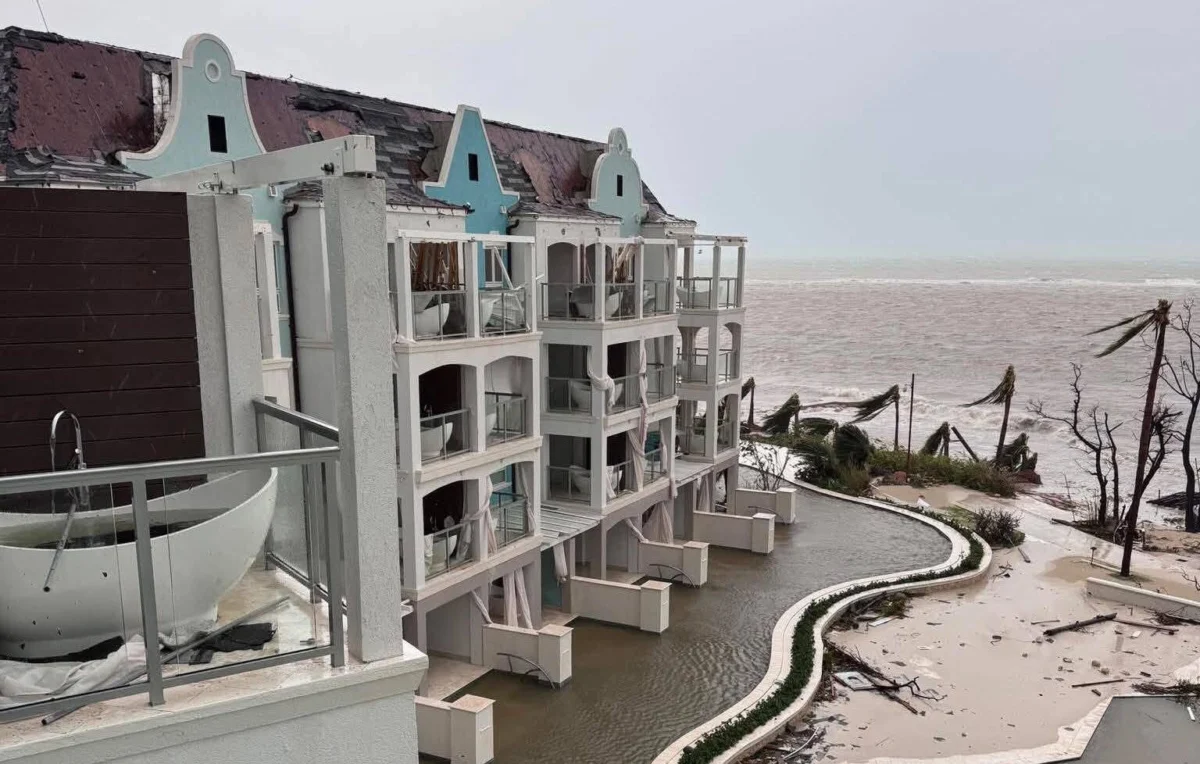
The 2025 end-of-year financial filings from Host Hotels & Resorts have provided a stark quantification of the physical and fiscal toll extreme weather events are exerting on the luxury hospitality sector. For years, the mention of hurricanes in annual reports was largely relegated to boilerplate risk disclosure—standardized language intended to shield companies from liability without necessarily signaling immediate financial peril. However, the specific disclosure regarding The Don CeSar in St. Pete Beach, Florida, following the 2024 hurricane season, marks a shift toward more granular and transparent accounting of climate-related impacts. According to the filing, the back-to-back strikes of Hurricanes Helene and Milton resulted in an estimated $105 million in damages to the iconic "Pink Palace," a figure that includes both immediate remediation and long-term restoration costs.
The scale of this loss highlights a growing challenge for Real Estate Investment Trusts (REITs) and hospitality operators: the increasing difficulty of bundling climate-related repair costs into general capital expenditure (capex) projects without drawing significant investor scrutiny. For Host Hotels & Resorts, the damage at The Don CeSar represented a substantial portion of its 2025 financial activity, necessitating a reallocation of resources and a protracted operational shutdown that tested the resilience of one of Florida’s most historic coastal assets.
The One-Two Punch: Contextualizing the 2024 Hurricane Season
The damage sustained by The Don CeSar was the result of an exceptionally volatile period for the Florida Gulf Coast. In late September 2024, Hurricane Helene made landfall as a Category 4 storm, bringing record-breaking storm surges to the Tampa Bay area. While the storm’s eye passed well offshore, its massive wind field and water displacement inundated coastal properties, including those in St. Pete Beach. Less than two weeks later, while recovery efforts were in their infancy, Hurricane Milton struck the region, compounding the structural stress and water damage already present.
For The Don CeSar, a landmark property that has stood since 1928, the dual impact of Helene and Milton was unprecedented in the modern era of its ownership. The $105 million damage estimate provided by Host Hotels & Resorts reflects the severity of these events. Of that total, approximately 30%—or $31.5 million—was dedicated specifically to remediation. This phase involved the immediate stabilization of the structure, water extraction, mold prevention, and the removal of debris to prevent further degradation of the historic site.
Financial Breakdown: Capex Allocation and Insurance Recoveries
The financial impact of the 2024 hurricanes extended beyond the physical repairs of a single property, influencing the broader capital strategy of Host Hotels & Resorts. In 2025, the company reported spending roughly $75 million on hurricane-related and other restoration work across its portfolio. This expenditure accounted for approximately 11.6% of the company’s overall capital expenditure for the year, a significant diversion of funds that might otherwise have been directed toward property enhancements, acquisitions, or technology upgrades.
The recovery of these costs is a multi-faceted process involving complex insurance claims. At the time of its 2025 filing, Host Hotels & Resorts had received $73 million in insurance payouts. While this figure covers a substantial portion of the physical damage, it also includes compensation for business interruption—the lost revenue resulting from the hotel’s inability to host guests during the peak of the recovery period.
The gap between the $105 million in estimated damages and the $73 million in insurance proceeds received thus far suggests a lingering financial tail. In the hospitality industry, insurance settlements for major catastrophic events often take years to fully resolve, particularly when disputes arise over "wind versus water" damage or when multiple storms occur in quick succession, complicating the determination of which event caused specific structural failures.
Chronology of Recovery: From Shutdown to Reopening
The operational timeline for The Don CeSar serves as a case study in the logistical hurdles of modern disaster recovery. Following the strikes in late 2024, the property was forced into a total operational shutdown. The closure lasted through the first quarter of 2025, a period that typically includes some of Florida’s most profitable weeks due to spring break and the winter tourism surge.
- September–October 2024: Hurricanes Helene and Milton impact the St. Pete Beach area. The Don CeSar sustains major damage to ground-level facilities, landscaping, and mechanical systems.
- November 2024–February 2025: Intensive remediation and stabilization efforts. Host Hotels & Resorts mobilizes specialized restoration teams to preserve the historic integrity of the "Pink Palace."
- March 2025: The hotel achieves a partial reopening. Limited guest rooms and essential services are restored, allowing the property to begin generating revenue again, albeit at reduced capacity.
- April–June 2025: Restoration of secondary amenities, including beachfront access and select dining venues.
- Third Quarter 2025: All amenities, including full-service spas, luxury dining, and event spaces, are officially reopened to the public.
This timeline illustrates that even for a well-capitalized REIT like Host, the path from a major climate event to full operational capacity is a marathon rather than a sprint. The loss of nearly six months of full operations at a premier asset represents a significant blow to annual RevPAR (Revenue Per Available Room) metrics for the regional submarket.
Strategic Shift Toward Climate Resilience
The 2025 filing does more than just tally losses; it provides insight into Host Hotels & Resorts’ long-term strategy for mitigating climate risk. The company disclosed that over the six-year period leading up to December 2025, it had allocated approximately 8% of its total capital expenditure toward making its properties more resilient to climate-related threats.
Resilience spending in the hospitality sector often includes the installation of heavy-duty storm shutters, the elevation of critical mechanical and electrical systems (such as HVAC units and backup generators) above projected flood levels, and the reinforcement of roofing and building envelopes. For coastal properties like The Don CeSar, these investments are no longer considered optional enhancements but are essential for maintaining insurability and asset value.
Analysts note that Host’s proactive allocation of 8% of capex toward resilience is higher than many of its peers, reflecting a portfolio that is heavily weighted toward coastal luxury markets. However, as the $105 million damage figure demonstrates, even robust resilience measures cannot entirely eliminate the risk posed by Category 4 and 5 hurricanes.
Official Reactions and Industry Implications
While Host Hotels & Resorts maintains a disciplined, data-centric approach in its public filings, the broader hospitality industry has reacted to the Don CeSar figures with a mix of concern and pragmatism. Industry analysts at firms like Truist Securities and Baird have noted that the "Don CeSar event" serves as a benchmark for the true cost of hurricane damage in the current inflationary environment. The rising costs of specialized labor and construction materials in Florida have made restoration significantly more expensive than it was even five years ago.
Inferred reactions from the local tourism board and St. Pete Beach officials suggest that the reopening of The Don CeSar was viewed as a critical milestone for the region’s economic recovery. As an "anchor" property, its closure had a ripple effect on local businesses, from airport transfer services to local restaurants and boutiques that rely on the hotel’s affluent clientele.
From a broader perspective, the implications of this disclosure are three-fold:
- Valuation Adjustments: Investors are increasingly looking beyond current earnings to assess the "climate adjusted" value of coastal real estate. Properties in high-risk zones may face higher discount rates in valuation models to account for the probability of $100 million-plus damage events.
- Insurance Market Volatility: The $73 million payout received by Host highlights the critical role of the reinsurance market. As payouts for hospitality assets continue to climb, premiums for Florida coastal properties are expected to remain on an upward trajectory, potentially squeezing margins for smaller operators who lack Host’s scale.
- Transparency Standards: The detail provided in the 2025 filing sets a new standard for how hospitality REITs discuss climate impact. Moving away from "boilerplate" language toward specific asset-level damage reporting allows for better-informed market pricing and risk assessment.
Conclusion: The New Reality for Coastal Hospitality
The $105 million damage to The Don CeSar is a definitive signal that the "business as usual" approach to climate risk is no longer viable. For Host Hotels & Resorts, the 2024 hurricane season was an expensive lesson in the volatility of the Gulf Coast, but it also served as a catalyst for more transparent financial reporting and a reinforced commitment to resilience.
As the hospitality industry moves further into the decade, the ability to withstand and rapidly recover from extreme weather will become a primary competitive advantage. The story of The Don CeSar in 2025 is not just one of destruction, but of the immense capital and strategic planning required to preserve the world’s most iconic travel destinations in an era of environmental uncertainty. The "Pink Palace" has returned to its former glory, but the financial fingerprints of Hurricanes Helene and Milton will remain on the balance sheets of its owners for years to come.