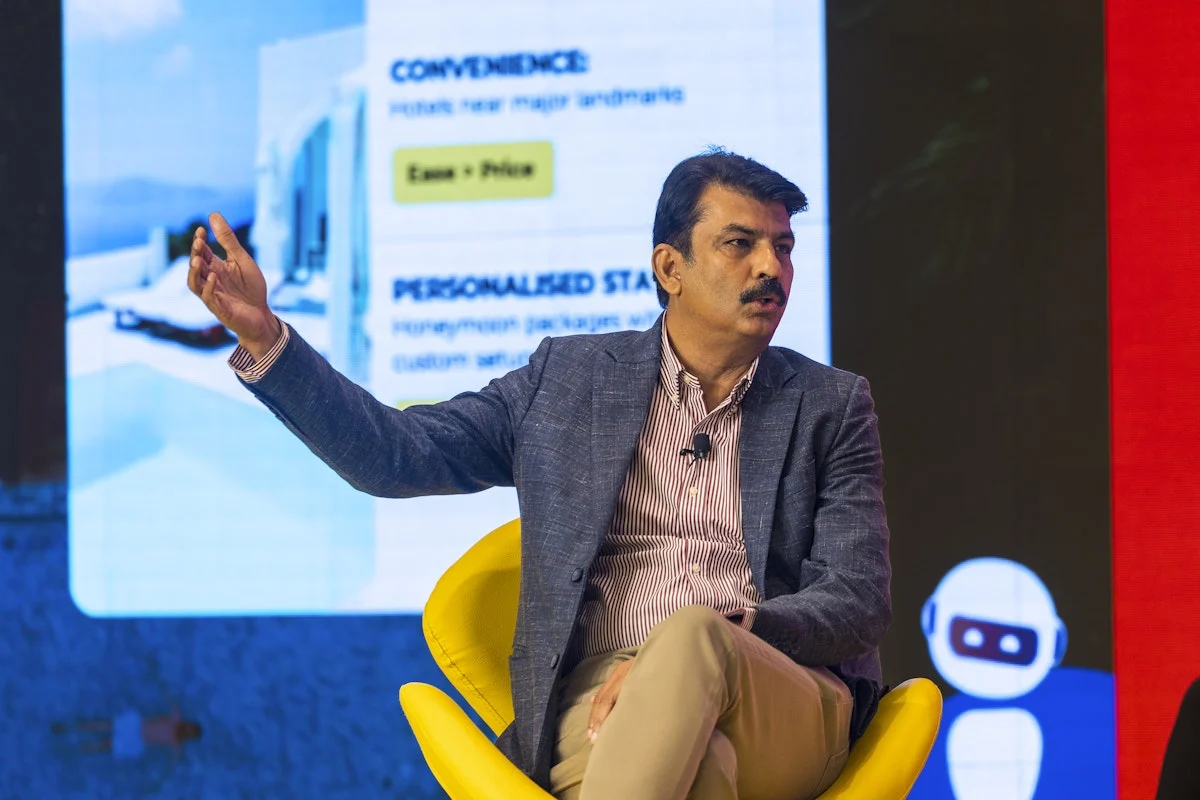
MakeMyTrip, India’s preeminent online travel platform, has signaled a significant shift in the nation’s travel patterns as the domestic aviation market navigates a period of notable volatility. Despite a contraction in flight capacity and a rise in airfares, the underlying demand for travel among Indian consumers remains robust, manifesting in a strategic pivot toward alternative modes of transportation and domestic destinations. During a recent earnings briefing, the company revealed that the aviation sector experienced a year-over-year decline in flight frequency of approximately 2% during the last quarter—a development that Mohit Kabra, Group Chief Operating Officer of MakeMyTrip, described as "unprecedented" in the context of India’s traditionally high-growth aerospace market.
The decline in flight availability has not translated into a broader travel recession. Instead, the Indian traveler is demonstrating high levels of adaptability, increasingly opting for short-haul, drivable vacations and premium ground transportation. This shift is particularly evident in the luxury bus and intercity cab segments, which recorded growth rates between 30% and 40% over the same period. As the aviation industry grapples with supply chain bottlenecks and geopolitical disruptions, the broader travel ecosystem is being reshaped by a consumer base that prioritizes experiences over specific modes of transit.
The Aviation Contraction: Supply Chain and Geopolitical Headwinds
The reported 2% decline in flight capacity is a departure from the double-digit growth trajectories that characterized the Indian aviation sector over the past decade. Several factors have converged to create this supply-side constraint. Foremost among these are the persistent technical challenges involving Pratt & Whitney engines, which have led to the grounding of a significant portion of the narrow-body fleets operated by major domestic carriers like IndiGo. This grounding has effectively capped the number of daily departures, leading to higher load factors but restricted overall volume.
Furthermore, the industry is witnessing a strategic recalibration of international routes. MakeMyTrip noted that Indian airlines are trimming their wide-body, long-haul aircraft operations. This reduction in capacity is particularly acute on westbound routes, where geopolitical instability in West Asia has forced airlines to reroute flights, increasing fuel consumption and operational costs. The consequence for the consumer has been a sustained increase in international airfares and a reduction in direct connectivity to European and North American hubs. Analysts suggest that these constraints are unlikely to ease in the immediate future, as global supply chains for aircraft components remain stretched and engine manufacturers work through a backlog of repairs.
The Pivot to Road: The Rise of Luxury Buses and Intercity Cabs
As flight prices climb and availability fluctuates, the "road trip" has transitioned from a niche leisure activity to a mainstream travel solution. MakeMyTrip’s data highlights a surge in the popularity of luxury bus bookings, driven by the modernization of India’s highway infrastructure and the entry of premium bus operators offering sleeper berths, air conditioning, and digital booking conveniences. The 30% to 40% growth in this segment suggests that travelers who were previously "priced out" of the aviation market are not canceling their plans but are instead upgrading their ground travel experience.
Intercity cabs have also emerged as a preferred mode for family and group travel. The convenience of door-to-door service, combined with the rising cost of short-haul flights to regional airports, has made private vehicle hire a competitive alternative. This trend is most pronounced in travel corridors connecting major urban centers like Delhi-Jaipur, Mumbai-Pune, and Bangalore-Mysore. The growth in this sector is further bolstered by the "drivable vacation" trend, where travelers seek out boutique resorts and homestays within a five-to-six-hour radius of their primary residence.
Chronology of Market Shifts: 2023 to 2024
The current state of the market is the result of a series of compounding events over the last eighteen months. To understand the "unprecedented" nature of the current flight contraction, it is necessary to look at the timeline of the Indian travel landscape:
- Early 2023: Post-pandemic travel demand reached record highs, leading to "revenge travel" surges. However, supply chain issues began to surface as engine manufacturers struggled to meet maintenance schedules.
- May 2023: The insolvency and subsequent grounding of Go First airlines removed a significant portion of domestic capacity, putting immediate upward pressure on fares across popular routes.
- Late 2023: Geopolitical tensions in the Middle East began to impact flight paths. Airlines were forced to adopt longer routes to avoid conflict zones, leading to increased technical stops and higher ticket prices for international travelers.
- Early 2024: Major domestic carriers confirmed the continued grounding of dozens of aircraft due to engine inspections. MakeMyTrip began observing a stabilization in hotel bookings but a distinct softening in flight volumes.
- Mid-2024: The current reporting period confirms the 2% YoY decline in flights. The shift toward luxury buses and intercity cabs becomes the dominant trend for the monsoon and shoulder travel seasons.
Demographic Drivers: Gen Z and the Social Traveler
A critical component of MakeMyTrip’s analysis focuses on the evolving behavior of younger demographics. Generation Z (Gen Z) travelers are increasingly moving away from traditional solo or family travel structures in favor of group exploration. This demographic is less deterred by the logistical challenges of ground transport, often viewing the journey as a social extension of the vacation itself.
Gen Z travelers are also driving the demand for "alternative" destinations—locations that offer high visual appeal for social media but are accessible via road or bus rather than expensive air routes. This group prioritizes flexibility and experiential value, often choosing to spend a larger portion of their budget on high-quality accommodation or local activities while economizing on the mode of transport. The rise of "hostel culture" and organized group tours for young adults has provided a cushion for the travel industry, ensuring that total passenger numbers remain high even as flight numbers dip.
Official Responses and Industry Sentiment
While airline executives have expressed concern over the "supply-side shocks," travel aggregators like MakeMyTrip are focusing on diversifying their service offerings to capture the shifting demand. Mohit Kabra’s comments reflect a broader sentiment within the travel tech sector: the need to provide a multi-modal platform that can pivot as quickly as the consumer does.
Industry analysts from firms like CAPA India (Centre for Aviation) have echoed these findings, noting that while the appetite for travel is "inelastic," the choice of destination and transport is highly "elastic" based on price and convenience. The consensus among market observers is that the Indian travel market is entering a "K-shaped" phase, where premium international travel remains the province of the affluent, while the burgeoning middle class drives growth in the domestic road and rail sectors.
Supporting Data: Financial and Operational Metrics
The financial health of the travel sector remains surprisingly resilient despite the aviation slump. MakeMyTrip reported that while the flight segment saw a contraction in volume, other segments provided significant offsets. Key data points from the recent market analysis include:
- Gross Bookings: Despite flight declines, total gross bookings across the platform have shown steady growth, fueled by higher average transaction values in the hotel and packages segment.
- Accommodation Growth: Bookings for alternative accommodations, including villas and homestays, have outpaced traditional hotel growth, reflecting the preference for "drivable" secluded vacations.
- Bus Segment Revenue: The bus ticketing business has become a major contributor to the company’s bottom line, benefiting from the 40% surge in demand for intercity travel.
- International Fares: Average ticket prices for westbound international flights have seen a 15% to 20% increase compared to pre-geopolitical disruption levels, leading to a shift in international interest toward "visa-on-arrival" destinations in Southeast Asia and Central Asia.
Broader Impact and Future Implications
The current trends suggest a long-term structural change in how Indians approach travel. The reliance on aviation as the primary driver of tourism growth is being challenged by the efficiency and increasing luxury of ground transport. This has significant implications for infrastructure planning; the government’s focus on the "Bharatmala" project and the development of high-speed expressways is likely to further accelerate the shift toward road-based tourism.
For the aviation industry, the challenge remains one of capacity restoration. Until the engine issues are resolved and the global geopolitical climate stabilizes, airlines will likely continue to prioritize high-yield routes over volume, potentially keeping airfares elevated for the foreseeable future. This "new normal" of high-cost flying may solidify the luxury bus and private cab sectors as permanent fixtures of the Indian travel landscape rather than temporary substitutes.
In conclusion, while the 2% decline in flights represents a rare moment of contraction for Indian aviation, the travel industry at large is proving its durability. By embracing multi-modal transport and catering to the experiential demands of Gen Z, companies like MakeMyTrip are navigating the "rough period" by following the traveler, even when that traveler chooses the highway over the sky. The resilience of the Indian wanderer ensures that while the method of movement may change, the momentum of the industry remains forward-looking.