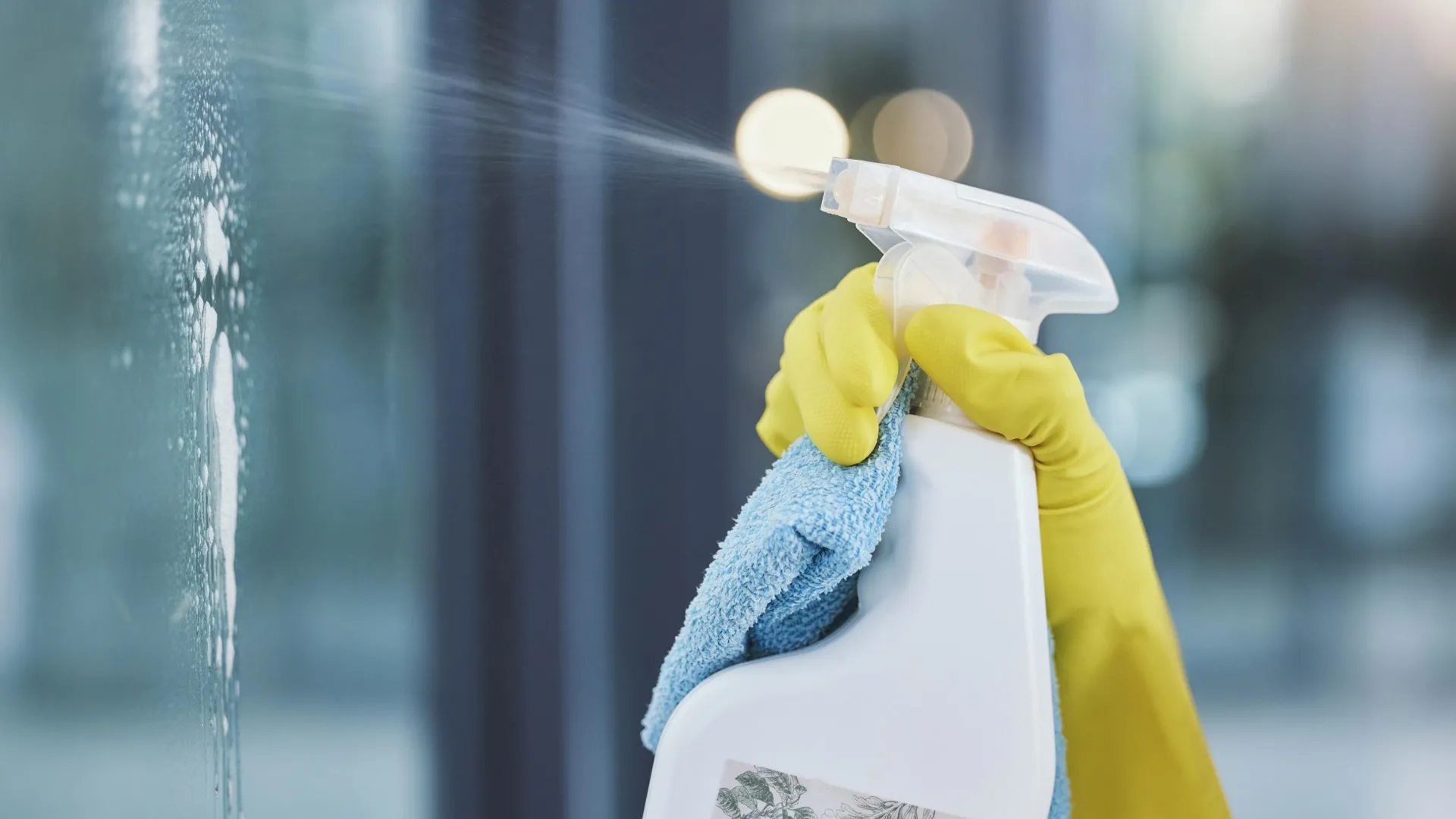
A pleasant aroma in a room, often associated with a sense of cleanliness, can mask a complex chemical process occurring in the air. Research spearheaded by Brandon Boor at Purdue University reveals that fragrant compounds released from both conventional cleaning agents and natural essential oil-based products can react rapidly indoors, generating nanoparticles. These minuscule particles, if inhaled, possess the alarming capability to penetrate deep into the human respiratory system, posing potential health risks.
The findings, presented at the fall meeting of the American Chemical Society (ACS) during the "Healthy Indoor Spaces: Bridging the Microbiome and Chemistry" symposium, underscore a critical paradox: while cleaning is essential for hygiene, it can simultaneously create invisible air pollution. "Importantly, cleaning removes viruses and bacteria from surfaces, but it can also generate invisible air pollution," stated Boor, an Assistant Professor of Civil and Construction Engineering at Purdue University, specializing in indoor air quality. "There’s no visible dust or smoke in the air, but these particles are forming."
The Invisible Threat: Nanoparticles from Everyday Cleaning
Boor elaborated on the concerning implications, stating, "We showed that indoor ozone reactions with fragrances from cleaning produce nanoparticles that carry a respiratory dose comparable to, or greater than, what you would experience from standing outside along a busy road." He emphasized the deceptive nature of this pollution, noting, "The particles are different in terms of their composition, but the total dose can be higher. You’re not seeing smoke, dust, or haze in the air. Instead, you think the air smells great so it must be clean."
The impetus for this investigation arose during the COVID-19 pandemic, a period when indoor cleaning and disinfection practices intensified globally. Boor and his colleague, Nusrat Jung, also an Assistant Professor of Civil and Construction Engineering at Purdue, observed the pervasive use of strongly fragranced products. "That’s often to create a pleasant smellscape in the indoor space," Boor explained. "But clean air should not smell like highly concentrated citrus fruit. It should not really smell of anything."
Natural Chemistry Amplified Indoors
The scientific understanding of this phenomenon draws parallels with atmospheric chemistry observed in natural environments. For decades, atmospheric scientists have known that volatile organic compounds (VOCs) emitted by plants, such as terpenes like pinene from pine trees, can react with ozone in the air. These reactions are a natural process that contributes to the formation of tiny airborne particles, which can eventually coalesce and grow to sizes that play a role in cloud formation. However, this process typically occurs slowly in outdoor environments due to the relatively low concentrations of terpenes.
Indoors, the scenario is dramatically different. Scented cleaning products are designed to release these fragrance compounds, including terpenes, as they evaporate from sprayed droplets or cleaned surfaces. Common cleaning liquids contain a variety of terpenes and related compounds, such as pinene (pine), limonene (citrus), thymol (thyme), and linalool (lavender). During cleaning, the airborne concentrations of these compounds can surge dramatically, reaching levels tens or even hundreds of times higher than those typically measured in natural forest environments.
Recreating Reality in a Controlled Environment
To simulate real-world conditions, the Purdue research team conducted experiments within a specially designed model home on the university’s campus. This meticulously crafted structure featured a functional kitchen, wood flooring, and a bathroom, enabling the researchers to replicate typical household cleaning activities. They utilized both conventional scented liquid cleaning products and botanical-based disinfectant sprays and wipes.
The experimental results unequivocally demonstrated that the fundamental chemical processes responsible for nanoparticle formation in outdoor atmospheres could occur indoors with significantly greater speed and at much higher concentrations. This amplified indoor chemistry carries potentially significant implications for human exposure.
The Scale of Particle Production
Routine cleaning tasks, from mopping floors to wiping countertops with scented products, were found to generate billions, and in some cases, trillions, of airborne particles. The exact number of particles produced varied depending on the specific product used. The vast majority of these particles fell into the nanoparticle or ultrafine particle category, measuring between a mere 1 to 30 nanometers in diameter.
A critical concern is that these ultrafine particles often reside below the detection limits of common at-home air quality monitors. This means that individuals may be completely unaware of the significant increase in particle concentrations occurring in their living spaces. The research revealed that ordinary cleaning activities could temporarily elevate ultrafine particle levels above those typically measured in outdoor environments.
Health Implications of Ultrafine Particles
The minuscule size of these particles is a key factor in their health implications. Ultrafine particles have the capacity to deposit throughout the entire respiratory tract, reaching the deepest regions of the lungs. Once embedded in the lung tissue, they can trigger irritation and inflammation, contributing to respiratory distress. Furthermore, some studies suggest that these particles may even have the potential to enter the bloodstream, leading to systemic health effects.
One of the most striking revelations from the research was the remarkable speed of this particle formation process. Nanoparticle nucleation and subsequent growth were observed to occur within mere minutes. "By the time you finish cleaning up an indoor space, you’ve already formed a lot of nanoparticles and inhaled them," Boor commented, highlighting the immediacy of the exposure.
The Ozone Factor: A Potent Catalyst
Further research conducted by Boor and Professor Ernest Blatchley at Purdue explored the synergistic effects of scented cleaning products and germicidal far-UV (UV-C) lamps, devices increasingly used for indoor air disinfection. This combination was found to create particularly conducive conditions for nanoparticle formation.
UV-C lamps, when interacting with oxygen in the air, can generate ozone. In the experimental model home, the simultaneous use of scented cleaners and UV-C lamps led to a measurable increase in ozone concentrations, reaching approximately 20 to 40 parts per billion. While these levels were comparable to, and in some cases below, outdoor ozone concentrations recorded during the experiments, their presence indoors alongside high terpene concentrations significantly intensified nanoparticle production. This synergistic effect raised substantial concerns regarding the cumulative particulate matter inhaled by occupants.
Strategies for Reducing Exposure
Boor emphasized that the objective of this research is not to discourage cleaning, which remains a vital practice for public health in removing harmful viruses and bacteria from surfaces. Instead, the findings aim to empower consumers with knowledge to make informed choices and adopt practices that mitigate exposure to the secondary air pollution generated during the cleaning process.
The researchers have put forth several actionable recommendations to reduce exposure:
- Opt for Unscented Products: Prioritizing unscented cleaning agents and air fresheners significantly reduces the introduction of VOCs that can react to form nanoparticles.
- Enhance Ventilation: Utilizing exhaust fans in kitchens and bathrooms, and opening windows whenever weather permits, can effectively dilute indoor air and remove airborne pollutants.
- Avoid Ozone-Generating Devices: When using scented cleaning products, it is advisable to refrain from using devices that intentionally generate ozone, such as certain air purifiers or UV-C lamps that produce ozone as a byproduct.
Broader Implications and Future Directions
The implications of this research extend beyond individual homes. As indoor air quality becomes a more prominent focus in public health discussions, understanding the sources and mechanisms of indoor pollution is paramount. The study by Boor and his team provides crucial data that can inform building design, product formulation, and public health advisances.
The findings suggest a need for a re-evaluation of the safety assumptions surrounding fragranced products commonly used in homes, schools, and workplaces. The potential for these everyday items to contribute to a significant burden of respiratory exposure warrants further investigation and public awareness campaigns.
The research was supported by a National Science Foundation Faculty Early Career Development Program (CAREER) grant and the Alfred P. Sloan Foundation, underscoring the significance and recognition of this important area of study. The collaborative efforts of graduate and undergraduate students at Purdue University were instrumental in the successful execution of the "tiny house" experiments.
The abstract of the study, titled "Indoor atmospheric nanoparticle formation from scented cleaning products," further details the methodology and findings, highlighting the rapid nucleation rates and condensational growth rates observed indoors, which often exceeded typical outdoor values by orders of magnitude. The abstract also points to the potential for these nanoparticles to deposit efficiently throughout the human respiratory system, leading to inhalation dose rates comparable to or exceeding those from primary combustion sources like traffic emissions. This comprehensive body of work positions indoor surface cleaning and disinfection as significant drivers of indoor atmospheric nanoparticle formation, underscoring the necessity for improved building ventilation, advanced air cleaning technologies, and thoughtful product formulation to safeguard human health from secondary pollutants.