Geneva – A United Nations fact-finding mission has issued a stark warning, asserting that civilians in Iran are trapped in a dire predicament, facing gross human rights violations and crimes against humanity perpetrated by their own government, alongside the lethal consequences of the nation’s ongoing conflict with the United States and Israel. The mission’s latest report to the UN Human Rights Council, released Thursday, meticulously details two distinct but equally devastating crises unfolding simultaneously, painting a grim picture of suffering from both internal repression and external warfare.
The independent experts on the three-member mission meticulously investigated two of the deadliest attacks on civilians that occurred amidst the conflict, attributing responsibility for these incidents to the United States. Concurrently, their findings extensively document the Iranian authorities’ brutal suppression of widespread domestic protests, concluding that the state’s actions constitute crimes against humanity. This dual indictment underscores a deeply complex and perilous environment for the Iranian populace, caught between state-sponsored violence and the collateral damage of geopolitical strife.
The February 28th Strikes: Civilian Targets and Allegations of War Crimes
The UN fact-finding mission focused significant attention on events of February 28, the date widely cited as the commencement of an escalated war between the US and Israel against Iran. Two particular incidents from that day, resulting in substantial civilian casualties, were subject to intense scrutiny.
The Minab Primary School Tragedy:
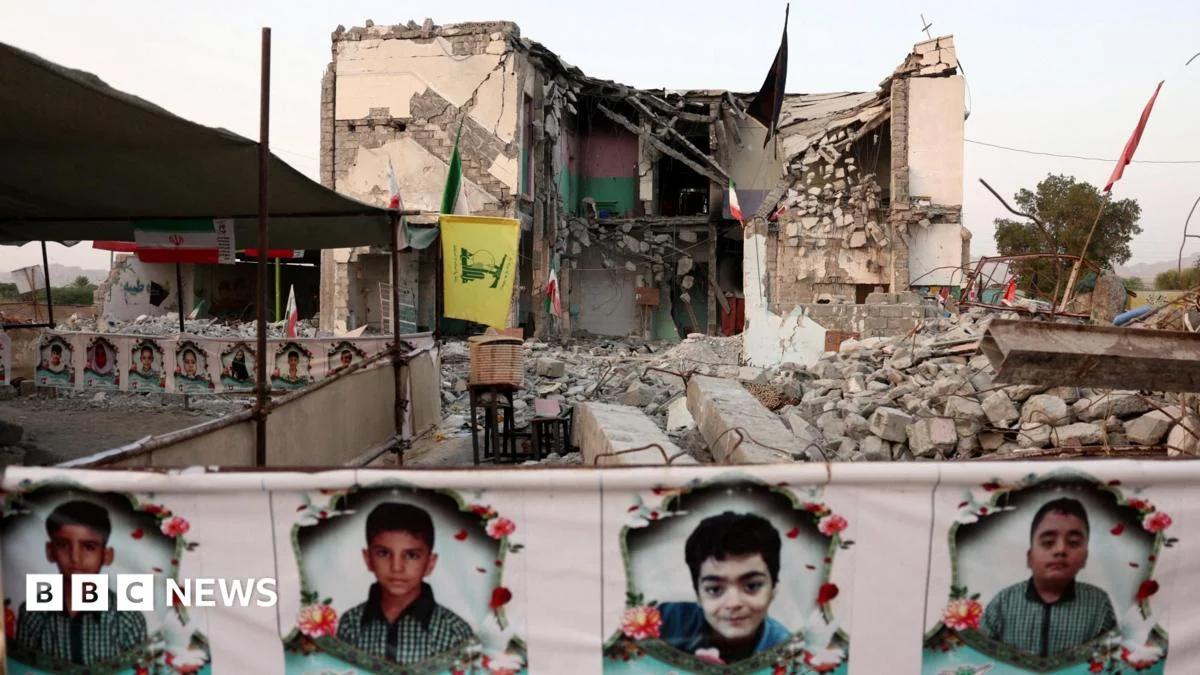
One of the most devastating incidents investigated by the mission involved a missile strike on Shajareh Tayyebeh Primary School in the southern Iranian town of Minab. Local authorities reported a horrific toll: at least 156 people killed, including a staggering 120 children. The mission’s experts confirmed that the school was situated adjacent to an Islamic Revolutionary Guard Corps (IRGC) naval complex, which was also targeted in the broader assault that day. However, their investigation found that the school itself was "clearly identifiable" as a civilian structure, and crucially, "no information indicated that it was used for military purposes."
The experts presented compelling evidence to support their conclusion that the strike on the school was carried out by the United States. This evidence included media reports indicating that a preliminary US military inquiry had found US forces responsible for the attack. Furthermore, the fact that Tomahawk missiles were used in the strike was a critical piece of the puzzle; the mission highlighted that the US is the only party to the conflict known to possess and deploy these advanced, long-range cruise missiles. Tomahawk missiles, known for their precision strike capabilities, are typically launched from naval vessels or submarines, or from strategic bombers, and are designed to hit specific targets. The mission’s finding that the school was the "intended point of impact," rather than a result of an errant strike or collateral damage from the attack on the adjacent IRGC complex, was based on survivor accounts indicating the school was struck twice. This suggests a deliberate targeting, directly contradicting international humanitarian law concerning the protection of civilians and civilian infrastructure during armed conflict.
The Lamerd Sports Complex Attack:
On the same day, February 28, another strike caused significant civilian harm in the town of Lamerd. Precision Strike Missiles (PrSM), a new generation of tactical ballistic missiles, reportedly dispersed clouds of tungsten pellets over a sports complex and a residential area. This attack resulted in the deaths of at least 21 civilians, including seven children, according to local authorities. Similar to the Minab incident, the fact-finding mission’s experts determined that the sports complex was "clearly identifiable" and that there was "no information indicated it was used for military purposes."
The experts again concluded that there were reasonable grounds to believe the strike was carried out by the US, citing the exclusive possession of PrSM missiles by the United States among the parties involved in the conflict. PrSMs are designed to provide long-range precision fires and are highly destructive, especially when equipped with specific warheads like those dispersing tungsten pellets, which can cause widespread damage to a broad area. The use of such a weapon in a civilian-populated area, especially against an undisputed civilian target, raises severe questions about adherence to the principles of distinction and proportionality under international humanitarian law.
Allegations of War Crimes and US Denials:
In both the Minab and Lamerd incidents, the fact-finding mission’s experts unequivocally stated there were "reasonable grounds to believe that the US committed the war crime of launching an indiscriminate attack resulting in loss of life or injury to civilians or damage to civilian objects." Indiscriminate attacks are defined under international humanitarian law as those which are not directed at a specific military objective, or which employ a method or means of combat which cannot be directed at a specific military objective, or whose effects cannot be limited as required by international humanitarian law. Such attacks are strictly prohibited and constitute war crimes.
The United States military has yet to release the full findings of its investigation into the Minab strike, a delay that has drawn criticism and fueled speculation. Defence Secretary Pete Hegseth, while not directly addressing the Minab incident’s specifics, has publicly stated that the US military would "never target civilian targets." Regarding the Lamerd strike, the US military has gone further, denying any strikes on Lamerd that day and disputing reports identifying the weapon used as a PrSM. These categorical denials stand in stark contrast to the detailed findings and conclusions of the UN fact-finding mission, setting the stage for a potential international legal and diplomatic confrontation over accountability for these civilian deaths.
Iran’s Domestic Crisis: A Brutal Crackdown and Crimes Against Humanity
Beyond the external conflict, the UN fact-finding mission’s report delves into Iran’s severe internal human rights crisis, focusing on the violent repression of mass protests that engulfed the nation in December 2025 and January 2026. This period marked an "unprecedented escalation" in government crackdowns, characterized by a level of brutality and systemic violence not seen in previous waves of dissent.
Context of the Protests:
While the report does not detail the specific triggers, the December 2025 and January 2026 protests were part of a recurring pattern of widespread public unrest in Iran, often fueled by a combination of economic grievances, political disenfranchisement, and social restrictions. Past protests, such as those in 2019 and 2022, have seen similar, albeit less severe, state responses. The 2025-2026 demonstrations, however, appear to have reached a new intensity, prompting a correspondingly extreme government reaction. These protests typically represent a broad cross-section of Iranian society, including students, women, ethnic minorities, and working-class citizens, all voicing discontent with the ruling establishment.
Methods of Repression:
The mission documented extensive and systematic human rights violations during the crackdown:
- Widespread Use of Lethal Force: Security personnel were reported to have positioned themselves on rooftops and other elevated positions, firing assault rifles directly into crowds of unarmed protesters. This tactic, designed to maximize casualties, resulted in mass killings and injuries. Witnesses, health workers, and victims’ families provided harrowing accounts of these targeted killings.
- Targeting of Vulnerable Body Parts: Protesters sustained severe wounds to the head, chest, and eyes from metal shotgun pellets, with many suffering permanent blindness. This suggests a deliberate intent to inflict debilitating injuries, a tactic previously observed in other authoritarian crackdowns.
- Attacks on Healthcare Facilities: As the repression escalated, security forces systematically attacked healthcare facilities. Wounded demonstrators seeking medical aid were reportedly beaten and arrested, and some healthcare workers were also detained. This created a climate of fear, deterring victims from seeking life-saving care and further compounding the humanitarian crisis. Such actions are a grave violation of medical neutrality and international human rights principles.
- Mass Arrests and Torture: Tens of thousands of people were detained during the protests. The mission found that these detainees faced systematic torture, prolonged solitary confinement, and denial of legal counsel. Methods of torture often include physical beatings, psychological abuse, and other inhumane treatment aimed at extracting confessions or punishing dissent. The denial of legal representation, particularly during initial detention, severely undermines due process and increases the vulnerability of detainees to abuse.
- Escalation of Death Penalty: The government has since intensified its use of the death penalty against protesters, with at least 29 men executed following expedited trials on charges connected to the unrest. These trials often lack transparency, due process, and independent legal oversight, raising serious concerns about their fairness and adherence to international legal standards for capital punishment. The use of the death penalty as a tool for political repression is a particularly egregious human rights violation.
Contested Casualty Figures:
The exact death toll from the crackdown remains fiercely disputed. The fact-finding mission noted that independent verification was not possible, but there were "strong grounds to believe that it was significantly higher than the official figure of 3,000." The Iranian government’s official count, moreover, largely identified the deceased as members of the security forces or bystanders, a narrative that stands in stark contrast to independent assessments. The US-based Human Rights Activists News Agency (Hrana), a respected monitoring group, has independently confirmed the killing of more than 7,000 people, almost all of whom were identified as protesters. This vast discrepancy underscores the challenge in obtaining accurate information from within Iran and highlights the government’s attempts to control the narrative.
Conclusion of Crimes Against Humanity:
Based on the overwhelming evidence, the fact-finding mission’s experts concluded that Iranian authorities had committed "many gross human rights violations" during the crackdown. More gravely, they determined that these violations amounted to "the crimes against humanity of murder, imprisonment and other severe deprivation of physical liberty, torture, and other inhumane acts, committed as part of a widespread and systematic attack directed against a civilian population." The designation of "crimes against humanity" carries immense legal weight under international law, signifying particularly grave offenses committed as part of a systematic policy against a civilian population, regardless of whether a state of armed conflict exists.
Official Reactions and Broader Implications
The Iranian authorities have consistently denied allegations of widespread repression, instead accusing the US and Israel of "fomenting the unrest" and blaming the deaths on what they described as "terrorists" and "rioters." This narrative seeks to externalize blame and delegitimize the protest movement, painting it as a foreign-backed conspiracy rather than an organic expression of domestic discontent. This stance makes accountability within Iran highly improbable in the near term.
The UN fact-finding mission’s report carries significant implications on multiple fronts. Legally, the findings of war crimes and crimes against humanity could lay the groundwork for future international accountability mechanisms, although pursuing such avenues often faces considerable political and jurisdictional hurdles. The International Criminal Court (ICC) has specific jurisdiction, and while Iran is not a signatory to the Rome Statute, the UN Security Council could refer situations to the ICC, or national courts could pursue universal jurisdiction cases. However, the current geopolitical climate makes such actions complex.
Geopolitically, these findings further exacerbate tensions between Iran and Western powers, particularly the US and Israel. The attribution of civilian deaths to US strikes, combined with Iran’s internal abuses, paints all parties in a negative light regarding their adherence to international law and human rights. It could complicate any future diplomatic efforts and deepen the mistrust between these nations. The report serves as a powerful reminder of the human cost of both direct military conflict and state repression, placing immense pressure on the international community to respond effectively.
For the Iranian people, the report underscores the profound and multi-faceted challenges they face. Caught between a government willing to use extreme violence to maintain power and the devastating impact of external military operations, their suffering is immense. The mission’s call to action is implicit: urgent international attention and pressure are needed to protect civilians and ensure accountability for egregious violations of human rights and international law, regardless of the perpetrator. The dual crises in Iran represent a severe test for the international human rights system and global commitment to peace and justice.