


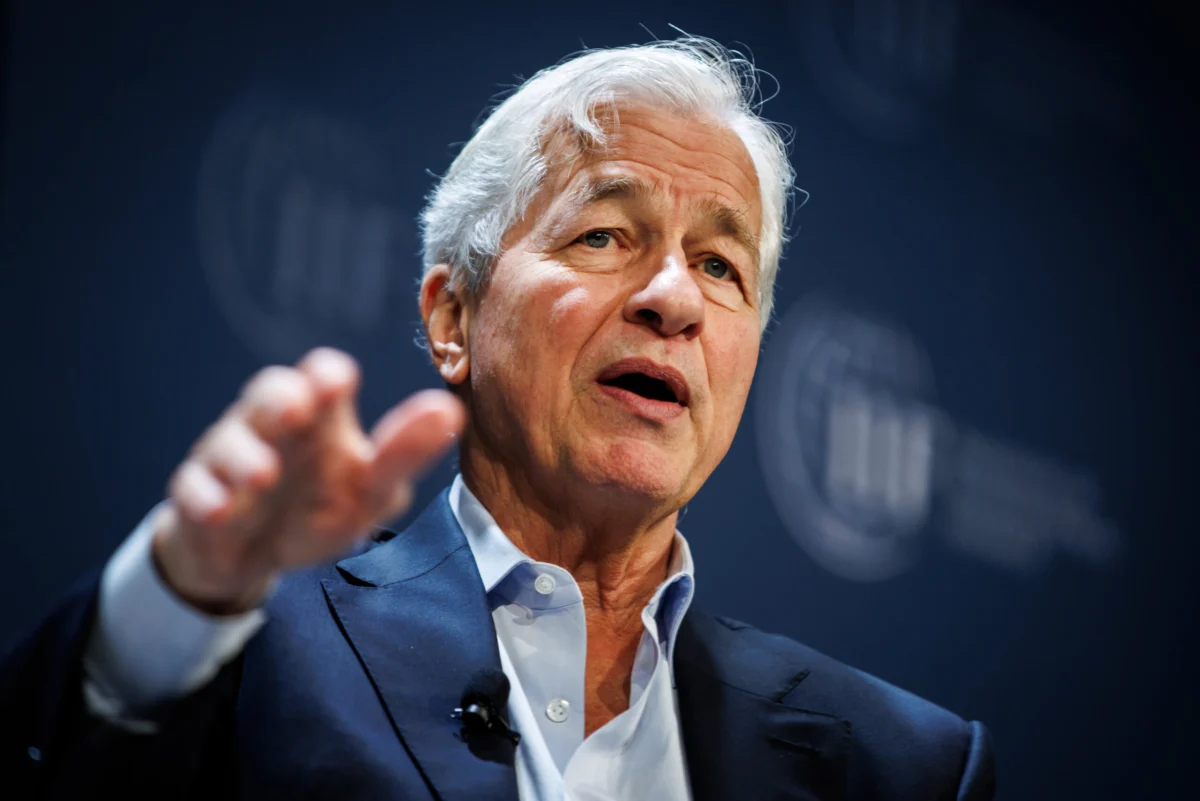
JPMorgan Chase CEO Jamie Dimon has delivered a stark warning to investors, asserting that the global economy faces significant, underestimated risks and advising against purchasing either equities or long-dated U.S. Treasurys at their current valuations. In an extensive interview released late Monday, Dimon articulated his concern that financial markets are failing to adequately price in a rapidly growing array of geopolitical and fiscal threats, suggesting a potential disconnect between investor optimism and underlying realities.
"I do think those risks are probably bigger than other people think," Dimon stated, highlighting escalating conflicts in Ukraine and the Middle East, persistent tensions between the United States and China, and a global surge in military spending occurring against a backdrop of mounting government deficits. His remarks underscore a deep-seated apprehension regarding the stability of the international economic order and the sustainability of current fiscal trajectories.
A Looming Tipping Point: Geopolitical and Fiscal Threats
Dimon’s assessment points to a complex interplay of factors that, while individually concerning, collectively present a more formidable challenge than widely acknowledged. The ongoing war in Ukraine, now in its third year, continues to destabilize European energy markets and supply chains, while the renewed conflict in the Middle East carries the potential for broader regional escalation, threatening global oil flows and political stability. Simultaneously, the strategic rivalry between the U.S. and China has intensified across economic, technological, and military domains, leading to trade disputes, technology restrictions, and increased defense outlays by both nations and their allies. Global military expenditure reached an unprecedented $2.24 trillion in 2022, according to the Stockholm International Peace Research Institute (SIPRI), a trend exacerbated by current geopolitical flashpoints.
Beyond immediate conflicts, Dimon expressed particular alarm over the fiscal health of major economies, especially the United States. The U.S. national debt surpassed $34 trillion in early 2024, with annual deficits projected to remain elevated for the foreseeable future. The Congressional Budget Office (CBO) forecasts the federal deficit to reach $1.9 trillion in fiscal year 2024, rising to an average of $2.6 trillion per year over the next decade. These figures are driven by increased government spending, including rising interest payments on existing debt, and a structural mismatch between revenues and expenditures. Dimon warned that this trajectory is unsustainable and will eventually necessitate a "reckoning," potentially driving interest rates significantly higher as "bond vigilantes"—investors who demand greater compensation for financing government debt—exert pressure on the market.
The Market’s Optimism Versus Dimon’s Caution
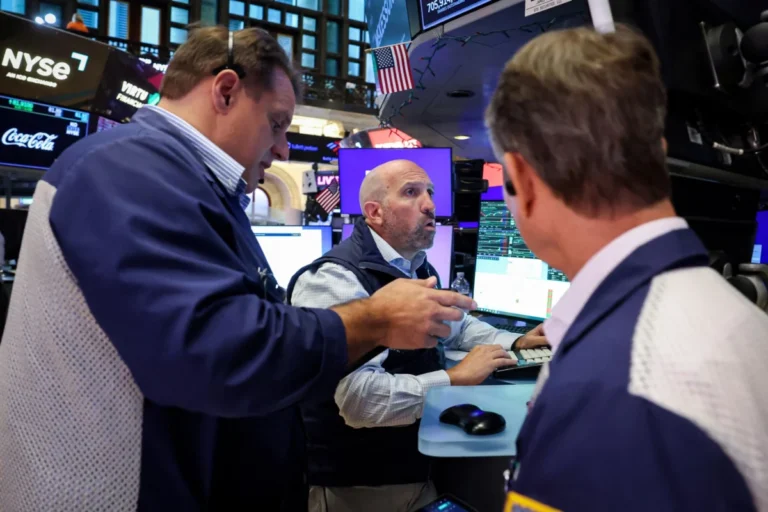
Dimon’s cautionary stance stands in stark contrast to the prevailing bullish sentiment that has characterized financial markets recently. Despite the geopolitical turmoil and lingering inflationary pressures, the S&P 500 index has delivered impressive returns, appreciating by nearly 10% year-to-date. This rally has been fueled by robust consumer spending, moderating inflation data, and an overwhelming investor enthusiasm for artificial intelligence (AI) technologies. The AI trade, in particular, has driven valuations for technology companies to historic highs, with many investors betting on a transformative impact across industries.
Adding to this optimism, JPMorgan Chase itself, along with its banking peers, recently reported blockbuster quarterly results. These strong earnings were largely powered by surging trading revenues and a resurgence in investment banking activity, reinforcing the perception that the U.S. economy has demonstrated remarkable resilience in the face of recent global challenges. However, Dimon acknowledged this resilience but cautioned against complacency. He noted that the global economy has indeed become more adaptable, partly due to a decreased reliance on traditional energy sources compared to previous decades. Yet, he warned that this resilience does not eliminate the possibility of a sudden inflection point, illustrating it with the analogy: "You may need more straws in the camel’s back to cause that tipping point." He suggested that even the current resurgence of conflicts might not be the singular catalyst for a major economic downturn but contributes to an accumulating risk profile.
A History of Warnings: Jamie Dimon’s Track Record
Jamie Dimon has a well-established reputation for his candid and often pessimistic outlook on economic risks. His pronouncements frequently capture significant attention from investors, policymakers, and the media, given his influential position at the helm of the world’s largest bank by market capitalization. This latest warning is consistent with a pattern of cautionary statements he has issued over the years, often preceding periods of market volatility or economic shifts.
One of his most notable warnings came in June 2022, when he famously advised investors to "brace yourself" for an "economic hurricane" caused by a combination of the Federal Reserve’s quantitative tightening policies and the war in Ukraine. While the full force of a "hurricane" was arguably averted by a resilient U.S. labor market and strong corporate earnings, his warnings served as a crucial reminder of the fragility of the post-pandemic economic recovery. Prior to that, Dimon had expressed concerns about inflation, supply chain disruptions, and the long-term implications of excessive government spending. His consistent focus on systemic risks provides a valuable counterpoint to periods of market exuberance, prompting a deeper consideration of potential vulnerabilities that might otherwise be overlooked. This history lends weight to his current concerns, urging a deeper scrutiny of the underlying assumptions driving market sentiment.

The Peril of Deficits and the Rise of Bond Vigilantes
Dimon’s most pointed fiscal warning centered on persistent U.S. budget deficits, which he predicts will inevitably lead to higher interest rates. He articulated a clear pathway for this "reckoning": as the U.S. government continues to issue vast amounts of debt to finance its spending, the supply of Treasurys will increase. If demand does not keep pace, investors will require a higher yield to purchase these bonds, effectively driving up borrowing costs for the government. This dynamic is traditionally associated with "bond vigilantes"—market participants who sell bonds or demand higher yields when they perceive government fiscal policy to be unsustainable or inflationary, thereby enforcing fiscal discipline through market mechanisms.
"My view is it will become a problem," Dimon stated, predicting that even if inflation were to return to the Federal Reserve’s target of 2%, the 10-year Treasury bond yield should realistically be in the range of 4% to 4.5%. As of late 2025, the 10-year Treasury yield hovers around 4.2%, suggesting that Dimon sees little room for capital appreciation in bond prices and significant downside risk should yields climb further. Higher interest rates would have profound implications across the economy, increasing the cost of servicing the national debt, making corporate borrowing more expensive, potentially dampening investment, and slowing economic growth. For the average American, this could translate into higher mortgage rates, increased costs for auto loans, and reduced access to credit, impacting consumer spending and real estate markets.
Skepticism on Equities and the AI Revolution
Beyond bonds, Dimon also voiced considerable caution regarding the broader equity market. While he acknowledged that he might consider an individual stock if it represented "a great investment" based on specific fundamentals, he explicitly stated he would not be a buyer of the broader market at current valuations. This generalized skepticism reflects a concern that current stock prices, particularly in growth-oriented sectors, may not fully reflect the aforementioned geopolitical and fiscal risks. Price-to-earnings (P/E) ratios for major indices like the S&P 500 are currently above their historical averages, prompting questions about sustainability, especially if corporate earnings growth were to slow or if interest rates were to rise, making bonds more attractive relative to stocks.
His measured tone extended to the much-hyped artificial intelligence revolution. Dimon drew parallels between today’s AI spending boom and the early days of the internet, a period characterized by massive investment, rapid innovation, and significant market speculation. "The amount of money being spent is huge. Will it in total pay off? Probably, just like the internet did," Dimon said, acknowledging the long-term transformative potential of AI. However, he quickly tempered this optimism by recalling how many early internet pioneers, such as Yahoo and Netscape, ultimately faded or were acquired, while eventual giants like Google and Facebook emerged later. "Will it pay off the way you expect and the timetable you expect? Definitely not," he concluded, suggesting that while AI’s ultimate impact will be profound, the path to profitability and market dominance for current players is far from guaranteed and fraught with risk. This perspective advises investors to exercise prudence, recognizing that the current leaders in the AI race may not be the ultimate long-term winners, and that the timeline for widespread, profitable AI integration could be longer than many currently anticipate.
Broader Implications and Expert Reactions
Jamie Dimon’s latest warnings, emanating from one of the most respected voices in global finance, are likely to resonate deeply across investment communities and policy circles. While some market strategists and economists maintain a more optimistic outlook, pointing to strong corporate earnings, robust employment, and moderating inflation as indicators of economic resilience, Dimon’s concerns align with a growing segment of analysts who fear that financial markets may be underestimating systemic risks.
For investors, Dimon’s counsel suggests a strategy of increased caution and a focus on fundamental value rather than broad market momentum. His reluctance to buy long-dated Treasurys implies a belief that yields are more likely to rise than fall, leading to capital losses for bondholders. His skepticism on equities, meanwhile, calls for rigorous due diligence and selective investment, particularly in an environment where geopolitical uncertainty and fiscal imbalances could trigger unexpected market corrections.
Policymakers, especially in the United States, are likely to face renewed pressure to address the nation’s burgeoning debt. Dimon’s explicit mention of "bond vigilantes" serves as a powerful reminder that market forces can, and often do, impose fiscal discipline when political will is lacking. Ignoring these warnings could lead to higher borrowing costs for the government, potentially crowding out private investment and limiting future fiscal flexibility.
Ultimately, Dimon’s message is a call for vigilance. In an increasingly interconnected and volatile world, where technological disruption meets geopolitical fragmentation and fiscal strain, the path ahead for the global economy remains uncertain. While optimism can drive innovation and growth, a healthy dose of realism, informed by comprehensive risk assessment, is crucial for navigating potential storms. Jamie Dimon’s latest pronouncement serves as a powerful reminder that beneath the surface of seemingly robust market performance, significant vulnerabilities persist, demanding careful consideration from all participants in the global financial system.