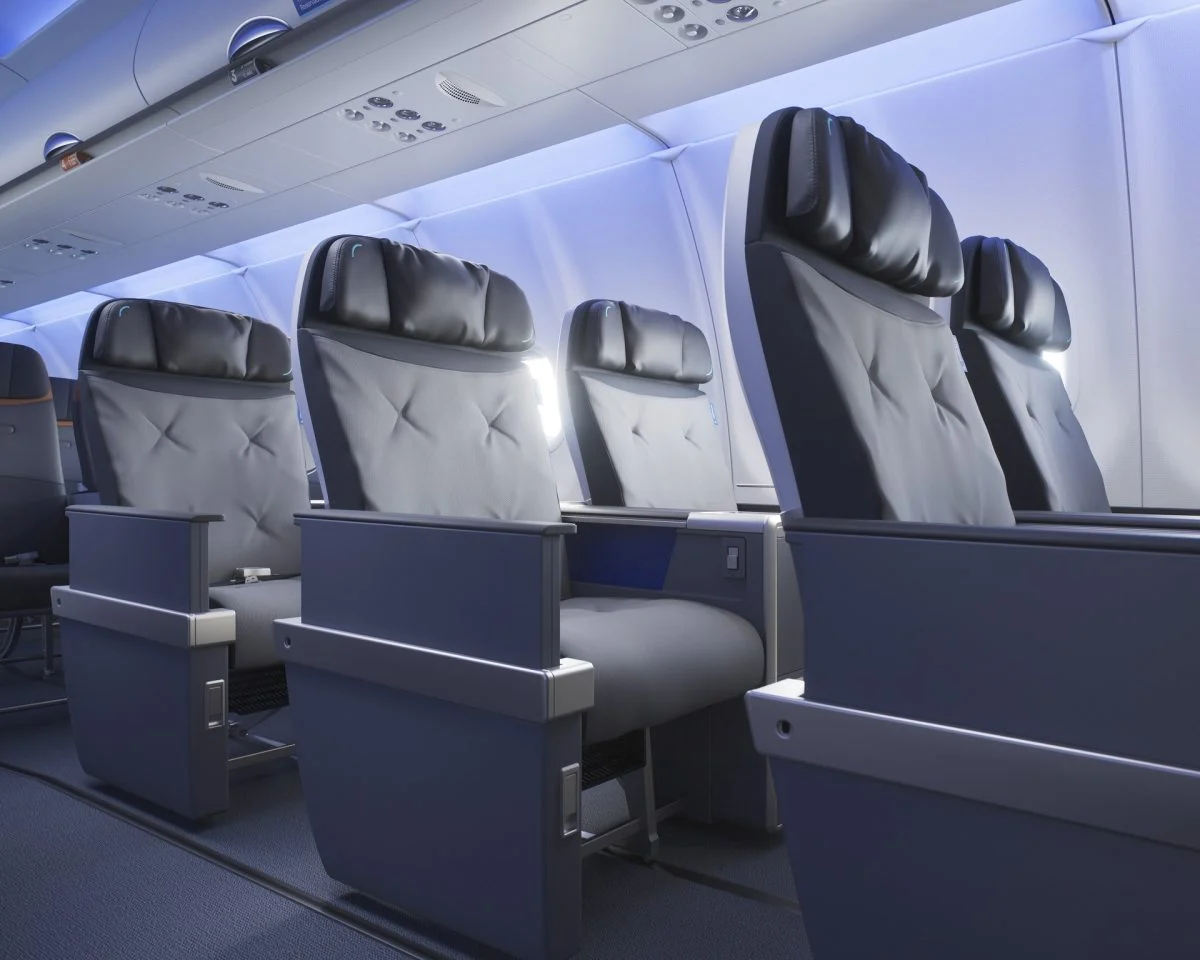
JetBlue Airways officially introduced its new domestic first-class product, branded as BlueFirst, on Tuesday, marking a significant departure from its long-standing single-cabin domestic model and signaling a high-stakes gamble to reverse a six-year streak of financial losses. The New York-based carrier is betting that a premium-heavy strategy will stabilize its balance sheet and allow it to compete more effectively with legacy carriers like Delta Air Lines and United Airlines for high-value travelers. This move comes as the airline navigates a turbulent period characterized by the collapse of its proposed merger with Spirit Airlines, the dissolution of the Northeast Alliance with American Airlines, and mounting pressure from activist investors to return to profitability.
The BlueFirst cabin represents the first time JetBlue will offer a traditional domestic first-class experience on its narrow-body fleet for shorter-haul routes. While the airline has seen considerable success with its "Mint" premium service on transcontinental and international flights, the domestic "Core" experience has remained largely egalitarian, with "Even More Space" seats serving as the only upgrade option. The introduction of BlueFirst seeks to bridge this gap, offering a dedicated cabin that promises enhanced comfort, technological integration, and elevated service standards.
Engineering the BlueFirst Experience: Comfort and Design
At the heart of the BlueFirst announcement is a focus on physical comfort and ergonomic design. The new seats are constructed using a specialized foam typically reserved for high-end mattresses, intended to provide superior pressure relief and support compared to standard aircraft seating materials. This focus on "sleep-grade" comfort in a domestic setting is a unique marketing angle for JetBlue, which has historically prioritized the passenger experience through its "humanity in travel" branding.
In terms of physical dimensions, the BlueFirst seats offer a significant upgrade over the standard economy experience. Passengers will benefit from seven additional inches of legroom compared to the standard "Core" seating, along with up to five inches of recline. The cabin configuration is set in a 2×2 layout, ensuring that every passenger has either an aisle or a window seat, effectively eliminating the middle seat in the premium section. This configuration is standard for domestic first class across the industry, but JetBlue’s specific focus on seat width and cushioning is aimed at differentiating its product from the aging interiors of some competitors.
The rollout will vary slightly depending on the aircraft type. JetBlue’s Airbus A220s and A320s will be outfitted with 12 BlueFirst seats, while the larger Airbus A321s will feature 16 seats. This capacity ensures that the premium cabin remains exclusive while still providing enough inventory to drive meaningful revenue.
Technology and In-Flight Amenities
JetBlue has long been a leader in in-flight entertainment (IFE), and the BlueFirst cabin continues this trend. Each seat will be equipped with a 13.3-inch high-definition seatback screen, which is significantly larger than the screens found in most domestic economy cabins. To complement the hardware, JetBlue is introducing a new seatback ordering system, allowing passengers to request food, customized cocktails, and other beverages directly from their screens without having to wait for a flight attendant to pass through the aisle with a cart.
Connectivity is another pillar of the BlueFirst offering. Each seat features dedicated power outlets and USB ports to ensure that business travelers can remain productive during flight. Additionally, the airline is providing dedicated overhead bin space for BlueFirst passengers, addressing one of the primary pain points of domestic travel: the struggle for carry-on storage.
The service elements of BlueFirst are designed to mimic the "boutique" feel of the Mint cabin but tailored for shorter durations. Passengers will receive premium blankets and curated amenity kits, items rarely seen on domestic flights under three hours. The culinary program will include high-quality meals and a "customized cocktail" program, further elevating the experience beyond the standard snack basket offered by low-cost competitors.
Strategic Financial Context: A Six-Year Turnaround Plan
The introduction of BlueFirst is not merely a product upgrade; it is a central component of JetBlue’s broader "JetForward" strategic plan. The carrier has faced a grueling financial stretch, recording annual losses for six consecutive years. These losses have been exacerbated by rising fuel costs, labor disputes, and the high costs associated with maintaining an aging fleet of Embraer E190s, which are currently being phased out in favor of the more fuel-efficient Airbus A220.
Financial analysts point to the failure of the Spirit Airlines merger as a turning point for JetBlue. After a federal judge blocked the $3.8 billion acquisition on antitrust grounds, JetBlue was forced to pivot from a growth-by-acquisition strategy to a focus on organic, high-margin revenue. By introducing a domestic first-class product, JetBlue can charge a significant premium for seats that take up relatively little additional real estate on the aircraft compared to the revenue they generate.
According to industry data, premium leisure travel has remained the most resilient and fastest-growing segment of the airline industry following the COVID-19 pandemic. High-income travelers have shown an increased willingness to pay for space and privacy, even on short-haul flights. By capturing this segment, JetBlue aims to improve its unit revenue (RASM) and achieve its goal of $800 million to $900 million in incremental EBIT (Earnings Before Interest and Taxes) by 2027.
Ground Experience and Priority Services
Recognizing that the premium experience begins long before takeoff, JetBlue is integrating BlueFirst into its ground operations. Passengers booking these seats will receive priority boarding and check-in services. More importantly, JetBlue has secured access to expedited security lanes at more than 30 of its most frequented airports. This "curb-to-gate" premium strategy is essential for attracting corporate travelers and frequent fliers who prioritize time savings.
The airline also recently announced the development of its first-ever airport lounges at New York’s John F. Kennedy International Airport (JFK) and Boston Logan International Airport (BOS). While these lounges are primarily intended for Mint passengers and high-tier loyalty members, the synergy between the new lounges and the BlueFirst cabin creates a cohesive ecosystem for premium travelers, positioning JetBlue as a legitimate alternative to the "Big Three" legacy carriers.
Timeline and Fleet Integration
JetBlue has outlined a clear timeline for the debut of BlueFirst. Bookings are expected to open in the fall of this year, with the first retrofitted or newly delivered aircraft entering service before the end of the year. The initial rollout will focus on high-traffic business routes and key leisure destinations where premium demand is highest.
The transition to a multi-class domestic cabin represents a significant operational undertaking. The airline must manage the logistics of retrofitting existing A320 and A321 aircraft while ensuring that new A220 deliveries come equipped with the BlueFirst configuration. This fleet modernization is critical, as the A220 offers 25% lower fuel burn per seat compared to the aircraft it replaces, further aiding the airline’s quest for profitability.
Market Analysis and Competitive Implications
The move to introduce BlueFirst puts JetBlue in direct competition with Delta’s "First Class," United’s "United First," and American’s "Flagship Business" or "First" products. Historically, JetBlue’s competitive advantage was its superior economy product, which offered the most legroom in coach and free high-speed Wi-Fi. However, as legacy carriers have improved their own economy offerings and expanded their premium cabins, JetBlue’s "one-class" domestic approach began to look dated.
By adopting a traditional two-class domestic structure, JetBlue is effectively acknowledging that the "hybrid" model—somewhere between a low-cost carrier and a full-service airline—is no longer sufficient in the current economic climate. To survive as a standalone entity, JetBlue must maximize the revenue potential of every square inch of its aircraft.
Industry experts suggest that BlueFirst could also serve as a retention tool for JetBlue’s TrueBlue loyalty program. High-tier "Mosaic" members will likely see new opportunities for upgrades, providing more value to the program and encouraging brand loyalty among frequent travelers who might otherwise be tempted by the expansive networks of larger competitors.
Conclusion and Future Outlook
The unveiling of BlueFirst marks the beginning of a new chapter for JetBlue Airways. It is a bold move that seeks to leverage the airline’s reputation for service and style to capture a larger share of the premium market. However, the success of the product will depend on the airline’s ability to execute the rollout seamlessly and maintain a price point that attracts customers without cannibalizing its economy base.
As the first BlueFirst-equipped aircraft prepares for its maiden flight later this year, the aviation industry will be watching closely. For JetBlue, the stakes could not be higher. After years of financial headwinds and strategic setbacks, the "mattress foam" seats of BlueFirst may be the foundation upon which the airline builds its return to profitability. If successful, BlueFirst could redefine JetBlue’s identity, transforming it from a high-quality discount carrier into a formidable premium competitor in the domestic skies.