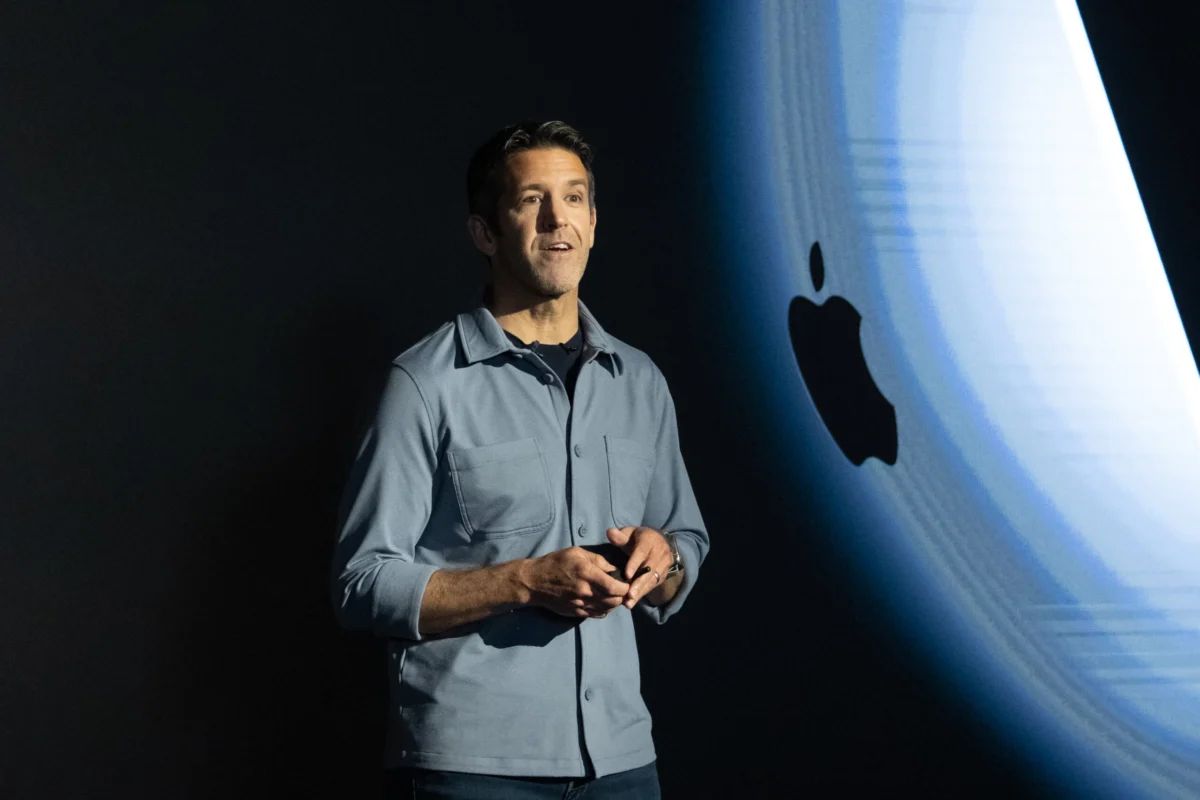
After a remarkable 15-year tenure at the helm of Apple, Tim Cook has officially passed the torch, ceding the coveted CEO role to John Ternus, the company’s former Senior Vice President of Hardware Engineering. The transition, which saw Ternus assume leadership of one of the world’s most valuable and influential companies as of Tuesday, marks a pivotal moment for Apple, ushering in a new chapter under a leader largely unknown to the broader public until his successor status was announced in April. Ternus, a seasoned Apple veteran, now inherits the immense responsibility of guiding the Cupertino behemoth through an increasingly complex technological landscape, rife with both immense opportunities and formidable challenges, particularly in the burgeoning field of artificial intelligence and amidst growing regulatory scrutiny worldwide.
Tim Cook’s departure from the CEO position concludes an extraordinary era defined by unprecedented growth, diversification, and a steadfast commitment to the foundational principles of privacy and user experience established by his predecessor, Steve Jobs. Taking over from the iconic co-founder in August 2011, Cook faced the daunting task of leading Apple beyond the visionary shadow of Jobs. His tenure saw Apple’s market capitalization skyrocket from approximately $350 billion to comfortably over $3 trillion, a testament to his strategic prowess and operational genius. Under Cook, Apple not only solidified its dominance in the smartphone market with successive generations of the iPhone but also successfully diversified its revenue streams into high-margin services, including Apple Music, Apple TV+, Apple Arcade, and the App Store. Furthermore, he oversaw the explosive growth of Apple’s wearables division, transforming products like the Apple Watch and AirPods into global cultural phenomena. Cook’s meticulous focus on supply chain efficiency and environmental stewardship also became hallmarks of his leadership, cementing Apple’s reputation for both profitability and corporate responsibility. His decision to transition into the role of Executive Chairman underscores a commitment to continuity and strategic oversight, ensuring his vast experience remains an invaluable asset to the company during this transition.
John Ternus steps into the CEO role at an exceptionally dynamic juncture for Apple, with several high-stakes events and strategic imperatives immediately on the horizon. Next week, the company is slated to host its much-anticipated iPhone launch event, a critical annual showcase that introduces the newest iteration of its flagship hardware and typically sets the tone for its holiday sales quarter. Beyond new devices, Apple is also on the cusp of rolling out its significantly re-engineered Siri AI experience, a crucial update powered by Google’s advanced Gemini models. This move represents Apple’s concerted effort to reassert its presence in the highly competitive AI landscape, a domain where many analysts suggest the company has lagged behind rivals like Google, Microsoft, and OpenAI. The success of this Siri overhaul will be a significant early barometer of Ternus’s leadership and Apple’s renewed AI strategy.
The transition, while significant, has been managed with Apple’s characteristic emphasis on internal succession and stability. In a parting message to staff on his last day as CEO, Tim Cook expressed profound confidence in his chosen successor: “I take enormous comfort in handing the helm to someone as brilliant and wonderful and capable as John. Few people understand what it takes to build products that change the world the way John does, and I could not be more excited for his leadership.” This endorsement highlights Ternus’s deep roots within Apple’s product development culture, a quality often cited as essential for leadership at a company renowned for its hardware and integrated software ecosystem.
A Quarter-Century of Dedication: John Ternus’s Journey at Apple
John Ternus, now 51 years old, brings a quarter-century of dedicated service to his new role, having spent nearly half his life contributing to Apple’s technological advancements. His journey with the company began in 2001, joining the product design team shortly after a brief stint at Virtual Research Systems, a small maker of virtual-reality devices. This foundational experience in product development laid the groundwork for a career steeped in the meticulous craft of hardware engineering, which would eventually see him rise through the ranks to lead one of Apple’s most critical divisions.
By 2013, Ternus had been promoted to Vice President of Hardware Engineering, a role that saw him overseeing significant product lines and technical initiatives. His ascent continued, culminating in his promotion to Senior Vice President in 2021. Throughout his career, Ternus reported directly to Tim Cook, who he openly acknowledges as a mentor. His extensive tenure and steady progression within the hardware division positioned him as a strong candidate for succession, particularly given Apple’s historical preference for promoting from within. At 15 years Cook’s junior, Ternus’s appointment also suggests a long-term strategic vision for leadership continuity, a hallmark of Apple’s executive transitions over the past two decades. Indeed, Apple has only seen two CEOs in this millennium, emphasizing the company’s value for stable, enduring leadership.
Ternus’s early experiences at Apple provided a clear indication of his dedication to detail and quality, principles that define Apple’s product philosophy. He once recounted a memorable incident from his first year, involving the Apple Cinema Display, an early desktop monitor. "At some point in my first year, I found myself at a supplier facility. I was far away from home. Well past midnight, I was using a magnifying glass to count the number of grooves on the head of a screw… and I was arguing with the supplier because these parts had 35 grooves. They were supposed to have 25," Ternus recalled in his 2024 commencement speech at the University of Pennsylvania’s engineering school. "I distinctly remember stepping back for a minute and thinking, ‘What the hell am I doing? Is this normal?’" This anecdote, while seemingly minor, perfectly encapsulates the obsessive attention to detail that has long been ingrained in Apple’s product development culture, a legacy inherited from Steve Jobs and diligently upheld by leaders like Ternus.
As his responsibilities expanded, Ternus’s focus broadened from individual components to entire product ecosystems. He played a pivotal role in the hardware development behind some of Apple’s most iconic products, overseeing the launches of the AirPods, Apple Watch, and the groundbreaking Vision Pro. His leadership was also instrumental in major strategic shifts, such as Apple’s monumental transition from Intel processors to its own proprietary Apple Silicon, a move that delivered significant performance and efficiency gains across the Mac lineup. Most recently, Ternus was deeply involved in the production of the MacBook Neo, Apple’s new, more affordable laptop model. This product exemplifies Apple’s innovative approach to design and cost-efficiency, leveraging an iPhone chip to power the device while maintaining the brand’s quality standards. “We never want to ship junk. We want to ship great products that have that Apple experience, that Apple quality. To do that with the Neo required building something completely new from the ground up… leveraging both the technologies we’d been developing like Apple silicon, but also the kind of expertise that we’ve developed over many, many years of building Macs, and building phones, and building iPads, and all of these things,” Ternus told Tom’s Guide in a recent interview.
A Leader Defined by Humility and Craftsmanship
Beyond his technical acumen, insights into Ternus’s character reveal a leader who values humility and a deep appreciation for craftsmanship. In his commencement address, he shared a guiding principle: “Always assume you’re as smart as anyone else in the room, but never assume that you know as much as they do. With this mindset, you’ll find the confidence you need to push forward, but more importantly, the humility to ask questions.” This philosophy stands in stark contrast to the often-abrasive egos prevalent in the tech industry, signaling a potentially more collaborative and inquisitive leadership style for Apple. His relatively recent foray onto social media platform X further suggests a cautious but deliberate step into the public spotlight.

Ternus also frequently references Steve Jobs’s legendary attention to craftsmanship. In an interview, when asked about his favorite memory of Jobs, he recounted a story about the former Apple co-founder’s observation of furniture. “[Jobs] was moving a piece of furniture, a chest of drawers, and pulled it away from the wall and looked at the back and was just reflecting on, you know, that the carpenter who made it had made it beautiful,” Ternus said. “It finished the back as beautifully as the rest of it, even though nobody was going to see it, right? And I think about that all the time because I think that perfectly exemplifies what we do here.” This anecdote underscores Ternus’s alignment with Apple’s core ethos of creating products that are meticulously designed, both inside and out, regardless of whether every detail is immediately visible to the user.
Challenges and Opportunities Under New Leadership
As CEO, John Ternus faces a complex array of challenges and opportunities that will define Apple’s trajectory in the coming years. Foremost among these is the urgent imperative to accelerate Apple’s advancements in artificial intelligence. While the upcoming Siri AI powered by Google Gemini demonstrates a willingness to partner, the company must articulate and execute a compelling long-term AI strategy that integrates seamlessly across its ecosystem, from devices to services. The global AI race is intensifying, and Apple, despite its vast resources, is under pressure to innovate at a rapid pace to maintain its competitive edge.
Another significant area of focus will be the Vision Pro. While praised for its technological prowess, the spatial computing device remains a niche product with a premium price tag. Ternus will need to steer Apple’s strategy for the Vision Pro, addressing questions of broader market adoption, developer engagement, and the underlying technological roadmap for future iterations. Scaling this nascent product category into a mainstream success will require strategic vision and significant investment.
Beyond product innovation, Apple continues to navigate a challenging global regulatory environment. Antitrust scrutiny regarding its App Store policies, particularly in Europe and the United States, poses a substantial threat to its services revenue model. Ternus will need to lead Apple through these legal and political battles, balancing compliance with the need to protect its business interests. Furthermore, ongoing geopolitical tensions, particularly concerning supply chains and market access in China, will demand astute strategic planning and diversification efforts to mitigate risks.
However, Ternus also inherits a company with unparalleled strengths. Apple’s robust ecosystem, characterized by deep integration between hardware, software, and services, remains a formidable competitive advantage. Its brand loyalty is among the strongest in the world, backed by a massive and affluent customer base. The company’s immense financial reserves provide ample capacity for research and development, strategic acquisitions, and aggressive market expansion. Ternus’s deep expertise in hardware engineering, the very core of Apple’s product identity, positions him uniquely to drive innovation in a company where tangible, beautifully designed products are paramount. His relative youth also suggests the potential for a long and stable leadership period, a characteristic Apple has historically valued.
Beyond the Boardroom: Glimpses of the Man
Beyond his professional achievements, glimpses into Ternus’s personal life reveal a background rooted in engineering and community engagement. He was a member of the swim team during his time at the University of Pennsylvania, where he pursued his engineering degree. For his senior project, he developed a feeding arm controllable by head movements, designed to assist individuals with quadriplegia. This early project showcases a foundational inclination towards practical problem-solving and an application of technology for human benefit.
Public records indicate a degree of civic engagement, with Ternus making a political donation of $2,900 to Senator Chuck Schumer (D-NY) in 2021. However, consistent with his pre-CEO role, Ternus has largely maintained a low public profile, allowing his work to speak for itself. This discretion is characteristic of many Apple executives who operate behind the scenes, ensuring the company’s products and brand remain the central focus. As he steps into the CEO role, this relative anonymity is set to change dramatically, as he becomes the public face of one of the world’s most scrutinized corporations.
The Road Ahead
John Ternus’s appointment as Apple CEO signifies a seamless yet significant transition for the company. While Tim Cook’s era was defined by operational excellence, massive scale, and strategic diversification, Ternus’s tenure is poised to focus intensely on product innovation, particularly in the critical areas of AI and spatial computing. His deep hardware background and long-standing commitment to Apple’s meticulous design philosophy provide a strong foundation for future success. The upcoming iPhone launch and the rollout of the enhanced Siri AI will serve as early tests of his leadership, offering the world a first look at Apple’s direction under its new helmsman as it navigates the complexities of the 21st-century tech landscape. The market, analysts, and consumers alike will be watching closely to see how this seasoned "product builder" shapes the next chapter of Apple’s enduring legacy.