
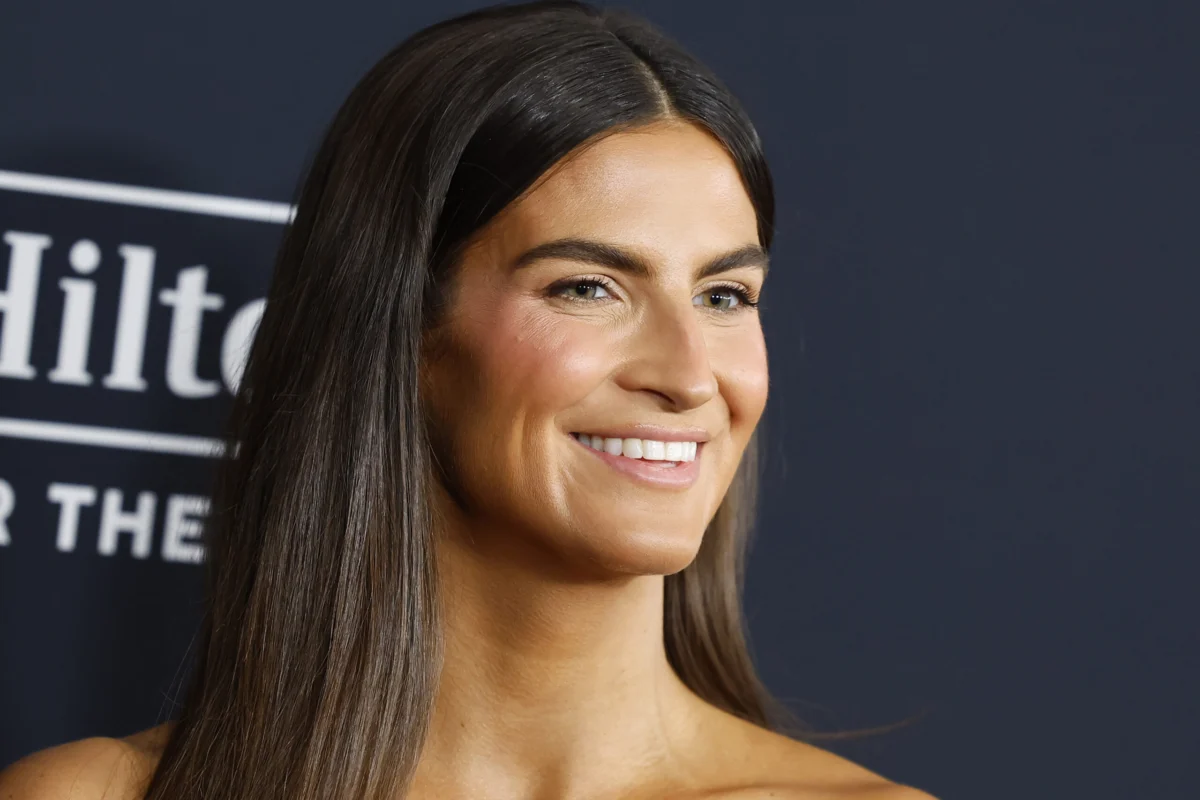
CNN correspondent and anchor Kaitlyn Collins has addressed the barrage of personal insults President Donald Trump directed at her during his remarks at the rescheduled White House Correspondents Association (WHCA) dinner. Collins stated that the attacks were not surprising, given that such personal animosity has become a normalized feature of interactions originating from the Oval Office. Her comments came during an appearance on "The Daily Show" with host Jon Stewart on Monday, where she reflected on the events of the preceding Friday night.
The Context of the WHCA Dinner and Trump’s Remarks
The WHCA dinner, a long-standing tradition that brings together members of the White House press corps, the President, and distinguished guests, serves as a platform for both lighthearted roasting of the media and a more somber acknowledgment of the role of a free press. This particular event, however, was overshadowed by a security incident that occurred in April. A gunman reportedly attempted to breach the White House and fired a weapon, an act which authorities are investigating as a potential assassination attempt on President Trump. The original gala was postponed following this alarming breach, with a makeup event being scheduled for Friday night at the Waldorf Astoria in Washington, D.C.
During his address at this rescheduled dinner, President Trump, who has frequently singled out Collins for criticism in the past, did not hold back. His speech, described by attendees and observers as lengthy and rambling, saw him repeatedly target the CNN journalist. Collins was the subject of a series of barbs, including comments about her appearance and a directive to "just smile." The President also attempted a convoluted joke that drew a comparison between Collins and transgender influencer Dylan Mulvaney. Notably, Mulvaney herself had publicly dismissed the comparison on TikTok over the weekend, characterizing it as a compliment.
The awkward reception of Trump’s joke at the dinner was a point of particular fascination for Collins. She was present at the event, having recently received an award for her reporting on President Trump’s meeting with Ukrainian President Volodymyr Zelensky. Reflecting on the moment, Collins told Jon Stewart, "In the room, I was not surprised when he insulted me. That happens pretty regularly inside the Oval Office. This is just a bigger venue where it was happening."
A Pattern of Presidential Criticism and Media Interaction
President Trump’s targeting of Kaitlyn Collins is not an isolated incident. The CNN White House correspondent has become a frequent focus of the President’s public criticism, often during White House press briefings or on social media platforms. This dynamic has shaped the nature of their interactions, with Collins often being perceived as a tenacious questioner who presses for direct answers, a style that frequently elicits deflection or sharp retorts from the President.
Collins elaborated on this strategy during her "Daily Show" interview. "That’s why I ask the questions the way I do," she explained. "Because I want anyone to be able to listen to what I’m asking, whether that’s at a briefing or during a moment with the president, and think, ‘I want to know the answer to that, too,’ or ‘That is a good question.’ I don’t want it to only serve one audience or one political leaning. I want anyone – from my family in Alabama, to people in the White House, to people in Washington – to be able to hear that question and think, ‘What is the answer to that?’”
This approach underscores a broader challenge faced by journalists covering the Trump administration: how to elicit substantive responses from a president known for his rhetorical deviations and direct confrontations with the press. The President’s consistent engagement with Collins, even through criticism, highlights her prominence as a figure who actively seeks to hold the administration accountable.
The Silence in the Room and Its Implications
One of the most striking aspects of the WHCA dinner for Collins was the reaction of the audience to President Trump’s personal attacks. "What was most surprising to me was, the room was filled with a lot of his staffers, his Cabinet, his allies, Republicans in Congress – it was so quiet in the room during the president’s remarks," she told Stewart.
This silence has been interpreted in various ways. Jon Stewart, with his characteristic wit, speculated that it might have been a moment of deference to the President. However, the quiet could also reflect a broader phenomenon within the political ecosystem surrounding President Trump: a reluctance among his allies and staff to publicly challenge or contradict him, even when his behavior might be considered unprofessional or undignified by traditional standards.
The normalization of such personal attacks within the White House, as Collins suggested, has significant implications for the functioning of democratic discourse. When the leader of the free world engages in consistent ad hominem attacks against journalists, it can have a chilling effect on the press and create an environment where critical reporting is framed as personal vendettas rather than essential oversight.
Broader Context and Trump’s Continued Online Engagement
The WHCA dinner incident is part of a larger pattern of President Trump utilizing public forums to critique and, at times, denigrate members of the media. His presidency was marked by frequent accusations of "fake news" and "enemy of the people" directed at various news organizations and individual journalists. This rhetoric, critics argue, can undermine public trust in journalism and embolden those who seek to suppress dissenting voices.
Following the dinner, President Trump continued his engagement with the narrative by posting an AI-generated image on his Truth Social platform. The image depicted Collins’s face superimposed onto the body of Dylan Mulvaney in a Budweiser advertisement. This further amplified the personal nature of his critique and demonstrated his willingness to employ digital tools to disseminate his messaging and attack perceived adversaries.
The Role of the White House Correspondents Association
The White House Correspondents Association plays a crucial role in advocating for press freedom and facilitating the relationship between the press and the presidency. By hosting the annual dinner, the association aims to foster a dialogue, albeit sometimes a contentious one. The association’s bylaws and mission statement emphasize the importance of a free and independent press in a democracy.
The incidents at the dinner, particularly the President’s personal attacks on a journalist, raise questions about the effectiveness of such traditions in fostering a more constructive relationship. While the dinner is intended to be a space for both humor and serious reflection, the President’s conduct suggests a potential for the event to be co-opted for purposes of personal retribution rather than mutual understanding.
Analysis of Implications
Kaitlyn Collins’s response and the events at the WHCA dinner highlight several critical issues:
- Normalization of Presidential Attacks: The increasing frequency and acceptance of personal attacks from the President against journalists can erode democratic norms and create a hostile environment for reporting. This can lead to self-censorship among some journalists and a reluctance among the public to trust news organizations.
- Impact on Public Perception of the Press: When the President consistently criticizes journalists, it can shape public opinion, making it more difficult for the press to fulfill its watchdog role. The "punching bag" dynamic that Collins described can lead to a perception that the media is inherently biased or adversarial, rather than a vital component of democratic accountability.
- The Role of Allies and Staff: The silence observed in the room during the President’s remarks points to a broader issue of how political figures and their entourages respond to potentially problematic behavior from their leaders. A lack of internal dissent or accountability can allow such behaviors to persist and become entrenched.
- The Evolving Landscape of Political Discourse: The use of AI-generated imagery and social media platforms to amplify personal attacks signals a shift in how political figures engage with the media and the public. This can blur the lines between genuine reporting and politically motivated disinformation.
Collins’s calm and measured response, coupled with her explanation of her journalistic approach, serves as a testament to the resilience of reporters striving to fulfill their duties in challenging environments. Her focus on crafting questions that resonate with a broad audience underscores the fundamental purpose of journalism: to seek truth and inform the public, regardless of political affiliation. The ongoing dynamic between President Trump and journalists like Collins remains a significant indicator of the health of democratic institutions and the future of press freedom.