

The Evolution of the Racing Livery: From National Colors to Corporate Uniforms
To understand the significance of the art car, one must first look at the history of how racing cars have been presented. In the early 20th century, racing liveries were dictated by national identity. International regulations assigned specific colors to different countries: British Racing Green for the United Kingdom, Rosso Corsa for Italy, Bleu de France for France, and white (later silver) for Germany. These colors allowed spectators to identify the origin of the vehicle at a glance, fostering a sense of national pride and competition.
The landscape shifted dramatically in 1968 when the FIA (Fédération Internationale de l’Automobile) allowed commercial sponsorship. This ushered in the era of the "corporate uniform." Team Lotus was among the first to capitalize on this, replacing their traditional green with the red, gold, and white of Gold Leaf tobacco. This was followed by the legendary John Player Special livery and the Gulf Oil colors seen on the Porsche 917. While these designs became iconic, they were ultimately functional tools designed to maximize brand recognition for sponsors. By the late 1990s and early 2000s, the increasing number of secondary and tertiary sponsors often resulted in "busy" liveries, where the lines of the car were obscured by a patchwork of conflicting logos.
The Genesis of the Art Car: 1975 and the BMW Revolution
The concept of the art car as a formal project began in 1975, initiated by French racing driver and auctioneer Hervé Poulain. Poulain envisioned a vehicle that combined the speed of the track with the prestige of the gallery. He approached his friend, American artist Alexander Calder, to paint a BMW 3.0 CSL that Poulain would then race in the 24 Hours of Le Mans.
This first BMW Art Car was a revelation. Calder, known for his mobiles, used bold primary colors and sweeping curves that ignored the traditional boundaries of the car’s panels. The project was so successful—not just in terms of aesthetics but in the massive media attention it garnered—that BMW established a formal Art Car program. This initiative has since seen 19 official cars created by some of the most influential artists of the 20th and 21st centuries, including Frank Stella, Roy Lichtenstein, Andy Warhol, Robert Rauschenberg, David Hockney, and Jeff Koons.
A Chronology of Key BMW Art Cars
- 1975: Alexander Calder (BMW 3.0 CSL) – The first of its kind, emphasizing movement through bold color blocks.
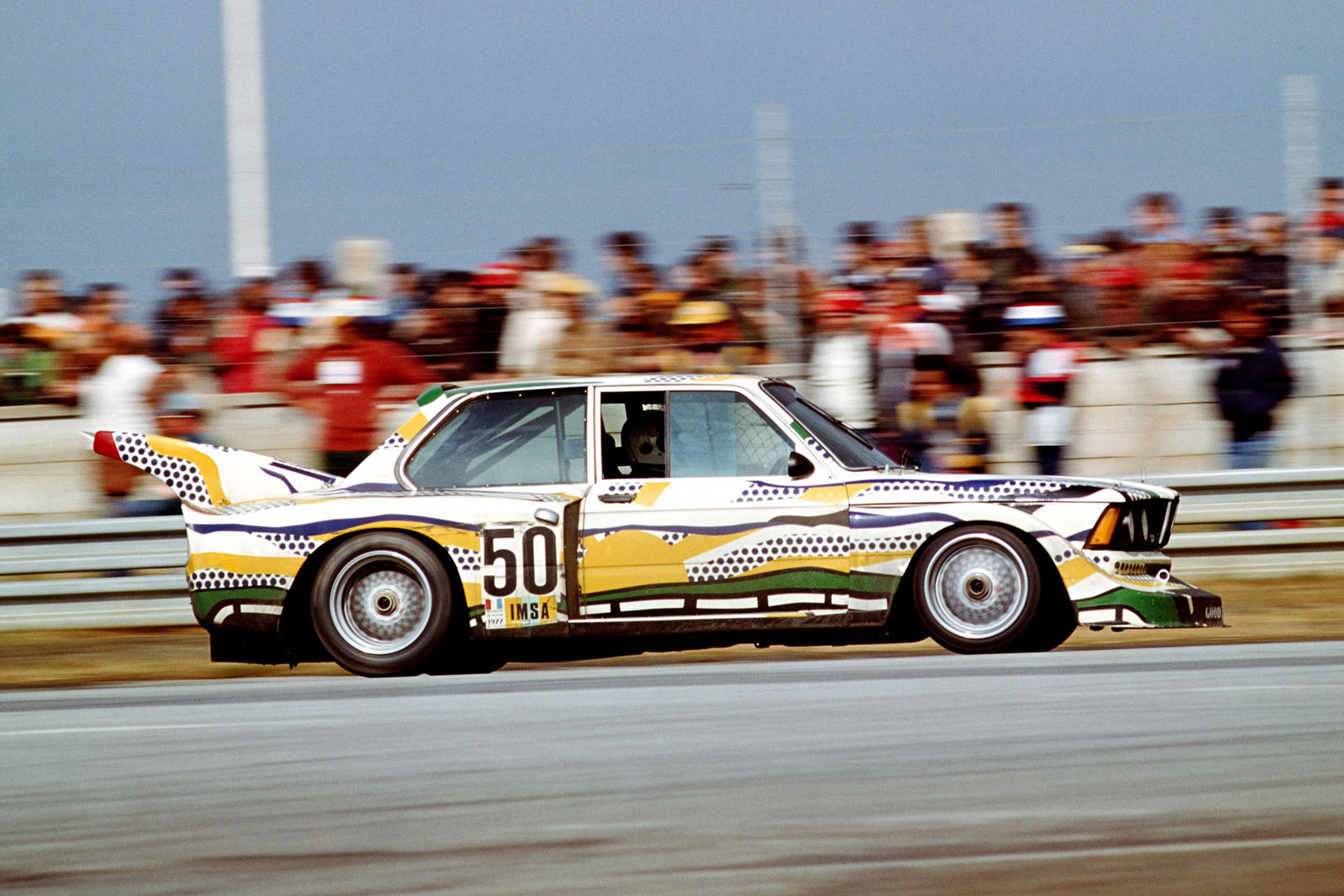
- 1977: Roy Lichtenstein (BMW 320i Turbo) – Utilized "Ben-Day dots" to depict a landscape moving across the car, simulating the effect of speed.
- 1979: Andy Warhol (BMW M1) – Unlike previous artists who painted scale models that were then transferred to the car by technicians, Warhol painted the M1 himself in just 23 minutes. He famously stated that he wanted to "give a vivid depiction of speed. If a car is really fast, all the contours and colors will become a blur."
- 2010: Jeff Koons (BMW M3 GT2) – A vibrant explosion of lines that seemed to radiate from the front of the car, designed to evoke the power of the engine and the friction of the air.
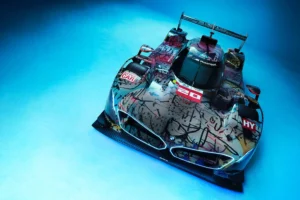
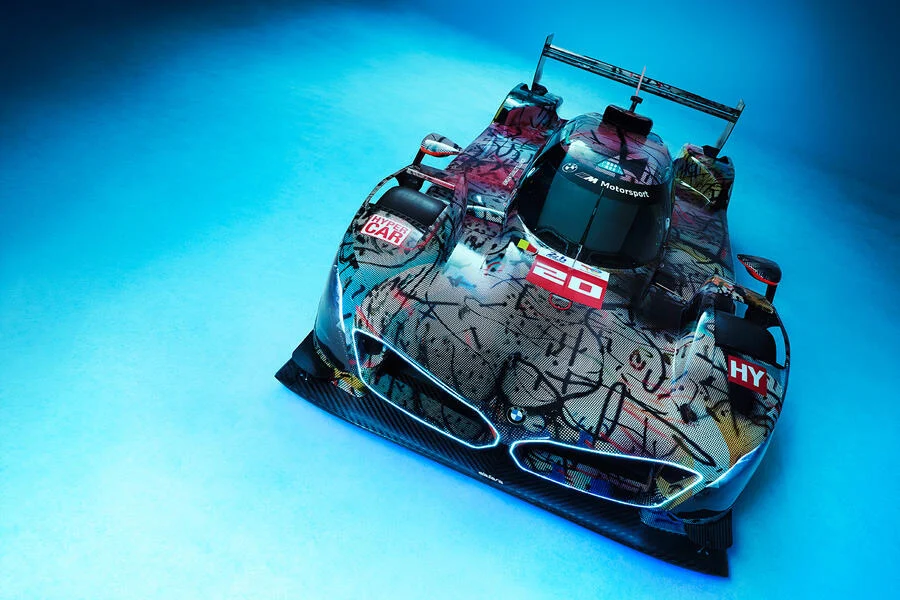
- 2024: Julie Mehretu (BMW M Hybrid V8) – The most recent addition, utilizing digital mapping and complex layering to create a "performative painting" that competed at Le Mans.
Beyond BMW: The Expansion of the Movement
While BMW is the most famous proponent of the art car, the movement has spread across the industry. Porsche has a long history of artistic collaborations, perhaps most famously the 1968 Porsche 356 C driven by Janis Joplin, which featured a psychedelic mural titled "The History of the Universe." More recently, Porsche collaborated with artist Richard Phillips in 2019 to create a 911 RSR "Art Car" that won its class at the 24 Hours of Le Mans, proving that artistic expression does not have to come at the expense of performance.
In 2021, Alpine collaborated with Argentinian artist Felipe Pantone to produce a series of A110 models. Pantone’s work, characterized by glitch aesthetics and ultra-high-contrast gradients, perfectly complemented the modern, angular lines of the Alpine. Similarly, Bentley introduced the "Unifying Spur" in 2021, a Flying Spur designed by Rich Morris that used a continuous line drawing to represent themes of diversity and inclusion.
Technical Challenges: The Engineering Behind the Art
Creating an art car is not merely a matter of applying paint to metal. In the world of high-stakes motorsport, every gram of weight and every millimeter of aerodynamic surface is scrutinized. This creates a unique set of challenges for both the artist and the engineering team.
Weight and Balance
Traditional automotive paint can add significant weight to a vehicle. In a sport where teams spend millions to shave off a few kilograms, a heavy "art" finish can be a liability. Modern art cars often utilize high-tech vinyl wraps or specialized ultra-thin paints to minimize this impact. For Andy Warhol’s M1, the thick layers of hand-applied paint actually added several kilograms to the car, a compromise the racing team accepted for the sake of the project’s cultural value.
Aerodynamics and Heat Management
The texture of the paint can also affect the car’s drag coefficient. Glossy finishes vs. matte finishes can influence how air flows over the bodywork at 200 mph. Furthermore, racing cars generate immense heat. The liveries must be heat-resistant, particularly around the engine bay and exhaust outlets, to prevent the artwork from blistering or peeling during a 24-hour endurance race.
The Economic and Cultural Impact
The value of art cars extends far beyond the racetrack. From a marketing perspective, an art car generates "earned media" that far outweighs the cost of the commission. While a standard livery might be featured in a racing magazine, an art car is covered by Vogue, The New York Times, and Artforum. This brings the brand to the attention of a demographic that may have no previous interest in motorsport.
Auction Values and Museum Presence
Art cars are among the most valuable vehicles in existence. Because they are unique pieces of fine art as well as significant pieces of automotive history, their value is decoupled from the standard market for racing cars. While a standard BMW M1 might sell for $500,000 to $800,000, the Warhol M1 is considered essentially priceless, with estimates suggesting it could fetch upwards of $30 million to $50 million if it were ever to hit the open market.
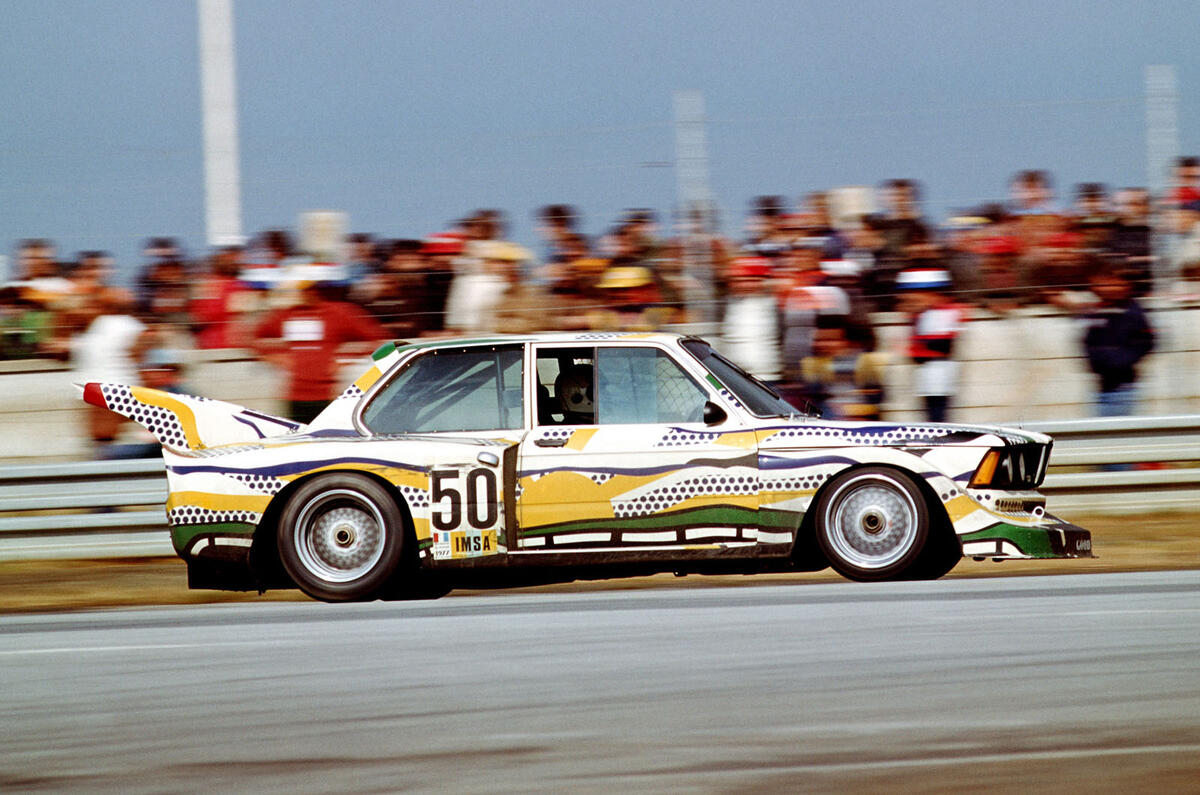
Furthermore, these vehicles have found a permanent home in the world’s most prestigious museums. BMW Art Cars have been exhibited at the Louvre in Paris, the Royal Academy in London, and the Guggenheim in New York and Bilbao. This elevates the automobile from a consumer product to a cultural artifact.
Analysis: Why Art Cars Resonate in the Digital Age
The current resurgence of interest in art cars can be attributed to a desire for authenticity in an increasingly digital and commercialized world. In Formula 1 and the World Endurance Championship (WEC), liveries have become increasingly dictated by "brand guidelines" and corporate synergy. This often results in designs that feel sterile.
Art cars, by contrast, offer a "human touch." They represent a moment of creative freedom where the driver, the engineer, and the artist collaborate on something that has no purpose other than to be striking. In the age of social media, where visual "stopping power" is the ultimate currency, the bold colors and unique patterns of an art car are perfectly suited for viral engagement.
Data from digital engagement platforms indicates that "special" liveries—of which art cars are the pinnacle—generate up to 400% more social media interactions than standard season liveries. This has led to a trend of "one-off" liveries for specific races, such as McLaren’s Gulf-themed car for the 2021 Monaco Grand Prix or Red Bull’s fan-designed liveries for US-based races. However, these are still fundamentally corporate exercises. The true art car remains a step above, as it is driven by an artistic vision rather than a marketing department’s brief.
Conclusion: The Future of the Rolling Canvas
As the automotive industry transitions toward electric vehicles (EVs) and autonomous technology, the role of the car as a symbol of personal expression is evolving. Art cars provide a bridge between the mechanical past and the digital future. We are already seeing the emergence of "digital art cars," where LED body panels or augmented reality (AR) overlays allow a vehicle’s appearance to change in real-time.
However, the physical art car—the hand-painted, wind-sculpted racing machine—remains the gold standard for automotive beauty. By prioritizing creativity over corporate visibility, these vehicles remind us that cars are not just tools for transportation or billboards for tobacco and oil companies; they are sculptures in motion. While the JPS and Gulf liveries will always hold a place in the hearts of racing purists, the art car represents the highest form of the medium, proving that the most memorable designs are those that dare to be art first and advertisements second.