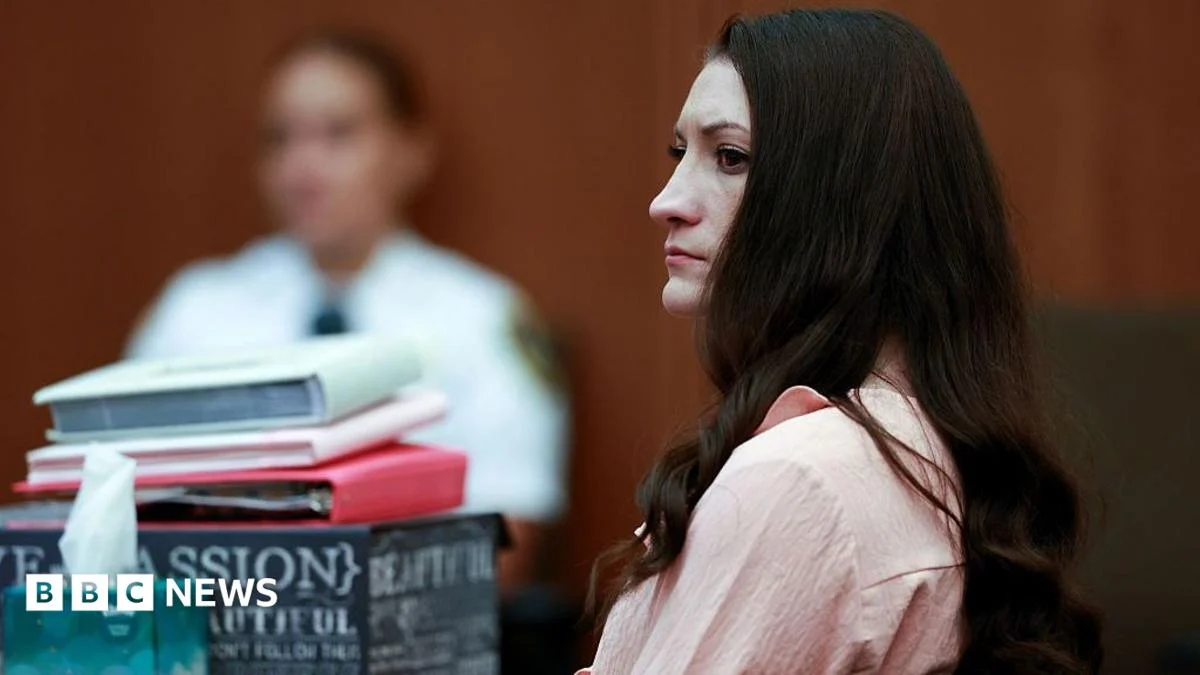
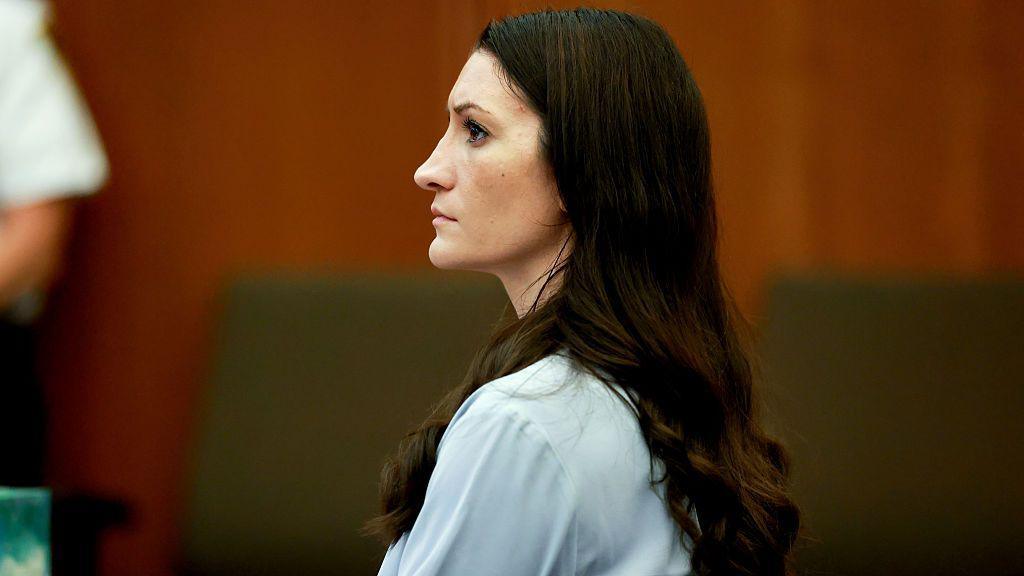
A jury is currently deliberating the fate of Lindsay Clancy, the Massachusetts mother accused of the tragic murders of her three young children in their suburban Boston home. This harrowing case has profoundly captivated the American public, not only due to the unspeakable nature of the alleged crimes but also because of the complex legal and medical arguments at its core. Clancy, now 36, does not dispute that she was responsible for the deaths of her children, but her legal team argues strenuously that she should not be held criminally responsible, citing severe mental illness, specifically postpartum psychosis, as the mitigating factor. She faces three counts of first-degree murder in the January 2023 deaths of her five-year-old daughter Cora, three-year-old son Dawson, and eight-month-old son Callan. A conviction by the jury could result in a sentence of life in prison without the possibility of parole. The emotional five-week trial has brought to light distressing details and sparked widespread discussions about maternal mental health, the justice system’s capacity to handle such cases, and societal understanding of severe psychiatric conditions.
The Tragic Events and the Core Legal Battle
The events of January 24, 2023, unfolded in the quiet Duxbury, Massachusetts, residence shared by the Clancy family. Prosecutors allege that on that day, Lindsay Clancy intentionally strangled all three of her children with fitness bands before jumping from a second-story window of their home. The fall left Clancy paralyzed, and she has attended the entirety of her trial in a wheelchair, a stark visual reminder of the tragedy. From the outset, Clancy’s attorneys have not contested her physical role in the deaths. Instead, their defense hinges entirely on an insanity plea, asserting that Clancy was in the throes of severe mental illness, characterized by profound hallucinations and delusions, following the birth of her youngest child. They presented evidence of her ongoing treatment for mental health problems, including a voluntary check-in to a psychiatric hospital just days prior to the children’s deaths, aiming to establish a pattern of deteriorating mental state.
Conversely, the prosecution has presented a narrative of calculated and intentional acts, arguing that Clancy made a deliberate decision to end her children’s lives and, therefore, should be held fully accountable under the law. A key element of their argument is the allegation that Clancy intentionally sent her husband, Patrick Clancy, out on errands, ensuring he would not be home at the time of the killings. This act, they contend, demonstrates a level of planning inconsistent with a complete break from reality. The juxtaposition of these two narratives—one of a mother consumed by a devastating illness, the other of a mother making a conscious, albeit horrific, choice—forms the central conflict that the jury must resolve.
Unraveling a Timeline of Deterioration: Family Testimonies
The five-week trial was punctuated by highly emotional testimonies from Clancy’s family members, who provided a harrowing chronology of her declining mental health. Her husband, Patrick Clancy, took the stand for two days, recounting in gruesome detail the day his children died and the preceding months of his wife’s "big spiral." He described a rapid and severe deterioration in her condition beginning approximately a month before the deaths, marked by significant weight loss, profound depression, and a "really hard time" coping. Patrick testified about Clancy’s intermittent attempts to seek professional help, the myriad medications she was prescribed, and her candid admissions of suicidal thoughts. His testimony painted a picture of a family desperately trying to navigate an escalating mental health crisis.

The emotional impact of Patrick’s testimony reached its peak when the jury heard the recording of his frantic 911 call. In the recording, his screams of "She killed the kids" after discovering his children in the basement reverberated through the courtroom, eliciting audible sobs from Lindsay Clancy herself. It was a visceral moment that underscored the immense pain and devastation inflicted upon the family. It is crucial to note that throughout the trial, and despite baseless conspiracy theories that circulated online regarding his involvement, Patrick Clancy was never considered a suspect by investigators, a fact repeatedly affirmed by Clancy’s own admission and her legal team’s defense strategy.
Further corroborating the defense’s claims of a severe mental health crisis, Lindsay’s former mother-in-law, Susan Clancy, testified that Lindsay was "begging for help" in the months leading up to the tragedy. She described Lindsay’s struggles with insomnia, loss of appetite, and pervasive anxiety and sadness, noting a stark contrast to her previously "very nurturing" maternal demeanor before the birth of her youngest son, Callan. Lindsay’s mother, Paula Musgrove, also testified, revealing that her daughter had expressed thoughts of harming the children a month prior to their deaths. Musgrove recounted her daughter becoming increasingly paranoid, expressing fears that her prescribed medications were "destroying her mind." Lindsay’s sister, Allison Ozga, reinforced these accounts, telling the court that her sister was experiencing daily suicidal thoughts in the month before the killings. These collective family testimonies provided a powerful, unified narrative of a woman spiraling into a severe mental health crisis, creating a crucial backdrop for the defense’s insanity plea.
The Battle of Experts: Postpartum Psychosis Under Scrutiny
A significant portion of the trial involved intense battles between over ten expert witnesses, called by both the defense and the prosecution, who offered conflicting assessments of Clancy’s mental state. The defense meticulously argued that Clancy suffered from postpartum psychosis, a rare but severe psychiatric emergency that can affect women after childbirth. This condition is characterized by a rapid onset of psychotic symptoms, including mania, depression, hallucinations, and delusions, typically within the first two weeks to three months postpartum. It is distinct from postpartum depression in its severity and the presence of psychotic features. The defense aimed to convince the jury that Clancy’s actions were a direct manifestation of this severe condition, rendering her incapable of understanding the wrongfulness of her actions or conforming her conduct to the law.
However, the prosecution’s experts challenged this diagnosis, leading to heated exchanges in the courtroom. One particularly contentious moment involved Dr. Jennifer Tufts, a psychiatrist who had treated Clancy over a dozen times for five months. Testifying for the prosecution, Dr. Tufts asserted that Clancy did not exhibit signs of psychosis during their sessions, stating there were "no serious signs that her safety or anyone else’s safety was at risk." Defence attorney Kevin Reddington, however, pointed to Tufts’ own medical notes, which described Clancy’s "not hyper, pressured speech." Pressured speech, a rapid and frantic way of talking, is a known symptom of mania and psychosis. Dr. Tufts denied that she believed Clancy had pressured speech, claiming the "not" applied to both "hyper" and "pressured." Her defiant response, "I don’t care what it says. I know what I meant," underscored the deep divisions in expert opinion and raised questions about the interpretation of medical records.
Another key confrontation involved prosecutor’s expert psychiatrist Dr. Avram Mack, whom Reddington repeatedly questioned about whether postpartum psychosis is a recognized diagnosis. Dr. Mack maintained that the American Psychiatric Association views postpartum psychosis as a "proposed illness" or a specifier for other diagnoses (such as "Peripartum onset" for major depressive disorder or bipolar disorder in the DSM-5, the diagnostic manual for mental disorders), rather than a standalone diagnosis. This nuanced distinction, while medically accurate in the context of diagnostic manuals, was leveraged by the defense to highlight the prosecution’s perceived downplaying of the severity and distinct nature of the condition. Reddington’s frustrated retort, "I don’t care," during this exchange, captured the intense frustration of the defense in trying to validate the existence and impact of this specific maternal mental illness within the legal framework. These expert clashes highlighted the inherent difficulty in translating complex psychiatric conditions into the black-and-white terms often required by the legal system, leaving the jury to grapple with differing interpretations of Clancy’s mental state.
Public Outcry and Broader Implications for Maternal Mental Health
Beyond the confines of the courtroom, the Lindsay Clancy trial has ignited a significant public conversation, particularly amplified through social media platforms. Thousands have followed the court proceedings online, and a visible movement of support for Clancy has emerged, with hundreds of women gathering outside the courthouse. Dressed in pink shirts emblazoned with slogans like "She Needed Help" and "Peace For Lindsay," these supporters represent a broader societal demand for increased awareness and improved care for maternal mental health issues. Their presence underscores a growing empathy for mothers who struggle with severe postpartum conditions and a critique of systems perceived as failing to provide adequate support.
The case has become a lightning rod for discussions around the spectrum of maternal mental health disorders, from common postpartum depression and anxiety to the rarer but devastating postpartum psychosis. Advocates argue that Clancy’s situation highlights systemic gaps in mental health screening, diagnosis, and treatment for new mothers. The trial has prompted calls for greater resources for perinatal mental health, better education for medical professionals, and a more compassionate understanding from the public and the legal system. Regardless of the verdict, the trial’s extensive coverage and public reaction have undeniably elevated the conversation surrounding these critical issues, pushing for a re-evaluation of how society supports new mothers and handles the tragic outcomes when that support is insufficient.
Judicial Directives and Ethical Quandaries
In the final days before closing arguments, the trial saw a significant legal skirmish when Clancy’s defense team requested a mistrial. This request stemmed from what they argued was prejudicial questioning by prosecutors regarding Clancy’s Catholic faith. Specifically, prosecutors asked Clancy’s former mother-in-law, Susan Clancy, whether she was aware that murder was considered a "mortal sin" after establishing her Catholic background. The judge, William Sullivan, immediately instructed jurors to disregard this testimony, recognizing its inappropriate nature.
The issue resurfaced when forensic psychologist Kirk Heilbrun, who interviewed Lindsay Clancy after the killings, testified that he had asked Clancy whether suicide was considered a "mortal sin" in the context of discussing her Catholic upbringing. The defense argued that introducing religious tenets, particularly the concept of "mortal sin," was highly prejudicial, implying moral culpability that could overshadow the legal question of criminal responsibility due to mental illness. Judge Sullivan ultimately denied the defense’s request for a mistrial, but he issued a stern and unequivocal rebuke to the prosecution, telling jurors that it was an "absolutely inappropriate area of testimony." He emphasized, "It is to be stricken. It is not to be considered. I can’t be any more clear of that," underscoring the legal system’s commitment to fairness and the separation of religious belief from criminal intent. This judicial intervention highlighted the delicate balance judges must strike to ensure a fair trial, particularly when emotional and potentially inflammatory topics are introduced.
Conclusion: Awaiting a Verdict with Broad Implications
As the jury deliberates, the Lindsay Clancy trial stands as a poignant and complex case that challenges the intersection of law, mental health, and societal compassion. The core dilemma facing the jurors is whether Clancy’s actions were the result of a severe mental illness that rendered her criminally irresponsible or a calculated, intentional act for which she must be held fully accountable. The verdict, whatever it may be, will not only determine Lindsay Clancy’s future but also carry significant implications for how the legal system in Massachusetts, and potentially beyond, addresses cases involving severe maternal mental health disorders. It will undoubtedly continue to fuel vital conversations about the critical need for better mental health support for new mothers, the complexities of diagnosing and treating postpartum psychosis, and the ongoing challenge of achieving justice in cases marked by such profound tragedy and human suffering. The outcome will be closely watched, shaping both legal precedents and public understanding for years to come.