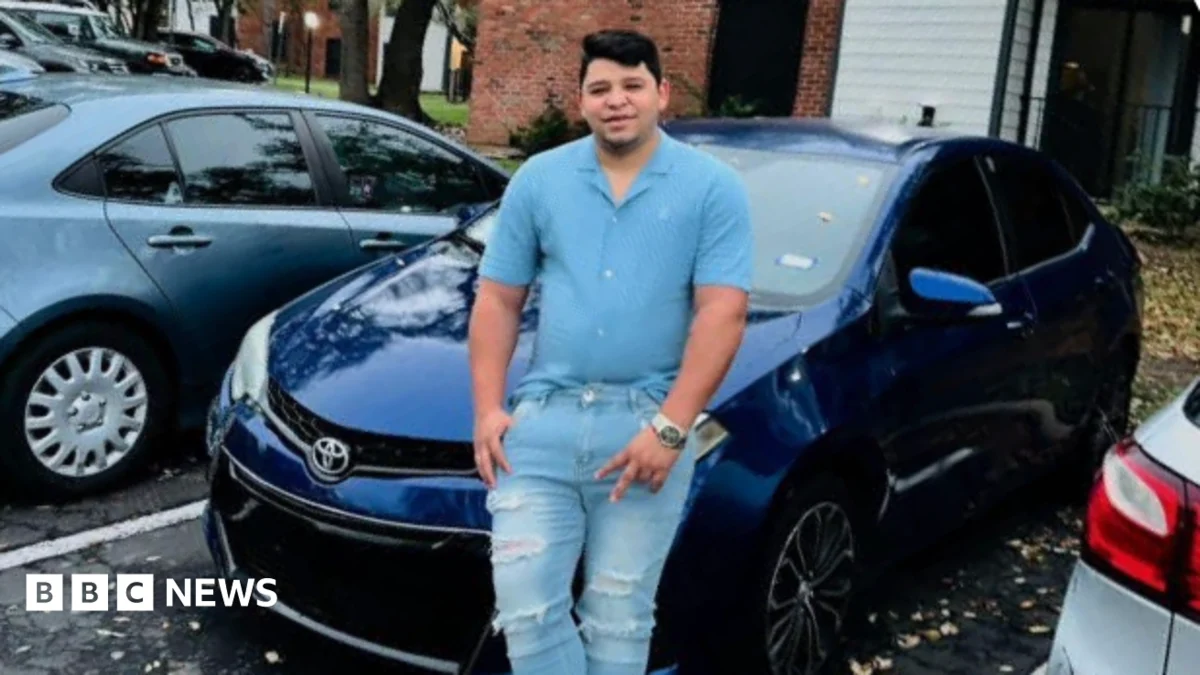
Austin, Texas — The legal battle surrounding Wilber Garces Perez, a Venezuelan national critically injured during an encounter with U.S. Immigration and Customs Enforcement (ICE) agents, has escalated significantly, with his immigration lawyer successfully securing a temporary restraining order (TRO) to prevent his immediate deportation. The incident, which saw Garces Perez shot and wounded, has ignited a fierce debate over federal immigration enforcement tactics, the welfare of detainees, and the transparency of agency operations, drawing sharp criticism from advocates and public officials alike, while federal authorities staunchly defend their actions and policies.
A Temporary Reprieve and Ongoing Medical Concerns
Garces Perez’s immigration attorney, Kate Lincoln-Goldfinch, confirmed the federal lawsuit she filed led to a crucial temporary block on his removal from the United States. This legal maneuver ensures that Garces Perez cannot be deported before a scheduled in-person court appearance on September 30, a date deemed essential for his legal proceedings. Lincoln-Goldfinch announced the development on social media, stating, "For now, we have secured a temporary block on his deportation while his case moves forward. This is an important step, but our work is not over." The attorney underscored the critical need for Garces Perez to receive "appropriate medical care" and vowed to "continue fighting to protect his rights."
The severity of Garces Perez’s injuries remains a central concern. He sustained a fractured clavicle from the gunshot wound and is currently wearing a sling, experiencing "significant swelling and pain," according to Lincoln-Goldfinch. The full extent and cause of a reported loss of movement in his arm have yet to be definitively determined, adding urgency to the calls for comprehensive medical evaluation and treatment. The legal team’s immediate focus is to ensure his physical recovery is prioritized while navigating the complex immigration system.
Chronology of a Contentious Encounter
The events leading to the current legal and public outcry began on a Sunday afternoon in Austin, Texas.
- Sunday Afternoon: The incident unfolds. According to Garces Perez’s lawyer, he was making a DoorDash delivery when an unmarked black truck sideswiped his vehicle. Unaware it was an ICE vehicle, he made a U-turn. His car was reportedly hit a second time before agents exited their vehicle and shot him.
- Hours Later (Sunday): Dozens of protesters gather at the scene of the shooting, some waving flags of Mexico and Guatemala, carrying signs demanding that ICE leave the city. This immediate public reaction signaled the deep community tensions surrounding federal immigration enforcement.
- Monday Evening: Following his initial treatment and transfer to a detention facility, Garces Perez was reportedly unable to move his arm. He was subsequently taken back to a hospital for further treatment before being returned to the detention facility. His attorney alleges that during this transfer, despite his injury, he was handcuffed, shackled at the ankles, placed in a waist chain, and handled roughly. Furthermore, Lincoln-Goldfinch claims that detention personnel revoked his communication privileges and moved him from an infirmary into an isolated room furnished with a flat, non-adjustable bed, raising serious questions about his welfare and access to legal counsel.
- Tuesday: A flurry of official and public reactions erupts.
- The Austin Police Department (APD), which was not involved in the shooting itself but responded to the scene, releases dashcam and body camera footage. While the footage does not capture the shooting, several gunshots can be heard in one dashcam clip. Other footage shows officers approaching Garces Perez’s car and detaining him, revealing what appears to be a single gunshot wound in his back when his t-shirt is cut away.
- The Department of Homeland Security (DHS) issues a strong statement pushing back against what it termed "false narratives," attributing the spread of "lies" to sanctuary cities and media, and warning against resisting officers or evading arrest.
- Texas lawmaker Joaquin Castro, a Democrat, publicly demands Garces Perez’s release from detention.
- Local and state officials voice calls for an independent investigation into the shooting incident, emphasizing the need for transparency and accountability.
- Garces Perez’s lawyer files the federal lawsuit for a temporary restraining order.
- September 30: The client is ordered to appear in person before a judge, a date that now serves as a crucial deadline for preventing any potential deportation.
Conflicting Narratives: The Shooting and Aftermath
The incident has been characterized by starkly contrasting accounts from Garces Perez’s legal team and federal authorities.
The Attorney’s Account: Kate Lincoln-Goldfinch painted a picture of a routine day for her client, who was working as a DoorDash delivery driver. The unprovoked sideswiping by an unmarked black truck, followed by a second collision, then agents emerging and opening fire, suggests a lack of clear identification or warning from the federal officers. This narrative raises questions about the protocols for identifying law enforcement in such encounters and the necessity of using lethal force in what was presented as a traffic stop situation. The attorney’s emphasis on Garces Perez’s unawareness that the truck belonged to ICE agents highlights a potential for confusion and misinterpretation in high-stress situations involving unmarked vehicles.
DHS’s Counter-Narrative: The Department of Homeland Security, through Secretary Markwayne Mullin, offered a firm and uncompromising counter-narrative. Mullin’s statement to the BBC directly refuted what he called "false narratives," asserting that Garces Perez is "an illegal alien who has no legal status to be here." He further claimed that Garces Perez had "been given some of the best medical care he’s ever received in his life." DHS stated the man, whom they did not name in their statement, was "the subject of a targeted vehicle stop" and confirmed his work permit had expired the previous year. Secretary Mullin concluded with a resolute declaration: "No amount of smears and false narratives will slow down ICE from doing its job by removing dangerous illegal aliens from our communities and making America safe again." This statement frames the incident as a legitimate enforcement action against an individual lacking legal status, emphasizing national security and public safety.
Medical Care and Detention Conditions: A Point of Contention
The dispute extends beyond the shooting itself to the conditions and medical treatment Garces Perez has received in detention.
Lincoln-Goldfinch’s allegations detail a concerning environment for an injured detainee: rough handling during transfer, communication privileges revoked, and placement in an isolated room with an inadequate bed. These claims suggest a disregard for his medical needs and potential violations of his rights to humane treatment and access to legal counsel, particularly critical for someone with a severe injury.
DHS, however, directly contradicted these claims. In its Tuesday statement, the agency asserted that Garces Perez had received "around the clock" medical care. It specifically denied claims that he received no pain medication and was forced to sleep on the floor, stating, "This alien was released from the hospital and arrived at the detention facility just a few hours later, where he slept on a bed." This rebuttal aims to present a picture of professional and adequate care within the detention facility, contrasting sharply with the attorney’s allegations. The discrepancy between these accounts underscores the difficulty in verifying conditions within detention facilities without independent oversight.
Broader Context: Immigration Enforcement and "Sanctuary Cities"
The incident involving Garces Perez unfolds against a backdrop of intensified immigration enforcement and ongoing tensions between federal agencies and local jurisdictions, particularly those labeled "sanctuary cities." While Austin is not officially designated a "sanctuary city," its local policies and community sentiment often align with principles that limit cooperation with federal immigration authorities, leading to friction.
ICE operations, especially in urban areas, frequently draw scrutiny for their tactics, which can include the use of unmarked vehicles and plainclothes officers, sometimes leading to confusion among the public. The agency’s mandate to apprehend individuals lacking legal status or those with expired visas often puts it at odds with local communities that advocate for more humane and less disruptive enforcement strategies. The DHS Secretary’s direct criticism of "sanctuary cities" in his statement highlights the political dimension of this ongoing debate, portraying local non-cooperation as an impediment to federal law enforcement and a contributor to "false narratives."
The surge of Venezuelan migrants to the U.S. in recent years also provides important context. Many have fled economic collapse and political instability in their home country, seeking asylum or other forms of relief. While some may initially enter with temporary permits or pending asylum claims, navigating the complex U.S. immigration system can lead to periods where their legal status becomes precarious, as was the case with Garces Perez whose work permit had expired. The "gig economy" aspect of his employment as a DoorDash driver further illustrates how many undocumented individuals integrate into the economy, often in jobs with fewer formal checks, making them vulnerable to enforcement actions during their daily lives.
Political and Community Fallout
The shooting has quickly become a flashpoint for political and community action.
Texas lawmaker Joaquin Castro, a prominent Democrat, swiftly condemned the situation, calling for Garces Perez’s release from detention. Castro’s intervention reflects a broader movement among progressive politicians and immigrant advocates who frequently challenge the severity of federal immigration enforcement and advocate for due process and humane treatment for all individuals, regardless of immigration status.
Local and state officials have joined the chorus, pushing for an independent investigation into the shooting. Calls for independent probes are common in incidents involving law enforcement use of force, aiming to ensure transparency, accountability, and public trust. The Austin Police Department’s release of dashcam and body camera footage, while not showing the shooting, is a step towards transparency, providing objective visual and audio evidence of the immediate aftermath. However, the absence of footage depicting the actual moment of the shooting leaves critical questions unanswered and fuels demands for a more comprehensive inquiry.
The immediate protests following the incident, with demonstrators carrying flags and signs, underscore the deep-seated anger and fear within immigrant communities regarding ICE operations. The demands for ICE to leave Austin reflect a desire for local control and protection against federal enforcement actions perceived as aggressive or unwarranted. DHS’s unequivocal response that "ICE will not be slowing down nor leaving Austin" signals a firm resolve to continue its operations, irrespective of local opposition, setting the stage for continued confrontations between federal authority and community resistance.
Implications and Future Outlook
The Garces Perez case is poised to have significant implications across several fronts. Legally, the temporary restraining order is a critical, albeit preliminary, victory, allowing his legal team to pursue his case without the immediate threat of deportation. The federal lawsuit itself could set precedents regarding the use of force by ICE agents, particularly in non-violent or traffic-related encounters, and could further scrutinize the medical and humane treatment standards within immigration detention facilities.
From a policy perspective, the incident will likely intensify the ongoing national debate about immigration enforcement, border security, and the balance between federal authority and local community values. Secretary Mullin’s strong rhetoric suggests a continued hardline stance from the federal government, while calls from politicians like Joaquin Castro signal persistent efforts to reform immigration policies and protect immigrant rights.
For Garces Perez himself, the road ahead is long and uncertain. While the immediate threat of deportation has been averted, he still faces a complex legal battle to resolve his immigration status, compounded by his serious injuries and the need for extensive medical care. His case will continue to be a focal point for advocates, legal experts, and politicians, serving as a powerful example of the human impact of U.S. immigration policies and enforcement practices. The outcome of his legal fight will not only determine his personal future but could also influence the broader landscape of immigration law and enforcement in the United States. The U.S. Attorney’s Office in Texas, having declined to comment on the case, maintains a professional distance as the legal proceedings unfold, indicating the sensitive and ongoing nature of the matter.