


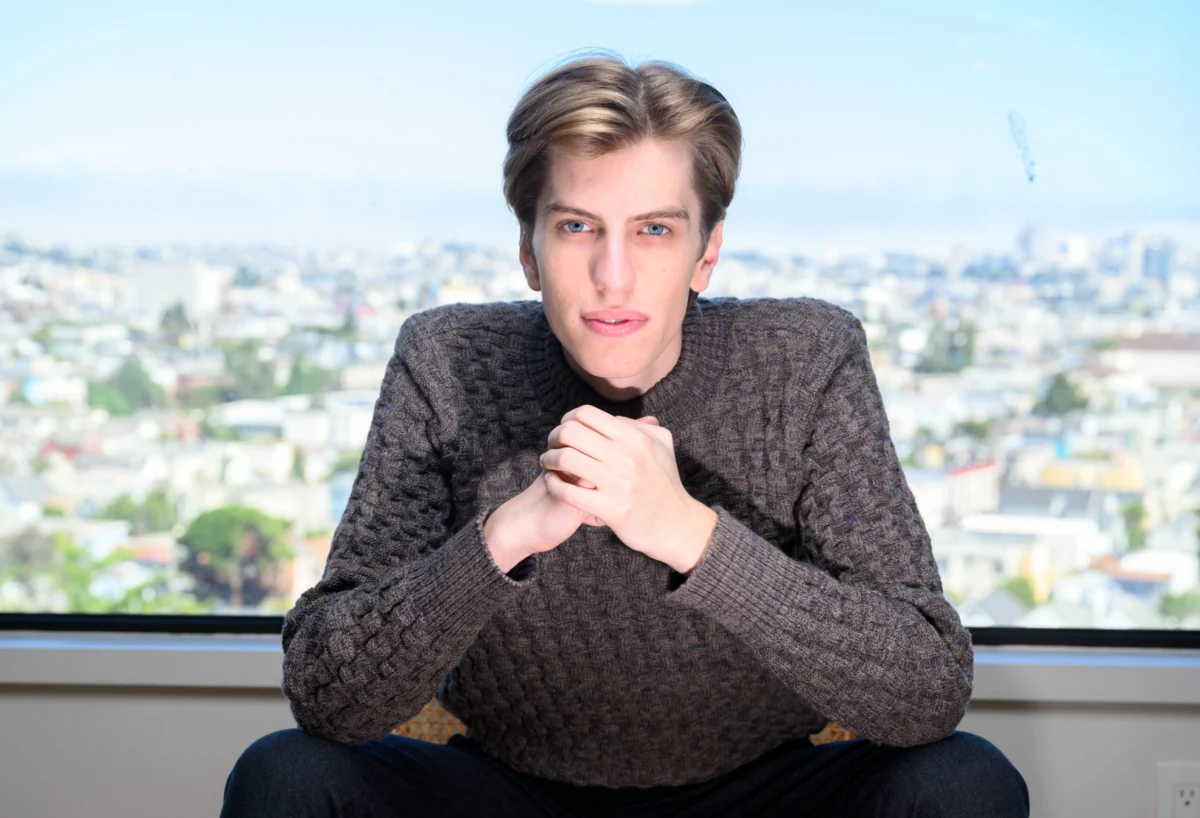
Leopold Aschenbrenner, once hailed as a prescient oracle of artificial super intelligence, witnessed the dramatic unraveling of his AI-themed hedge fund, Situational Awareness, this week, as its assets plummeted from a peak of $45 billion to approximately $10 billion. The precipitous decline, triggered by a sharp downturn in semiconductor stocks and subsequent Wall Street margin calls, has cast a stark spotlight on the inherent risks of highly leveraged investments in volatile emerging sectors, and the often-fragile line between visionary insight and market reality. The saga of Aschenbrenner’s meteoric ascent and sudden, public reversal has resonated across both the tech world and financial markets, marking him as the most prominent casualty to date in the turbulent landscape of the AI boom.
The Rise of a Self-Proclaimed Prophet
Just two years prior, Aschenbrenner, a former OpenAI researcher, presented himself as one of a select few capable of discerning the future with unparalleled clarity. His sprawling, 165-page essay, "Situational Awareness," published in June 2024, quickly became essential reading within Silicon Valley circles. In this manifesto, Aschenbrenner articulated a bold vision: the imminent arrival of artificial general intelligence (AGI) within years, a timeline he argued governments and the wider public were severely underestimating. He positioned himself not merely as an analyst, but as a prophet, gifted with a unique understanding of AI’s trajectory and its profound societal implications. This intellectual cornerstone would later lend its name to his ill-fated hedge fund.
Aschenbrenner’s journey to this self-anointed status began with a childhood marked by exceptional intellectual gifts. Born in Germany to physician parents, he displayed an early and prodigious aptitude for mathematics and computer science. He accelerated through the German school system, graduating high school at the tender age of 15. His academic prowess continued at Columbia University, where he earned valedictorian honors at 19. During his time at Columbia, he garnered attention for a significant academic paper titled "Existential Risk and Growth," which explored the profound societal challenges and opportunities presented by advanced technologies.
A Columbia classmate, Sofia Montrone, who was the salutatorian in their 2021 graduating class, recalled her initial encounter with Aschenbrenner via Zoom shortly before their graduation. Montrone noted that Aschenbrenner was not widely known as a campus luminary, describing him simply as "some guy." Her impression of him was "child-like" and socially awkward, observations that align with Aschenbrenner’s own public reflections on his personality. He has previously spoken about his "weirdness" and "disagreeableness," qualities he believed were stifled in German culture but which he came to view as the source of his intellectual edge in a world often resistant to unconventional thinking.
The Effective Altruism Pipeline and Controversial Beginnings
While at Columbia, Aschenbrenner co-founded the university’s chapter of Effective Altruism (EA), a philosophical movement popular in certain tech enclaves. EA posits that individuals should use evidence and reason to determine the most effective ways to benefit others, often encouraging high earners to maximize their income to donate to carefully selected causes. This network proved to be a crucial career conduit for Aschenbrenner, eventually connecting him with other prominent EA proponents, including Sam Bankman-Fried, the now-disgraced founder of the cryptocurrency exchange FTX.
Following his graduation in 2021, Aschenbrenner joined the Future Fund, the philanthropic arm of FTX, working alongside Bankman-Fried from a penthouse in the Bahamas. This stint at FTX, an organization that would spectacularly collapse under a cloud of fraud and mismanagement, provided Aschenbrenner with early exposure to high-stakes, high-risk financial environments. While his role was specifically with the philanthropic division, his association with FTX and its eventual implosion serves as a cautionary footnote, hinting at an early pattern of operating within fast-paced, loosely regulated ecosystems where ambitious visions sometimes outstrip practical safeguards.
In 2023, Aschenbrenner transitioned to OpenAI, joining its critical Superalignment team. This team, led by Ilya Sutskever, focused on the paramount challenge of ensuring that advanced artificial intelligence remains aligned with human interests and values. It was during his tenure here that Aschenbrenner’s concerns about security protocols intensified. After an internal system breach, he authored a memo to the board, raising alarms about the company’s security vulnerabilities and specifically naming China as a potential foreign espionage threat.
His time at OpenAI ended controversially in 2024, when the company fired him, alleging improper sharing of confidential information. Aschenbrenner vehemently disputed this characterization, asserting that he was merely raising legitimate concerns about the company’s security practices. Scott Aaronson, a distinguished computer scientist who previously worked on AI safety at OpenAI, defended Aschenbrenner, stating, "I liked Leopold while at OpenAI. I was sorry when he got pushed out because of sharing information in a way leadership didn’t approve of. It sounded like he was trying to do the right thing and they overreacted." An OpenAI spokesman declined further comment, referring to past statements that indicated disagreement with many of Aschenbrenner’s claims.
From Manifesto to Multibillion-Dollar Fund
Weeks after his departure from OpenAI, Aschenbrenner capitalized on his growing notoriety and deep-seated convictions about AI’s trajectory. His June 2024 essay, "Situational Awareness," served as both a public declaration of his beliefs and a strategic launchpad. The essay’s central thesis—that artificial general intelligence (AGI) was not a distant dream but a near-term reality, potentially arriving within years, and that governments were woefully unprepared—resonated powerfully in the tech world. Admirers lauded it as the work of a prodigy, offering invaluable insights into the future of AI, while critics questioned the certainty of his predictions and the extent of his own perceived authority on such complex timelines.

By July 2024, Aschenbrenner leveraged this rising fame and intellectual cachet into substantial seed capital for his hedge fund, also named Situational Awareness. He reportedly secured $225 million from an impressive roster of tech luminaries, including Stripe co-founders Patrick and John Collison, former GitHub CEO Nat Friedman, and prominent investor Daniel Gross. This rapid accumulation of capital underscored the intense belief among certain Silicon Valley investors in Aschenbrenner’s vision and his ability to translate that vision into financial success. He famously declared at the time, "Before long, the world will wake up… If they are seeing the future even close to correctly, we are in for a wild ride."
What followed was an extraordinary two-year run, virtually unprecedented in recent Wall Street history. Situational Awareness, under Aschenbrenner’s guidance, amassed gains exceeding 1,000% since its inception. The Wall Street Journal reported last month on his fund’s phenomenal success, highlighting the astounding fact that Aschenbrenner was just 24 years old. This period solidified his image as an AI investment guru, with online followers closely scrutinizing his quarterly filings for clues on the hottest AI stocks, believing his unique "situational awareness" offered an unparalleled edge. At its zenith earlier this month, the fund commanded an impressive $45 billion in assets, a testament to its explosive growth and the voracious appetite for AI-related investments.
The Unraveling: Leverage, Volatility, and Margin Calls
The spectacular ascent of Situational Awareness, however, concealed a perilous foundation: aggressive leverage. Reports indicated that the fund employed as much as 400% leverage, meaning it borrowed heavily to amplify its investment positions. While leverage can significantly boost returns during bull markets, it equally magnifies losses when markets turn. This inherent risk, though well-known to seasoned financial professionals, appeared to be overlooked by some of Aschenbrenner’s fervent followers and, arguably, by the young manager himself.
The limits of Aschenbrenner’s seemingly infallible vision were brutally exposed this week. A confluence of factors conspired against the highly leveraged fund. The broader market experienced a significant correction, with the semiconductor sector—a cornerstone of AI development and thus a major focus for Situational Awareness—bearing the brunt of the downturn. Analysts had been pointing to growing concerns over potential overvaluation in semiconductor stocks, alongside broader macroeconomic headwinds such as persistent inflation anxieties and the prospect of higher-for-longer interest rates. These fears manifested in a sharp decline across key semiconductor players, including those heavily favored by Situational Awareness.
The immediate trigger for the fund’s collapse was a cascade of margin calls. A margin call occurs when the value of securities in a brokerage account falls below a certain level, prompting the broker to demand additional funds or the liquidation of assets to cover potential losses. With 400% leverage, even a relatively modest decline in the value of the fund’s holdings quickly led to massive margin deficiencies. Unable to meet these demands, Situational Awareness was forced into a fire sale of its public equity bets. Hard-hit names like SK Hynix, a major memory chip manufacturer, and CoreWeave, a specialized cloud provider for AI, were offloaded at a significant discount to Ken Griffin’s Citadel, one of the world’s largest hedge funds. This forced liquidation dramatically reduced the fund’s public holdings, driving its total assets down to roughly $10 billion.
Jerry Diao, who runs a Wall Street coaching firm, offered a perspective common among financial veterans: "A lot of people saw this blow-up as a matter of not if, but when. Maybe his views on AI are correct in the long run, but in the public markets, you have to be prepared for the short-term." This sentiment underscores the stark difference between long-term technological prognostication and the immediate, unforgiving realities of market trading, particularly with excessive leverage. The hedge fund did not immediately respond to a request for comment from CNBC regarding the rapid decline.
Beyond Public Markets: Private Stakes and Personal Irony
While the public equity portfolio of Situational Awareness experienced a catastrophic collapse, approximately one-third of the fund’s holdings were in private companies. A significant portion of this private stake was a multibillion-dollar investment in Anthropic, a prominent AI research and safety company. This diversification into private, less liquid assets might offer some insulation from the immediate public market turmoil, though the valuation of such stakes can also be volatile and subject to broader market sentiment.
In a poignant twist of fate, the near-collapse of Situational Awareness coincided with Aschenbrenner’s wedding, scheduled for this upcoming weekend. He is engaged to Avital Balwit, who serves as the chief of staff for Anthropic CEO Dario Amodei. This personal detail adds another layer of human drama to a story already replete with ambition, intellectual hubris, and financial catastrophe, highlighting the intense pressures and interconnectedness within the insular world of AI and its financial backers.
Broader Implications: A Cautionary Tale for the AI Investment Boom
The dramatic implosion of Situational Awareness serves as a potent cautionary tale for the burgeoning AI investment landscape. It highlights several critical implications:
- The Perils of Unchecked Hubris: Aschenbrenner’s rapid rise was fueled by a narrative of singular foresight and genius. This event underscores that even profound intellectual acumen in a specific domain does not guarantee success in the complex and unforgiving world of financial markets, especially when combined with inexperience in money management and aggressive risk-taking.
- The Double-Edged Sword of Leverage: The use of 400% leverage, while initially amplifying returns to astronomical levels, ultimately proved to be the fund’s undoing. It vividly illustrates how leverage can turn minor market fluctuations into catastrophic losses, particularly in sectors prone to high volatility like emerging technologies. This could lead to increased scrutiny of leverage ratios in AI-focused funds across the industry.
- Market Realities vs. Visionary Projections: The incident underscores the fundamental difference between long-term technological predictions and short-term market dynamics. While Aschenbrenner’s long-term views on AGI might eventually prove correct, the public markets operate on quarterly earnings, macroeconomic shifts, and investor sentiment, which can be brutal even for fundamentally sound companies.
- Impact on AI Investment Sentiment: While unlikely to derail the broader AI boom, this high-profile failure could temper some of the irrational exuberance that has characterized parts of the sector. Investors might become more cautious, demanding greater transparency, more diversified strategies, and more experienced management from AI-themed funds. It could also shift focus from speculative, highly leveraged plays to more fundamentally sound, less aggressive investments within the AI ecosystem.
- Due Diligence and Investor Protection: The story raises questions about the due diligence performed by the initial seed investors and the responsibility of the financial industry to vet fund managers, regardless of their celebrity status within a specific tech niche. The fact that Aschenbrenner had no prior experience running money before launching a multi-billion dollar fund is a significant point of concern for many traditional finance professionals and regulators alike.
The saga of Leopold Aschenbrenner and Situational Awareness is a stark reminder that even in an era of unprecedented technological advancement and boundless ambition, the immutable laws of finance and risk management remain paramount. The "wild ride" Aschenbrenner predicted for the future of AI has indeed arrived, but not in the manner he or his investors might have envisioned, demonstrating that even the clearest vision of the future cannot always insulate one from the immediate, harsh realities of the present market.