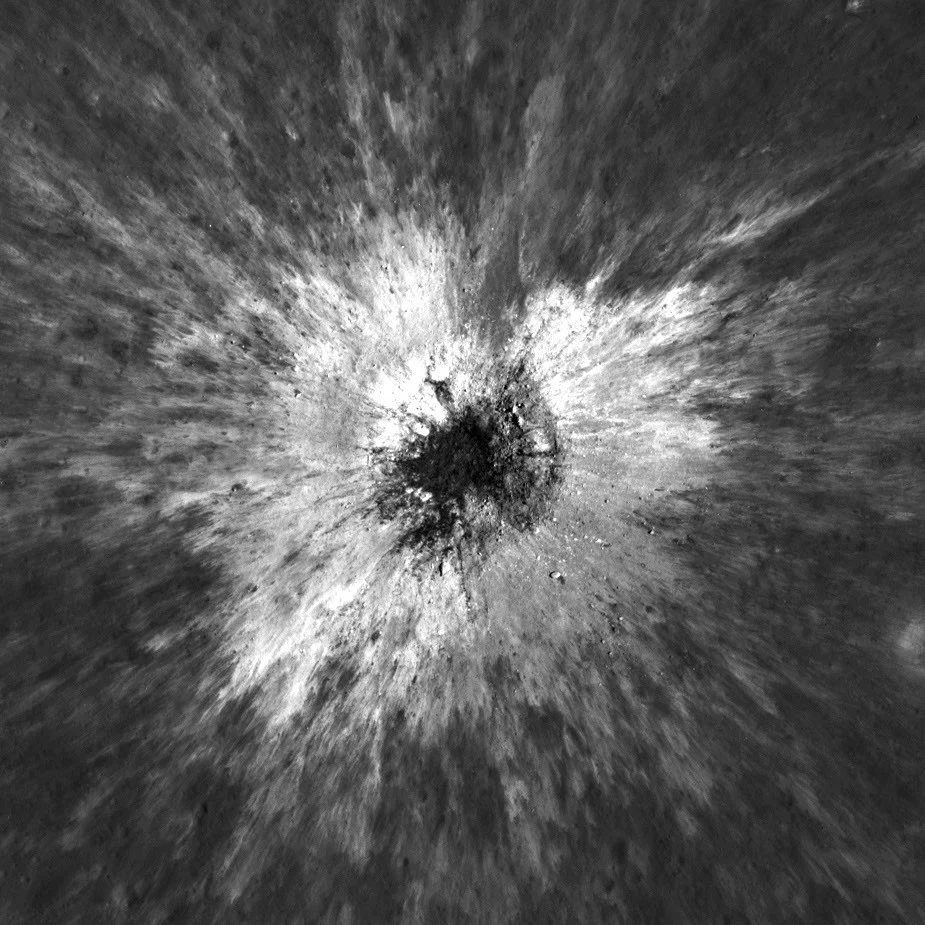
The lunar surface, a celestial canvas scarred by billions of years of cosmic collisions, has once again been dramatically altered by a rare and significant impact event. NASA’s Lunar Reconnaissance Orbiter (LRO), a sentinel continuously surveying Earth’s closest celestial neighbor, has captured stunning before-and-after imagery revealing a colossal new crater, approximately two soccer fields in diameter, formed between April and May of 2024. This monumental impact, resulting from a comet or asteroid roughly the size of a humpback whale, has been officially designated "McGetchin," in honor of the esteemed Apollo-era lunar scientist Dr. Thomas R. McGetchin. The unveiling of this remarkable geological feature on September 23, 2026, marks a pivotal moment for planetary science, providing a unique, real-time dataset for understanding the mechanics of hypervelocity impacts and the ongoing evolution of the Moon’s ancient crust.
A Rare Glimpse into Lunar Resurfacing Dynamics
The appearance of a crater of this magnitude, measuring an estimated 200 to 240 meters across, is an exceedingly rare phenomenon. Planetary scientists estimate that impacts capable of forming such large features occur only once every 132 years on the Moon. This statistical infrequency underscores the immense scientific value of the McGetchin crater, offering researchers an unparalleled opportunity to study the fresh aftermath of a significant extraterrestrial bombardment. The impactor, believed to be between 10 and 20 meters (30-60 feet) in size, delivered an immense kinetic energy payload to the lunar surface. While the exact composition – whether a volatile-rich comet or a rocky asteroid fragment – remains subject to further analysis, the sheer scale of the resulting excavation points to a high-velocity collision characteristic of objects traversing the inner solar system. Given typical impact velocities for such objects, which can range from 15 to 20 kilometers per second, the energy released could be equivalent to tens or even hundreds of kilotons of TNT, a powerful force capable of dramatically reshaping the lunar landscape.
The Lunar Reconnaissance Orbiter, launched in 2009, has been instrumental in this discovery. Its suite of advanced instruments, particularly the Lunar Reconnaissance Orbiter Camera (LROC), which includes two Narrow Angle Cameras (NACs) and a Wide Angle Camera (WAC), has meticulously mapped and monitored the lunar surface for over a decade. LRO’s systematic monthly passes over vast swathes of the Moon’s terrain allow scientists to detect subtle changes, from small, newly formed craters to the movement of regolith. This continuous surveillance proved critical in identifying the fresh impact site. By comparing images acquired before April 2024 with those taken after May 2024, the dramatic transformation of the lunar landscape became undeniably evident. The crisp, sharply defined rim and the stark contrast with the surrounding older, more weathered terrain immediately signaled a recent and powerful event.
Chronology of a Cosmic Event and Its Discovery
The timeline of the McGetchin crater’s formation and subsequent discovery highlights the diligence and long-term commitment of lunar observation missions. For years, LRO has systematically imaged the Moon, building an unprecedented archive of its surface features. This continuous baseline data is what enabled the detection of such a recent change.
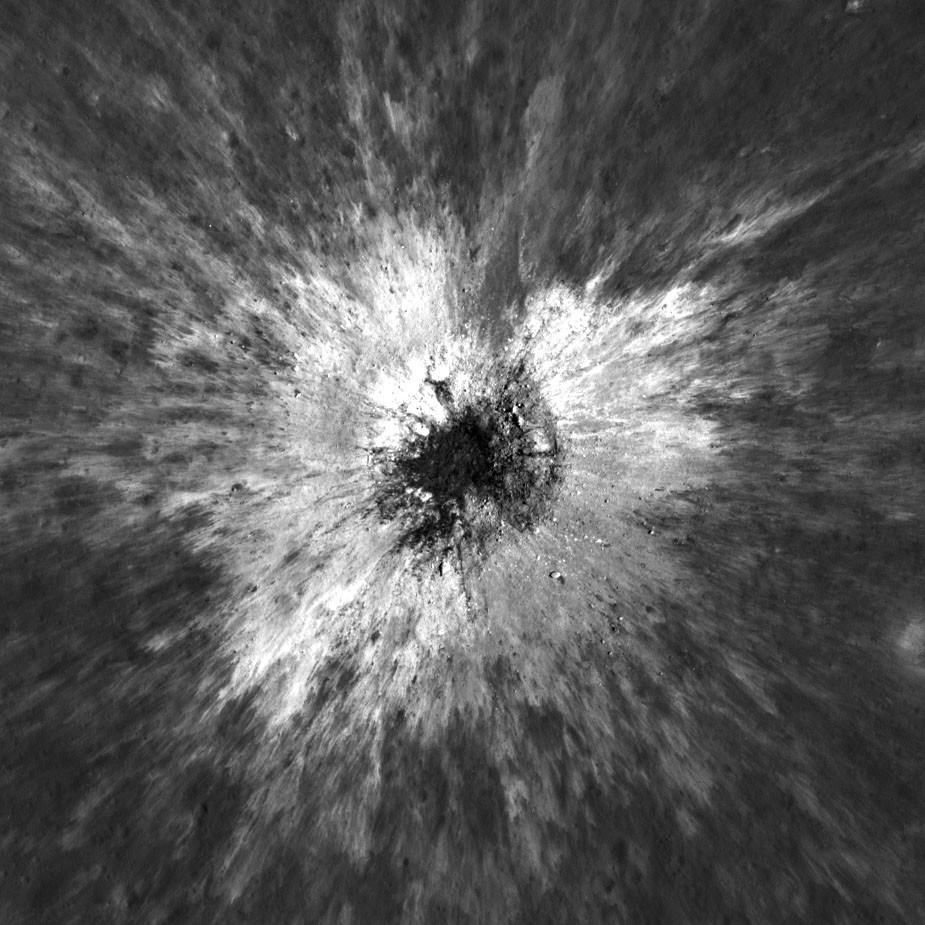
- Pre-April 2024: Routine LROC imaging data from prior months and years showed an undisturbed lunar surface in the precise region that would later become the McGetchin crater. These historical images serve as the crucial "before" snapshots, providing a pristine reference point against which changes could be meticulously measured.
- April – May 2024: Within this approximately 30-day window, the celestial projectile, a rogue comet or asteroid, collided with the Moon. While the precise moment of impact remains unknown, the LRO’s regular imaging schedule allowed scientists to constrain the event to this specific timeframe. The impact would have generated seismic waves propagating through the Moon’s interior, though without a currently active global lunar seismic network, direct detection of these waves was not possible.
- Post-May 2024: During subsequent orbital passes, LRO’s LROC instruments began acquiring new images of the region. Sophisticated change detection algorithms, often augmented by human review of comparative imagery, flagged the stark alteration. The fresh impact scar, characterized by its bright ejecta blanket – material excavated and thrown out from the impact site – and distinct morphology, stood out vividly against the older, more weathered lunar regolith.
- Spring/Summer 2024: Initial analysis by the LRO science team confirmed the presence of a new, large crater. This period would have involved detailed imaging from multiple angles, photometric analysis to understand surface texture and composition, and preliminary size and depth measurements. The initial findings would have spurred further dedicated observations, including specialized thermal imaging to investigate the impact’s effect on the lunar surface’s thermal properties.
- September 23, 2026: The official announcement and public release of the before-and-after images, along with a comprehensive scientific explanation, by the Astronomy Picture of the Day (APOD) initiative. APOD, a joint service of NASA/GSFC, NASA Science Activation, and Michigan Technological University, ensures broad public and scientific dissemination of such discoveries.
The meticulous nature of LRO’s mission, coupled with advanced image processing and analytical techniques, underscores humanity’s growing capability to monitor and understand dynamic processes occurring on other celestial bodies.
Anatomy of a Lunar Impact: The McGetchin Crater’s Structure
The McGetchin crater, spanning approximately 200 to 240 meters, exhibits classic impact crater morphology, albeit on a freshly formed scale. At its core is a deep, bowl-shaped depression, indicative of the immense energy transferred upon impact. Surrounding this central pit are sharply defined, raised ridges, forming a distinct rim that slopes gently back down to the undisturbed surface. This structure is a textbook example of an "excavation crater," where material is rapidly displaced outwards and upwards.
When an object impacts the Moon at hypervelocity speeds—typically tens of kilometers per second—the energy released is immense, far exceeding that of chemical explosions. Upon contact, intense shock waves propagate through the lunar surface, pulverizing, melting, and even vaporizing the target rock and regolith. A transient cavity forms almost instantaneously, rapidly expanding as material is ejected radially outward in a ballistic trajectory. This ejected material, known as ejecta, forms a blanket of debris that can extend many crater diameters away from the impact site, often appearing brighter than the surrounding older terrain due to the fresh exposure of subsurface material. The raised rim of the McGetchin crater is formed by a combination of the uplift of target material around the transient cavity and the deposition of some of the near-field ejecta. The interior walls of the crater would likely exhibit evidence of slumping and terracing as the unstable material settles post-impact, while the central floor might contain melt pools or a small central peak if the impact was sufficiently energetic.
The naming of the crater after Dr. Thomas R. McGetchin is a tribute to his pioneering work in lunar science. Dr. McGetchin (1939-1979) was a distinguished geologist and planetary scientist whose research significantly advanced our understanding of the Moon’s interior, volcanism, and the physical processes that shape planetary surfaces. His contributions, particularly during the Apollo era, which included analyzing samples and modeling lunar thermal evolution, laid foundational knowledge for future lunar missions. Naming a prominent, fresh geological feature after such a figure serves as a lasting recognition of his legacy and the continuous human endeavor to unravel the mysteries of our universe.
The Enigma of the "Cold Spot": Thermal Anomalies and Regolith Dynamics
One of the most intriguing discoveries associated with the McGetchin crater is the thermal anomaly detected by follow-up observations. Thermal imaging, almost certainly performed by LRO’s Diviner Lunar Radiometer Experiment, revealed a "large cold spot" that surrounds the impact site. This finding might seem counterintuitive at first glance, given the immense heat generated by a hypervelocity impact. However, the explanation lies in the unique properties of lunar regolith and the complex mechanics of impact.

The Moon’s surface is covered by a layer of fine, powdery, fragmented material called regolith, formed by billions of years of micrometeorite impacts pulverizing the underlying rock. Lunar regolith is an excellent insulator in its undisturbed state due to its porous, loosely packed structure in the vacuum of space. When a large impact occurs, the shock waves and excavation process dramatically alter the physical structure of the regolith in and around the crater. The impact "puffs up" or loosens the regolith even further, increasing its porosity and decreasing its bulk density within the ejecta blanket. This makes the affected regolith an even better insulator.
Here’s a more detailed breakdown of the thermal effects:
- Initial Heat Generation: The impact itself generated tremendous heat, momentarily creating a superheated plasma and vaporizing some material, while melting and fracturing subsurface rocks. The very center of the fresh crater might initially exhibit elevated temperatures due to this residual heat and the exposure of deeper, potentially warmer material.
- Regolith Disturbance and Ejecta Blanket: The immense energy of the impact shatters existing rock and compacts material directly beneath the impactor, but critically, it also excavates and redistributes a vast amount of regolith, creating a thick ejecta blanket that extends far beyond the visible crater rim. This ejected material, now even more porous and less dense than the undisturbed regolith, settles back down in a chaotic manner.
- Altered Thermal Conductivity: Less dense, highly porous regolith has a significantly lower thermal conductivity. This means it is less efficient at transferring heat. It acts like a more effective thermal blanket.
- Diurnal Temperature Cycle: During the lunar day, the Sun heats the lunar surface intensely. However, in areas with highly insulating, puffed-up regolith, this heat penetrates less deeply into the surface. Conversely, during the lunar night, when surface temperatures plummet to extreme lows (around -173°C or -280°F), this super-insulating layer prevents residual heat from deeper within the regolith from escaping to the surface efficiently, causing the surface to cool more rapidly and reach lower overall temperatures compared to adjacent, less disturbed areas.
Therefore, the "cold spot" observed by Diviner isn’t necessarily that the region never gets warm, but rather that its thermal behavior—especially its ability to retain heat through the lunar night or efficiently absorb heat during the day—has been fundamentally altered. The observation of a "large cold spot that surrounds the warm crater" could indicate that the freshly exposed, deeper material within the crater itself might be slightly warmer for a period due to the impact’s energy, while the extensive, disturbed ejecta blanket around it acts as a superior insulator, leading to an overall cooler surface temperature profile in the affected annulus over the long term, particularly during nocturnal periods. This phenomenon offers critical insights into how impact events modify the thermal properties of planetary surfaces, a vital consideration for future human habitats and robotic exploration.
Broader Implications and Scientific Value
The discovery of the McGetchin crater provides a wealth of data that will inform several critical areas of planetary science and future space exploration:
- Refining Impact Models: Scientists use complex computer models to simulate hypervelocity impacts and predict crater sizes, ejecta patterns, and subsurface alterations. The McGetchin event provides a real-world, precisely dated data point against which these models can be tested and refined. The known size of the impactor (estimated), the resulting crater diameter, and the observed thermal anomaly offer a comprehensive dataset for calibration. This improves our ability to understand impact processes on other airless bodies throughout the solar system, from Mercury to the icy moons of the outer planets.
- Lunar Surface Evolution and Chronology: The Moon’s surface is a dynamic environment, constantly reshaped by impacts, seismic activity (moonquakes), and space weathering. Observing a fresh, large crater helps scientists understand the current rate of resurfacing and erosion, which is crucial for accurately dating different regions of the Moon. This "ground truth" event allows for a more precise calibration of crater counting methods, a primary tool for determining the absolute ages of planetary surfaces across the solar system.
- Regolith Mechanics for Future Missions: The thermal anomaly directly relates to how regolith behaves under extreme stress. Understanding how impacts modify regolith density, porosity, and thermal conductivity is vital for engineers designing lunar landers, rovers, and future human habitats. For instance, knowing how deep heat penetrates or how efficiently it escapes from disturbed regolith impacts the design of thermal control systems for lunar infrastructure and equipment. It also has implications for understanding potential in-situ resource utilization (ISRU) efforts, such as extracting water ice from regolith or utilizing lunar soil for construction. The stability of newly formed crater rims and ejecta blankets is also a critical consideration for traverse planning for rovers and astronauts.
- Terrestrial Hazard Assessment: While this particular impact occurred on the Moon, it serves as a stark reminder of the continuous bombardment of celestial objects in our solar system. Earth’s atmosphere provides a protective shield, incinerating most smaller objects before they reach the surface. The