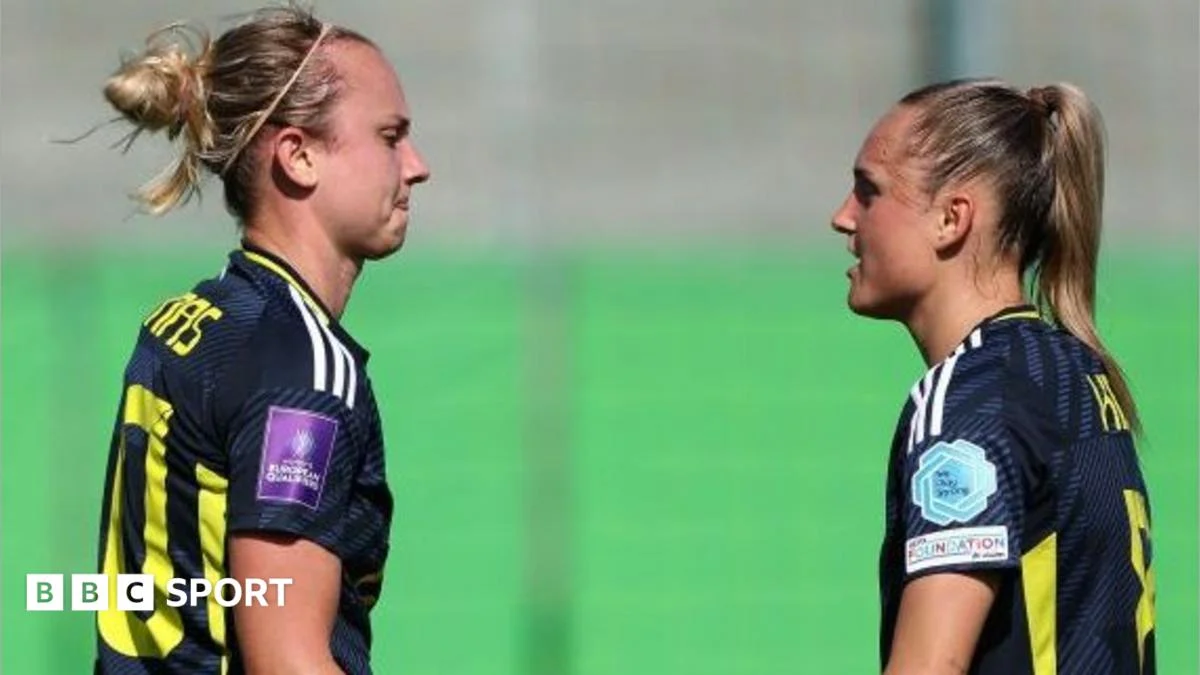
The Scottish women’s national football team is poised for its upcoming European Championship qualifying campaign with a significant boost, as several key players return to the squad after previous absences. The refreshed roster, announced by head coach Pedro Martinez, signals a strategic approach to building depth and experience as Scotland aims to secure its place in a major tournament for the first time since the 2019 FIFA Women’s World Cup. Among the notable inclusions are Newcastle United forward Martha Thomas and her clubmate Freya Gregory, both of whom were unavailable for the crucial qualifying double-header against Israel. Also making a welcome return is Como defender Sophie Howard, who was similarly forced to sit out the previous fixtures.
The midfield will also see a familiar face back in action with Celtic’s Maria McAneny earning a recall. McAneny, who last featured for Scotland in March, notably scored in a resounding 7-0 victory over Luxembourg. Her return injects further attacking prowess and midfield dynamism into the squad. This influx of experienced players comes as the team looks to build on its recent success, having topped their qualifying group on goal difference ahead of second-placed Belgium. This achievement places them just four games away from a coveted spot in the European Championship finals, a competition they have missed in the last two editions, along with the 2023 FIFA Women’s World Cup.
However, the squad announcement also includes some notable omissions. Defenders Leah Eddie and Kenzie Weir, along with strikers Eilidh Adams and Laura Berry, have been excluded from the latest selection. These changes reflect a continuous evaluation of player form and fitness, as well as a strategic assessment of the team’s needs for the upcoming challenges. Aston Villa’s young talent Mia McAulay, who was a late addition to the squad for the June double-header, has retained her place, underscoring her growing importance within the team.
Strategic Depth and Tournament Aspirations
Head coach Pedro Martinez emphasized the critical importance of squad depth in his selection rationale. Reflecting on Scotland’s journey and past tournament experiences, Martinez highlighted the need for a robust and versatile roster capable of competing at the highest level. "In any match or tournament football, we need squad depth," Martinez stated. "You need more than a 12-13 player roster to get deep into a tournament, and I am going to be that glass-half full optimist that says, ‘that is where we want to be, that is where we want to get to’."
Martinez’s forward-thinking approach is evident in his commitment to preparing the squad for the demands of a major tournament. "So, it’s my responsibility to start preparing for that," he continued. "That means we have a squad in form, playing in multiple positions and is attacking-minded, which is the thinking behind those selections." This philosophy suggests a deliberate strategy to foster competition within the squad and ensure that the team has multiple options available to adapt to different match scenarios and opponent strategies.
The coach’s mention of his past experience as assistant coach for the Australian Matildas at the 2019 World Cup provides valuable context. Despite Scotland’s absence from that tournament, Martinez’s involvement with a consistently high-performing nation like Australia would have offered him direct insight into the crucial elements required for success on the global stage. This firsthand experience likely informs his current emphasis on building a comprehensive and resilient squad.
Squad Selection: A Detailed Look
The full Scotland squad for the upcoming fixtures showcases a blend of established stars and emerging talent, with representation from various domestic and international leagues.
Goalkeepers:
The goalkeeping department features a strong contingent with Eartha Cumings of Manchester City, Lee Gibson of Glasgow City, and Sandy MacIver from Washington Spirit all included. This selection provides robust options for the crucial qualifying matches.
Defenders:
The defensive line sees several familiar faces alongside new additions. Georgia Brown (Jacksonville), Jenna Clark (Liverpool), Nicola Docherty (Rangers), Sophie Howard (Como), Emma Lawton (Ipswich Town), Rachel McLauchlan (Newcastle United), and Amy Muir (Glasgow City) form the defensive unit. The return of Sophie Howard is particularly significant, adding vital experience and leadership to the backline.
Midfielders:
The midfield is rich with talent and experience. Chelsea Cornet (Birmingham City), Erin Cuthbert (Chelsea), Christy Grimshaw (AC Milan), Sam Kerr (Liverpool), Kirsty Maclean (Liverpool), Maria McAneny (Celtic), Miri Taylor (Aston Villa), and Caroline Weir (Lyon) will be tasked with controlling the tempo and dictating play. The inclusion of Maria McAneny, a proven goalscorer, adds another dimension to Scotland’s midfield options.
Forwards:
The attacking third is bolstered by the return of Martha Thomas and Freya Gregory, alongside other potent threats. Lauren Davidson (Brann), Claire Emslie (Angel City), Freya Gregory (Newcastle United), Kirsty Hanson (Tottenham Hotspur), Kirsty Howat (Crystal Palace), Mia McAulay (Aston Villa), Kathleen McGovern (Newcastle United), and Martha Thomas (Newcastle United) form the forward line. The presence of Thomas and Gregory, who were unavailable for the previous Israel fixtures, is a significant boost to Scotland’s attacking firepower.
The Road to the European Championship: A Timeline
Scotland’s journey towards qualification for the European Championship has been a gradual but determined process. The team has been actively participating in qualifying campaigns over recent years, striving to break their streak of missing out on major tournaments.
The current qualifying cycle began with the draw for the European Championship group stage. Scotland was placed in a competitive group, where their performance against opponents like Israel, and potentially others in subsequent rounds, would determine their fate. The recent double-header against Israel marked a critical juncture in this campaign, with Scotland securing vital points. Topping the group on goal difference ahead of Belgium was a testament to their consistent performance and ability to find the back of the net.
The exclusion of Leah Eddie, Kenzie Weir, Eilidh Adams, and Laura Berry from the current squad suggests a performance-based selection policy, with Martinez likely assessing current form and tactical suitability for the challenges ahead. The retention of Mia McAulay, a young player who impressed as a late addition, indicates a commitment to integrating promising talent into the senior setup.
The upcoming four games represent the final hurdle before the tournament finals. This phase will undoubtedly test the squad’s resilience, tactical adaptability, and mental fortitude. The inclusion of players like Thomas and Gregory, who bring valuable experience and attacking threat, is a clear indicator of the team’s ambition to be at their strongest for these decisive encounters.
Supporting Data and Context
Scotland’s recent performance in the qualifying group stage provides a statistical basis for their current optimism. Finishing top of their group on goal difference signifies a strong offensive record and a solid defensive structure. Goal difference is often a crucial tie-breaker in tight qualifying groups, and Scotland’s superior standing over second-placed Belgium highlights their efficiency in both scoring and preventing goals.
The fact that Scotland is "four games away" from their first major tournament since the 2019 World Cup underscores the significance of the upcoming fixtures. This period represents a potential turning point for the women’s national team, which has faced challenges in qualifying for recent major competitions. Missing the last two European Championships and the 2023 World Cup has likely fueled a strong desire within the squad and the Scottish Football Association to achieve qualification.
The coach’s reference to "squad depth" is a common theme in successful international football. Teams that advance deep into tournaments often rely on their entire squad, not just their starting eleven. Injuries, suspensions, and tactical substitutions necessitate having players ready to step in and perform at a high level. Martinez’s proactive approach to building this depth, even before reaching the tournament finals, is a strategic advantage.
Broader Impact and Implications
The potential qualification for the European Championship would have far-reaching implications for women’s football in Scotland. It would provide a significant boost to the sport’s profile, inspiring a new generation of young girls to participate and aspire to represent their country. Increased media attention and public engagement would follow, potentially leading to greater investment in the women’s game at all levels, from grassroots clubs to the professional leagues.
For the players themselves, qualification would represent the pinnacle of their international careers, offering them the opportunity to compete on a global stage against the best teams in Europe. It would also enhance their individual profiles, potentially leading to more lucrative playing opportunities abroad and increased sponsorship deals.
The inclusion of players from a variety of leagues, including those in England and Italy, reflects the evolving landscape of women’s football, where talented Scottish players are seeking opportunities to develop their skills in competitive environments. This diversity within the squad can also bring different tactical approaches and experiences, enriching the team’s overall strategy.
The strategic decisions made by coach Martinez, particularly his emphasis on squad depth and an attacking mindset, suggest a clear vision for the future of the Scottish women’s national team. By preparing for success at major tournaments, he is not only aiming for immediate qualification but also laying the groundwork for sustained success in the years to come. The upcoming qualifying matches will be a crucial test of this strategy, but the recent squad selections and the team’s positive momentum suggest a bright future for Scottish women’s football.