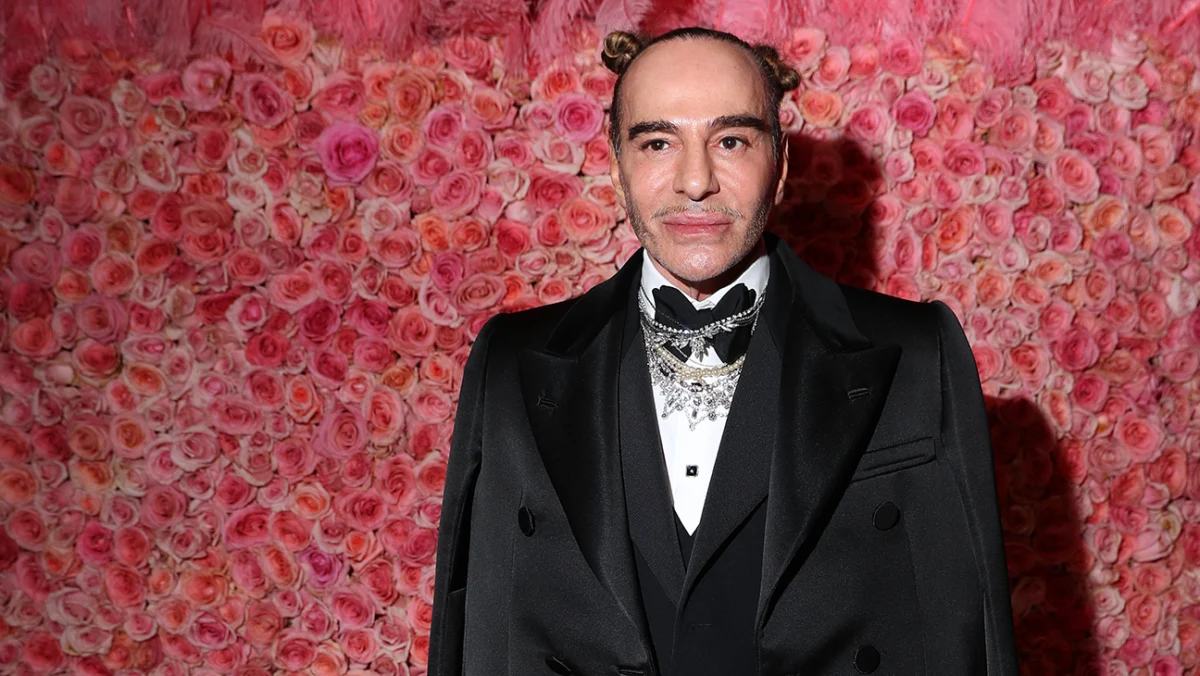
Organizers of the prestigious Met Gala are reportedly in discussions to reschedule the 2027 event, a move that signals a significant response to mounting criticism and backlash concerning the planned tribute to fashion designer John Galliano. The Metropolitan Museum of Art announced in July that Galliano’s influential and often controversial body of work would be the central focus of the Costume Institute’s exhibition for the year, with the Met Gala serving as its glittering kickoff. This decision has ignited a firestorm of debate, with prominent figures and organizations raising serious concerns about honoring a designer with a well-documented history of antisemitic and racist remarks.
The Met Gala, an annual event renowned for its celebrity-studded guest list and high-fashion interpretations of the exhibition’s theme, is a cornerstone of the fashion calendar. Galliano’s inclusion marks him as only the third living designer to be granted a solo exhibition at the Costume Institute, a testament to his significant, albeit contentious, impact on the global fashion landscape. He follows in the footsteps of design titans Yves Saint Laurent, who was honored in 1983, and Rei Kawakubo in 2017. The announcement stipulated that the exhibition would delve into "all the highs and lows" of Galliano’s career, explicitly acknowledging his infamous antisemitic rant.
Galliano’s rise to prominence was meteoric. He was instrumental in transforming Dior from a venerable French house into a global luxury powerhouse, revered for his theatricality, innovative silhouettes, and mastery of craft. However, his career imploded in 2011 when video footage emerged of him, reportedly in an inebriated state, making deeply offensive antisemitic remarks in a Paris café. The fallout was swift and severe. Dior immediately terminated his contract, and Galliano subsequently retreated from public life for a period of two years. A Paris court found him guilty of public insults based on religion, race, and ethnicity, imposing a fine and mandating payment of damages and court fees. In the aftermath of the scandal, Galliano engaged in a series of public apologies and met with Jewish leaders and rabbis, receiving blessings from organizations such as the Anti-Defamation League.
The exhibition and its accompanying gala are currently slated to commence on May 3, 2027. The event is traditionally overseen by Anna Wintour, the global editorial director of Vogue and a powerful figure on the Met’s board of trustees. However, the decision to spotlight Galliano has increasingly drawn fire from various quarters. According to a report by The New York Times, opposition has intensified in recent days, particularly among Jewish leaders in New York and across the nation.
Growing Opposition and Donor Concerns
The report in The New York Times highlighted that "opposition to the museum’s plan to honor Galliano has grown among Jewish leaders in New York and beyond." This sentiment has translated into tangible actions, with sources indicating that "donors have contacted Met executives and threatened to rescind gifts to the museum if the exhibition moves forward as planned." This financial pressure, coupled with public outcry, has reportedly compelled Met trustees and board members into damage control mode.
Potential Date Shift and Yom HaShoah Coincidence
The discussions surrounding a potential date change for the Met Gala underscore the gravity of the situation. The gala has always been held on the first Monday in May, a tradition that has become synonymous with the event. However, the current planned date of May 3, 2027, carries a particularly poignant and sensitive significance. It coincides with Yom HaShoah, also known as Holocaust and Heroism Remembrance Day. This unintended temporal alignment has amplified concerns and added another layer of complexity to the controversy. Shifting the gala to the following week is reportedly being considered as one measure to mitigate the fallout.
Official Criticism and Calls for Reconsideration
The controversy has not been confined to behind-the-scenes discussions. New York City Council Speaker Julie Menin publicly voiced her strong disapproval in a letter addressed to Anna Wintour, Costume Institute curator Andrew Bolton, and Met Director Max Hollein. Menin described the decision to honor Galliano as "a serious mistake." While acknowledging his "enormous" and "unquestionable" influence in the fashion world, she expressed "deep concern" about the choice.
Menin’s letter detailed the basis of her objections, stating, "Mr. Galliano’s long public record of antisemitism, racism and anti-Asian bigotry is deeply troubling." She emphasized the "repeated and significant" nature of his conduct, referencing his criminal conviction in France for racist and antisemitic public insults. She also pointed to his widely reported on-camera praise for Adolf Hitler and comments suggesting that individuals’ ancestors would have been "gassed." Menin underscored that "That is not behavior that should be easily overlooked or normalized." Furthermore, she referenced reports of a similar alleged antisemitic incident involving Galliano in 2019, indicating that the pattern of behavior may have persisted.
"At a time when our city is confronting a serious rise in antisemitism, anti-Asian hate, and other forms of hatred, I find the decision to so prominently honor someone who has engaged in this behavior to be wholly inappropriate," Menin wrote. She stressed the importance of New York City’s status as "one of the most diverse cities in the world" and argued that the Met, as a prominent cultural institution, should reflect and uphold these values.
Menin also raised questions about the decision-making process itself, stating her "deep concern about the process through which this decision was made." She asserted that Galliano’s rhetoric and conduct, including the alleged 2019 incident, "should have been more thoroughly investigated." She urged the organizers to "reconsider" their decision and suggested alternative avenues for acknowledging Galliano’s contributions, such as a "contextual exhibit or educational program" that could provide a more critical and nuanced examination of his work and its problematic aspects.
"The Met is one of New York City’s most treasured and visible cultural institutions," Menin concluded. "Its choices carry enormous weight, both here and around the world. I believe this choice falls short of the standard New Yorkers should expect from it."
Historical Context of Met Costume Institute Exhibitions
The Costume Institute at the Metropolitan Museum of Art has a distinguished history of curating exhibitions that celebrate the work of seminal fashion designers. The selection of a designer for a solo exhibition and its accompanying Met Gala is a highly coveted honor, signaling a designer’s lasting impact and influence on the art form.
- 1983: Yves Saint Laurent: 25 Years of Design. This exhibition was a landmark event, recognizing Saint Laurent as a pivotal figure who redefined modern womenswear, introducing iconic pieces like the Le Smoking tuxedo suit and the Mondrian dress. The gala celebrated his unparalleled contribution to fashion history.
- 2017: Rei Kawakubo/Comme des Garçons: Art of the In-Between. This exhibition explored the avant-garde and boundary-pushing designs of Rei Kawakubo, founder of Comme des Garçons. It highlighted her deconstructivist approach and her ability to challenge conventional notions of beauty and form in fashion.
- 2027: John Galliano (Planned). The proposed exhibition aims to showcase Galliano’s tenure at Dior and his own eponymous label. His designs are characterized by historical references, opulent fabrics, and dramatic silhouettes, often drawing inspiration from various eras and cultures. However, the planned focus on "highs and lows" means the exhibition is intended to confront the ethical and social dimensions of his career, a departure from previous tributes that largely focused on artistic merit.
The Broader Implications of the Controversy
The controversy surrounding the John Galliano exhibition and Met Gala raises significant questions about the role of cultural institutions in acknowledging and contextualizing problematic figures.
Ethical Considerations in Honoring Public Figures: The debate forces a reckoning with the balance between artistic achievement and personal conduct. Should a designer’s creative legacy be celebrated independently of their offensive behavior, or does such behavior fundamentally undermine their suitability for honor? The response from figures like Council Speaker Menin suggests a strong sentiment that, at a time of rising societal intolerance, institutions have a responsibility to avoid normalizing or appearing to endorse discriminatory actions.
The Met’s Role and Responsibility: As a globally recognized institution, the Met’s decisions carry considerable weight and influence public perception. Honoring Galliano, even with a stated intention to explore his transgressions, risks being interpreted as an endorsement or minimization of his past statements and actions. This is particularly sensitive given the rise in antisemitism and other forms of hate speech globally.
Impact on Donor Relations and Public Trust: The reported threat of donors rescinding their contributions highlights the financial and reputational risks involved. Cultural institutions often rely heavily on private funding, and alienating significant benefactors can have long-term consequences. Furthermore, public trust in the Met’s judgment and ethical compass is at stake.
The Nature of "Contextual" Exhibitions: While the idea of a "contextual" exhibition is presented as a potential alternative, the effectiveness of such an approach in mitigating harm is debatable. Critics may argue that any platform that grants Galliano such a prominent stage, even with caveats, still confers a level of legitimacy that is inappropriate given the severity of his past offenses. The alleged 2019 incident, if substantiated, further complicates the narrative and suggests that the problematic behavior may not have been confined to a single past event.
The decision to potentially alter the Met Gala’s date is a clear indication that the museum and its organizers are acutely aware of the escalating crisis. The coming months will likely see further developments as the Met navigates the complex terrain of artistic legacy, ethical responsibility, and public accountability in the glare of intense scrutiny. The outcome of these deliberations will not only shape the 2027 Met Gala but also set a precedent for how major cultural institutions approach similar controversies in the future.