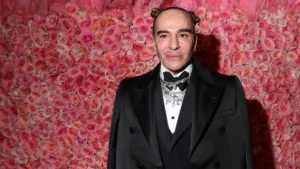
British right-wing political commentator Milo Yiannopoulos has been deported from the United States, concluding a controversial chapter in his presence within the country. The Department of Homeland Security (DHS) confirmed that Yiannopoulos, 41, described as an "illegal alien from the United Kingdom," was sent "back to his home country" on Friday after being detained by Immigration and Customs Enforcement (ICE). His removal underscores the stringent enforcement of U.S. immigration laws, a policy he himself has vociferously championed.
Chronology of Detention and Deportation
Yiannopoulos’s journey to deportation began with his initial entry into the United States in May 2019. According to DHS, he "chose to overstay his welcome in violation of our nation’s laws," thereby becoming an undocumented immigrant. This status led to his arrest on August 27 at Louis Armstrong New Orleans International Airport, where he was apprehended by ICE officials. Following standard procedures for individuals found to be in violation of their visa terms, Yiannopoulos was processed for deportation. His removal from the country on Friday, less than a week after his detention, highlights the efficiency with which U.S. authorities can act in such cases, especially when the individual is considered a flight risk or a clear overstay. The DHS statement, provided to the BBC, was unequivocal in its classification of Yiannopoulos’s status, emphasizing the illegality of his continued presence.
The Rise and Fall of a "Supervillain"
Milo Yiannopoulos first gained significant public notoriety as a former editor for Breitbart News, a far-right news and opinion website. He cultivated an image as a self-styled provocateur, famously calling himself the "most fabulous supervillain on the internet." His career has been marked by a series of controversies, primarily stemming from his incendiary comments and his association with the "alt-right" movement. The alt-right, a disparate and loosely defined group, gained prominence in the mid-2010s for its rejection of mainstream conservative politics, its embrace of online trolling, and its often-explicit white nationalist and misogynistic ideologies. While Yiannopoulos has stated he did not consider himself part of the alt-right, he frequently engaged with its adherents and publicly called the movement "energising and exciting," thereby amplifying its reach and normalizing some of its more extreme views.
His early career was characterized by a rapid ascent within conservative media circles, fueled by his sharp wit, theatrical public appearances, and willingness to challenge what he perceived as political correctness. He was an early and ardent supporter of Donald Trump during the 2016 presidential election campaign, even headlining an event called "Gays for Trump" during the Republican National Convention that year. His public persona, despite identifying as gay at the time (he now refers to himself as "ex-gay"), often involved making highly controversial statements targeting transgender people, Muslims, the Black Lives Matter movement, feminists, and even other gay individuals. These comments, which critics widely condemned as hate speech, cemented his reputation as a divisive figure.
The CPAC Scandal and Professional Setbacks
A pivotal moment in Yiannopoulos’s career came in 2017 when he was disinvited from speaking at the Conservative Political Action Conference (CPAC), a prominent annual gathering for conservatives in the U.S. The disinvitation followed the resurfacing of footage in which Yiannopoulos appeared to condone paedophilia. The comments, which he later claimed were misinterpreted and referred to his own childhood experiences, led to widespread condemnation and ultimately his resignation from Breitbart News. This incident significantly damaged his standing within the mainstream conservative movement, even as he retained a loyal following among some segments of the online far-right.
Despite these setbacks, Yiannopoulos attempted to maintain relevance in the political sphere. In 2020, he assisted rapper Kanye West in his unsuccessful bid for the U.S. presidency. He also briefly worked for other political figures. More recently, Yiannopoulos had become a critic of former President Donald Trump, writing on X in March that Trump had "lost his way, bought off by foreign interests," while still expressing support for Trump’s overall agenda. These shifts in allegiance highlight a continued, albeit diminished, desire to remain a voice within the right-wing political landscape.
The Ironic Twist: An Advocate for Strict Immigration Controls Becomes "Illegal Alien"
Perhaps the most striking aspect of Yiannopoulos’s deportation is the profound irony embedded in the circumstances of his removal. For years, Yiannopoulos has been a vocal and fervent advocate for extremely strict U.S. immigration controls, frequently calling for mass deportations and aggressive enforcement. His social media posts reveal a consistent pattern of such rhetoric. In a post from 2025 (likely a typo in the original source, possibly intended as 2023 or 2024, but reflecting his consistent viewpoint), he wrote: "We have got to deport millions and millions of people. Without that, nothing else matters." He also advocated for "on the spot deportation for anyone who can’t prove they are in the US legally" on social media. Furthermore, he publicly cheered on ICE raids and, last year, called for "total legal immunity for ICE agents when they’re on duty."
His own classification by the Department of Homeland Security as an "illegal alien" due to overstaying his welcome stands in stark contrast to his public pronouncements. The very enforcement mechanisms and legal definitions he lauded are precisely what led to his own detention and removal. This situation has not gone unnoticed by observers, many of whom have pointed out the hypocrisy inherent in his predicament. The U.S. immigration system, regardless of an individual’s political views or public platform, treats visa overstays as violations of federal law, leading to potential deportation and bans on future re-entry.
Legal Framework of Visa Overstays
Under U.S. immigration law, individuals entering the country on non-immigrant visas (such as tourist, business, or media visas) are granted permission to stay for a specific, limited duration. This period is typically indicated on their I-94 arrival/departure record. Overstaying this authorized period, even by a single day, constitutes unlawful presence. The consequences of such a violation can be severe and include:
- Deportation: As in Yiannopoulos’s case, individuals found to be in unlawful presence are subject to removal from the United States.
- Bars to Re-entry: Depending on the length of the unlawful presence, an individual may be barred from re-entering the U.S. for several years. Unlawful presence of more than 180 days but less than one year can result in a three-year bar, while unlawful presence of one year or more can lead to a ten-year bar. DHS’s statement, as reported by Laura Loomer, that Yiannopoulos is "NEVER allowed to come back to the United States ever again," suggests the severity of his overstay and the implications for his future travel to the U.S.
- Visa Invalidation: Any existing non-immigrant visas held by the individual are automatically canceled.
ICE, a principal investigative arm of the DHS, is responsible for enforcing these laws, identifying, arresting, and detaining non-citizens who have violated immigration statutes, including visa overstays. The process often involves detention pending a hearing or, in cases of clear violations like an overstay, direct deportation.
Reactions and Broader Implications
The news of Yiannopoulos’s deportation quickly reverberated through online political circles, particularly among the far-right. Laura Loomer, a far-right commentator and staunch Trump ally who has previously feuded with Yiannopoulos, was quick to claim credit for his arrest. On X (formerly Twitter) on Friday night, Loomer posted that his flight back to the UK had already departed, adding, "This subversive foreign agent is already out of the United States and DHS tells me he’s NEVER allowed to come back to the United States ever again." While Loomer’s direct role in his detention remains unconfirmed by official sources, her public statement highlights the often-fractious and competitive nature of personalities within the far-right media landscape, where individuals often vie for influence and attention.
The deportation of a prominent figure like Yiannopoulos serves as a stark reminder that U.S. immigration laws apply to all non-citizens, regardless of their public profile or political affiliations. It demonstrates the consistent application of enforcement policies by ICE and DHS, which operate under mandates to uphold the nation’s immigration statutes. For the broader online far-right and alt-right movements, Yiannopoulos’s removal marks the physical absence of a once-influential, albeit controversial, voice from the U.S. stage. While his online presence and ability to communicate globally remain, his capacity to engage directly with American audiences through rallies, speaking tours, or media appearances is now severely curtailed.
The incident also underscores the legal risks associated with non-compliance with visa regulations. For foreign nationals present in the U.S., adhering strictly to the terms of their visas, including their authorized period of stay, is paramount to avoiding severe penalties. The BBC has approached the Home Office in the United Kingdom for comment regarding Yiannopoulos’s return, though a response was not immediately available.
In conclusion, Milo Yiannopoulos’s deportation from the United States closes a chapter on his direct involvement in American political discourse. His removal, triggered by a visa overstay, presents a powerful and ironic counterpoint to his long-standing advocacy for aggressive immigration enforcement. It serves as a testament to the universal application of immigration law and marks a significant personal and professional setback for a figure whose career has been defined by controversy and provocation.