


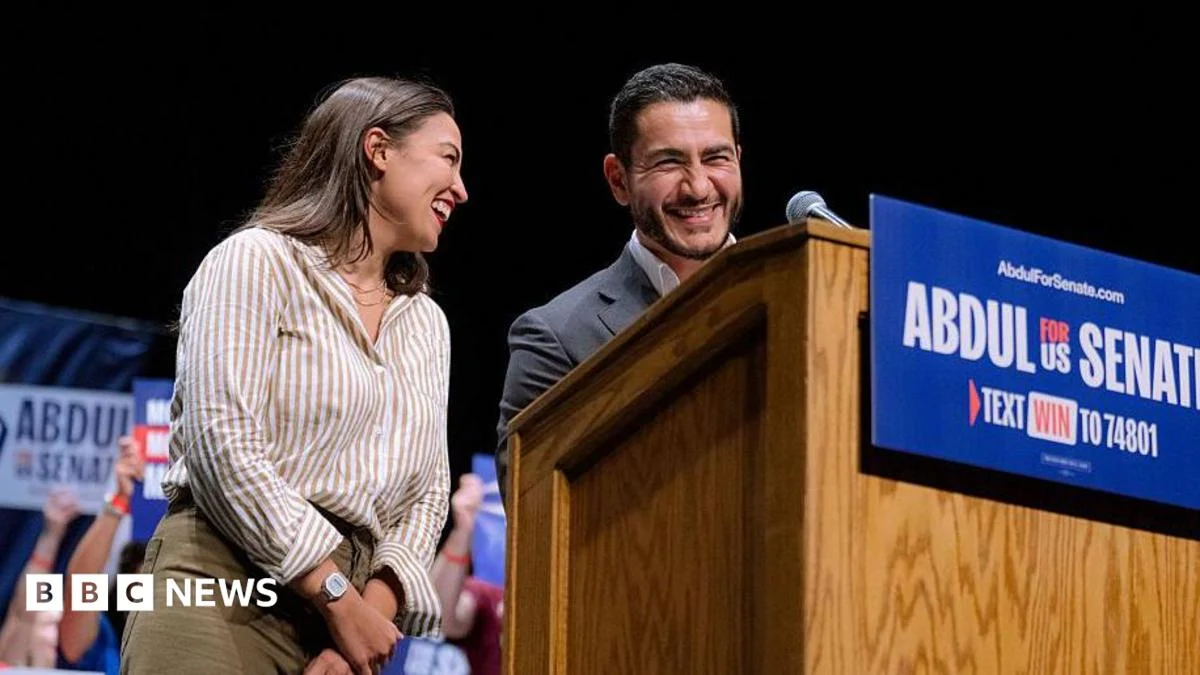
On a recent Saturday evening in Michigan, the skies still carrying a faint haze from distant Canadian wildfire smoke, a powerful political narrative unfolded as hundreds of voters converged on Detroit’s venerable 104-year-old Opera House. The grand venue, typically a stage for arts and culture, vibrated with political fervor as Senator Bernie Sanders and Democratic Representative Alexandria Ocasio-Cortez, two of the most prominent figures on the American left, took the stage to resounding cheers. Their presence underscored a pivotal moment in the state’s political landscape: the championship of Senate hopeful Abdul El-Sayed, a physician whose campaign is anchored firmly on a platform of universal healthcare, widely known as "Medicare for All."
El-Sayed’s rally was a vibrant display of progressive energy, with supporters brandishing signs emblazoned with his core slogan and wearing shirts advocating for an end to immigration enforcement and U.S. aid to Israel. This gathering was more than just a local campaign event; it was a national spectacle, drawing the attention of politicians, strategists, and voters across the country. The Michigan primary race, pitting El-Sayed against Congresswoman Haley Stevens, an established politician with significant financial backing, is increasingly seen as a microcosm of the profound divisions currently defining the Democratic Party as it strives to regain control of Congress in the upcoming November midterm elections.
The Ideological Battleground: Progressive vs. Centrist
At its heart, this primary race embodies the internal struggle within the Democratic Party. On one side stands the centrist establishment, characterized by its reliance on traditional power players, corporate donations, and a more incremental approach to policy change. Haley Stevens, the incumbent, epitomizes this faction. An experienced congresswoman, she has garnered endorsements from influential state figures, including Michigan Governor Gretchen Whitmer and outgoing Senator Gary Peters, signaling her alignment with the party’s mainstream. Her campaign messaging emphasizes her experience, her ability to deliver results, and her commitment to pragmatic solutions that appeal to a broader electorate. Stevens’ campaign has also benefited from substantial financial contributions, including significant corporate backing, which she and her supporters argue is essential for effective campaigning in a high-stakes environment.
Opposing this traditional approach is the resurgent left wing of the party, championed by figures like Sanders, Ocasio-Cortez, and New York City Mayor Zohran Mamdani, who represent a more radical vision for American governance. El-Sayed, though careful to avoid the explicit label of "Democratic socialist" claimed by some of his peers, aligns closely with their policy goals. His platform includes not only "Medicare for All" but also an annual wealth tax on billionaires and a re-evaluation of U.S. foreign policy, particularly regarding the Middle East. These policies reflect a desire for systemic change and a direct challenge to economic inequalities, appealing to a base that feels disenfranchised by the current political and economic systems.
A Wave of Progressive Victories and the Midwest Test
The summer primary season has witnessed a notable wave of victories for left-wing Democrats in various states, including significant wins in New York and Colorado. The election of Zohran Mamdani as Mayor of New York City, in particular, served as a powerful testament to the effectiveness of a progressive message, particularly when coupled with strong social media engagement and a laser-like focus on affordability issues. These successes have injected a fresh sense of optimism into the progressive movement, suggesting that their policy positions resonate with a significant portion of the electorate.
However, the crucial question that remains is whether this momentum can translate into broader support, especially among the disillusioned working-class voters who, in a significant political shift, flocked to President Donald Trump in the 2016 and 2024 elections. Michigan, a state that voted for Democrat Joe Biden in 2020 but swung to Trump four years prior, represents a critical test case for this proposition. Its politically diverse and historically working-class demographics make it a challenging yet essential battleground for both factions of the Democratic Party.
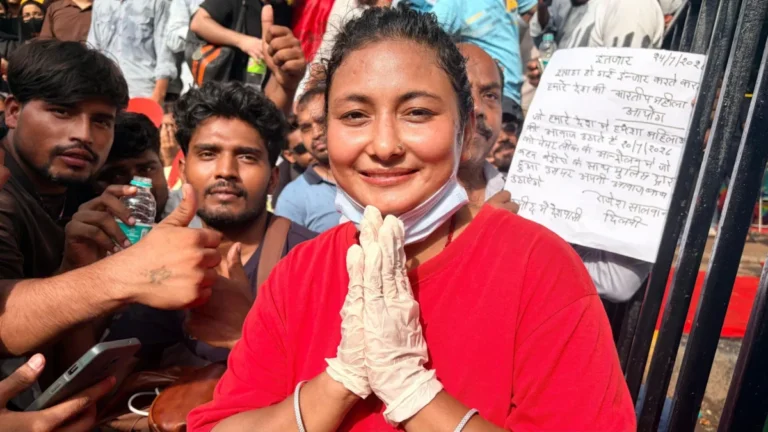
Political strategists and voters alike are watching closely. Adrian Hemond, a Michigan-based political strategist, commented on the inherent challenge: "They got a big win electing Mamdani mayor of New York City, but also, it’s New York City. They have been much less able to win in some more traditionally purple areas." This sentiment encapsulates the core dilemma: while progressive ideas may thrive in urban, traditionally liberal enclaves, their appeal in the more politically varied — and often economically struggling — regions of the Midwest is less certain. The outcome in Michigan, alongside other key Midwestern races like Francesca Hong’s bid for governor in neighboring Wisconsin, will offer valuable insights into the viability of the progressive agenda on a broader national scale.
Michigan’s Pivotal Role in the National Political Landscape
The open Senate seat in Michigan is not merely an internal party squabble; it is a must-win for Democrats nationally. The seat had been held by a Democrat, and retaining it is crucial for the party’s aspirations to expand its majority in the Senate and, more broadly, to act as a legislative check on any future presidential agenda, particularly if Donald Trump were to return to the White House. The winner of the August 4th primary will face Mike Rogers, a prominent Trump ally, in the November 3rd general election, raising the stakes considerably.
Michigan’s political history and demographic makeup underscore its significance. Once a stronghold of organized labor and the automotive industry, the state has experienced profound economic shifts, leading to periods of deindustrialization and economic uncertainty. This has created a politically volatile environment where voters are highly responsive to candidates who address economic anxieties. The state’s diverse population, including significant African American and Arab American communities, adds layers of complexity to its political dynamics, making it a bellwether for national trends.
Policy Distinctions and Voter Priorities
At the rally, Ocasio-Cortez proclaimed El-Sayed represented the "politics of the future," a message designed to inspire hope and mobilize the progressive base. However, miles outside the venue, a different sentiment prevailed among some voters. Colleen Houlihan, a 74-year-old from Ferndale, Michigan, expressed her doubts, likely leaning towards Stevens. "I want radical change in the country," she stated, "but we’ve got to start with this administration and it’s got to be an electable candidate to get power back in sane hands." This perspective highlights the pragmatic concerns about electability that often temper progressive enthusiasm.
El-Sayed’s policy proposals, including "Medicare for All" and an annual wealth tax on billionaires, represent a significant departure from the Democratic Party’s more moderate stances in recent years. "Medicare for All," a single-payer healthcare system, aims to eliminate private health insurance and ensure universal access to medical care, a concept that enjoys strong support among progressives but faces fierce opposition from the healthcare industry and many moderate politicians who argue it is fiscally unfeasible and would disrupt the existing system too drastically. The proposed wealth tax, designed to generate revenue and address wealth inequality, similarly sparks debate over its economic impact and constitutionality.
These policies come at a time when the Democratic Party faces one of its lowest favorability ratings. A Gallup poll in 2025 indicated a 12% drop in positive views among Democrats towards their own party, settling at 67%. This decline suggests a growing discontent within the party’s base, which El-Sayed seeks to harness by advocating for policies that directly address everyday economic struggles. Indeed, polling from the past year consistently shows that healthcare costs, alongside the rising prices of gas, groceries, and housing, remain top issues for voters heading into the November midterms.
Les Lukacs, a long-standing Democrat from Monroe, Michigan, who currently lacks health insurance, is a prime example of the voter base El-Sayed targets. Lukacs unequivocally stated he would not vote for Stevens in November if El-Sayed lost the primary. "We can barely afford groceries and gas," he lamented. "I have to make sacrifices – and healthcare is one of them." His statement underscores the direct impact of economic policies on individual lives and the potential for progressive platforms to mobilize a segment of the electorate that feels overlooked by the political establishment. El-Sayed himself emphasized this point to the BBC, arguing that if the Democratic Party genuinely cared about everyday people, "they’d be fighting on the same policies I’m fighting for."
In response, a spokesperson for Stevens’ campaign affirmed her commitment to "fight for all Michiganders from every zip code to lower costs, protect manufacturing jobs, and take on Donald Trump’s corruption and abuses of power," signaling her focus on practical, broadly appealing economic issues and a clear opposition to the Republican right.
The Israel-Palestine Divide and Michigan’s Arab-American Community
Beyond economic policy, El-Sayed has also taken a strong stance on foreign policy, particularly regarding U.S. involvement in the Middle East and aid to Israel. He has been vocal in his criticism, aligning with a growing portion of voters, as suggested by recent polling, who believe the U.S. is excessively supportive of its longtime ally in the wake of the ongoing conflict. This issue carries particular weight in Michigan, home to the second-largest Arab-American population in the United States, a community deeply affected by and engaged with Middle Eastern affairs.
El-Sayed, himself the son of Egyptian immigrants, has unequivocally labeled Israel’s actions in Gaza as genocide. He has also been quick to highlight his opponent’s financial ties to AIPAC (the American Israel Public Affairs Committee), a powerful lobbying group that has reportedly spent nearly $30 million to support Stevens’ campaign. This financial backing from a pro-Israel lobby group positions Stevens in stark contrast to El-Sayed’s critical stance. Like many moderate Democrats, Stevens has publicly supported upholding U.S. aid to Israel without conditions, a position that resonates with traditional foreign policy approaches but alienates a significant segment of the progressive and Arab-American electorate. She did not respond to a BBC request for comment on her specific stance on Israel.
Rex Nazarko, leader of the American Muslim Engagement and Empowerment Network, believes El-Sayed’s position on Israel could sway thousands of Democratic voters in Michigan who chose not to support Kamala Harris and Joe Biden in the 2024 presidential election due to their administration’s policies concerning Israel. This indicates a potent electoral force that could significantly impact the primary outcome and potentially the general election, demonstrating how foreign policy can become a decisive local issue.
Electability, Campaign Finance, and the Future of the Party
As progressive voters rally behind El-Sayed, concerns about the movement’s broader appeal and electability persist among other Democrats. Sally, a 45-year-old Michigan resident and elected official who requested anonymity due to her public role, expressed excitement about the progressive movement’s enthusiasm but questioned its sustainability. "There’s a lot of that momentum, but keeping that momentum going is really hard," she observed. She also acknowledged the practical reality of campaign finance, noting that despite criticism leveled against Stevens for her ties to corporate funding, "big money helps in politics." Sally argued that "it’s those connections that are going to support changes in law and make things move faster," reflecting a common belief among centrist Democrats that financial backing and established networks are crucial for legislative success.
Even some of El-Sayed’s most steadfast supporters harbor anxieties about the sufficiency of their votes. Claire McHugh, a 70-year-old rally attendee, admitted, "I’m a little scared. I’m a little nervous. I just hope that enough people are fed up with the status quo." Her sentiment captures the blend of hope and trepidation that often accompanies insurgent political movements.
When questioned about the capacity of left-wing candidates to attract moderate Democrats and ultimately defeat Republicans, El-Sayed maintained a defiant stance, telling the BBC he was not concerned with the future of the Democratic Party as an abstract entity. Instead, he asserted, "If Democrats want to find their future, I think we’re showing it to them right here." This statement underscores the progressive belief that their platform is not merely an alternative but the necessary path forward for the party to reconnect with voters and address pressing national issues.
Larry Sabato, a widely respected political analyst and director of the University of Virginia’s Center for Politics, emphasized the precarious position of the Democratic Party. He noted that it remains uncertain which faction of the party will ultimately prevail in the long run. However, regardless of the primary’s outcome, Sabato stressed the imperative for Democrats to find a way to "sew these two very large groups back together" if they hope to reverse recent electoral losses and build a sustainable path to power. "It’s already frayed," he warned. "If they don’t do the repair job they need to do and quickly, certainly through 2028, then they’re going to have to get used to losing."
The Michigan Senate primary, therefore, transcends a simple contest for a political seat. It is a vital test of the Democratic Party’s identity, its strategic direction, and its capacity to unite disparate ideological wings under a common banner. The outcome will not only determine who represents Michigan in the Senate but will also send a powerful signal about the future trajectory of one of America’s two major political parties, potentially shaping national elections for years to come.