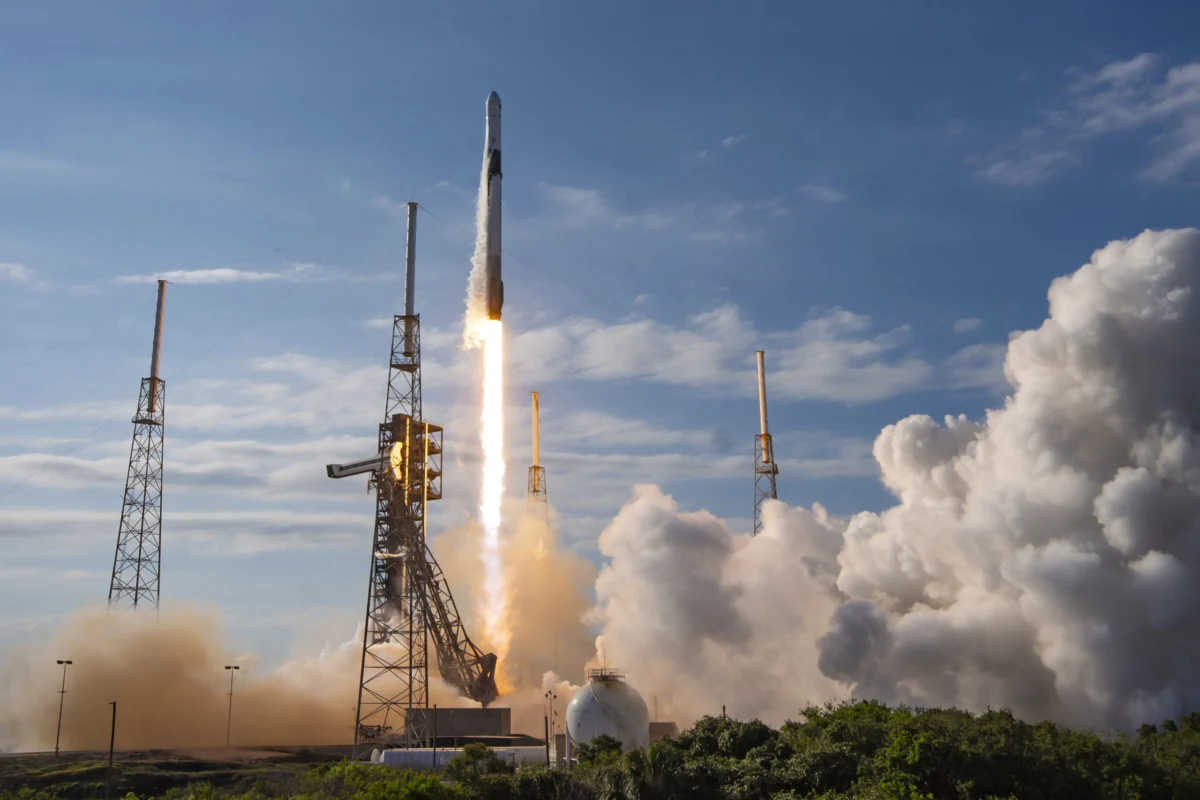
NASA and SpaceX are gearing up for a pivotal mission to the International Space Station (ISS), marking the 35th commercial resupply services (CRS) flight by SpaceX for the agency. This crucial mission will ferry a diverse array of NASA science investigations, essential supplies, and critical equipment to the orbital laboratory, utilizing a Falcon 9 rocket to launch the Dragon spacecraft from the historic Cape Canaveral Space Force Station in Florida. The launch is currently targeted for no earlier than October, a timeframe that underscores the rigorous preparation and coordination required for such complex space operations. This upcoming mission is not merely a routine delivery; it represents a continuum of scientific exploration, technological advancement, and the sustained commitment to humanity’s presence in low Earth orbit.
The Enduring Partnership: SpaceX and NASA’s Commercial Resupply Services Program
The Commercial Resupply Services program is a cornerstone of NASA’s strategy to maintain a robust and independent capability for cargo delivery to the International Space Station. Initiated in the early 2000s, following the retirement of the Space Shuttle program, the CRS initiative aimed to foster a vibrant commercial space industry in the United States while ensuring reliable access to the ISS. This strategic pivot allowed NASA to transition from owning and operating all aspects of space transportation to acting as a customer, purchasing services from private companies. The first phase, CRS-1, saw contracts awarded to SpaceX and Orbital Sciences Corporation (now Northrop Grumman Innovation Systems) in 2008, with SpaceX’s inaugural cargo flight successfully launching in 2012. This marked a paradigm shift, demonstrating the viability of private companies in providing critical spaceflight services.
The program has since evolved, with the CRS-2 contracts awarded in 2016 to SpaceX, Northrop Grumman, and Sierra Nevada Corporation (now SNC’s Dream Chaser). These subsequent contracts extended the partnership, ensuring continued resupply capabilities through the operational lifespan of the ISS and beyond. The 35th SpaceX CRS mission is a testament to the longevity and success of this public-private partnership, highlighting the reliability and cost-effectiveness that commercial providers bring to space logistics. Over the years, these missions have collectively delivered hundreds of tons of cargo, encompassing everything from astronaut provisions and spare parts to sophisticated scientific instruments and experimental payloads, directly enabling the groundbreaking research conducted aboard the orbital outpost. The consistent cadence of these flights underscores the maturation of the commercial space industry and its integral role in supporting national space objectives, including the exploration goals of the Artemis program.
The Workhorse Duo: Falcon 9 and Dragon
At the heart of this resupply mission are SpaceX’s venerable Falcon 9 rocket and Dragon spacecraft. The Falcon 9, a two-stage-to-orbit medium-lift launch vehicle, has become one of the most frequently launched rockets in the world since its debut in 2010. Renowned for its reusability, a core innovation championed by SpaceX, the Falcon 9 has drastically reduced launch costs and increased launch frequency. Its first stage boosters are routinely landed and refurbished for multiple subsequent missions, a feat of engineering that has revolutionized access to space. For CRS missions, the Falcon 9 provides the necessary thrust and precision to place the Dragon spacecraft into its intended orbital trajectory, setting the stage for its rendezvous with the ISS.
The Dragon spacecraft itself is a cargo-carrying capsule capable of delivering pressurized and unpressurized payloads to the ISS. Its unique capability to return significant amounts of cargo to Earth, unlike other commercial resupply vehicles, makes it invaluable for bringing back completed experiments, scientific samples, and equipment for analysis. This two-way transport system significantly enhances the research capabilities of the ISS, allowing scientists to retrieve time-sensitive biological samples or sensitive hardware for post-flight examination. The Dragon’s design has also evolved, with the Crew Dragon variant now ferrying astronauts to and from the station, further solidifying its versatility and critical role in both cargo and human spaceflight. The impending 35th mission will leverage the proven reliability and performance of this integrated system, ensuring the safe and timely delivery of its vital contents.
A Crucial Delivery: Powering the Orbital Outpost with IROSA
Among the most significant payloads on this mission are the final sets of the International Space Station Roll-Out Solar Arrays (IROSA). These arrays are not merely supplemental power sources; they are critical components of a multi-year effort to augment the station’s electrical power system, ensuring its operational viability for the remainder of its projected lifespan and supporting its eventual controlled deorbit. The ISS, originally designed with a 15-year operational life, has far exceeded expectations, thanks in part to continuous upgrades and maintenance. The original nickel-hydrogen batteries and solar arrays, installed decades ago, have shown signs of degradation over time, necessitating these enhancements.
The IROSA project began with the delivery of the first two arrays on SpaceX CRS-22 in June 2021, followed by subsequent installations. Each IROSA array is a compact, "roll-out" design, significantly more efficient and lighter than the station’s original rigid solar arrays. They are designed to unroll like a carpet when deployed, extending over the existing, larger arrays. This configuration allows the original arrays to continue generating power while the new IROSA panels provide a substantial boost. Once all six IROSA arrays are installed and fully operational, they will collectively increase the station’s power generation capacity by more than 30%, providing over 20 kilowatts of additional power. This added power is essential for supporting new scientific investigations, operating advanced hardware, and maintaining critical station systems as the orbital outpost continues its mission. The final sets delivered on CRS-35 will complete this crucial upgrade, installed by astronauts during future spacewalks. Beyond sustaining current operations, this power augmentation is also vital for the station’s safe and controlled deorbit at the end of its mission, ensuring that sufficient power is available to execute the necessary maneuvers.
Groundbreaking Science Aboard Dragon
The Dragon spacecraft will also transport a suite of cutting-edge scientific experiments, each designed to leverage the unique microgravity environment of the ISS to achieve breakthroughs not possible on Earth. These investigations span various disciplines, from biology and biotechnology to physical sciences and technology development, underscoring the ISS’s role as a versatile, multi-disciplinary laboratory.
One particularly promising investigation involves hardware to manufacture artificial retinas in microgravity. Retinal diseases, such as age-related macular degeneration and retinitis pigmentosa, are leading causes of blindness worldwide. Producing complex biological structures like retinas in a laboratory setting on Earth is challenging due to gravitational forces that can cause cells to clump or settle, hindering proper tissue formation. In microgravity, cells can grow and organize more uniformly, potentially allowing for the fabrication of more accurate and functional artificial retinas. These microgravity-produced retinas could serve as vital models for studying disease progression, testing new therapies, and ultimately, could lead to novel treatments or even regenerative approaches to restore vision for patients on Earth.
Another critical experiment focuses on developing 3D heart cell models for large-scale drug testing. Cardiovascular diseases remain a major global health concern, and drug development often faces hurdles in accurately predicting human responses. Creating 3D models of human heart tissue in microgravity can lead to more physiologically relevant representations than traditional 2D cell cultures. These 3D models can mimic the complex structure and function of the human heart more closely, providing a superior platform for screening potential new drugs, understanding drug toxicity, and assessing their efficacy. This research not only has profound implications for pharmaceutical development on Earth but also for understanding and mitigating the effects of long-duration spaceflight on the cardiovascular system, a key concern for future missions to the Moon and Mars.
The mission will also carry materials to study how a new type of glass is formed in microgravity. Glass manufacturing on Earth is influenced by gravity, which can cause imperfections, crystallization, or density variations in the molten material. By processing glass in the near-weightless environment of the ISS, scientists hope to create novel glass compositions with enhanced optical, thermal, or mechanical properties that are difficult or impossible to achieve terrestrially. Such research could lead to the development of advanced materials for next-generation fiber optics, specialized lenses for scientific instruments, or even innovative shielding materials for spacecraft. Understanding the fundamental physics of glass formation in microgravity offers insights that could revolutionize materials science and engineering.
Finally, the Dragon will deliver brain organoids to the orbital complex, miniature 3D models of human brain tissue derived from stem cells. These organoids are invaluable tools for studying the intricate development and function of the human brain. In microgravity, researchers can investigate how these complex structures respond to environmental stressors and changes, potentially uncovering fundamental mechanisms underlying neurological conditions. This specific investigation aims to explore potential treatment targets for devastating neurodegenerative diseases like Alzheimer’s, Parkinson’s, and multiple sclerosis. By observing how these brain organoids develop and respond in microgravity, scientists hope to identify new pathways for intervention and drug discovery, accelerating the search for cures for these debilitating conditions affecting millions globally.
The International Space Station: A Quarter Century of Discovery
For more than 25 years, people have lived and worked continuously aboard the International Space Station, marking an unprecedented era of international collaboration and scientific achievement. This continuously crewed orbital laboratory has served as a unique platform for advancing scientific knowledge across virtually every discipline, making research breakthroughs that are simply not possible in Earth’s gravitational environment. The station’s microgravity conditions allow scientists to observe phenomena without the confounding effects of gravity, leading to fundamental discoveries in material science, fluid dynamics, human physiology, and biology.
The ISS plays a pivotal role in helping NASA understand and overcome the multifaceted challenges of human spaceflight. Research conducted on board directly addresses concerns related to radiation exposure, muscle atrophy, bone density loss, fluid shifts, and psychological impacts of isolation—all critical factors for planning long-duration missions beyond low Earth orbit. Furthermore, the space station has been instrumental in expanding commercial opportunities in low Earth orbit (LEO), not just through cargo and crew resupply services, but also by hosting private research, manufacturing, and even space tourism ventures. This growing commercial ecosystem is seen as a vital stepping stone towards a future where multiple private space stations operate alongside government-funded platforms.
Critically, the ISS serves as a foundational testbed for the technologies and operational procedures necessary for future deep space exploration. It builds directly on the experience and knowledge required for long-duration missions to the Moon, as part of the ambitious Artemis program, and ultimately to Mars. Every experiment conducted, every system tested, and every challenge overcome on the ISS contributes to the collective human knowledge base that will enable humanity’s expansion deeper into the solar system.
Logistics and Media Access
Ensuring public awareness and transparency for these missions is paramount, and NASA actively facilitates media coverage of prelaunch and launch activities. Media accreditation for the upcoming SpaceX CRS-35 mission is open exclusively to U.S. media representatives. The application deadline for credentialing is set for 11:59 p.m. EDT, Thursday, October 1. All accreditation requests must be submitted online through NASA’s dedicated portal at https://media.ksc.nasa.gov. Upon approval, media personnel will receive a confirmation email detailing access and logistical information. NASA’s comprehensive media accreditation policy is available online for reference, outlining the guidelines and requirements for covering agency events. For specific questions regarding accreditation or to request special logistical support, media are encouraged to contact [email protected]. For other general inquiries, the Kennedy Space Center newsroom can be reached at 321-867-2468. This structured approach to media access ensures that the public remains informed about the critical work being performed by NASA and its commercial partners in advancing space exploration.
Looking Ahead: The Future of Orbital Resupply
The upcoming CRS-35 mission is more than just another launch; it is a reaffirmation of the robust infrastructure supporting humanity’s permanent presence in space. As the International Space Station approaches the eventual end of its operational life in the coming decade, the lessons learned from decades of commercial resupply will be invaluable. NASA is already working with commercial entities to develop future commercial low Earth orbit destinations, ensuring a seamless transition and continued access to microgravity research platforms. The success of the SpaceX CRS program provides a proven model for these future endeavors, demonstrating that private industry can reliably and efficiently support complex space operations. This mission, with its critical hardware and groundbreaking experiments, not only extends the scientific legacy of the ISS but also paves the way for the next generation of orbital outposts and deep space exploration. The journey to unlock the secrets of the universe and extend humanity’s reach continues, propelled by these vital commercial partnerships.