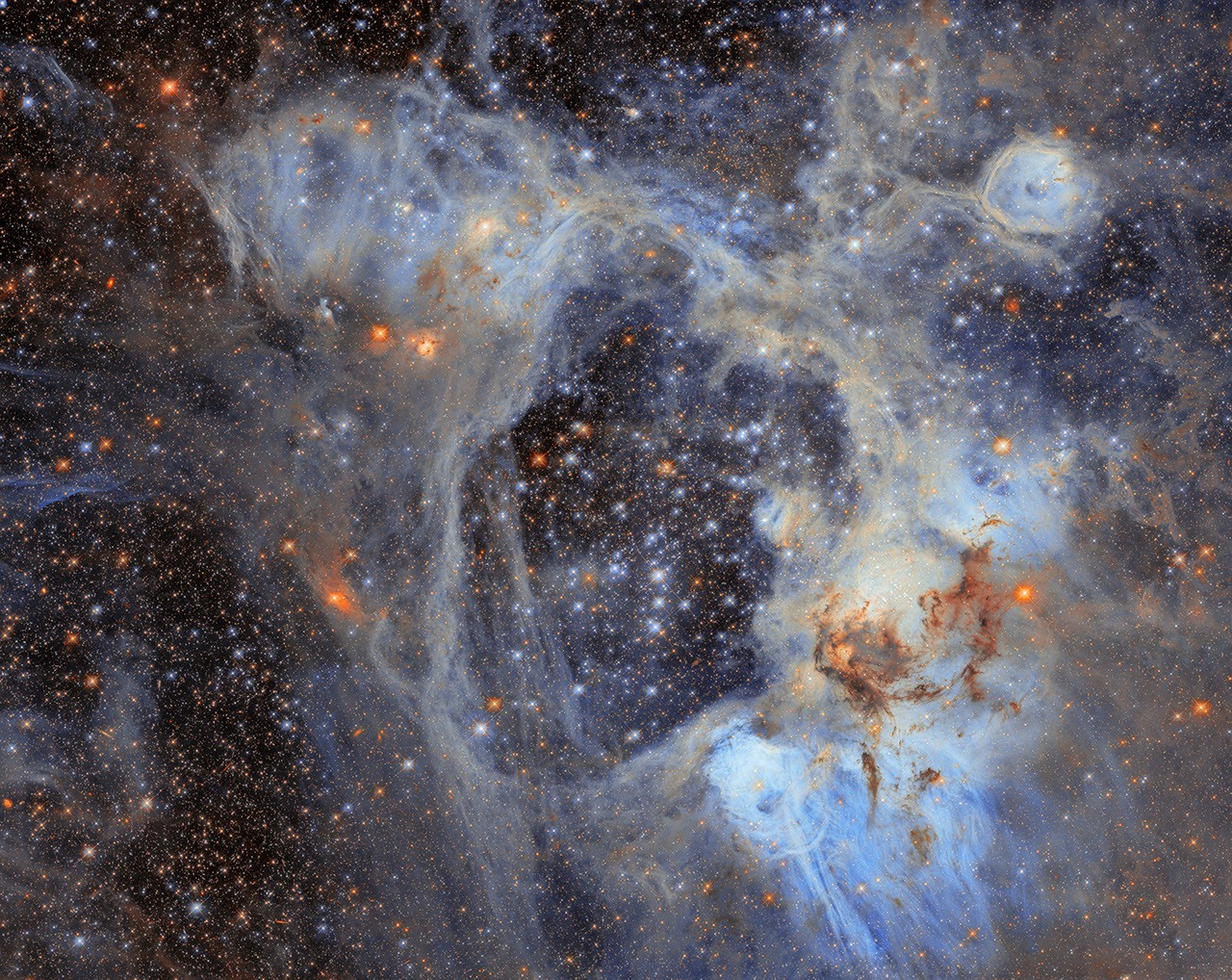
The venerable NASA/ESA Hubble Space Telescope has delivered a breathtaking image of LHA 120-N44, or simply N44, a sprawling cosmic vista nestled within the Large Magellanic Cloud (LMC). Located a mere 160,000 light-years from Earth in the constellation Dorado, the LMC stands as the largest of the Milky Way’s satellite galaxies, serving as a dynamic cosmic laboratory for astronomers. This latest observation, released on September 3, 2026, showcases N44 as a highly active site of star birth, dominated by a vast central void and an intricate shell of dense, dusty gas, providing invaluable insights into the complex processes of stellar genesis and evolution.
The Hubble Space Telescope: A Legacy of Discovery
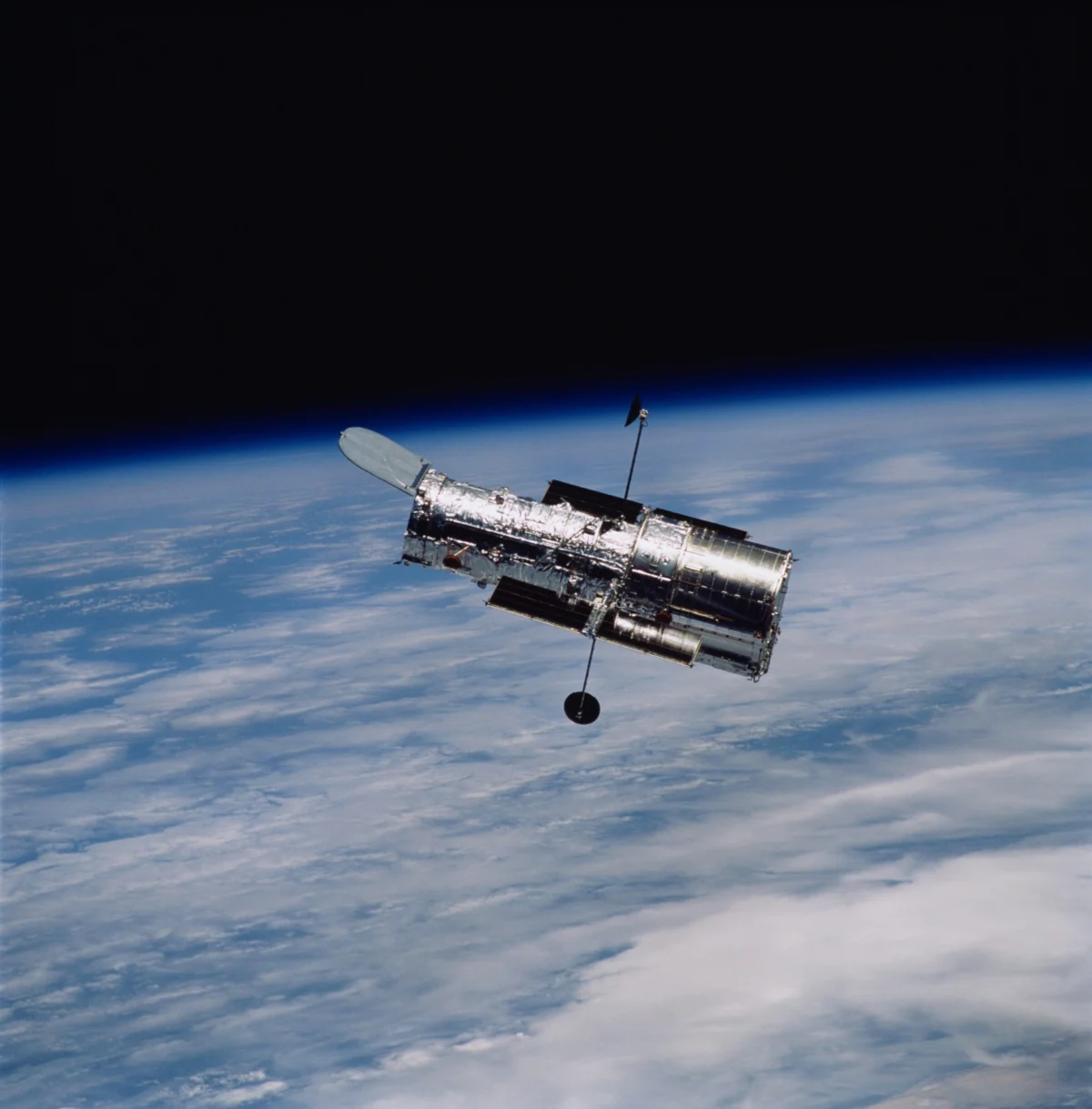
Launched into low Earth orbit on April 24, 1990, the Hubble Space Telescope (HST) represents a monumental collaboration between NASA and the European Space Agency (ESA). For over three decades, Hubble has transcended its initial mission parameters, revolutionizing humanity’s understanding of the cosmos. Positioned above the distorting effects of Earth’s atmosphere, its suite of advanced instruments—including the Wide Field Camera 3 (WFC3) and the Advanced Camera for Surveys (ACS)—has delivered unparalleled optical and ultraviolet views of the universe. From tracing the expansion of the universe to observing the birth and death of stars, and from analyzing the atmospheres of exoplanets to capturing the majestic collisions of galaxies, Hubble’s contributions to astrophysics are immeasurable. Its sensitive observations and fine spatial resolution are particularly crucial for distinguishing faint objects in crowded stellar nurseries like N44, allowing astronomers to conduct detailed censuses of star populations that would be impossible from ground-based observatories. This longevity and consistent performance underscore Hubble’s status as one of humanity’s most successful scientific endeavors, continually pushing the boundaries of astronomical discovery.
The Large Magellanic Cloud: A Nearby Cosmic Laboratory
The Large Magellanic Cloud is not just a neighboring galaxy; it is a critical astronomical asset. Its relative proximity makes it an ideal target for detailed studies of stellar populations, nebulae, and galactic evolution. Unlike the more massive Milky Way, the LMC possesses a lower metallicity – meaning it has a smaller abundance of elements heavier than hydrogen and helium. This characteristic is particularly significant because the early universe was similarly metal-poor. By studying star formation within the LMC, astronomers can gain crucial insights into the conditions under which the universe’s first generations of stars, known as Population III stars, might have formed. These primordial stars are hypothesized to have been massive and short-lived, playing a pivotal role in reionizing the universe and seeding it with the first heavy elements. The LMC, therefore, acts as a local analogue to the conditions of the nascent cosmos, offering a unique opportunity to explore the fundamental processes that shaped the universe as we know it today.
Unveiling N44: A Superbubble of Stellar Genesis
N44, cataloged as LHA 120-N44, is a prime example of the LMC’s vigorous star-forming activity. This photogenic nebula in Dorado is characterized by two dominant features: an expansive central void and a surrounding shell of dense, dusty gas. The central void, colloquially termed a "superbubble," spans an impressive 210 by 140 light-years across. Its existence is a testament to the colossal power of the massive stars born within it. These stellar behemoths, through their intense stellar winds—streams of charged particles ejected at high velocities—and their cataclysmic ends as supernovae, have relentlessly expelled much of the original gas and dust from which they coalesced. This powerful outflow has carved out the vast cavity, pushing material outwards and shaping the nebula’s dramatic architecture.
The Mechanics of a Superbubble
The formation of a superbubble is a dynamic and energetic process. When a cluster of massive stars forms, their collective stellar winds create a large, low-density cavity. As these stars reach the end of their lives, they explode as supernovae, injecting immense amounts of energy and momentum into the interstellar medium. The shockwaves from these explosions sweep up and compress the surrounding gas and dust, expanding the cavity further and creating a dense shell at its periphery. This compressed shell, rich in raw materials, then becomes a fertile ground for subsequent generations of stars. The ultraviolet radiation emitted by the hot, massive stars within the superbubble further energizes the gas shell, causing it to glow brightly across various wavelengths, making it a prominent target for astronomical observation. This intricate interplay of stellar birth, death, and environmental sculpting makes N44 a fascinating object for studying the cyclical nature of star formation.
N44F: A Microcosm of Stellar Winds
Within the broader N44 complex, astronomers have identified several distinct features, many of which were first cataloged by astronomer Karl Henize in the 1950s. One particularly striking example is N44F, a smaller interstellar bubble situated near the upper-right corner of Hubble’s latest image. Unlike the colossal superbubble, N44F is the direct result of the powerful stellar winds emanating from a single, exceptionally hot and massive star. As revealed in a previously released Hubble close-up, the star’s furious winds and intense radiation have intricately sculpted the surrounding gaseous environment, creating dramatic pillars of dusty gas that point towards the central star. These smaller bubbles offer valuable insights into the localized effects of massive stars on their immediate surroundings, providing a scaled-down yet equally instructive example of the processes driving the larger superbubble’s evolution.
The Census of Stars: Program #14689
The data underlying this spectacular image originates from an ambitious observing program, #14689, led by Principal Investigator Gouliermis. The primary objective of this program was to conduct a comprehensive survey of N44, taking a detailed census of its stellar population. Through Hubble’s unmatched capabilities, astronomers were able to catalog nearly half a million stars within the cluster, alongside various foreground and background interlopers. This meticulous cataloging effort is crucial for understanding the demographics of star-forming regions and the processes that govern stellar evolution.
Pre-Main-Sequence Stars: Glimpsing Stellar Infancy
One of the most significant findings from program #14689 was the identification of approximately 30,000 pre-main-sequence stars. These "baby stars" are still in their formative stages, having not yet ignited nuclear fusion of hydrogen into helium in their cores—the defining characteristic of a main-sequence star like our Sun. Studying these nascent stars is paramount for understanding the initial phases of stellar evolution, from the collapse of cold gas clouds into dense knots to the moment nuclear fusion ignites. Hubble’s exceptional sensitivity and fine spatial resolution were indispensable in this endeavor, enabling the detection and characterization of these faint, often obscured objects within the crowded stellar cluster. The ability to peer into these early stages of stellar life provides critical data for refining theoretical models of star formation and sheds light on the timescales involved in the complex journey from gas cloud to glowing star.
Astronomers React: Insights into Cosmic Evolution
The release of Hubble’s latest image and the associated scientific findings have been met with enthusiasm within the astronomical community. "Observations like these from Hubble are foundational to our understanding of how stars form and interact with their environment," stated a representative from the Space Telescope Science Institute (STScI), which operates Hubble for NASA. "N44 is a vibrant cosmic laboratory where we can directly witness the forces that sculpt galaxies. The sheer number of young, pre-main-sequence stars identified in this region gives us an unprecedented statistical sample to study the early lives of stars."
Scientists from both NASA and ESA emphasized the unique role the LMC’s low metallicity plays in these studies. "The Large Magellanic Cloud provides a crucial window into the conditions prevalent in the early universe," explained an ESA spokesperson. "By studying star formation in an environment poor in heavier elements, similar to the primordial cosmos, we can test our theories about how the very first stars formed and, in turn, how the universe began to populate itself with the elements essential for planets and life." The collaboration between NASA and ESA continues to leverage Hubble’s enduring capabilities to address some of the most profound questions in astrophysics.
Broader Implications: Star Formation, Early Universe, and Future Astronomy
The insights gleaned from N44 extend far beyond this single nebula. They have profound implications for several key areas of astrophysical research:
-
Refining Star Formation Models: The detailed census of pre-main-sequence stars in N44 allows astronomers to calibrate and refine theoretical models of star formation. By observing the distribution, ages, and masses of these nascent stars within the superbubble’s shell, researchers can better understand the efficiency of star formation in compressed gas environments and the precise timescales involved in the transition from molecular cloud collapse to stable hydrogen fusion. This data helps to resolve long-standing questions about how quickly stars are born and how their properties are determined by their birth environment.
-
Understanding the Early Universe: The LMC’s lower metallicity makes N44 an invaluable analogue for the conditions present in the early universe, when heavy elements were scarce. The ability to study star formation in such an environment helps bridge the gap between theoretical predictions of the first stars and observable phenomena. It provides empirical data to inform models of Population III star formation, which are crucial for understanding the reionization epoch and the initial chemical enrichment of the cosmos. These observations are a stepping stone to understanding how the universe evolved from a primordial soup of hydrogen and helium to the complex, chemically rich environment we inhabit today.
-
Guiding Future Missions: Hubble’s observations of N44 also serve as crucial pathfinders for next-generation observatories. The James Webb Space Telescope (JWST), with its unparalleled infrared capabilities, is ideally suited to peer through the thick dust clouds that often obscure the youngest stars. Data from Hubble, which excels in visible and ultraviolet light, can guide JWST to specific regions within N44 for even deeper infrared investigations, potentially revealing even more deeply embedded protostars and shedding light on the earliest stages of stellar collapse. This synergy between different space telescopes maximizes the scientific return and pushes the boundaries of astronomical discovery.
-
Inspiring Public Engagement: Beyond its scientific value, the sheer aesthetic beauty of images like N44 captivates the public imagination. These cosmic vistas serve as powerful reminders of the universe’s grandeur and complexity, fostering a sense of wonder and encouraging interest in science and space exploration among new generations.
In conclusion, Hubble’s latest detailed portrait of the N44 superbubble in the Large Magellanic Cloud stands as a testament to the telescope’s enduring legacy and its continued capacity to deliver groundbreaking science. By meticulously cataloging thousands of nascent stars and unraveling the dynamic processes shaping this stellar nursery, astronomers are gaining unprecedented insights into the fundamental mechanisms of star formation and the conditions that governed the universe in its infancy. These findings not only enrich our cosmic understanding but also pave the way for future explorations by advanced observatories, ensuring that the quest to comprehend our universe remains vibrant and continuous.