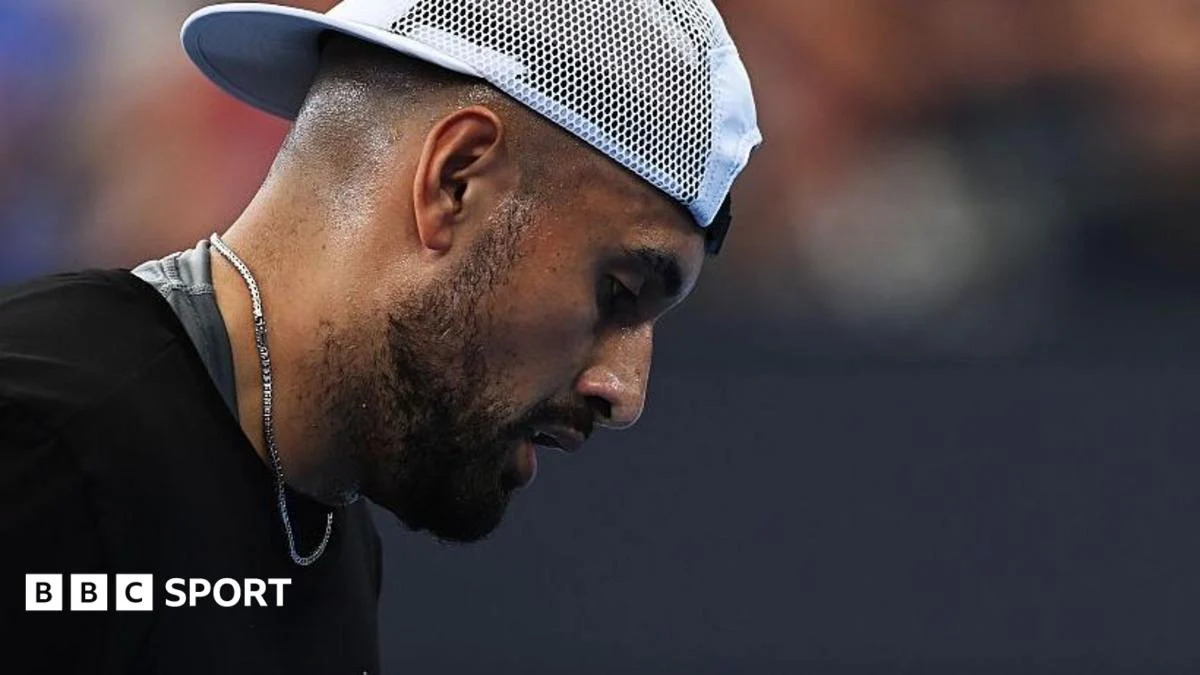
Australian tennis star Nick Kyrgios is now eligible to resume his professional career after serving a one-month ban imposed by the International Tennis Integrity Agency (ITIA) for testing positive for cocaine. The ban, which concluded on September 3rd, stemmed from a sample provided by Kyrgios during the Mallorca Open in June. The positive test result, for benzoylecgonine – a metabolite of cocaine – led to his provisional suspension on August 4th.
Kyrgios, who is 31 years old, admitted to investigators from the ITIA that he had consumed cocaine at a nightclub in Magaluf in the early hours of June 20th. This admission was crucial, as it allowed the ITIA to consider the use as being "outside of competition." The timing of the consumption is particularly significant; Kyrgios played his first-round match at the Mallorca tournament on June 22nd, just two days after his reported drug use. He lost this match in straight sets to fellow Australian Adam Walton.
The ITIA, after consulting with an independent expert, accepted Kyrgios’s account that the cocaine use occurred outside of an official competition. This distinction is vital under anti-doping regulations, as substance use within the competition period can carry more severe penalties. While Kyrgios could have faced a maximum ban of three months, his proactive engagement with a treatment program led to a reduction of his suspension to one month. The ban officially ended on Thursday, September 3rd, making him immediately eligible to compete.
Timeline of Events and Consequences
The chain of events leading to Kyrgios’s ban can be detailed chronologically:
- Early Hours of June 20th: Nick Kyrgios reportedly consumes cocaine at a nightclub in Magaluf.
- June 21st: The singles draw for the Mallorca Open commences. Although Kyrgios’s first-round match was scheduled for the following day, by ITIA and WADA definitions, players are often considered "in competition" from the moment the draw is released, or even earlier depending on specific tournament regulations.
- June 22nd: Kyrgios plays his first-round match at the Mallorca Open, losing to Adam Walton.
- June (Date Unspecified): Kyrgios submits a doping control sample during the Mallorca Open.
- August 4th: Kyrgios is provisionally suspended by the ITIA after his June sample is found to contain benzoylecgonine.
- August (Date Unspecified): Kyrgios cooperates with ITIA investigators, admitting to cocaine use on June 20th. He also provides evidence of enrolment and payment for a treatment program.
- August 28th: Kyrgios begins his participation in a treatment program.
- September 3rd: Kyrgios’s one-month ban concludes, making him eligible to return to professional tennis.
Beyond the suspension, Kyrgios will also face financial penalties. He has been stripped of his prize money from the Mallorca Open, amounting to 6,570 euros (approximately £5,650). His current world ranking has also plummeted to 918, reflecting his prolonged absence from the tour due to both the ban and ongoing injury issues.
Background and Kyrgios’s Response
When the positive test was initially announced, Kyrgios publicly stated his intention to step away from social media and public life for the following 28 days. He framed this period as an opportunity to "focus on getting myself right," signaling a period of introspection and rehabilitation.
Kyrgios, a former world number 13, has had a challenging recent period on the court. He has competed in only four singles matches this season, largely due to persistent knee and wrist injuries that have required significant medical attention, including reconstructive surgery. His last competitive appearance was in the men’s doubles at Wimbledon, where he and his partner, Alexander Bublik, were eliminated in the first round.
Following the announcement of his provisional suspension, Kyrgios released a lengthy statement on Instagram, acknowledging the severe impact his injuries have had on him both mentally and physically. He expressed frustration with his body’s inability to meet the demands of his mind and candidly admitted that coming to terms with the potential end of his career has been a profound struggle. He unequivocally stated, however, that "None of that excuses what I did."
Cocaine is classified as a stimulant and a substance of abuse by the World Anti-Doping Agency (WADA), placing it firmly on their prohibited list. Athletes are held to a strict liability standard under the WADA Code, meaning they are responsible for any prohibited substance found in their system, regardless of intent.
Broader Context: Kyrgios’s Controversial Career and Anti-Doping Stance
Nick Kyrgios has long been a polarizing figure in the world of professional tennis. His on-court demeanor has frequently drawn criticism, leading to numerous substantial fines for offenses such as racket smashing, audible obscenities, and disputes with umpires. His career has also been marked by off-court controversies, including a 2023 admission of assaulting an ex-girlfriend two years prior, for which he avoided a criminal conviction. He has also faced criticism for comments perceived as misogynistic and, in 2024, shared a post from controversial influencer Andrew Tate, though he later asserted he had taken "all lengths" to distance himself from Tate’s views.
Intriguingly, Kyrgios has also been a vocal critic of the tennis integrity system, particularly regarding anti-doping cases. He previously described the system as "awful" and expressed strong disapproval of the leniency he perceived in the bans handed to top players Jannik Sinner and Iga Swiatek. He labeled the handling of these cases as "disgusting" for the sport. This statement now casts his own one-month ban in a different light, as it is an identical duration to Swiatek’s ban and two months shorter than Sinner’s, the very cases he had criticized.
The fact that Kyrgios’s one-month ban is the same duration as Swiatek’s and shorter than Sinner’s, given his vocal criticism of those perceived lenient punishments, is a notable aspect of this situation. The ITIA’s decision to reduce his ban to one month was contingent on his provision of an invoice demonstrating payment for and commencement of a treatment program, which began on August 28th. This suggests that his willingness to engage with rehabilitation efforts played a significant role in mitigating the severity of his sanction.
Career Achievements and Personal Struggles
Despite his controversies and recent difficulties, Nick Kyrgios has achieved notable success in his career. He has won seven ATP Tour singles titles and reached the pinnacle of Grand Slam tennis by making it to the Wimbledon final in 2022, where he lost in four sets to Novak Djokovic. He also secured a Grand Slam title in doubles, winning the Australian Open men’s doubles crown in 2022 with his compatriot Thanasi Kokkinakis.
Beyond the court, Kyrgios has been commendably open about his struggles with mental health. He has spoken candidly about contemplating suicide and spending time in a psychiatric hospital in London following his defeat at Wimbledon in 2019. This personal vulnerability has resonated with many, adding another layer to the complex public perception of the Australian athlete.
Analysis of Implications
Kyrgios’s return to the court marks a significant moment for both the player and the sport. His absence has been felt, given his electrifying playing style and capacity to draw large crowds. However, his eligibility comes at a time when his career is at a crossroads, heavily impacted by injuries. His ability to regain peak form and compete at the highest level will be a considerable challenge, compounded by the reputational damage and the need to rebuild trust with fans and the tennis establishment.
The ITIA’s handling of the case, while resulting in a ban, also appears to have factored in Kyrgios’s cooperation and commitment to rehabilitation. This approach, which balances accountability with support for player welfare, is becoming increasingly important in professional sports. Kyrgios’s future trajectory will undoubtedly be closely watched, not only for his performance on court but also for his continued journey of personal and professional recovery. His return will reignite discussions about player accountability, mental health support, and the integrity of the sport.