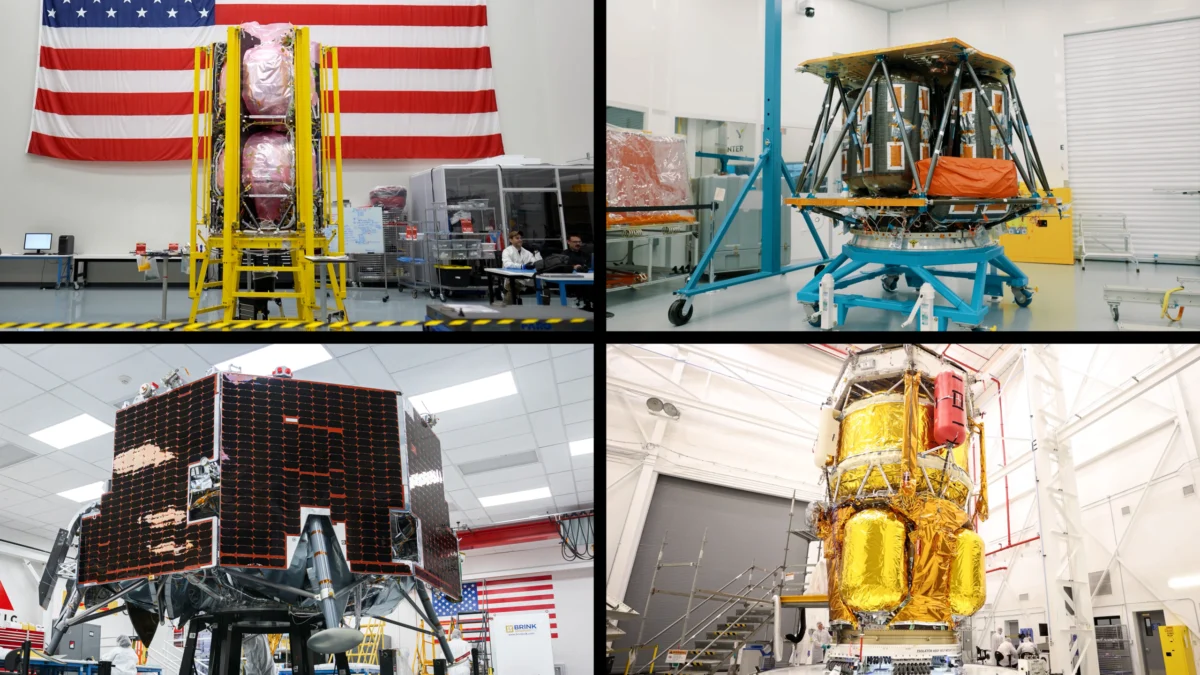
Before humanity can establish a sustainable presence on the lunar surface, a goal central to NASA’s ambitious Artemis program, the intricate hardware designed to facilitate this new era of exploration must first prove its resilience against one of the Moon’s most insidious adversaries: lunar dust. At the heart of this crucial validation effort is NASA’s Johnson Space Center (JSC) in Houston, where engineers at the state-of-the-art Lunar Development and Test Facility (LDTF) are meticulously unraveling the mysteries of this pervasive threat. Their work is not merely about testing equipment; it is about safeguarding astronaut health, ensuring mission longevity, and laying the foundational groundwork for future deep-space endeavors, including a human mission to Mars.
The Unforgiving Lunar Environment: A Microscopic Menace
Unlike the weathered, rounded grains of sand found on Earth, lunar dust, or regolith fines, is a product of billions of years of bombardment by micrometeoroids and solar wind on an airless body. This continuous pulverization process, without the smoothing effects of wind or water erosion, results in particles that are exceptionally sharp, jagged, and highly abrasive at a microscopic level. Furthermore, the vacuum of space, combined with solar radiation, imparts an electrostatic charge to these particles, causing them to cling tenaciously to virtually every surface they encounter—from spacesuits and optical lenses to delicate mechanical joints and thermal blankets.
The historical context of lunar dust is critical. During the Apollo missions from 1969 to 1972, astronauts frequently reported the pervasive nature of the dust. Eugene Cernan, commander of Apollo 17, famously described it as "very fine, like talcum powder, but it’s abrasive as sandpaper." It fouled equipment, clogged mechanisms, abraded suit materials, interfered with seals, and even caused minor irritation to astronauts’ eyes and respiratory systems when brought inside the lunar module. The Apollo 11 crew, the first to walk on the Moon, noted the difficulty of cleaning their suits and equipment. Apollo 17’s Harrison Schmitt, a geologist, provided invaluable insights into the dust’s characteristics, but even with their scientific training, mitigating its effects remained a significant challenge throughout the program. With Artemis aiming for longer-duration missions and the establishment of a permanent base, these historical lessons underscore the urgent need for comprehensive dust mitigation strategies. Without effective countermeasures, lunar dust poses a direct threat to mission success, potentially damaging critical life support systems, degrading power generation capabilities, and compromising the health and operational efficiency of astronauts.
Artemis: A New Chapter in Lunar Exploration
The Artemis program represents NASA’s ambitious plan to return humans to the Moon, building a sustainable presence that will serve as a springboard for future missions to Mars. The program is structured in phases: Artemis I, an uncrewed test flight of the Space Launch System (SLS) rocket and Orion spacecraft, successfully completed its journey around the Moon in late 2022. Artemis II, planned for 2024, will carry a crew on a lunar flyby, testing critical systems with humans aboard. The highly anticipated Artemis III, slated for as early as 2025, aims to land the first woman and the next man on the lunar south pole, a region believed to harbor significant water ice reserves. Subsequent missions, Artemis IV and beyond, envision the development of a lunar base, the Artemis Base Camp, and the Gateway orbital outpost, facilitating extended stays and advanced scientific research.
The success of these missions, particularly the long-duration expeditions and the establishment of permanent infrastructure, hinges on the ability of human-made systems to withstand the extreme lunar environment. This includes not only the vacuum and radiation but, crucially, the pervasive and destructive lunar dust. The LDTF’s work directly supports the Artemis program’s objectives by rigorously testing and validating the technologies that will enable astronauts to live and work safely and effectively on the Moon for weeks, months, or even years.
The Lunar Development and Test Facility: A Microcosm of the Moon
The Lunar Development and Test Facility, strategically located within the Energy Systems Test Area at NASA Johnson Space Center, stands as a testament to engineering ingenuity dedicated to overcoming the Moon’s challenges. Managed by a dedicated team of NASA engineers, the facility provides an unparalleled capability to develop and rigorously test hardware in meticulously simulated lunar conditions. Its primary function is to evaluate how spacesuits, spacecraft components, mechanisms with moving parts, and sensitive joints will perform when exposed to the abrasive and adhesive properties of lunar regolith.
The facility’s capabilities are a direct result of the specialized systems developed by NASA Johnson’s Propulsion and Power Division. These systems enable the recreation of a harsh lunar environment on Earth. The LDTF comprises several key components: a dedicated dust containment and preparation laboratory for ambient testing, allowing for detailed examination of dust properties and interactions; a 3-foot cube vacuum chamber for smaller-scale component testing; and a more expansive 15-foot thermal vacuum chamber. The latter is particularly crucial, as it allows engineers to test hardware under conditions that replicate not only the vacuum of space but also the extreme thermal cycles experienced on the Moon, which can range from over 120°C (250°F) in sunlight to below -130°C (-200°F) in shadow. Inside this chamber, a closed-loop nitrogen system meticulously recreates the thermal and vacuum aspects of the lunar environment, providing a realistic testbed for evaluating the resilience of advanced materials and complex systems.
According to Mike Salinas, Deputy Chief of the Propulsion and Power Division branch, the LDTF is more than just a testing ground; it is a critical accelerator for technological advancement. "The facility helps develop and test technologies needed for long-duration lunar exploration," Salinas stated, emphasizing the long-term vision. He further elaborated on a groundbreaking area of research: "Engineers are advancing techniques to extract resources from lunar regolith, which can be turned into oxygen for astronauts and liquid oxygen for rocket propellant." This In-Situ Resource Utilization (ISRU) research is pivotal for establishing a truly sustainable lunar presence, significantly reducing the mass and cost of supplies that must be launched from Earth. The LDTF is actively exploring methods like hydrogen reduction and molten salt electrolysis, which could unlock the Moon’s vast reserves of oxygen, bound within its mineral composition, revolutionizing future space logistics.
Mitigating the Dust: Engineering Solutions and Future Outlook
The challenges posed by lunar dust are complex, requiring multi-faceted mitigation strategies. Engineers at the LDTF are exploring a variety of solutions, from developing new dust-resistant materials and coatings for spacesuits and equipment to designing active dust removal systems. These include electrostatic dust shields, which use electric fields to repel charged dust particles, and robotic brush systems designed to clean sensitive surfaces. Advanced material science is focusing on self-cleaning surfaces and specialized fabrics that resist dust adhesion and abrasion. For moving parts, new seal designs and lubrication methods are being investigated to prevent dust ingress and wear.
The implications of the LDTF’s work extend far beyond dust mitigation. The facility’s ability to simulate the lunar environment with such precision also supports the development of crucial technologies for power generation, thermal control, and communication systems that must operate reliably in extreme conditions. The insights gained from testing at LDTF directly inform the design and manufacturing of every piece of hardware destined for the lunar surface, from the next-generation spacesuits (like the xEVAS system) to the components of future lunar habitats and scientific instruments.
Broader Impact: Paving the Way for Sustainable Presence and Mars
The meticulous work performed at the LDTF has profound implications for the future of space exploration.
Ensuring Astronaut Safety and Mission Longevity: The primary objective of dust mitigation is to protect astronauts and their equipment. By identifying vulnerabilities and validating solutions, the LDTF directly contributes to enhancing crew safety and extending the operational lifespan of lunar assets. This means longer scientific expeditions, more efficient resource utilization, and a greater return on investment for the Artemis missions. The lessons learned here will also be crucial for designing health protocols and personal protective equipment to safeguard astronauts against potential long-term health effects of dust exposure.
The Economic and Scientific Promise of Lunar Resources: The research into In-Situ Resource Utilization (ISRU) at the LDTF is a game-changer. The ability to extract oxygen from lunar regolith not only provides breathable air for astronauts but also offers a source of propellant (liquid oxygen) for spacecraft. This "fuel depot" concept on the Moon could dramatically reduce the cost and complexity of future deep-space missions, including those to Mars. Moreover, extracting other valuable elements from regolith could spur a nascent lunar economy, fostering commercial enterprises in space.
Mars: The Ultimate Horizon: The Moon serves as an indispensable proving ground for Mars. While Martian dust has different properties (e.g., iron-rich, less abrasive, but still electrostatically charged and pervasive), the methodologies, technologies, and operational protocols developed to handle lunar dust will directly inform strategies for Mars missions. Understanding how to build and maintain habitats, operate rovers, and protect crew in a dusty extraterrestrial environment is a fundamental prerequisite for successful human exploration of the Red Planet. The LDTF’s contributions are thus not only for the Moon but for the broader vision of humanity becoming an interplanetary species.
The Spirit of Exploration, Celebrated and Shared
The pioneering spirit of exploration and innovation that permeates the Lunar Development and Test Facility is not confined to its interior. The exterior of the building itself has become a canvas for this inspiring narrative. In 2024, acclaimed artist Sebastian Boileau completed a large-scale mural depicting astronauts actively exploring the lunar surface beneath a breathtaking vista of the cosmos. This vibrant artwork serves as a public celebration of the ingenuity, discovery, and relentless pursuit of knowledge happening daily within the facility’s walls, embodying the "Golden Age of exploration" that NASA is ushering in.
To further engage the public and provide unprecedented access to this critical work, NASA has launched a new 3D virtual tour of the Lunar Development and Test Facility. This innovative digital experience allows anyone, anywhere in the world, to virtually step inside and explore the chambers, laboratories, and specialized equipment where engineers are meticulously preparing the technologies that will define humanity’s return to the Moon and beyond. It is a powerful tool for transparency and inspiration, allowing future generations of scientists and engineers to witness firsthand the dedication and innovation driving the Artemis program.
In conclusion, the Lunar Development and Test Facility at NASA’s Johnson Space Center is an indispensable asset in humanity’s quest to return to and ultimately inhabit the Moon. By systematically addressing the formidable challenge of lunar dust, the LDTF is not merely solving an engineering problem; it is forging the path for sustainable lunar operations, unlocking extraterrestrial resources, and preparing the way for future human voyages to Mars. The work performed within its specialized chambers is foundational to the success of the Artemis program, ensuring that when astronauts finally set foot on the Moon’s surface again, they will be equipped with the resilience and knowledge to thrive in its unforgiving embrace.