An Australian aviation crew has successfully completed an unprecedented midwinter mission to rescue a critically ill US expedition member from McMurdo Station in Antarctica, navigating through freezing temperatures and total darkness. The "extraordinary" medical evacuation, undertaken by Skytraders on Friday, July 28, demonstrated a remarkable confluence of human expertise, advanced aviation technology, and international cooperation in one of the planet’s most inhospitable environments. The patient, whose identity has not been released, was safely transported to Christchurch, New Zealand, where they are now reported to be recovering well.
The Unprecedented Challenge: Midwinter in Antarctica
This mission stands as a historic achievement, marking the first time such an operation has been successfully conducted in July – the heart of the Antarctic winter – and entirely under the cloak of polar darkness. The conditions faced by the Skytraders crew were exceptionally severe: temperatures plummeted to -43C (-45.4F), compounded by the perpetual night that defines the continent during its austral winter. For several months, McMurdo Station, the largest US research facility in Antarctica, experiences continuous darkness, with the sun not rising above the horizon. This period brings with it extreme cold, violent blizzards, and limited visibility, making any aviation activity profoundly hazardous.
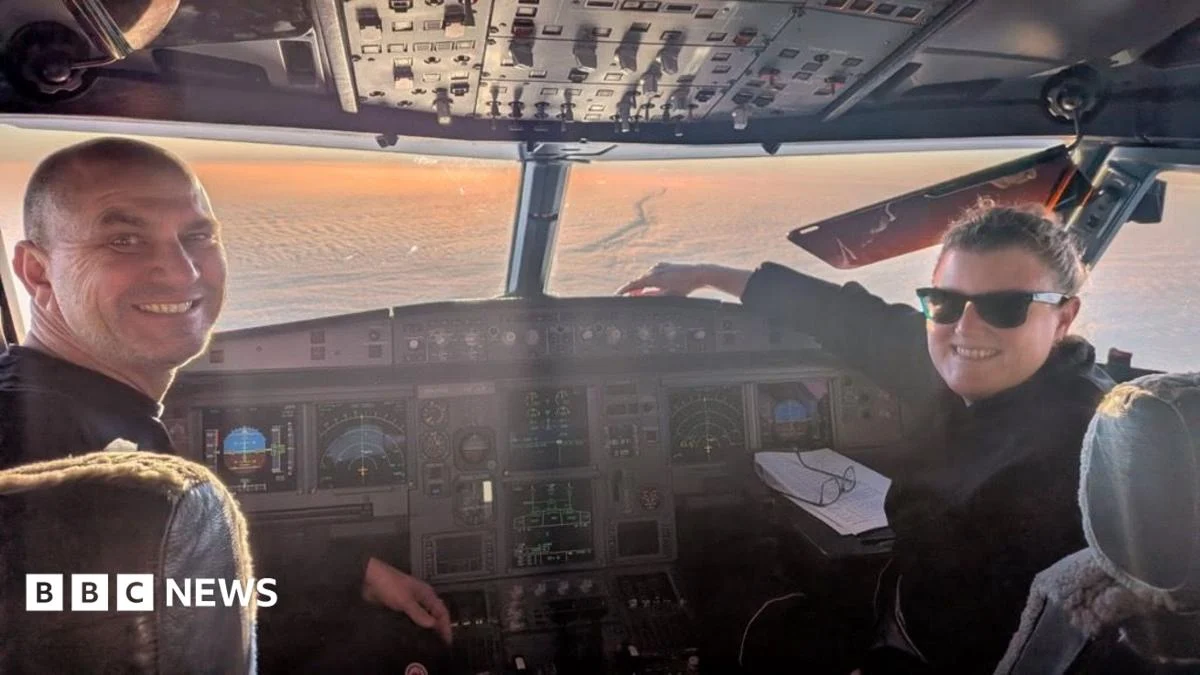
Captain Louise Robertson, one of four pilots aboard the Airbus A319, known as Snowbird 1, highlighted the mission’s unique nature. "We completed it on the 31st of July, and the first day of any sort of sunlight, which was very minimal, would be on the 1st of August," she told the BBC, emphasizing the absolute darkness that enveloped their entire operation. Her husband of 18 years, Rod Robertson, took the controls for the critical landing at the US research station on Ross Island. "He was in the left seat and I was in the right seat," she recalled, describing it as the most complex operation in her seven years at Skytraders and 25 years as a pilot. The sheer audacity and precision required to land and take off an aircraft of this size in such conditions underscore the exceptional skill of the flight crew and the robust capabilities of their aircraft.
A Race Against Time: The Mission’s Genesis and Planning
The urgent call for assistance originated from the US Antarctic Program (USAP) via the Australian Antarctic Division (AAD) on Wednesday afternoon, July 26. A medical emergency at McMurdo Station necessitated immediate evacuation, triggering a rapid response protocol that mobilizes specialized assets for remote polar operations. Skytraders, an Australian aviation company with extensive experience in Antarctic logistics, was tasked with the mission.
The initial phase involved a "major operation" to configure the Airbus A319 for medical transport. Engineers and a dedicated design team worked tirelessly for 24 hours to fit a specialized stretcher and medical equipment into the aircraft’s cabin. This conversion is a critical step for aeromedical evacuations, ensuring the patient’s stability and comfort during long-haul flights under potentially turbulent conditions. The medical team, comprising highly trained doctors and paramedics, also prepared for the extreme cold, strategizing patient transfer protocols that minimize exposure to the lethal Antarctic air.
Navigating the Antarctic Gauntlet: Weather Delays and Runway Preparations
Despite the urgency, the unforgiving Antarctic weather imposed an initial 12-hour delay. A severe snowstorm gripped the region, preventing the immediate launch of the mission. Captain Robertson explained, "We had quite a narrow time frame that we could actually fly down to Antarctica because there was a snowstorm on the first day that we were intending to go down which stopped the operation." Such delays are common in polar logistics, where weather windows are fleeting and unpredictable, demanding patience and adaptability from all personnel involved.
Crucially, the storm also hampered efforts by the ground crew at McMurdo to prepare Phoenix Airfield, the station’s primary runway, for the arrival of the large Airbus A319. Made of compacted snow, the 3-kilometer-long runway requires meticulous grading and grooming to ensure a smooth and safe landing surface, particularly for heavy aircraft. This intricate process, typically taking six hours, became an even more arduous task for the ground crew battling -45C temperatures and strong winds. Their "phenomenal job" under such extreme duress was indispensable to the mission’s eventual success, creating the necessary infrastructure in conditions that would challenge any machinery or human endurance.
The Flight into Darkness: Hobart to McMurdo
With the weather eventually providing a marginal window, the Snowbird 1 finally took off from Hobart, Tasmania, in the early hours of Friday morning. The flight itself was a testament to advanced navigation and piloting skills. Flying over the vast, featureless expanse of the Southern Ocean towards a continent shrouded in darkness demands constant vigilance and reliance on sophisticated instrumentation. The pilots had to contend with the absence of visual cues, a phenomenon known as "whiteout" or "blackout" depending on light conditions, which can disorient even the most experienced aviators.
Upon nearing McMurdo Station, the challenge intensified. Landing a large passenger jet on a compacted snow runway in total darkness requires pinpoint accuracy and close coordination with ground control. Captain Rod Robertson’s expertise in handling the aircraft in such extreme conditions was paramount. The Phoenix Airfield, a crucial logistical hub for USAP, is designed to accommodate large wheeled aircraft, but its operation in midwinter night presents unique difficulties. The precision of the landing, guided by minimal ground lighting and advanced onboard systems, speaks volumes about the crew’s training and the aircraft’s capabilities.
On the Ice and Return Journey: A Swift Transfer
The Skytraders crew spent precisely one hour on the ground at Phoenix Airfield. This narrow window was meticulously planned to minimize exposure to the extreme cold for both the crew and the patient. The medical team swiftly transferred the patient from the station’s medical facility to the waiting aircraft, ensuring their condition remained stable throughout the process. Every second counted, as prolonged exposure to -43C temperatures could exacerbate medical conditions and pose significant risks to the transfer team.
Once the patient was safely aboard and secured in the specially configured cabin, Snowbird 1 quickly prepared for departure. The takeoff from the icy runway, again in total darkness, required similar precision and power as the landing. With the patient under constant medical supervision, the aircraft embarked on its return journey, heading north towards the warmer climes and advanced medical facilities of Christchurch, New Zealand. Upon arrival, the patient received immediate treatment and is now reportedly recovering well, a testament to the swift and efficient execution of the entire evacuation chain.
Expertise Under Pressure: A Symphony of Collaboration
The success of this mission was not merely the achievement of the flight crew but a complex interplay of specialized expertise from numerous teams. Captain Al Wallach, another pilot on the mission, underscored this collaborative effort: "Every Antarctic mission demands absolute precision, but winter operations raise the complexity significantly." He elaborated that the conditions encountered were "right on the edge of even the most specialised aircraft capability."
The success hinged on the seamless coordination between:
- Flight Crews: Piloting the aircraft, navigating extreme weather, and executing precise landings and takeoffs.
- Meteorologists: Providing critical weather forecasts and real-time updates for flight planning and safety.
- Operational Planners: Orchestrating the logistics, scheduling, and resource allocation for the entire mission.
- Runway Teams: Working on the ground at McMurdo to maintain and prepare the Phoenix Airfield under brutal conditions.
- Engineers and Design Teams: Modifying and maintaining the aircraft for extreme polar operations and medical transport.
- Medical Personnel: Providing critical care to the patient during transfer and flight.
- Communication Teams: Ensuring constant contact between all parties across vast distances.
This intricate network of professionals, each performing their role with meticulous attention to detail, exemplifies the high standards required for Antarctic operations, where margin for error is virtually nonexistent.
Broader Context: Antarctic Operations and International Cooperation
McMurdo Station, located on the southern tip of Ross Island, serves as the logistical hub for the US Antarctic Program, supporting a wide array of scientific research in fields ranging from glaciology and biology to astrophysics and climate change. Its isolation, combined with the extreme environment, means that robust emergency response capabilities are vital for the safety of its year-round personnel, who can number over 1,000 in summer and around 150 in winter.
The Australian Antarctic Division (AAD) plays a significant role in supporting international Antarctic efforts, leveraging its geographical proximity and specialized capabilities. Emma Campbell, head of the Australian Antarctic Division, lauded the operation, stating it "highlights both the capability of our people and the strong partnerships that underpin Antarctic programmes around the world." This mission reinforces the spirit of cooperation enshrined in the Antarctic Treaty System, which designates Antarctica as a continent for peace and scientific research, fostering collaboration among nations rather than competition.
This is not the first time Skytraders has come to the aid of the US Antarctic Program. In March 2020, the company conducted a similar medical evacuation from McMurdo, though temperatures were slightly less extreme at -30°C. These repeated missions underscore Australia’s established role as a reliable partner in Antarctic logistics and emergency response, building a reputation for excellence in a domain where few nations possess the necessary resources and expertise.
Technological Prowess and Human Endurance
The Airbus A319 (Snowbird 1) is a specialized aircraft modified for polar operations. These modifications include enhanced navigation systems, cold-weather capabilities, and potentially extended range or specialized de-icing equipment, allowing it to operate reliably in conditions that would ground conventional aircraft. The ability to land on and take off from a compacted snow runway further highlights its robust design and the specific training of its crews.
Beyond the technological marvel, the mission is a powerful testament to human endurance and courage. The individuals involved – pilots, ground crew, medical staff, and support personnel – operated under immense pressure, facing psychological and physical challenges unique to the polar environment. The isolation, the constant darkness, and the bone-chilling cold demand extraordinary resilience and a profound commitment to duty. Their willingness to venture into such hostile conditions to save a life exemplifies the unwavering dedication of those who support scientific endeavors in Antarctica.
Conclusion
The successful midwinter rescue from McMurdo Station stands as a landmark achievement in polar aviation and international collaboration. It underscores the critical importance of robust logistical support for scientific research in the world’s most extreme environment and the imperative for nations to work together in the face of such formidable challenges. This mission not only saved a life but also showcased the pinnacle of human skill, technological advancement, and the enduring spirit of cooperation that defines humanity’s presence in Antarctica. As scientific exploration continues to push boundaries in remote polar regions, the lessons learned and the capabilities demonstrated by operations like this will be invaluable in safeguarding the lives of those who brave the frozen frontier.