The hospitality landscape in the United Arab Emirates is currently navigating a complex intersection of regional geopolitical tensions and rapidly evolving consumer booking patterns. Philip Barnes, the Chief Executive Officer of Rotana, one of the leading hotel management companies in the Middle East, Africa, Eastern Europe, and Turkiye, has recently offered a sobering yet pragmatic assessment of the current state of the industry. As the Gulf region contends with the ripple effects of the ongoing friction between the United States and Iran, alongside broader regional instabilities, the traditional metrics used to forecast hotel performance are being fundamentally challenged. Barnes’ observations highlight a significant shift in how travelers approach the region, characterized by a drastic narrowing of booking windows and a departure from historical reservation trends.
For industry analysts and stakeholders, the current data presents a paradox. While "business on the books" for the fourth quarter of the year appears significantly lower than in previous cycles, recent performance suggests that these numbers no longer tell the full story. The hospitality sector, particularly in hubs like Abu Dhabi and Dubai, is learning to operate in an environment where the "wait-and-see" approach has become the default for international tourists and corporate travelers alike. This shift necessitates a deeper look into the underlying causes of market volatility, the resilience of specific source markets, and the strategic maneuvers required to maintain growth in an era of uncertainty.
The Evolution of the Booking Window and Market Sentiment
The concept of "business on the books" has traditionally served as a reliable barometer for a hotel’s quarterly success. However, Barnes has cautioned against over-reliance on this metric in the current climate. According to the CEO, the fourth quarter (Q4) of the current year shows reservation levels that are dramatically below those recorded during the same period last year. Yet, this discrepancy is not necessarily a harbinger of decline. Barnes pointed to the performance of August and September as evidence of a new market reality. During those months, advance bookings were similarly minimal, yet both months ultimately performed well, exceeding initial projections through last-minute demand.
This narrowing booking window is a direct response to the perceived instability in the Middle East. When geopolitical tensions escalate—specifically the long-standing and often unpredictable friction between the U.S. and Iran—travelers become hesitant to commit to non-refundable or long-term travel plans. The psychological impact of regional conflict creates a "short-cycle" economy. Barnes cited a recent example where a Rotana property received a booking for 45 German tourists with only two days’ notice. Such a scenario would have been an anomaly a decade ago; today, it is becoming a standard operational challenge.
The implications for hotel operations are significant. Revenue management teams, which previously relied on data from six months out to set pricing strategies, must now remain agile, adjusting rates and staffing levels in real-time. The lack of visibility into Q4 does not imply a lack of demand, but rather a lack of commitment. As Barnes noted, the situation is neither "doom and gloom" nor "gangbuster business" until the regional political climate achieves a semblance of sustained stability.
Geopolitical Context: The U.S.-Iran Shadow and Regional Stability
The primary driver of this cautious consumer behavior is the ongoing tension between the United States and Iran, which frequently manifests in the waters of the Arabian Gulf and the surrounding airspace. For the UAE, a country that has positioned itself as a safe haven of luxury, commerce, and tourism, the perception of regional safety is its most valuable asset. Any escalation in the U.S.-Iran standoff, or broader conflicts in the Levant and the Red Sea, creates a "geographical contagion" in the minds of Western travelers.
While the UAE remains one of the safest destinations globally, international media coverage of regional conflicts often fails to distinguish between the specific zones of conflict and the stable commercial hubs of the Gulf. This lack of nuance leads to a "blanket caution" among tourists from Europe and North America. The timeline of these tensions is long-standing, but recent spikes in maritime incidents and diplomatic stalemates have kept the risk profile elevated. For Rotana, which operates a significant portfolio across Abu Dhabi and the wider region, managing this perception is as critical as managing the properties themselves.
Analysis of Key Source Markets: Russia, Germany, China, and India
Despite the overarching geopolitical concerns, Rotana’s CEO highlighted several key markets that continue to provide a foundation for the region’s hospitality sector. The recovery and behavior of these markets offer a roadmap for how the UAE intends to sustain its tourism goals.
The Resilience of the Russian Market
The Russian market remains a vital pillar for UAE tourism. Following the onset of the conflict in Ukraine and the subsequent sanctions imposed by Western nations, the UAE emerged as one of the few global destinations accessible and welcoming to Russian travelers. While Barnes noted that volumes have not fully returned to pre-conflict levels, the Russian market continues to show a high propensity for luxury stays and extended vacations. The direct flight connectivity provided by carriers like Emirates, Etihad, and FlyDubai has solidified this corridor.
Germany’s Measured Return
Germany has historically been one of the UAE’s most important European source markets, particularly for the "sun and sand" segment and the corporate sector. Barnes identified Germany as a focus point for Rotana, noting that German tourists are starting to return. However, the German market is particularly sensitive to geopolitical stability. The shift toward two-day booking windows is most prevalent among European travelers who are accustomed to high levels of consumer protection and are wary of travel disruptions.
The Growth Engines: India and China
India continues to be a powerhouse for the Gulf. Its proximity, large middle class, and the deep cultural and economic ties between the two regions make it a reliable source of both leisure and MICE (Meetings, Incentives, Conferences, and Exhibitions) tourism.
China, on the other hand, represents the greatest potential for volume growth. As China continues its post-pandemic reintegration into global travel, the UAE has been a primary beneficiary of "revenge travel" from Chinese citizens. The visa-on-arrival status for Chinese nationals in the UAE and the aggressive marketing campaigns by the Department of Culture and Tourism (DCT) Abu Dhabi have positioned the capital as a preferred destination. Barnes emphasized that China and India remain "great supports" to the region, often offsetting the fluctuations seen in Western markets.
Strategic Responses and the Role of Saadiyat Rotana
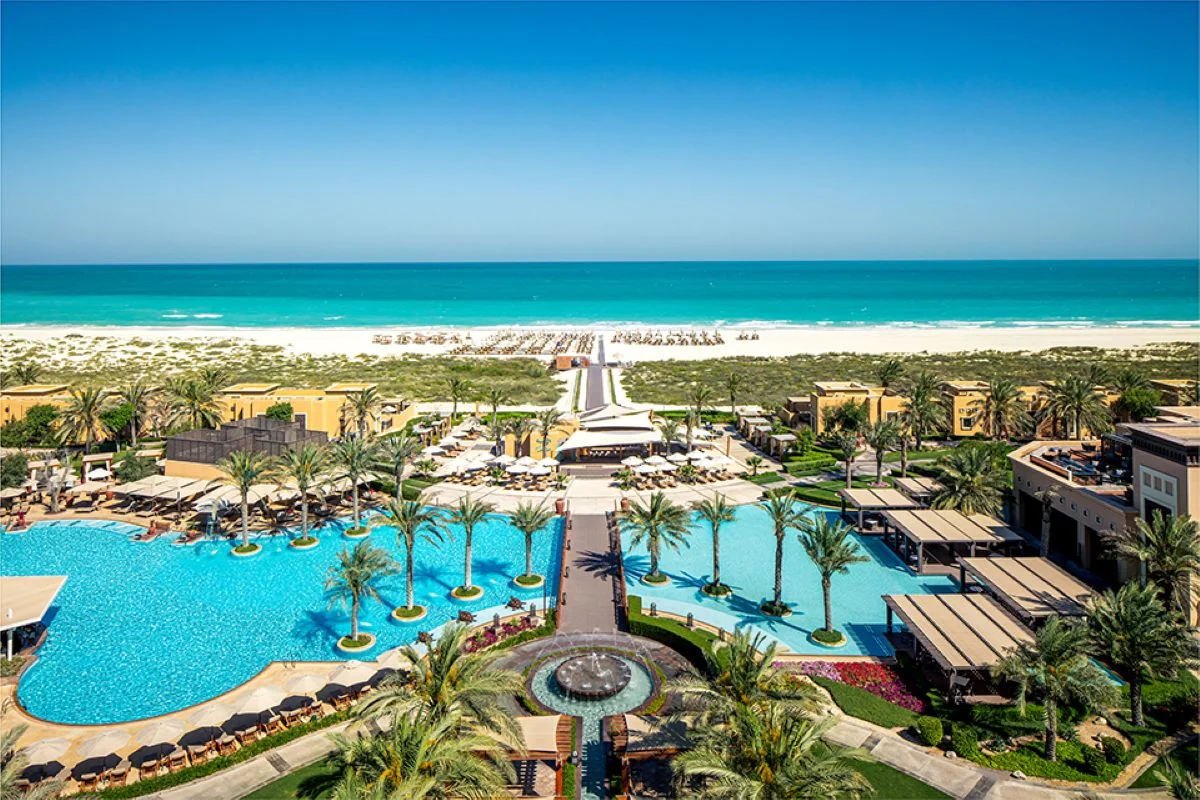
The Saadiyat Rotana Resort & Villas in Abu Dhabi serves as a prime example of how the group is positioning its assets to weather the current climate. Located on Saadiyat Island—a cultural and natural hub that houses the Louvre Abu Dhabi and will soon include the Guggenheim Abu Dhabi—the property targets a high-net-worth demographic that is often more resilient to economic shifts, if not geopolitical ones.
To counter the uncertainty of booking windows, Rotana has focused on:
- Operational Flexibility: Enhancing the ability to scale staffing and food and beverage services on short notice to accommodate sudden influxes of guests.
- Diversified Marketing: Shifting marketing spend toward markets with shorter flight times and fewer travel restrictions, such as India and the GCC (Gulf Cooperation Council) internal market.
- Value-Added Experiences: Moving away from price wars and instead focusing on unique cultural and wellness experiences that justify the premium of a last-minute booking.
Timeline of Regional Tourism Trends (2023-2024)
To understand the current situation, it is necessary to look at the chronological development of the sector over the past 18 months:
- Early 2023: Strong post-pandemic recovery with long booking windows and record-breaking ADR (Average Daily Rate) in Abu Dhabi and Dubai.
- Late 2023: Emergence of renewed regional tensions. The industry begins to see a slight softening in long-term bookings for the 2024 season.
- Q1-Q2 2024: Strengthening of the India and Russia corridors. China’s outbound travel begins to surge. Rotana reports steady performance despite narrowing booking windows.
- August-September 2024: A critical period where "on the books" data was low, but actual occupancy was high, proving the shift in consumer behavior.
- Current (Q4 2024): A period of "cautious optimism." While data suggests a slowdown, leadership remains confident that last-minute demand will bridge the gap.
Broader Implications for the UAE’s Vision 2030
The challenges described by Philip Barnes have broader implications for Abu Dhabi’s Economic Vision 2030, which seeks to diversify the economy away from oil and gas. Tourism is a cornerstone of this strategy. The UAE government has invested billions in infrastructure, from the expansion of Zayed International Airport to the development of world-class museums and entertainment districts like Yas Island.
The current volatility serves as a stress test for these ambitions. If the "new normal" is a world where booking windows are 48 hours instead of 48 days, the entire ecosystem—airlines, tour operators, and hotels—must recalibrate. This requires a shift toward more dynamic pricing models and a reliance on digital platforms that can capture immediate intent.
Furthermore, the situation underscores the importance of the UAE’s diplomatic role. By maintaining a stance of neutrality and focusing on de-escalation, the UAE preserves its image as a "safe harbor." This diplomatic positioning is as much an economic strategy as it is a political one.
Conclusion: A Market in Transition
The insights provided by Rotana CEO Philip Barnes offer a window into a hospitality sector that is both vulnerable and incredibly resilient. The "wait-and-see" attitude of global travelers is a rational response to a volatile world, but it does not equate to a lack of interest in the Gulf as a premier destination.
As Russia, Germany, China, and India continue to feed the region’s tourism engine, the success of the fourth quarter will likely be determined in the final weeks of the year. For Rotana and its peers, the mission is clear: maintain operational excellence, stay agile in the face of shifting data, and wait for the regional dust to settle. The story of Q4 is not yet written, and if the trends of August and September are any indication, the final chapter may be far more positive than the current data suggests. The hospitality industry in the Gulf is no longer just about providing a room; it is about providing certainty in an uncertain world.