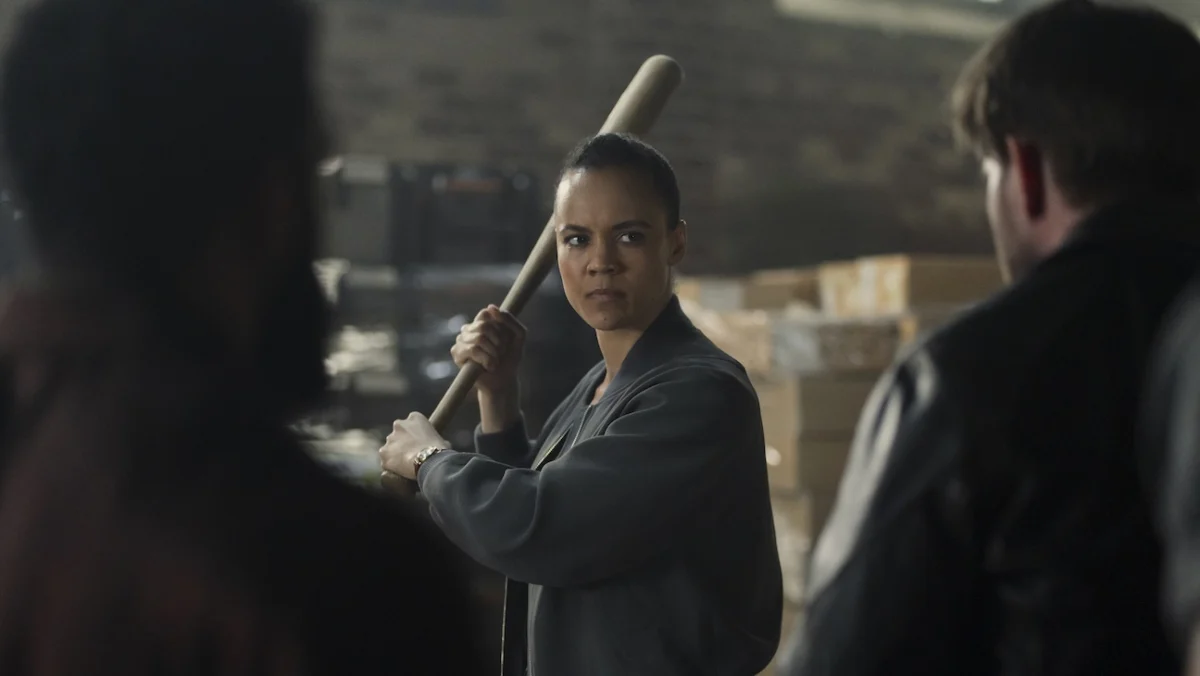
In the expansive universe of Lee Child’s Jack Reacher novels, Frances Neagley stands as a pivotal figure, earning Reacher’s deepest trust and serving as one of the rare recurring characters across the 30-book series. Her presence, though infrequent due to Reacher’s inherent lone-wolf persona, is consistently impactful. However, the television adaptation of Reacher, helmed by creator Nick Santora, has elevated Neagley’s role, integrating her more deeply into the narrative across its initial three seasons and now, with the development of a dedicated spin-off series. This strategic expansion mirrors a broader trend in serialized storytelling, where beloved supporting characters are given their own narrative arcs, and is further underscored by the announcement of at least two forthcoming novels focusing on Neagley, penned by Child and collaborator Yasmin Angoe.
The new series, Neagley, developed for television by Santora and Nicholas Wootton, arrives as the fourth season of Reacher nears completion on Amazon Prime Video. While the two series are not directly linked narratively, the appearance of Alan Ritchson as Reacher in Neagley serves as a narrative bridge, granting his character’s tacit approval for Neagley’s independent onscreen journey. This development highlights a symbiotic relationship between the two properties, with Neagley inheriting the action-oriented, plot-driven, and sometimes exposition-heavy structure that has defined its predecessor.
Thematic Resonance and Structural Similarities
Neagley mirrors Reacher in its reliance on the compelling screen presence of its lead, Maria Sten. The series arguably places a greater demand on Sten’s acting abilities than Reacher has on Ritchson, whose portrayal of Reacher is characterized by a deliberate, steadfast stoicism. Both series excel when focused on meticulously choreographed action sequences, but falter when delving into intricate plot exposition. This observation aligns with the critical reception of Reacher‘s previous seasons, many of which have been described as perfectly suited for six episodes, with the additional two episodes often feeling like padded filler. Neagley appears to follow this pattern, with Sten anchoring the series effectively and a supporting ensemble that evolves with likable characters. However, the latter half of the season, particularly episodes six and seven, reportedly becomes bogged down by an increasingly convoluted season-long arc and an attempt to delve into the protagonist’s backstory.
Unveiling the Origins of Frances Neagley
The series commences with a prologue featuring a brief appearance by Alan Ritchson, setting the stage for the central mystery. The narrative then shifts to Chicago, where a disoriented young man, identified as Tommy (Jhaleil Swaby), walks towards an oncoming train, a tragic end that triggers the season’s primary investigation. Tommy is revealed to be a childhood friend of Frances Neagley, and one of the few familial connections she possesses, alongside her ailing ex-cop father.
Despite her independent nature and reluctance to operate as a team player, Neagley works within a bustling Chicago private investigations firm. Her professional competence and consistent revenue generation provide her with the leverage to pursue Tommy’s death independently, a decision her employer ultimately accommodates. This investigation quickly brings Neagley into contact with key figures, including Detective Hudson Riley (Greyston Holt), a Chicago PD officer with a complex family history, and the enigmatic Keno (Jasper Jones), a resourceful young man with a criminal past and a direct connection to Tommy’s demise.
A Network of Alliances and Adversaries
The narrative unfolds as Neagley is compelled into an uneasy alliance with Riley and Keno. They are also joined by Renee (Adeline Rudolph), a receptionist at the PI office who evolves into a more integral member of the team. Their investigation leads them to Echo Canyon, a rural community on the outskirts of Chicago that operates a produce business supplying local street markets. However, the farm’s operations bear a striking resemblance to a wellness cult, overseen by Lawrence Cole (Damon Herriman). Cole, a former English professor turned folk singer and now a spiritual guru, conducts his primary business within a heavily secured barn, monitored by pharmaceutical executive Pierce Woodrow (Matthew Del Negro).
Character Depth and Performance Analysis
Frances Neagley, who previously served under Reacher in the 110th military police, shares her mentor’s sharp observational skills and a refined sense of justice that often borders on vengeance. While she projects a tough exterior, employing tactics such as torture and possessing formidable combat abilities, she lacks Reacher’s imposing physical stature. Instead, Neagley’s strengths lie in her exceptional dexterity, a quality that Maria Sten effectively conveys, and her convincing portrayal as a runner—a contrast to Ritchson’s Reacher, whose deliberate, weighty presence sometimes hinders a sense of natural human movement.
Under Santora’s direction and with a directing team comprised of Reacher veterans such as Sam Hill, Gary Fleder, and MJ Bassett, Neagley maintains a visual and tonal consistency with its predecessor. The series effectively captures the gritty atmosphere of its chosen setting, Chicago, even when filming takes place in Toronto. The immediate impact of the action sequences, such as individuals engaging in physical altercations, often overshadows the subtle geographical discrepancies.
The first season of Neagley begins with a familiar, grounded tone but gradually introduces increasingly convoluted plot elements, culminating in a penultimate episode that reportedly represents a thematic low point. The finale, however, shifts towards a more stylized, action-packed conclusion, featuring a memorable sequence where the main characters walk away from an exploding building in slow motion. While this scene employs a well-worn cinematic trope, it is executed in a manner that provides enjoyable, albeit cliché, resolution.
Exploring Neagley’s Defining Trait: Haphephobia
A significant aspect of Neagley’s character, particularly in the novels, is her haphephobia, the fear of being touched. This trait serves as a crucial narrative device, explaining the platonic nature of her relationship with Reacher, who is depicted as a more physically intimate character. While fans have speculated about Neagley’s potential neurodivergence or a traumatic past influencing her phobia, Lee Child has intentionally maintained ambiguity, avoiding definitive explanations.
The television series, however, opts to actively explore the origins of Neagley’s haphephobia. This narrative choice has drawn criticism for framing a strong, assertive female character’s development primarily through trauma, a pattern observed more frequently in female characters than their male counterparts in popular media. While men might achieve Reacher-esque status through physical prowess, the series suggests that a woman’s journey to such strength is often inextricably linked to past suffering. This approach, while intended to foster viewer empathy and understanding, risks oversimplifying the character and making her feel more deliberately constructed than organically human. The focus on "solving" Neagley, rather than allowing her complexity to unfold organically, may lead to future seasons dwelling excessively on this singular aspect of her past and personality.
Despite the predictability of the trauma narrative, Sten delivers a compelling performance, delving beneath Neagley’s often stoic facade to reveal underlying emotional depth. Her chemistry with Greyston Holt, who portrays Detective Riley as a man whose outward polish masks his background, creates compelling, albeit at times uncomfortable, character interactions. The series’ attempt to explain Neagley’s motivations for the sake of viewer comprehension and potential romantic subplots is viewed by some critics as less innovative than allowing the character’s enigmatic nature to persist.
Supporting Cast and Narrative Weaknesses
Jasper Jones, whose resemblance to young actors from Stranger Things is notable, injects a grounded sense of humor into the series. His dynamic with Adeline Rudolph, who convincingly portrays Renee’s transformation from a background character to a capable action co-lead, is a highlight, often surpassing the narrative’s own suggestions for character development.
Damon Herriman, a versatile supporting actor, takes on the role of Lawrence Cole. While Herriman excels at portraying slick, persuasive figures, his casting in a cult leader role, particularly after his prior portrayals of Charles Manson, risks creating a sense of déjà vu. The character of Cole is largely conventional, and the writing fails to offer Herriman opportunities for significant variation. Similarly, supporting performances from Rebecca Liddiard and Jessica Clement, who play key figures within the farm, hint at intriguing complexities that are ultimately underdeveloped or veer into predictable and illogical plot resolutions.
Conclusion: A Satisfying, If Familiar, Potboiler
Despite its narrative shortcomings, Neagley delivers on its promise of pulpy, action-packed entertainment. While it may not fully resonate with audiences solely seeking the visceral "Very Big Man Punches Stuff" appeal of Reacher, it stands as a generally entertaining potboiler, a genre that Amazon Prime Video has consistently produced with considerable success. The series, by the end of its first season, achieves but does not surpass the expectations set by its progenitor, offering a familiar yet enjoyable extension of the Reacher universe.