A passenger boat carrying an estimated 270 individuals has reportedly capsized approximately four miles off the coast of northern Cyprus, near the coastal town of Kyrenia, initiating an urgent and extensive search and rescue operation involving multiple agencies and assets. The incident, which occurred in international waters but within the search and rescue responsibility zone of the self-proclaimed Turkish Republic of Northern Cyprus (TRNC), has prompted immediate concerns for the safety of all onboard. Early reports from local officials indicate a dire situation, with initial rescue efforts managing to reach a significant number of those in distress, though the full extent of casualties remains unclear as the operation continues.
The Unfolding Maritime Emergency
The maritime emergency began to unfold when reports surfaced that the passenger vessel, whose specific type and name were not immediately disclosed but was referred to by local media as a ferry, started taking on water. This critical phase rapidly escalated into a full capsize, leaving the boat inverted in the Mediterranean Sea. Images broadcast by local television channels depicted the stark reality of the situation: the upturned hull of the vessel visible above the waterline, with numerous individuals, identifiable by their bright orange life vests, clinging to its surface awaiting rescue. This visual evidence underscored the suddenness and severity of the incident, leaving little time for an orderly evacuation.
Murat Senkul, the mayor of Kyrenia, a prominent coastal town known for its historic harbour and vibrant tourism, was among the first officials to speak publicly about the crisis. Speaking to CNN Turk, Mayor Senkul conveyed the gravity of the situation, stating, "The situation is very serious." He further updated the public that 159 people from the capsized vessel had already been reached by rescue teams, providing a glimmer of hope amidst the unfolding tragedy. This initial count, however, left a substantial number of passengers unaccounted for, intensifying the urgency of the ongoing search.
A Coordinated Search and Rescue Effort
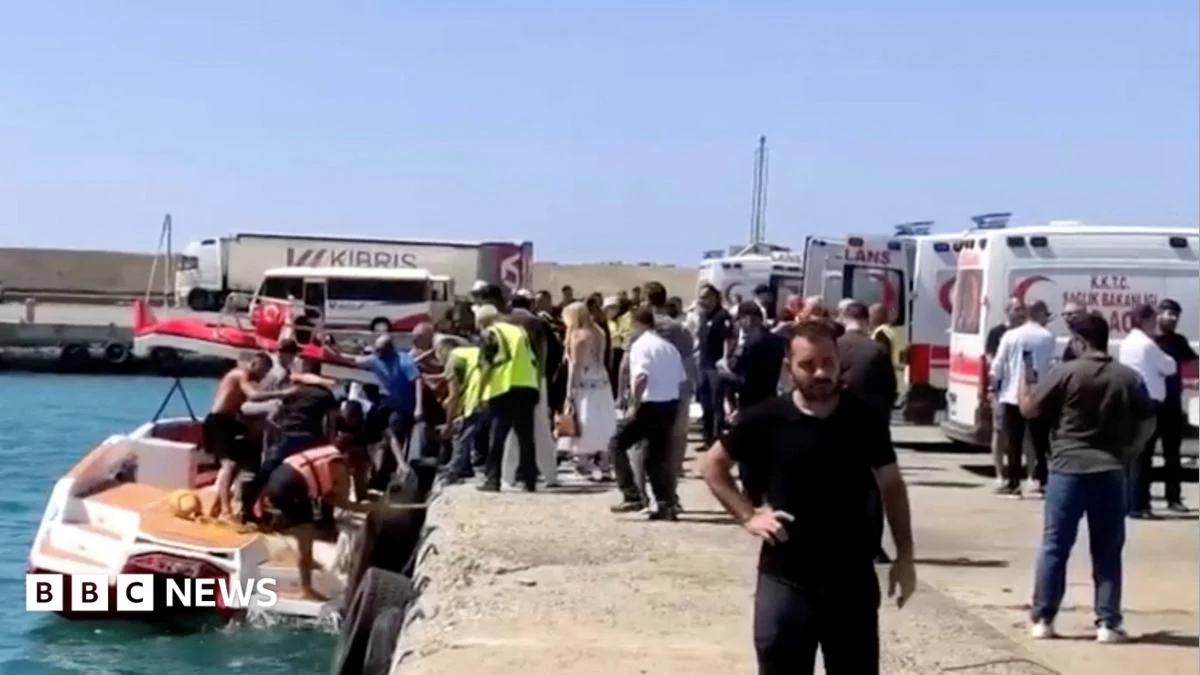
In response to the distress call, a comprehensive search and rescue (SAR) operation was immediately launched. Authorities from the TRNC, supported by Turkish maritime assets, rapidly mobilised resources to the incident site. Helicopters were dispatched to provide aerial reconnaissance and assist in locating survivors, while a fleet of coastguard boats converged on the area, crucial for retrieving individuals from the water and transporting them to safety. On land, a network of ambulances was strategically stationed along the beaches of Kyrenia, prepared to receive and provide immediate medical attention to the rescued passengers. The swift deployment of these resources highlights the established protocols for maritime emergencies in the region, designed to minimise loss of life in such critical scenarios.
Erhan Arikli, the Transport Minister of the TRNC, provided further updates to local media outlets, confirming that approximately 100 passengers had been successfully brought to shore. These individuals would be undergoing initial medical assessments and debriefing to gather more information about the incident and the condition of other passengers. The discrepancy between Mayor Senkul’s figure of 159 "reached" and Minister Arikli’s 100 "taken to shore" suggests the dynamic nature of a large-scale rescue operation, with figures being updated in real-time as survivors are retrieved, processed, and transported. The focus remained squarely on the remaining individuals who were yet to be accounted for, prompting rescue teams to scour the area with meticulous attention, leveraging daylight hours as much as possible.
Background and Political Context of Northern Cyprus
The incident off Kyrenia takes place against the unique political backdrop of Northern Cyprus. The Turkish Republic of Northern Cyprus (TRNC) is a self-declared state that controls the northern third of the island of Cyprus. It was established in the aftermath of the 1974 Turkish invasion, which followed a Greek-backed coup aimed at uniting Cyprus with Greece. The TRNC is recognised solely by Turkey, while the international community, including the United Nations, considers the Republic of Cyprus (which controls the southern two-thirds of the island) as the legitimate government of the entire island. This political division has implications for various aspects, including international aid, maritime jurisdiction, and coordinated rescue efforts, although humanitarian operations often transcend these political boundaries.
Kyrenia itself is a significant port and a major tourist destination within the TRNC. Its picturesque harbour, historic castle, and numerous resorts attract visitors, particularly from Turkey and other European countries. The maritime traffic in the area primarily consists of passenger ferries connecting Kyrenia with Turkish ports, local excursion boats, and private yachts. The vessel involved in the capsize is understood to be one such passenger boat, likely engaged in either a cross-sea journey or a local tourist excursion, given the number of people aboard and its reported distance from shore. The waters off Kyrenia are generally considered safe, making such a severe incident a rare and deeply concerning occurrence for the region’s maritime safety record and its vital tourism industry.
Chronology of the Disaster
While precise timings were still being pieced together, an approximate chronology of the unfolding disaster could be inferred from official statements and media reports:
- Early Morning (Time unspecified but before distress call): The passenger vessel reportedly departs from a port, likely Kyrenia, with approximately 270 individuals on board. Its intended destination or route remains unconfirmed.
- Mid-Morning (Approximate time of incident): The vessel, roughly four miles offshore, begins to experience difficulties, taking on water. The exact cause, whether mechanical failure, structural damage, or other factors, is not immediately clear.
- Rapid Escalation & Distress Call: The situation quickly deteriorates, leading to the vessel capsizing. A distress signal is believed to have been transmitted, alerting maritime authorities.
- Immediate Rescue Response: TRNC Coastguard and other emergency services are notified and rapidly deploy assets, including rescue boats and helicopters, towards the reported location.
- Ongoing Rescue Operations: Within hours of the incident, rescue teams arrive on scene. Mayor Senkul confirms 159 people have been "reached." Minister Arikli later states 100 have been "taken to shore." The focus remains on retrieving individuals from the water and the upturned hull.
- Ambulances and Medical Teams Mobilised: Onshore, medical personnel and ambulances are on standby to provide immediate care to survivors arriving from the incident site.
This rapid sequence of events underscores the unpredictable nature of maritime incidents and the critical importance of swift, coordinated responses to maximise survival rates.
Potential Causes and Implications
While an official investigation into the cause of the capsize will undoubtedly be launched, several factors are typically examined in such maritime disasters. These include:
- Weather Conditions: Although initial reports did not highlight severe weather, sudden squalls or choppy seas can contribute to a vessel’s instability, particularly if it is already compromised.
- Mechanical Failure: Engine problems, steering issues, or a breach in the hull dueading to water ingress are common causes of maritime accidents.
- Human Error: Navigation errors, improper loading, or a failure to adhere to safety protocols by the crew can also lead to catastrophic outcomes.
- Overcrowding: While the reported capacity of the vessel was not immediately known, carrying 270 passengers necessitates strict adherence to weight distribution and safety regulations.
- Structural Integrity: The age and maintenance record of the vessel will be scrutinised to determine if any pre-existing structural weaknesses played a role.
The implications of this incident are far-reaching. For the TRNC, which relies heavily on tourism, a maritime disaster of this magnitude could have a significant impact on visitor confidence. There will be intense pressure on authorities to conduct a transparent and thorough investigation, ensure accountability, and review existing maritime safety regulations to prevent future occurrences. The incident also highlights the complexities of search and rescue operations in politically sensitive regions, where cooperation across divided territories, while often prioritised in humanitarian crises, can sometimes face logistical hurdles.
Statements from Regional Authorities and International Response
Beyond the immediate statements from local officials, it is anticipated that higher authorities within the TRNC government, including the President or Prime Minister, will issue statements expressing condolences and committing to full support for the rescue efforts and subsequent investigation. Given Turkey’s close relationship with the TRNC and its significant maritime capabilities, it is highly probable that Turkish naval and coastguard assets are providing substantial assistance, both in terms of personnel and equipment, to bolster the ongoing SAR operation.
International maritime organisations and neighbouring countries may also offer assistance or express concern, underscoring the universal nature of maritime safety and the shared responsibility to aid those in distress at sea. While the political status of the TRNC complicates formal international engagement, humanitarian principles often dictate a more collaborative approach in such emergencies.
Looking Ahead: The Aftermath and Investigation
As the immediate crisis transitions into recovery and investigation phases, several key areas will demand attention. The welfare of the survivors, including medical treatment for physical injuries and psychological support for the trauma experienced, will be paramount. Efforts to identify the deceased and inform their families will be a delicate and challenging task.
The investigation into the capsize will likely involve a multidisciplinary team of maritime experts. Their findings will be crucial not only for determining the exact cause of this tragedy but also for informing potential revisions to maritime safety laws, inspection regimes, and crew training standards within the TRNC and potentially across the wider Eastern Mediterranean. This incident serves as a grim reminder of the inherent risks associated with sea travel and the perpetual need for vigilance and stringent safety measures to protect human lives.
This breaking news story remains highly fluid, with search and rescue operations continuing as darkness falls, challenging visibility and increasing the urgency for the unaccounted individuals. Authorities are expected to provide further updates as more information becomes available and the rescue efforts progress. The focus for now remains on the desperate search for survivors and bringing all those affected by this tragic maritime incident to safety.