


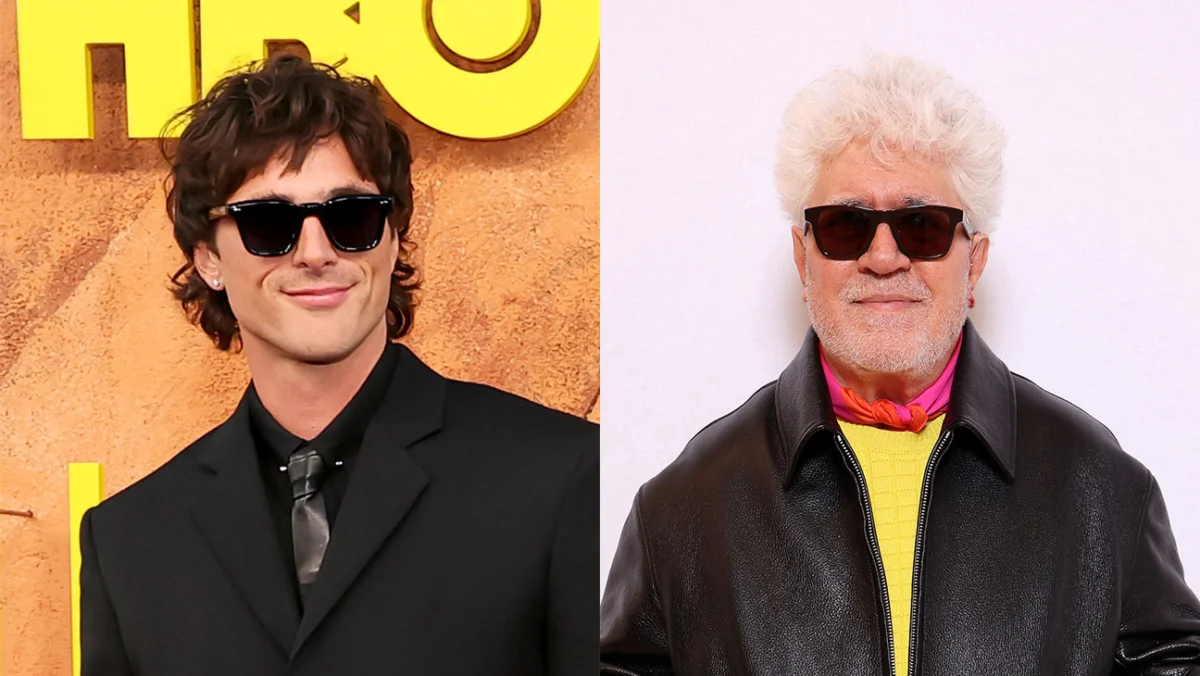
Renowned Spanish filmmaker Pedro Almodóvar has publicly expressed a degree of uncertainty regarding the foundation of Jacob Elordi’s burgeoning career, specifically questioning whether the actor’s significant rise in the entertainment industry is primarily driven by his status as a "sex symbol" or by genuine acting acclaim. The observations were made during Almodóvar’s appearance on the popular Spanish podcast, La Pija y la Quinqui.
During the podcast, when prompted about the possibility of collaborating with the young Australian actor, Almodóvar acknowledged Elordi’s "real" stardom. However, he elaborated that certain projects Elordi has undertaken have led him to ponder the underlying reasons for his widespread popularity, suggesting that the actor’s appeal might not solely stem from his craft. "I can now see that Jacob Elordi’s stardom is indeed real," Almodóvar stated, as reported by HuffPost. "I was still wondering whether he was a sex symbol or a respected actor."
Almodóvar’s Critical Assessment of Elordi’s Roles
Almodóvar, a filmmaker celebrated for his distinctive visual style and complex character portrayals, offered specific critiques of Elordi’s recent work. He pointed to Elordi’s role in the 2026 adaptation of Wuthering Heights as an example, describing the film itself as "very bad." Despite his negative assessment of the project, Almodóvar was careful to absolve Elordi and his co-star, Margot Robbie, of blame, stating, "They do what they can." This suggests that while Almodóvar may not have been impressed by the film’s overall quality, he recognized the actors’ efforts within its constraints.
The director also touched upon Elordi’s Oscar-nominated performance in Guillermo del Toro’s Frankenstein. While acknowledging the nomination and the role’s potential, Almodóvar posited that the character of the titular monster is inherently a "comfortable" part for an actor. He further suggested that del Toro’s interpretation of the classic story presented the monster in a more "attractive light," which could have contributed to the role’s reception.
Almodóvar concluded his thoughts on Elordi’s current trajectory by expressing a desire to witness the actor in more challenging roles. "We still need to see him, at least I do, in another role that demands more from him," he stated, implying that while Elordi has achieved significant recognition, his full acting potential may not yet have been fully showcased or tested.
Jacob Elordi’s Ascending Career Trajectory
Jacob Elordi’s presence in the entertainment landscape has undeniably grown in recent years, marked by a series of high-profile projects that have cemented his status as a leading man. His role in the critically acclaimed HBO series Euphoria, which is currently in its third season, significantly propelled his visibility and critical attention. The series, known for its raw portrayal of teenage life and its ensemble cast, provided Elordi with a platform to showcase his dramatic range.
Beyond Euphoria, Elordi has curated a diverse filmography. His performance in Sofia Coppola’s Priscilla (2023), where he portrayed Elvis Presley, garnered considerable attention and critical discussion. This was followed by a notable role in Emerald Fennell’s provocative drama Saltburn (2023), which generated significant buzz and solidified his ability to inhabit complex and sometimes controversial characters. The aforementioned Wuthering Heights adaptation, though met with Almodóvar’s disapproval, represents another significant feature film in his recent output.
Looking ahead, Elordi is slated to star in Ridley Scott’s upcoming film, The Dog Stars, based on Peter Heller’s novel. This casting further underscores his appeal to major directorial talents and his continued ascent in Hollywood.
The Impact of "Frankenstein" and Awards Recognition
Elordi’s Oscar nomination for his role in Frankenstein marked a significant milestone in his career. This recognition from the Academy of Motion Picture Arts and Sciences, alongside nominations from the Golden Globes, the Actors Guild Awards, and the Critics’ Choice Awards, underscored his critical reception and the industry’s acknowledgment of his talent. While Almodóvar’s comments suggest a desire for more demanding roles, these accolades undeniably place Elordi among the most promising actors of his generation.
The Frankenstein role, in particular, has been seen by many as a pivotal moment, allowing him to step into a more substantial dramatic performance on a global stage. The film’s reception and Elordi’s contribution to it have been a subject of considerable discussion within cinematic circles, contributing to the ongoing debate about his capabilities as an actor.
Context of Almodóvar’s Observations
Pedro Almodóvar’s candid remarks on La Pija y la Quinqui podcast come at a time when the discussion around male attractiveness and its influence on career trajectory in Hollywood is particularly prevalent. The Spanish auteur, known for his visually rich and emotionally resonant films, has a keen eye for talent and a reputation for eliciting nuanced performances from his actors. His willingness to voice such an observation, even if couched in a questioning tone, invites further scrutiny into the mechanisms of celebrity and artistic recognition.
The podcast, a platform known for its informal yet insightful conversations with prominent cultural figures, provides a space where such nuanced discussions can unfold. Almodóvar’s participation in such a forum suggests a desire to engage with contemporary trends in cinema and the actors who are shaping it. His perspective, honed over decades of filmmaking and artistic discernment, carries significant weight within the industry.
Broader Implications and Industry Discourse
Almodóvar’s questioning of Elordi’s stardom touches upon a broader industry discourse concerning the intersection of physical appeal and acting merit. In an era where social media presence and public image can significantly influence a performer’s career, it is often a challenge to delineate between genuine artistic achievement and the impact of marketability.
The implication of Almodóvar’s comments is that while Elordi has undeniably achieved a high level of fame and professional success, the ultimate measure of his talent may lie in his ability to transcend his current roles and consistently deliver performances that demand more from him, as the filmmaker suggested. This perspective aligns with the long-standing tradition of valuing actors for their transformative abilities and their capacity to embody a wide range of characters, rather than relying solely on established personas.
The industry will likely continue to observe Jacob Elordi’s career choices and subsequent performances with keen interest, seeking to understand whether his future projects will further solidify his reputation as a respected actor or reinforce the perception that his stardom is partly, or even primarily, fueled by his undeniable sex appeal. The coming years will undoubtedly provide more evidence to inform this ongoing discussion.