




The CLARITY Act, formally known as the Creating Leading Assets and Regulatory Integrated Technology Act, was designed to provide the first comprehensive federal framework for the digital asset market. Its primary goal is to resolve the long-standing jurisdictional dispute between the Securities and Exchange Commission (SEC) and the Commodity Futures Trading Commission (CFTC). By establishing clear criteria for when a digital asset is a security versus a commodity, the bill seeks to replace the current "regulation by enforcement" model with a statutory framework. However, despite a year of momentum following the passage of similar legislation in the House of Representatives, the Senate version has hit a wall of procedural and ethical concerns that now threaten its survival.
The Polymarket Indicator: A Barometer of Legislative Hope
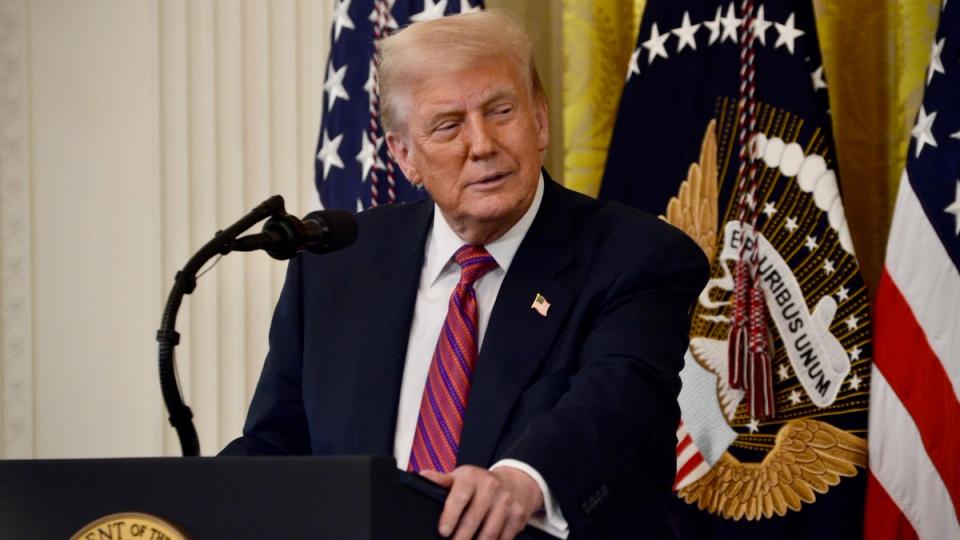
Prediction markets like Polymarket have become increasingly influential as alternative indicators of political outcomes. Unlike traditional polling, which measures public opinion, prediction markets require participants to "put their money where their mouth is," often resulting in a more cold-blooded assessment of reality. The decline in the CLARITY Act’s odds on Polymarket is particularly notable because it occurred despite high-profile support from Republican leadership and a recent meeting between former President Donald Trump and Senate Republicans to discuss the bill’s advancement.
In early January, when the market for the CLARITY Act’s passage launched, traders were cautiously optimistic, pricing the odds at roughly 62%. That optimism surged in February following a series of productive committee hearings and a sense that a bipartisan "grand bargain" was within reach. However, the mood soured in May as the Senate’s legislative calendar became increasingly crowded with appropriations bills and judicial confirmations. By mid-June, the unresolved deadlock over ethics provisions caused a final, sharp drop in confidence, bringing the odds to their current record low.
The Ethics Stumbling Block: Gallego and the Democratic Holdouts
The primary obstacle to the bill’s progress in the Senate is not necessarily the technical definition of a digital asset, but rather the ethical standards governing the people who oversee them. Senator Ruben Gallego (D-Ariz.), a pivotal figure in the Senate Banking Committee, has emerged as a vocal critic of the bill’s current lack of rigorous ethics language. Gallego was one of only two Democrats to vote the bill out of committee, but he has made it clear that his support on the Senate floor is contingent on the inclusion of bipartisan ethics provisions.
The core of the dispute involves potential conflicts of interest. Several high-ranking Democrats have expressed concerns that without specific prohibitions, public officials could influence crypto policy while holding significant personal stakes in the very assets they are regulating. These critics argue that the digital asset industry’s history of intense lobbying and high-profile collapses—such as the FTX scandal—necessitates a higher standard of transparency than what is currently required under the STOCK Act.
As of the third week of June, negotiations over this ethics language have reached a standstill. While Republicans have expressed a willingness to discuss transparency, they remain wary of "poison pill" amendments that could make the bill unpalatable to the industry or create an overly burdensome compliance regime for lawmakers. The lack of a public readout from a recent White House meeting on the subject has only fueled speculation that the two sides remain far apart.
A Year of Deadlock: The Chronology of the CLARITY Act
To understand the current stalemate, one must look back at the timeline of the bill’s development. The momentum for market structure reform began in earnest in May 2023, when the House Financial Services Committee and the House Agriculture Committee began joint hearings on the need for regulatory certainty.
- July 2023: The House of Representatives passed the Financial Innovation and Technology for the 21st Century Act (FIT21), a sister bill to the CLARITY Act, with a surprisingly strong bipartisan majority. This was seen as a mandate for the Senate to act.
- January 2024: The Senate version, the CLARITY Act, was introduced with much fanfare. Prediction markets initially reflected high hopes for a swift passage, buoyed by the belief that the SEC’s aggressive enforcement actions against firms like Coinbase and Ripple would force Congress’s hand.
- February 2024: Odds peaked at 82% as Senate leadership suggested the bill could be attached to a must-pass defense or spending package.
- April 2024: The SEC’s issuance of a Wells Notice to Uniswap, a major decentralized exchange, signaled that the agency had no intention of slowing its enforcement-first approach. This increased the urgency for legislation but also hardened the opposition of pro-SEC Democrats.
- May-June 2024: The focus shifted to the Senate Banking Committee, where the ethics debate began to overshadow the bill’s technical merits. The narrowing legislative window ahead of the August recess became the dominant narrative for Polymarket traders.
Industry Reaction: The High Cost of Uncertainty
The digital asset industry has reacted to the legislative slowdown with a mixture of frustration and alarm. During a House hearing on Friday, marking the one-year anniversary of the House passing its version of the bill, industry executives warned that the continued lack of clarity is driving innovation away from U.S. shores.
Sarah Aberg, an executive at Nova Labs, provided a poignant example of how regulatory ambiguity can stifle growth. Nova Labs, the issuer of the Helium wireless network, recently settled a case with the SEC for $200,000 over allegations related to brand partnerships. Aberg told lawmakers that the years of uncertainty leading up to the settlement delayed vital investment in the network. "Clarity is not a call for deregulation; it is a call for the right regulation from the right regulator," Aberg testified. Her sentiment reflects a broader industry view that the SEC is currently overstepping its bounds by applying 1930s-era securities laws to 21st-century technology.
Randy Abernethy, an executive at Bullish (the parent company of CoinDesk), echoed these concerns, emphasizing the need for a "rule book" that brings digital asset markets under formal U.S. oversight. "The community has already done the hard work," Abernethy suggested, referring to the technical compromises made during the drafting of the bill. He argued that without a clear federal framework, the U.S. risks losing its competitive edge to jurisdictions like the European Union, which recently implemented its Markets in Crypto-Assets (MiCA) regulation.
Comparative Analysis: The Global Context
The U.S. legislative gridlock stands in stark contrast to the progress being made in other major financial hubs. The EU’s MiCA framework provides a comprehensive set of rules for stablecoin issuers and service providers, offering the kind of "durable rules" that Ryan Louvar of WisdomTree argued are essential for institutional adoption.
"Legislation would create rules that survive changes in administrations," Louvar noted during his testimony. This is a crucial point for institutional investors who are hesitant to commit capital to an asset class where the rules can change with the appointment of a new SEC Chair. Jason Sommensatto of Coin Center added that the CLARITY Act is specifically designed to protect software developers—the backbone of the crypto economy—without weakening anti-money laundering (AML) or investor safeguards. The argument is that by failing to pass the act, the U.S. is not protecting investors; it is simply ceding control to offshore entities that may have even fewer safeguards.
The "Regulation by Enforcement" Paradigm
The current stalemate leaves the industry in the hands of the SEC and its Chair, Gary Gensler. Gensler has consistently maintained that the majority of digital assets are securities and that existing laws are sufficient. However, this view has been challenged in the courts. The split decision in the SEC v. Ripple case and the SEC’s loss in the Grayscale case have created a fragmented legal landscape where different judges may interpret the law in different ways.
Supporters of the CLARITY Act argue that this is an inefficient way to govern a multi-trillion-dollar industry. They contend that the SEC’s "Howey Test," which determines what constitutes an investment contract, is ill-suited for decentralized protocols where there is no central "issuer" in the traditional sense. The CLARITY Act would have effectively modernized these definitions, but without Senate action, the industry faces years of protracted litigation.
Future Outlook and the Election Factor
With the August recess approaching and the 2024 presidential election looming, the probability of the CLARITY Act reaching President Biden’s desk this year is objectively low. Election years are notoriously difficult for passing complex, non-emergency legislation, as lawmakers become more focused on campaigning and less willing to take risks on bipartisan compromises.
Furthermore, the bill has become a political football. Former President Trump’s recent embrace of the crypto industry has framed the CLARITY Act as a "Republican win," which may inadvertently make it harder for some Democrats to support it without significant concessions. Conversely, if the bill fails this year, it will likely become a major campaign issue, with Republicans accusing the current administration of being "anti-innovation."
For the bettors on Polymarket, the 32% odds reflect a cold calculation: the Senate is out of time, the ethics divide is too wide, and the political stakes are too high for a quick resolution. While the "hard work" of drafting the bill may be done, the harder work of political navigation has only just begun. The digital asset industry, meanwhile, remains in a state of regulatory limbo, waiting for a "rule book" that seems increasingly unlikely to arrive before the next Congress is sworn in.