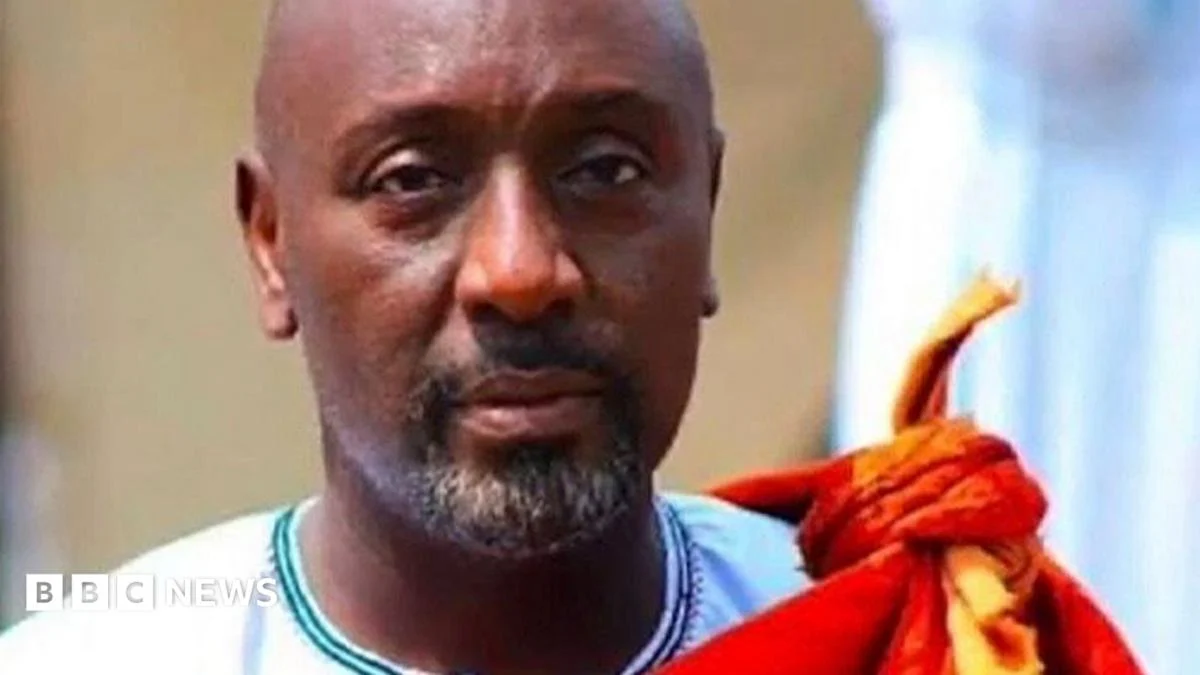
The venerable Tooro Kingdom, one of Uganda’s four officially recognised historical monarchies, is on the cusp of a significant transition as Prince Edward Rukidi Kijanangoma Nyabongo II prepares to ascend the throne. This imminent coronation marks not only a new chapter for the ancient kingdom but also brings to the forefront a compelling narrative of duty, tradition, and unexpected turns. For decades, Kijanangoma, aged 56, was a familiar and trusted voice across Uganda, known not as a royal heir but as a respected storyteller, a long-serving anchor, and an editor at the Uganda Broadcasting Corporation (UBC), the state broadcaster. His distinguished career in journalism saw him engage with national affairs and leaders, crafting a public persona far removed from the secluded life of royalty. Now, however, the spotlight has shifted, and Kijanangoma himself has become the central figure in a unfolding royal drama, his path to the Tooro throne sparking widespread attention and controversy both within and beyond Uganda’s borders.
A King’s Unexpected Path: From Newsroom to Throne
Prince Edward Rukidi Kijanangoma’s journey to the kingship is anything but conventional. Born in 1970 in Kidukuru village, Fort Portal, approximately 300 km (186 miles) west of Kampala, his early life was steeped in the rich traditions of the Tooro people, though his public career led him down a different path. He pursued higher education, graduating with a degree in Mass Communication from Uganda’s prestigious Makerere University in 1999. This academic foundation propelled him into a career in broadcasting that spanned over two decades, including stints in neighbouring Rwanda and, most notably, at the Uganda Broadcasting Corporation. As a journalist, he was privy to the intricacies of national governance, public sentiment, and the challenges facing communities across the nation. This unique exposure, his ability to communicate effectively, and his established network of contacts are now seen as invaluable assets for his new role as Omukama (King) of Tooro.
Upon his formal announcement as the designated successor, Kijanangoma articulated a vision centered on unity and development. He pledged to make the royal palace accessible to the people, symbolically opening the institution to broader engagement. "I ask you for one thing – they have given me this title as king but I cannot work alone, I have to work with you," he stated, signaling a collaborative approach to leadership. His mother, Assimwe Yusta Kijanangoma, expressed profound confidence in her son’s preparedness, noting that his upbringing was deeply rooted in traditional values. She recounted raising him with "the teachings of the old kingdom of a cane and instructions and scolding," yet also describing him as "well-mannered, he does not fight, or shout, even when wronged, he says a few words and does not go so much into it." These traits, cultivated through a blend of discipline and gentle temperament, are expected to serve him well in navigating the complex dynamics of a modern traditional monarchy.
The Tooro Kingdom: A Legacy of "Boy Kings" and Resurgence
The Tooro Kingdom holds a distinguished place within Uganda’s cultural landscape. It is one of four principal historical kingdoms officially recognized by the Ugandan state, alongside Buganda, Bunyoro, and Busoga. These kingdoms, with their deep historical roots, were tragically abolished in 1967 by then-President Milton Obote, a move that centralized power and dismantled centuries-old traditional structures. However, in a significant policy shift, the government under President Yoweri Museveni restored these institutions in the early 1990s. This restoration, often framed by the government as a means to promote cultural pride and national unity, has also been interpreted by political analysts as a strategic move to appease various ethnic communities and foster political loyalty towards the central administration.
For the past 31 years, the Tooro Kingdom was led by King Oyo Nyimba Kabamba Iguru Rukidi IV, a figure who captured global attention as the "boy king." King Oyo ascended to the throne in 1995 at the tender age of three, following the untimely death of his father, King Patrick David Matthew Kaboyo Olimi III. This made him, at the time, the world’s youngest reigning monarch, a distinction that brought both international curiosity and unique challenges to his regency. His reign, though marked by youth, saw him mature into a leader, presiding over his kingdom’s cultural affairs. Tragically, King Oyo’s life was cut short last month when he died from cancer at the age of just 34. His passing left a profound void and immediately triggered the traditional mechanisms of succession, setting the stage for the current dispute.
Uganda’s traditional kings, while holding no formal political authority in the modern state, wield considerable cultural influence and command significant loyalty within their respective communities. They serve as custodians of cultural heritage, tradition, and identity, playing a vital role in social cohesion and community development. This cultural mandate, though non-political, often translates into a significant moral and social authority that can impact regional dynamics and even national discourse.
The Heart of the Dispute: A Contested Succession
The selection of Prince Edward Rukidi Kijanangoma Nyabongo II as the next Omukama of Tooro has not been without significant contention, revealing a delicate interplay between ancient custom and evolving family dynamics. According to the long-established traditions of the Tooro Kingdom, succession typically falls to a recognized son of the late king. It was widely understood within close circles of the royal family that King Oyo had left behind a young son and a will outlining instructions for the child’s ascension to the throne.
However, a critical complication arose: this alleged son has never been formally introduced or publicly recognized by the kingdom. Furthermore, he was not acknowledged by the influential committee of 21 Babiito clan members, the body constitutionally mandated to select the king. It was this committee that ultimately selected Kijanangoma. The late King Oyo had never been publicly married, and details surrounding his wife or son remained largely private, contributing to the ambiguity of the situation.
Queen Best Kemigisa, King Oyo’s mother, emerged as a vocal proponent for her grandson’s right to the throne, arguing vehemently that the late king’s will ought to have been respected. Her appeals, however, were disregarded by the royal succession committee. They insisted that their selection process was conducted strictly in accordance with Tooro customs and traditions, which prioritize the public presentation and formal recognition of an heir. The committee’s stance highlighted a fundamental clash between private familial wishes and public customary law.
Kemigisa publicly referred to Kijanangoma’s selection as the "announcement of a second king," a pronouncement made "after the will of King Oyo was read to members of the royal family." She conveyed her profound distress, stating, "As a mother, that was extraordinarily painful," particularly as celebrations for the newly selected king were taking place "only metres from where my son’s body lay." This poignant statement underscored the deep emotional rift within the royal family. The queen later revealed that Oyo’s son, who was residing in the US state of Texas, had been scheduled to return home but this plan was abandoned amidst the "tense and polarized succession dispute." She asserted on X (formerly Twitter) that, "No child should be placed in circumstances where returning to his father’s homeland could mean being drawn into hostility and conflict," emphasizing her concern for her grandson’s well-being.
The Tooro Kingdom’s Information Minister, Charles Mwanguhya, offered the committee’s perspective to the BBC Focus on Africa podcast, stating that the son in question "hasn’t been presented anywhere, which means there is a growing acceptance that sad as it may be, King Oyo didn’t leave a son behind." Mwanguhya further clarified that while King Oyo inherited the crown directly from his father, the current situation meant "the crown has moved to a different line within the ruling clan." This significant shift underscores the Babiito clan’s interpretation of tradition, where the lack of a publicly recognized direct heir necessitates choosing from another eligible lineage within the royal family. A king, according to royal palace sources, must specifically hail from the Babiito clan and trace his ancestry back to King George David Matthew Kamurasi Rukidi III, the 11th Omukama who reigned from 1928 to 1965. Both Kijanangoma and the late King Oyo are cousins, being grandsons of Rukidi III, solidifying Kijanangoma’s claim within the established royal lineage.
Interestingly, Kijanangoma was not the only candidate considered for the coveted role. Among others, Prince George Desmond Kamurasi, a notable footballer who plays for one of the UK’s best-known amateur clubs, was also approached. However, according to the succession committee, the South East Dons captain and goalkeeper ultimately declined the offer of the throne, citing other responsibilities and commitments. This detail illustrates the rigorous and sometimes unexpected breadth of the selection process undertaken by the Babiito clan.
The Coronation: Rituals and Symbolism
The impending coronation of Prince Edward Rukidi Kijanangoma Nyabongo II is poised to be a day steeped in ancient rituals and profound symbolism, reaffirming the enduring cultural heritage of the Tooro Kingdom. The traditional practices are set to commence from midnight, marking the transition from one era to the next with sacred nocturnal rites. Following these initial ceremonies, the new king will undertake a symbolic 4-kilometer (2.5-mile) walk to the revered Karuziika royal palace, the spiritual and administrative heart of the kingdom. This journey, often undertaken on foot, signifies humility, endurance, and the king’s direct connection to his land and people.
Upon arrival at the palace, a series of further ceremonies will unfold. A mock fight is a crucial part of the coronation, a vivid re-enactment designed to signify that kingship is not easily attained or maintained. It symbolizes the challenges and potential conflicts that a monarch must be prepared to face, and the unwavering resolve required to defend the kingdom and its people. This ritual serves as a stark reminder that leadership comes with significant responsibilities and sacrifices.
Following the mock fight, the new king will receive blessings from members of the royal Babiito clan, the lineage from which all Tooro kings must originate. This act of blessing is a vital endorsement from the custodians of royal tradition, cementing his legitimacy within the clan structure. He will then perform other significant ceremonies that formally signify his assumption of the throne, rites that may involve ancestral veneration, pledges to uphold custom, and symbolic declarations of his intent to lead. Finally, the climax of the day will arrive when he sits upon the throne, and an actual crown is ceremoniously placed upon his head. This is the ultimate moment of investiture, physically signifying his new authority, his new position as the legitimate Omukama of the Tooro Kingdom. Each step of this elaborate process is meticulously observed, embodying the historical continuity and spiritual essence of the Tooro monarchy.
Government’s Stance and Broader Implications
The government of Uganda, under President Yoweri Museveni, plays a critical role in the contemporary landscape of traditional kingdoms. While restoring these institutions in the 1990s to foster cultural pride and national unity, the state also maintains a watchful eye, often intervening to ensure stability and alignment with national interests. In the context of the Tooro succession dispute, the government has unequivocally backed the Babiito clan’s choice of Kijanangoma. Attorney General Sam Mayanja officially declared that the Tooro Kingdom was cleared to proceed with the coronation, citing the absence of any formal legal complaint against the chosen successor. This official endorsement provides a crucial layer of legitimacy to Kijanangoma’s ascension, especially amidst the internal dissent from Queen Best Kemigisa and her relatives.
Further emphasizing this support, the date of the coronation was officially announced by the government, and President Museveni himself is scheduled to attend the ceremony. This level of presidential engagement is a powerful signal of the central government’s approval and its commitment to upholding the Babiito clan’s decision. Adding to this chorus of support, President Museveni’s son and the head of Uganda’s military, Gen. Muhoozi Kainerugaba, publicly expressed his backing for Kijanangoma, posting on X: "Long may he reign." Such high-profile endorsements from key figures within the Ugandan government not only bolster the new king’s position but also underscore the intricate political dynamics that intertwine with traditional leadership in the country. The government’s clear stance likely serves to stabilize the situation and deter further challenges to the succession, despite the ongoing sentiments of disapproval from certain factions of the royal family.
This intervention and endorsement by the state carry broader implications for the interplay between traditional institutions and modern governance in Uganda. It highlights the delicate balance the government strikes in allowing cultural autonomy while maintaining ultimate oversight. For the Tooro Kingdom, the government’s backing ensures a smoother transition and provides an official stamp of approval, crucial for the new king’s ability to command respect and loyalty from all segments of his community. It also implicitly reinforces the authority of the Babiito clan’s succession committee as the legitimate arbiter of royal lineage in the absence of a clear and publicly recognized direct heir.
The New King’s Roots and Preparation
Prince Edward Rukidi Kijanangoma Nyabongo II’s very name is steeped in royal heritage and prophetic significance. His father, the first Kijanangoma, was born in the year King Rukidi III ascended to the throne. It was King Rukidi III himself who bestowed upon him the name "Kijanangoma," which translates from the Tooro language to "the one who comes with the royal drum." This name, foretold two generations earlier, now resonates with profound meaning as the drum of royalty symbolically returns to its designated bearer, his son. This deep-rooted connection to prophecy and ancestry adds a mystical layer to his already compelling story.
Born in 1970, Kijanangoma was raised in the family home at Kidukuru village in Fort Portal, a region that serves as the heartland of the Tooro Kingdom. His upbringing, as described by his mother, Assimwe Yusta Kijanangoma, was deeply traditional, instilling in him the values and decorum expected of royal lineage. His pursuit of a mass communication degree from Makerere University in 1999 provided him with a modern education, complementing his traditional roots.
His extensive career as a broadcaster, spanning over two decades with the Uganda Broadcasting Corporation and in neighboring Rwanda, has equipped him with a unique skill set for his new role. Engaging with the public, interacting with leaders, and gaining exposure to national affairs as a journalist has undoubtedly honed his communication abilities, broadened his understanding of diverse communities, and forged crucial connections. These experiences are invaluable for a traditional leader whose role, though cultural, demands significant public engagement, diplomacy, and a vision for community development. After being named king, Kijanangoma explicitly stated his intention to leverage the connections he had built over his 21 years as a journalist "to get good things for our people." This demonstrates a practical approach to leadership, aiming to translate his professional network into tangible benefits for the Tooro Kingdom.
Looking Ahead: Challenges and Aspirations
As Prince Edward Rukidi Kijanangoma Nyabongo II prepares for his coronation, he faces a multifaceted challenge: unifying a royal family still reeling from the sudden loss of King Oyo IV and navigating the immediate aftermath of a contentious succession. The sentiments expressed by Queen Best Kemigisa underscore a deep emotional wound that will require careful and sensitive healing. Kijanangoma’s initial pledges of unity and an "open palace" are critical first steps towards reconciliation and fostering a sense of shared purpose within the kingdom.
Beyond the internal family dynamics, the new Omukama must balance the weight of ancient Tooro traditions with the demands of modern governance and development. His cultural influence, though not political, provides a platform to address pressing issues facing his people, such as education, healthcare, environmental conservation, and economic empowerment. His background as a communicator and his stated commitment to leveraging his network suggest a proactive approach to these challenges.
The role of traditional leaders in contemporary Uganda remains a fascinating study in the interplay of history, culture, and state power. Kijanangoma’s reign will be observed closely as a test case for how a modern professional, deeply rooted in tradition, can adapt to and lead a revered cultural institution. His vision for Tooro’s development, coupled with his ability to mend internal rifts, will define his legacy. The return of the "royal drum" to the bearer of the Kijanangoma name marks not just a change in leadership but a moment of profound cultural significance, carrying the hopes and aspirations of the Tooro people into a new era.