A newly formed advocacy group, Build American AI, backed by the influential pro-artificial intelligence super political action committee (PAC), Leading the Future (LTF), has announced a multi-million dollar advertising campaign aimed at persuading voters in critical battleground states of the benefits of hosting data centers. This strategic move, reported by several prominent news outlets, signals an intensifying effort by Silicon Valley’s most powerful figures to shape public perception and policy around AI infrastructure, particularly as concerns about data center development become increasingly salient in local and statewide elections.
The Emergence of Build American AI and Its Mission
Launched with a clear mandate, Build American AI aims to proactively address and counter growing public skepticism regarding the proliferation of large-scale data facilities. The group explicitly states its affiliation with Leading the Future (LTF) on its website, a super PAC that has rapidly become a significant player in AI-related political advocacy. Build American AI’s core message revolves around highlighting the economic advantages, job creation, and technological advancement that data centers purportedly bring to communities. By focusing its considerable ad budget on states like Kansas, Ohio, and Wisconsin, the group is directly engaging with regions where the debate over data center siting has emerged as a central electoral issue. These states, known for their swing voter populations and competitive political landscapes, represent a crucial battleground for influencing public opinion on a technology that is both transformative and, for some, controversial.
Leading the Future: A Powerhouse in Pro-AI Advocacy
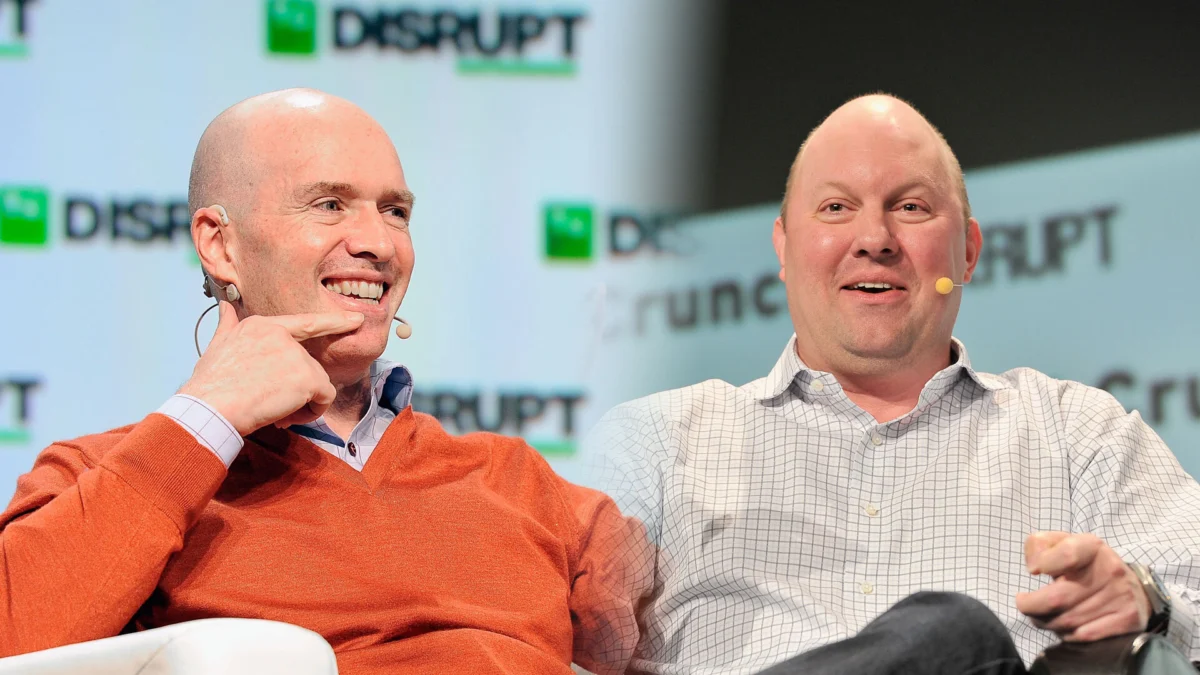
Leading the Future (LTF) burst onto the political scene with substantial financial backing, reportedly accumulating over $50 million in its initial funding rounds. The super PAC’s formidable war chest is primarily fueled by high-profile venture capitalists Marc Andreessen and Ben Horowitz, co-founders of Andreessen Horowitz (a16z), along with OpenAI President and co-founder Greg Brockman. LTF’s operational strategy has largely focused on direct political contributions, channeling funds to candidates who champion AI development and, conversely, actively opposing those who express reservations or advocate for stricter regulation of the technology. This dual approach underscores a sophisticated effort to cultivate a political environment conducive to rapid AI innovation and deployment. The PAC’s rapid ascent and aggressive tactics have positioned it as a dominant, albeit often polarizing, force in the nascent field of AI-focused political lobbying.
The Data Center Debate: Local Concerns vs. National Ambitions
The necessity of data centers for the advancement and widespread adoption of artificial intelligence cannot be overstated. These colossal digital fortresses house the servers, storage systems, and networking equipment essential for processing the vast amounts of data required to train and run AI models. As AI capabilities expand, so too does the demand for these physical infrastructures. Industry projections indicate a relentless increase in data center capacity, with some estimates suggesting a doubling of global data center power consumption within the next five to seven years. This exponential growth, while vital for technological progress, has ignited significant local opposition in many communities.
Common concerns raised by residents and environmental groups often include:
- Energy Consumption: Data centers are voracious consumers of electricity. A single large data center can consume as much power as a small city, putting immense strain on local grids and often necessitating the construction of new power plants, which can raise carbon emission concerns. In 2023, data centers globally were estimated to account for roughly 1-1.5% of the world’s electricity consumption, a figure projected to rise significantly with AI’s expansion.
- Water Usage: Cooling vast arrays of servers generates substantial heat, requiring sophisticated cooling systems, many of which are water-intensive. In regions facing drought or water scarcity, the demand for millions of gallons of water daily can create conflict with agricultural or residential needs.
- Land Use and Noise Pollution: The sheer scale of modern data centers often requires extensive tracts of land, sometimes displacing agricultural areas or natural habitats. Additionally, the constant hum of cooling fans and generators can be a source of noise pollution for nearby residents.
- Aesthetic Impact: Many communities express concerns about the visual impact of large, windowless industrial buildings in otherwise rural or residential landscapes.
Conversely, proponents, including Build American AI, highlight the tangible benefits:
- Economic Development: Data centers represent significant capital investments, often in the hundreds of millions or even billions of dollars, bringing substantial tax revenue to local municipalities.
- Job Creation: While data centers are not typically high-employment facilities once operational, their construction phase can create thousands of temporary jobs, and ongoing operations require a specialized workforce, offering well-paying technical positions.
- Infrastructure Improvement: The establishment of data centers often necessitates upgrades to local power grids, fiber optic networks, and other infrastructure, benefiting the wider community.
- Technological Leadership: Hosting cutting-edge AI infrastructure can position a state or region as a leader in the digital economy, attracting further tech investment and talent.
The ad blitz in Kansas, Ohio, and Wisconsin is specifically designed to tilt the scales of this local debate, attempting to reframe data centers from environmental liabilities to engines of economic prosperity and national security in the minds of voters.
Chronology of Key Developments in AI Political Advocacy
The landscape of AI political advocacy has seen rapid evolution in recent months, marked by significant financial outlays and public declarations:
- May 13, 2026: The New York Times publishes a comprehensive report highlighting Andreessen Horowitz’s unprecedented political spending, identifying their venture firm as the largest donor to the midterm elections, surpassing even high-profile individual donors like Elon Musk and George Soros. The firm’s disclosed federal contributions exceeded $115 million, spread across various causes, including AI and cryptocurrency.
- June 2026: OpenAI, a leading AI research and deployment company whose President, Greg Brockman, is a significant funder of LTF, publishes a blog post publicly distancing itself from LTF’s operational tactics. This move came amidst growing scrutiny of the PAC’s aggressive advocacy.
- July 22, 2026: Reuters reports that Anthropic, another major AI developer and a competitor to OpenAI, has pledged $20 million to Public First Action, a political group specifically advocating for AI regulation. This highlights the emerging divide within the AI industry regarding its political priorities.
- August 31, 2026: Build American AI, affiliated with LTF, officially announces its formation and its multi-million dollar advertising campaign targeting battleground states to promote data centers.
This timeline illustrates a rapid acceleration in tech industry engagement with the political process, with different factions adopting distinct strategies and priorities.
OpenAI’s Public Stance and the "Astroturfing" Controversy
In a notable move in June 2026, OpenAI published a blog post titled "Our Views on AI Policy and Political Advocacy," directly addressing the controversies surrounding Leading the Future (LTF). The statement acknowledged the questions surrounding LTF, noting the financial support from its President and co-founder, Greg Brockman, and his wife Anna. Crucially, OpenAI explicitly stated, "OpenAI does not direct the activities of LTF, or have visibility into their operations."
More significantly, OpenAI used the opportunity to condemn certain political tactics, writing, "Groups that are advocating on AI should be clear about their policy views, be honest about whom they represent, and not use tactics like astroturfing that obscure the real choices facing policymakers and the public." This pointed critique, widely interpreted as a direct rebuke of some of LTF’s perceived methods, refers to "astroturfing" – the practice of making a paid, organized campaign appear as if it is genuine grassroots support. Such tactics are often criticized for misleading the public and obscuring the true financial and organizational forces behind a particular message.
OpenAI’s carefully worded statement underscores the delicate tightrope walk for major AI companies. While their executives and investors are increasingly active in political advocacy, the companies themselves often seek to maintain an image of neutrality, scientific pursuit, and responsible development. The public distancing from LTF’s methods reflects an awareness of potential brand damage if associated with perceived opaque or misleading political campaigns. This incident also highlights a broader tension within the AI community between those who advocate for rapid, unencumbered development and those who prioritize robust regulatory frameworks and transparent public engagement.
The Broader Landscape of AI Political Advocacy
Leading the Future and now Build American AI are not isolated entities in the burgeoning field of AI political influence. They are part of a growing ecosystem of PACs, advocacy groups, and lobbying efforts funded by Silicon Valley titans. However, this ecosystem is far from monolithic. A significant ideological divide is emerging, broadly categorized into two camps: those advocating for accelerated AI development with minimal regulatory hurdles, and those pushing for proactive regulation to mitigate potential risks.
On one side stands LTF, emblematic of the "pro-innovation" or "effective accelerationism" wing, which views extensive regulation as a potential impediment to progress and American competitiveness. Their efforts are geared towards fostering an environment where AI companies can innovate quickly, arguing that the benefits of AI far outweigh its potential downsides, which can be managed through iterative development rather than pre-emptive restrictions.
Conversely, groups like Public First Action, backed by Anthropic, represent the "pro-regulation" camp. This faction emphasizes the ethical, safety, and societal risks associated with unchecked AI development, advocating for government oversight, safety standards, and robust accountability mechanisms. Anthropic’s $20 million donation to Public First Action in July 2026 vividly illustrates this diverging strategy, emphasizing a commitment to shaping AI policy through a regulatory lens. The existence of these two opposing, yet equally well-funded, advocacy streams suggests a complex and intense battle ahead for the future direction of AI policy in the United States and globally.
Andreessen Horowitz: A New Kind of Political Powerhouse
The deep pockets behind Leading the Future, particularly those of Marc Andreessen and Ben Horowitz, underscore a transformative trend in American politics: the increasing direct influence of venture capital firms. As reported by The New York Times in May 2026, Andreessen Horowitz (a16z) has become an unparalleled force in political spending, with their firm’s disclosed federal contributions exceeding $115 million. This figure not only eclipses the spending of individual high-profile donors but also signifies a new level of institutionalized political engagement by a venture capital firm.
A16z’s political strategy extends beyond AI. The firm is also a heavy supporter of pro-crypto efforts, notably through the crypto super PAC Fairshake. This broad-spectrum political investment reflects a strategic understanding that the future success of their portfolio companies and the broader technological ecosystems they operate within are inextricably linked to favorable regulatory and public policy environments. By investing heavily in politicians and causes that align with their vision for technological advancement, Andreessen Horowitz is attempting to proactively shape the legislative and public discourse around emerging technologies. This approach contrasts with traditional corporate lobbying, often focusing on specific legislative carve-outs, by aiming to influence the foundational ideological framework within which entire industries operate. The unprecedented scale of their spending signals a long-term commitment to exerting influence across multiple technological frontiers, from artificial intelligence to blockchain and beyond.
Implications for the 2026 Midterms and Beyond
The multi-million dollar ad campaign by Build American AI, strategically targeting battleground states in the run-up to the 2026 midterm elections, carries significant implications. Firstly, it elevates the discussion around data centers and AI infrastructure from niche local zoning meetings to a prominent statewide electoral issue. By injecting substantial funding into these debates, LTF and Build American AI aim to sway public opinion and, consequently, the stances of elected officials on AI-related development.
For candidates in Kansas, Ohio, and Wisconsin, the stance on data centers could become a defining element of their campaigns. Those who support data center development, aligning with the economic benefits narrative, may find themselves financially bolstered by pro-AI PACs. Conversely, candidates who voice environmental concerns or advocate for stricter local controls might face well-funded opposition. This dynamic could force a clearer articulation of policy positions on technology and environmental sustainability from candidates, enriching, or perhaps polarizing, public debate.
More broadly, this initiative represents a test case for how effectively well-funded tech advocacy groups can shape public perception of complex technological issues. If Build American AI’s campaign succeeds in shifting sentiment, it could set a precedent for similar efforts across other contentious tech topics. The challenge, however, lies in overcoming deeply ingrained local concerns with a national economic narrative, especially when environmental and quality-of-life issues are at stake.
The evolving landscape of AI political advocacy also highlights the growing importance of public education and transparency. As powerful interests invest heavily in influencing policy, the need for citizens and policymakers to critically evaluate information and understand the full spectrum of implications – economic, environmental, and societal – becomes paramount. The battle over data centers in the heartland is not just about server farms; it is a microcosm of the larger societal debate over the future of artificial intelligence and who gets to define its trajectory. As the lines between technological innovation, economic policy, and political campaigning blur, the actions of groups like Build American AI will increasingly shape the narrative and the reality of AI’s integration into society.