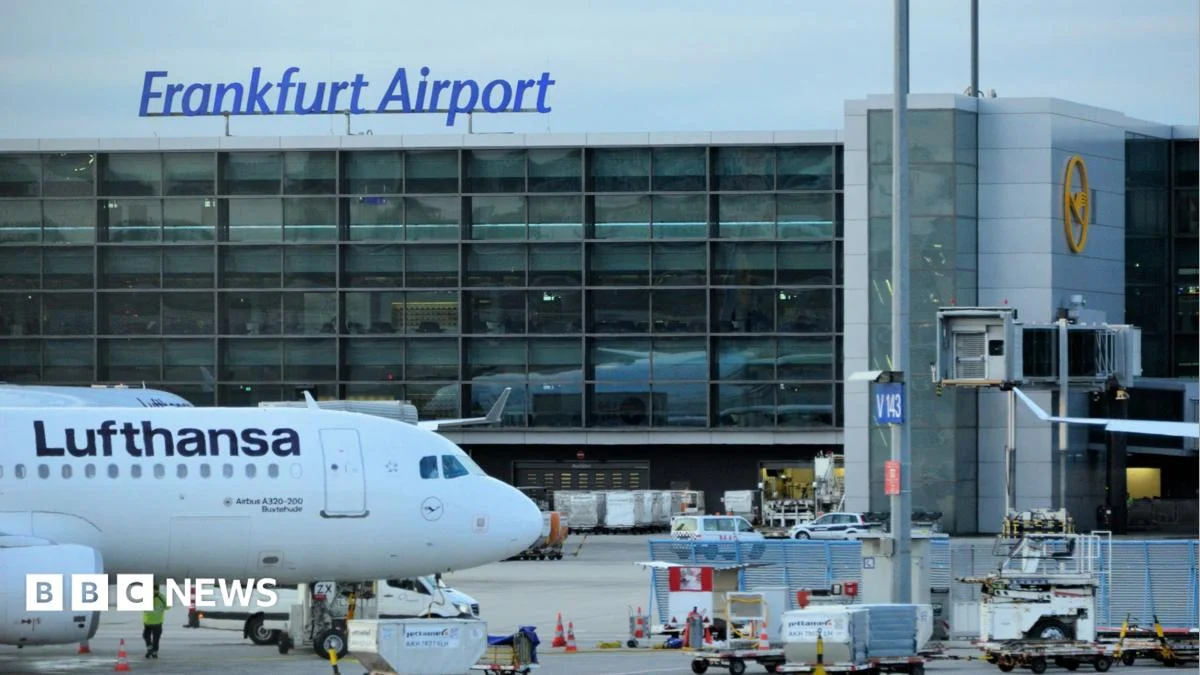
A rare and tragic outbreak of malaria has led to the deaths of two employees at Frankfurt Airport, Germany’s busiest aviation hub, following an infection that also sickened four other workers. The serious mosquito-borne disease is believed to have been introduced to the airport premises via mosquitoes carried on an incoming aircraft, triggering a localized transmission event first detected in July. The incident has cast a spotlight on the unique challenges of vector control in international travel hubs and the critical importance of swift diagnostic protocols, even in non-endemic regions.
The Unfolding Crisis: Fatalities and Infections
The initial reports, surfacing in July, indicated that four Frankfurt Airport workers had contracted malaria. This alarming development quickly escalated, with public health officials confirming later that a total of six male employees, engaged in diverse roles across different areas of the vast airport complex, had been infected. The most somber update arrived from the Frankfurt Public Health Department, which announced on Wednesday that two of the affected individuals had succumbed to the infection. A spokesperson for Fraport, the airport operator, had earlier confirmed one employee’s death, underscoring the severity of the situation.
The victims, whose identities have not been released out of respect for their privacy, are believed to have contracted the disease through bites from infected mosquitoes that are thought to have hitched a ride on a plane. This mechanism, known as "airport malaria" or "baggage malaria," is an exceedingly rare phenomenon in non-tropical regions like Germany, making this outbreak particularly unusual and concerning for public health authorities.
Chronology of an Unprecedented Outbreak
The timeline of the outbreak reveals a series of escalating events and official responses:
- Early July: Initial cases of malaria among airport workers are identified. The Robert Koch Institute (RKI), Germany’s federal agency for disease control and public health, notes that four employees fell ill between July 4 and July 6. Crucially, none of the infected individuals had a recent travel history to malaria-endemic areas, immediately pointing towards a localized transmission event.
- Mid-July: The RKI issues an epidemiological bulletin, stating its belief that the mosquitoes responsible for the infections were brought into the airport by plane. This assessment marks the official recognition of an "airport malaria" event.
- Ongoing Investigations (July-August): The Frankfurt Public Health Department launches a comprehensive investigation to trace the source of the infections. Blood samples from the six infected workers are analyzed to determine if they were all infected by a single mosquito or by multiple vectors. Airport operator Fraport begins implementing immediate mitigation measures.
- Recent Weeks: Traps are installed across the airport premises to capture mosquitoes. Any captured insects are sent to laboratories for analysis to identify their species and geographical origin, a crucial step in understanding the precise vector involved and its likely point of entry.
- Wednesday, [Specific Date, if available, otherwise implied]: The Frankfurt Public Health Department issues a letter to media outlets, confirming the tragic news that two of the six affected individuals have died. Fraport also releases a statement confirming a fatality among its employees.
This sequence of events underscores the rapid progression and potentially fatal nature of malaria, especially when diagnosis is delayed due to the unusual context of transmission.
The Enigma of "Airport Malaria"
"Airport malaria" is a term used to describe cases where individuals contract malaria without having traveled to an endemic region, typically occurring in the vicinity of international airports. It happens when infected mosquitoes, usually from the Anopheles genus, are inadvertently transported aboard aircraft from malaria-endemic countries. These mosquitoes, often surviving the journey in cargo holds or passenger cabins, then exit the plane upon arrival and bite individuals in the airport or surrounding areas.
While extremely rare, such incidents are not unprecedented globally. Major international airports, by their very nature, serve as critical junctures for global movement, not just of people and goods, but inadvertently, also of disease vectors. The last recorded instance of "airport malaria" in Germany was also at Frankfurt Airport in 2023, though specific details of that case, such as the number of infections or fatalities, were not immediately comparable in scale or public health impact to the current outbreak. Prior to that, similar isolated cases have been reported in other European countries and the United States, usually involving single infections rather than a cluster. The challenge lies in the fact that non-endemic areas do not typically maintain the same level of vector surveillance and control as regions where malaria is commonplace, making these rare introductions particularly dangerous.
Understanding Malaria: A Public Health Overview
Malaria is a life-threatening disease caused by parasites that are transmitted to people through the bites of infected female Anopheles mosquitoes. According to the World Health Organization (WHO), it is predominantly found in tropical and subtropical regions of the world, with Sub-Saharan Africa carrying a disproportionately high share of the global malaria burden. In 2022, there were an estimated 249 million malaria cases and 608,000 malaria deaths worldwide, highlighting its devastating global impact.
The disease is preventable and curable, but symptoms can range from mild to life-threatening. Common symptoms include fever, chills, headache, muscle aches, and fatigue. If not promptly diagnosed and treated, malaria can progress to severe forms, leading to organ failure, seizures, coma, and death. Importantly, malaria is not transmitted from person to person; it requires the mosquito vector to complete its life cycle and transmit the parasite. This characteristic is crucial for understanding why the Frankfurt Public Health Department has reassured the general population that the risk of transmission to the broader community is "very, very low."
The RKI has consistently highlighted that malaria in Germany almost exclusively affects long-haul travelers who have been infected in malaria-endemic areas. The agency noted in its epidemiological bulletin that the lack of a travel history in cases like these can lead to a delayed diagnosis. This delay, the RKI stressed, significantly increases the risk of a severe course of the disease, as early treatment is vital for positive outcomes. The fact that the infected individuals were airport workers without recent travel history underscores the diagnostic challenge posed by "airport malaria."
Official Responses and Mitigation Efforts
In the wake of the outbreak, both Fraport and the Frankfurt Public Health Department have initiated a series of urgent measures to contain the situation and prevent further infections.
Fraport spokesperson confirmed that the airport operator has provided "comprehensive information to all employees and encourage them to consult a doctor if they experience any symptoms." This proactive communication is critical in raising awareness among airport staff, who are potentially at higher risk due to their working environment. Beyond informational campaigns, physical interventions are underway. Traps have been strategically installed across the airport to capture mosquitoes. These captured specimens are then meticulously analyzed in laboratories to determine their species, which is crucial for understanding their origin and potential resistance to insecticides, as well as to confirm if they carry the malaria parasite.
The Frankfurt Public Health Department is spearheading the overarching investigation. Their work includes analyzing blood samples from the infected individuals to ascertain the precise strain of the malaria parasite and to determine if the infections stemmed from a single mosquito or multiple vectors, which could offer clues about the extent of the mosquito presence. The department’s letter to media outlets also sought to quell public anxiety, emphasizing that "For the population of Frankfurt, the risk is considered very, very low. The disease is not transmissible from person to person but is always transmitted by mosquitoes." This distinction is vital in preventing misinformation and unnecessary panic. However, officials also cautioned that laboratory test results to definitively determine the source of the infections were not expected to be available for several weeks, indicating the complexity and time-consuming nature of such forensic epidemiological work.
The Robert Koch Institute’s Perspective and Warnings
As Germany’s central scientific institution in the field of biomedicine and a key player in public health, the Robert Koch Institute (RKI) has provided invaluable insights and warnings regarding this outbreak. The RKI’s early involvement in July, identifying the unusual nature of the infections due to the lack of travel history, was pivotal. Their expertise highlighted the extreme rarity of locally transmitted malaria in Germany, typically a country free from endemic malaria.
The institute’s statements have consistently emphasized the importance of considering malaria in diagnostic processes, even when the usual epidemiological markers (i.e., recent travel to endemic areas) are absent. This is a critical message for healthcare professionals across non-endemic countries, as a delayed diagnosis can be fatal. The RKI’s epidemiological bulletins serve as vital alerts, guiding clinicians to broaden their differential diagnoses in unusual presentations of febrile illness, especially in individuals associated with international travel hubs. Their previous report of an "airport malaria" case at Frankfurt in 2023 further underscores their long-standing awareness of this specific risk, even if isolated. The RKI’s ongoing monitoring and research will be instrumental in developing more robust prevention and response strategies for such rare but dangerous events.
Broader Implications for Public Health and Aviation
The Frankfurt Airport malaria outbreak carries significant implications, extending beyond the immediate tragedy of the two deaths.
Firstly, it serves as a stark reminder of the challenges posed by global interconnectedness to public health. In an era of extensive international travel and trade, the accidental transport of disease vectors, including mosquitoes, becomes an inherent risk. This necessitates sophisticated vector control measures at all major international airports, not just in endemic regions. While many airports already have disinsection protocols for aircraft arriving from certain areas, this incident may prompt a review and potential enhancement of these measures.
Secondly, the difficulty in diagnosing malaria in non-travelers highlights a critical gap in clinical awareness. Medical practitioners in non-endemic countries may not routinely consider malaria in patients presenting with flu-like symptoms if there’s no travel history. This outbreak underscores the need for ongoing education and vigilance among healthcare providers, particularly those in proximity to international transport hubs, to consider "airport malaria" as a differential diagnosis.
Thirdly, for airport operators like Fraport, the incident raises questions about worker safety and occupational health. Employees working in various parts of the airport, including cargo areas, tarmac, and terminals, could be exposed. This may lead to a re-evaluation of personal protective measures, environmental controls, and health surveillance for airport staff, potentially including targeted health advisories or even preventative measures if warranted by future risk assessments.
Finally, the incident has potential implications for public confidence in airport safety and international travel. While authorities have rightly stressed the very low risk to the general public, any health scare linked to a major transport hub can generate anxiety. Transparent communication, robust investigation, and visible implementation of preventative measures will be crucial in maintaining public trust.
Ongoing Investigations and Future Preventative Measures
The ongoing investigations by the Frankfurt Public Health Department are crucial. Identifying the exact species of mosquito, its origin, and how it survived the journey and established itself within the airport environment will provide invaluable data. This information can inform targeted preventative measures, such as specific insecticide treatments, enhanced surveillance, and improved aircraft disinsection protocols.
In the long term, this incident reinforces the need for collaborative international efforts in disease surveillance and vector control. Information sharing between health authorities and aviation bodies globally is essential to track potential threats and implement harmonized preventative strategies. As climate change potentially expands the geographical range of mosquito vectors, such "airport malaria" cases, while still rare, might become an even more pertinent concern, necessitating proactive adaptation of public health strategies worldwide. The tragic deaths at Frankfurt Airport serve as a somber call to action, reminding the world that the fight against infectious diseases is a continuous, evolving, and globally interconnected challenge.