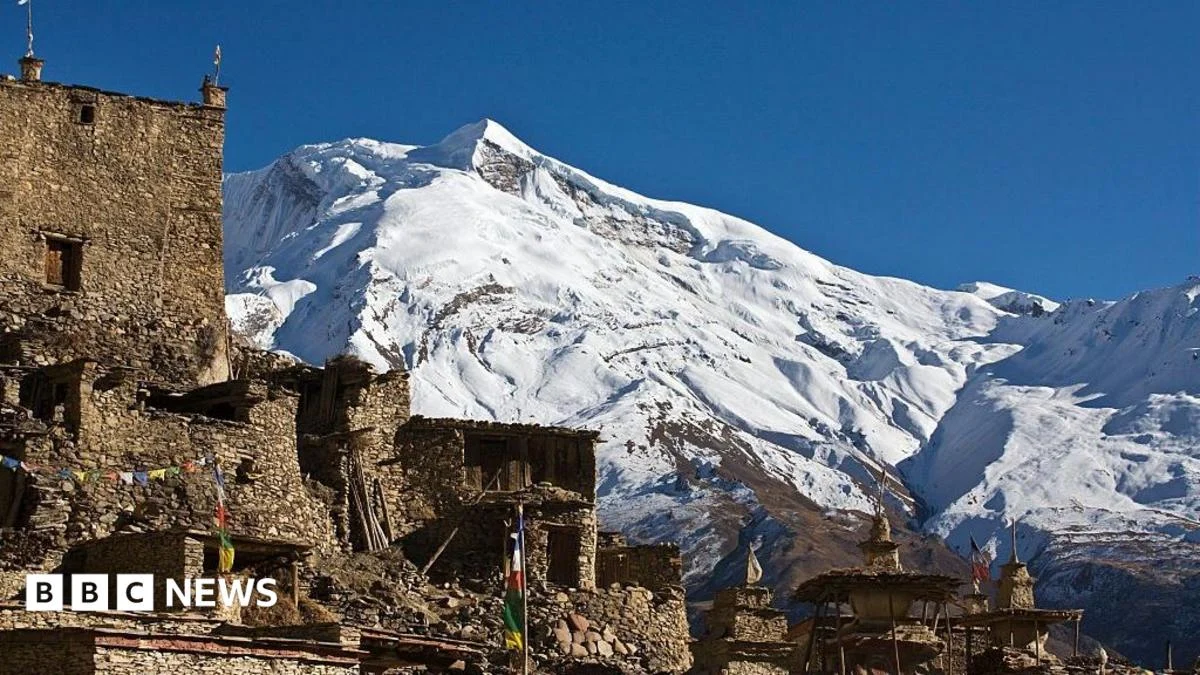
Rescue teams in Nepal are continuing an arduous search for survivors and victims following a devastating avalanche that struck a climbing group’s base camp on Himlung Himal peak in the remote Manang district. The incident, which occurred on Sunday morning, has so far resulted in the recovery of two bodies, with an estimated dozen individuals, all Nepalese nationals, still unaccounted for. The tragic event underscores the escalating dangers faced by mountaineers and support staff in the Himalayas amidst increasingly volatile weather patterns.
The Catastrophic Incident on Himlung Himal
The avalanche descended upon the base camp of Himlung Himal, a formidable 7,126-meter (23,380-foot) peak situated near Nepal’s border with the Tibetan Autonomous Region of China. The group affected comprised Nepalese climbers and vital support staff who had been dispatched ahead of an international expedition. Their crucial role was to establish the base camp, manage the initial route, and fix ropes on the lower sections of the mountain, tasks essential for the safety and progress of subsequent foreign climbers.
Bibhuti Chand Thakur, a representative from Himalaya Holidays Trekking, confirmed to news agency AFP that at least eight members of his expedition team were among the missing. The precise number of individuals still unaccounted for remains fluid as rescue operations navigate the chaotic and dangerous terrain. The sheer force of the avalanche, described as a "sheet of snow," engulfed the camp with little warning, leaving a scene of destruction and despair.
Challenges in High-Altitude Rescue Operations
Immediate rescue efforts were severely hampered by adverse weather conditions prevalent in the region. Thick snow, persistent rainfall, and low visibility prevented helicopters and specialized rescue teams from reaching the remote site in the critical hours immediately following the disaster. The delay underscores the inherent difficulties of high-altitude rescue, where weather windows are narrow and logistical challenges immense.
A specialized rescue team, comprising highly experienced mountaineers and emergency personnel, was eventually dispatched from Kathmandu, the Nepalese capital, via helicopter. However, local media reports indicate that their efforts to fully access the site and conduct a thorough search were curtailed by the same challenging weather, necessitating a continuation of operations into Monday. The race against time is critical, as survival rates in avalanche incidents diminish rapidly with prolonged exposure to extreme cold and injuries. Rescue teams are employing all available resources, including advanced search techniques and specialized equipment, to locate the missing. The rugged topography and the vastness of the snow-covered area further complicate the search, demanding immense endurance and skill from the rescuers.
The Role of Nepalese Support Staff: Unsung Heroes
The victims and missing individuals are all Nepalese nationals, highlighting the often-overlooked risks undertaken by local support staff in the burgeoning Himalayan climbing industry. These individuals, often referred to as Sherpas or high-altitude workers, are the backbone of mountaineering expeditions, performing the strenuous and dangerous tasks of carrying equipment, setting up camps, and fixing ropes, often for significantly less compensation than their foreign counterparts. Their intimate knowledge of the mountains is invaluable, yet they frequently bear the brunt of the dangers inherent in these extreme environments. This incident serves as a stark reminder of their critical contributions and the sacrifices they make.
A Season of Treachery: Extreme Weather in the Himalayas
The avalanche on Himlung Himal is not an isolated incident but rather a symptom of a broader pattern of extreme and unpredictable weather gripping the Nepalese Himalayas. Forecasts had indicated heavy snowfall around the 7,126-meter peak in the days leading up to the disaster, creating highly unstable snowpacks ripe for avalanches. Persistent rain and snow have characterized recent days across Nepal’s mountain districts, rendering conditions treacherous for even the most experienced climbers.
This volatile weather has already forced the evacuation of climbers from Mount Manaslu, the world’s eighth-highest peak, earlier in the week due to a heightened threat of avalanches. Such preemptive measures, while necessary, disrupt expeditions and incur significant financial losses for operators and climbers alike. The increasing frequency and intensity of these extreme weather events are raising serious concerns about the long-term viability and safety of the region’s economically vital climbing tourism industry. Experts suggest that a combination of natural weather cycles and anthropogenic climate change is contributing to these more extreme and unpredictable conditions, leading to greater instability in the high mountain environments.
A Broader Context of Regional Disasters
The tragic events on Himlung Himal unfold against a backdrop of multiple, interconnected natural disasters that have recently afflicted Nepal and the broader Asian continent. This latest loss of Nepalese climbers occurs less than two months after another devastating incident on Broad Peak in Pakistan, where six individuals, including the renowned British-Nepalese mountaineer Nirmal Purja, tragically lost their lives. These incidents collectively paint a grim picture of the escalating risks in high-altitude mountaineering.
Furthermore, Nepal is still reeling from the aftermath of a massive flood and landslide in August, which devastated areas along the Nepal-Tibet border. That catastrophe, triggered by a glacial collapse in the Himalayas, sent vast quantities of water and debris careening down the Trishuli River valley, sweeping away entire settlements. More than 1,400 people are confirmed to have died in that event, and over 6,000 individuals remain missing, underscoring the profound and ongoing vulnerability of communities living in the shadow of the Himalayas. Efforts to recover bodies and provide relief continue in those affected regions, stretching Nepal’s already limited resources.
Beyond Nepal, extreme weather events have wreaked havoc across other parts of Asia in the past week:
- India: The neighboring Indian state of Uttar Pradesh has reported more than 50 fatalities due to extreme weather conditions, including heavy rains and associated incidents.
- Thailand: Bangkok, Thailand’s capital, has declared a flood emergency disaster following torrential rainfall since Thursday. Residents have been urged to stay indoors or seek higher ground as widespread inundation affects the metropolis.
- Japan: Earlier in the week, Typhoon Dujuan battered Tokyo, unleashing devastating landslides in neighboring prefectures that claimed the lives of four people. Typhoon Dujuan represents the latest in a series of powerful storms that have impacted the Pacific region, their intensity amplified by the "super El Niño" phenomenon. This climatic condition, characterized by an area of unusually warm sea water in the equatorial Pacific, provides additional energy that fuels the formation and strengthening of tropical storms and typhoons.
Implications and Future Outlook
The recurring pattern of extreme weather and natural disasters across Asia, from the Himalayan avalanches to urban flooding and typhoons, signals a critical juncture for regional resilience and climate adaptation strategies. For Nepal, the immediate challenge lies in ensuring the safety of its mountaineering industry, a crucial pillar of its economy. The incident on Himlung Himal will undoubtedly prompt renewed scrutiny of safety protocols, weather forecasting capabilities, and the deployment of support staff in high-risk environments. Discussions around regulating expedition sizes, mandatory rest periods, and enhanced insurance for local workers may gain momentum.
In the long term, the interconnectedness of these events with global climatic shifts, particularly the influence of El Niño and broader climate change, demands a more comprehensive and collaborative approach. Scientists warn that warmer global temperatures contribute to more energetic weather systems, increased glacial melt, and more unpredictable precipitation patterns, all of which heighten the risk of events like avalanches, floods, and super typhoons. The vulnerability of Himalayan glaciers to warming temperatures, leading to glacial lake outburst floods, is a particular concern for the region.
The international community, alongside national governments, faces the urgent task of investing in robust early warning systems, resilient infrastructure, and sustainable land management practices to mitigate the human and economic costs of these escalating environmental challenges. For the families of those lost and missing on Himlung Himal, the immediate future is one of grief and uncertainty, a stark reminder of the immense power of nature and the courage of those who venture into its most extreme realms. The incident serves as a poignant and tragic testament to the profound and dangerous transformations occurring across the world’s highest mountains.