

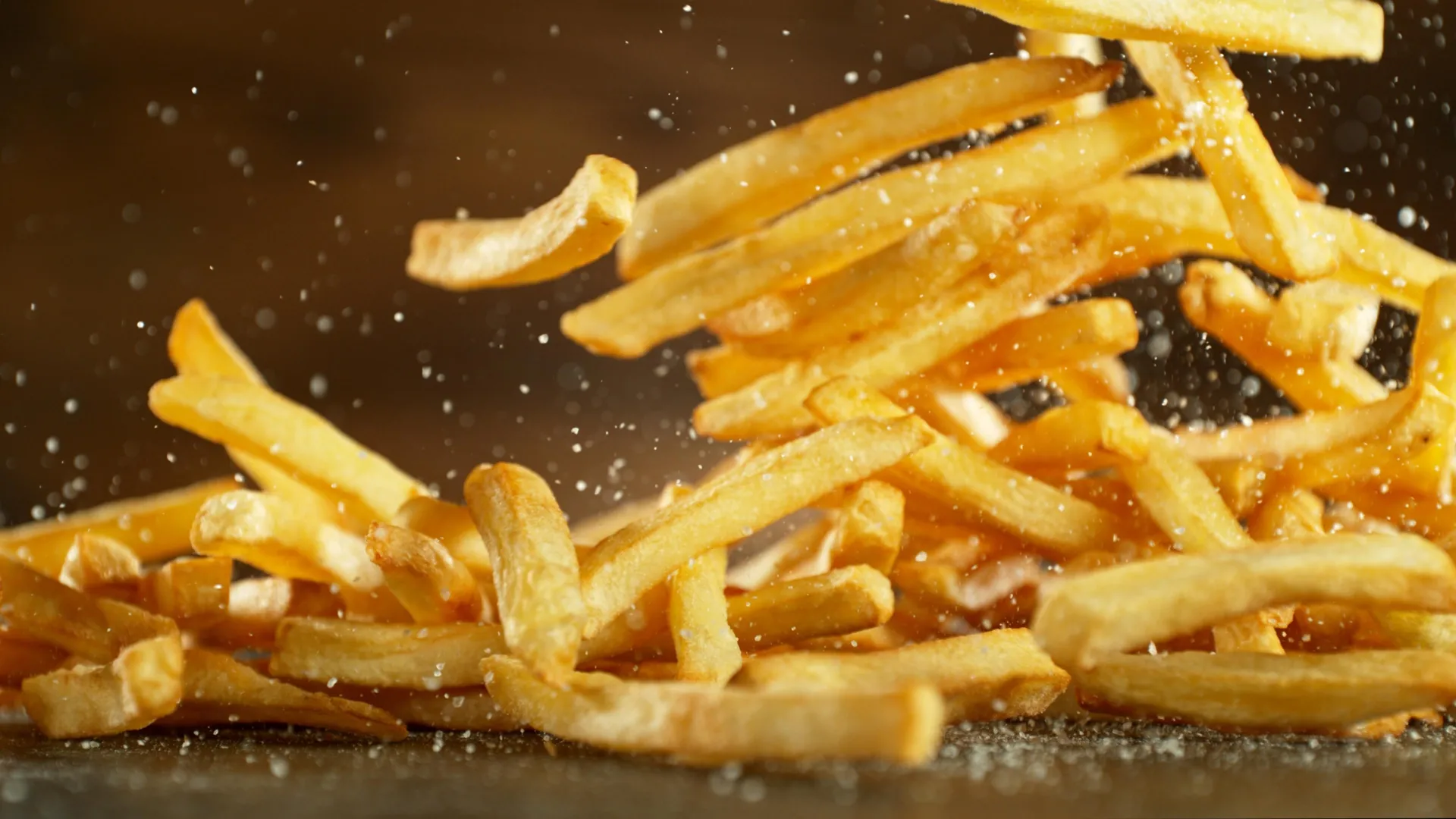
French fries, a globally beloved culinary staple, owe their immense popularity to an irresistible combination of a satisfyingly crisp exterior and a rich, savory flavor. However, the very process that imbues them with these desirable characteristics—deep frying—also leads to significant oil absorption, substantially increasing their fat and calorie content. This high fat intake is a well-documented contributor to serious health concerns, including obesity, cardiovascular diseases like hypertension, and type 2 diabetes. In response to this growing public health challenge and a burgeoning consumer demand for healthier yet still indulgent food options, researchers at the University of Illinois Urbana-Champaign are pioneering a novel approach that could fundamentally alter how one of the world’s favorite snacks is prepared. Their groundbreaking work investigates the potential of microwave energy, when strategically integrated with conventional frying techniques, to yield French fries that are significantly lower in fat without compromising the sensory attributes that consumers crave.
The Science Behind the Sizzle: Understanding Oil Absorption in Frying
At the heart of the University of Illinois’s research lies a fundamental understanding of the physics and chemistry involved in the deep-frying process. When potatoes are submerged in hot oil, a complex interplay of heat transfer, moisture evaporation, and pressure dynamics occurs. Initially, the water content within the potato cells is at a high level. As the potato heats up, this water transforms into steam. The escape of this steam from the potato’s cellular structure creates void spaces. Crucially, as the steam leaves, it can generate negative pressure within these newly formed spaces. This negative pressure acts much like a vacuum, actively drawing oil from the surrounding cooking medium into the potato to fill these voids.
Pawan Singh Takhar, a professor of food engineering and the principal investigator leading this ambitious project, elaborates on this phenomenon: "Think of a straw dipped in a drink. If you forcefully blow air into the straw, you create positive pressure, pushing the liquid away. Conversely, if you suck on the straw, you create negative pressure, and the liquid is drawn upwards. Food materials, like potatoes, are comprised of countless microscopic ‘straws.’ During frying, when positive pressure is maintained inside the food, oil is repelled. However, if negative pressure develops, it acts as a powerful suction, pulling oil into the food’s porous structure."
Takhar and his doctoral student, Yash Shah, have meticulously documented these internal transformations. Their research, detailed in two recent publications, reveals that a substantial portion, often up to 90%, of the oil absorption during conventional frying occurs precisely when the potato is under this negative pressure. This prolonged suction effect is a primary reason why traditional French fries can become so laden with fat.
A Microwave Intervention: Harnessing Electromagnetic Energy for Healthier Fries
The University of Illinois team’s innovative solution involves leveraging the unique properties of microwave energy. Unlike conventional heating, which relies on heat transfer from the external surface inward, microwave energy penetrates the food material more uniformly. This penetration causes water molecules within the potato to vibrate rapidly, generating steam from the inside out.
"When we heat something in a conventional oven," Professor Takhar explains, "the heat moves from outside to inside. But a microwave oven heats from the inside out, because the microwaves penetrate everywhere in the material. The microwaves oscillate water molecules, causing more vapor formation and thus shifting the pressure profile towards the positive side. The higher pressure in microwaves helps reduce oil penetration."
This internal pressure buildup, driven by microwave-induced steam generation, effectively counteracts the negative pressure that facilitates oil absorption in traditional frying. By promoting a more positive internal pressure for a longer duration, the microwave energy acts as a deterrent to excessive oil uptake.
The Dawn of Hybrid Frying: A Synergistic Approach
While the potential of microwave energy to reduce oil absorption is significant, the researchers discovered that relying solely on microwave frying does not yield the desired textural qualities. Fries cooked exclusively with microwave energy tended to be soft and lacked the characteristic crispiness that consumers associate with premium French fries. This is because conventional frying, with its high surface temperatures, is crucial for achieving the Maillard reaction and other chemical processes that create a desirable golden-brown color and a rigid, crunchy exterior.
Recognizing this limitation, the Illinois team proposed a sophisticated hybrid approach. Their vision is a dual-action frying system that strategically combines the benefits of both conventional and microwave heating. In this proposed model, conventional frying would be employed to achieve the essential browning and crisping of the fry’s surface. Simultaneously, or in a carefully orchestrated sequence, microwave energy would be introduced to accelerate internal moisture evaporation and build up positive pressure, thereby minimizing oil ingress.
"Consumers want healthy foods, but at the time of purchase, their cravings often take over," Professor Takhar observes. "High oil content adds flavor, but it also contains a lot of energy and calories. My research team studies frying with the aim of obtaining lower fat content without significant differences in taste and texture." This hybrid system represents a significant stride towards achieving that goal, offering a pathway to produce fries that are both healthier and retain their appeal.
A Glimpse into the Research Process: From Potato Strips to Scientific Data
The research journey undertaken by Takhar and Shah was rigorous and multifaceted. It involved a systematic examination of the physical transformations occurring within potato strips during various cooking regimes. The process began with selecting and preparing potatoes, which were rinsed, peeled, and cut into standardized strips. Subsequently, these strips underwent a blanching process. Blanching, which involves a brief immersion in hot water or steam, serves to initiate the softening of potato tissues, preparing the surface for the subsequent frying stage.
The blanched potato strips were then seasoned with salt and introduced to soybean oil heated to a precise 180 degrees Celsius (approximately 356 degrees Fahrenheit). Throughout the frying process, both under conventional and experimental microwave conditions, the researchers meticulously collected a range of critical data points. These included real-time measurements of temperature, internal pressure, volume changes, textural properties, moisture content, and, most importantly, the final oil content of the fries.
This comprehensive data collection allowed the team to gain unprecedented insights into the intricate dynamics of water evaporation and oil infiltration. By correlating the internal pressure profiles with the rate and extent of oil absorption, they could pinpoint the exact mechanisms driving fat uptake.
Advanced Techniques: Mathematical Modeling and Specialized Equipment
To complement their laboratory experiments, the Illinois researchers employed sophisticated mathematical modeling techniques. These computational tools allowed them to simulate the complex interactions of various parameters during the frying process, offering predictions and insights that would be challenging to obtain through empirical observation alone. This advanced modeling helped them explore a wider range of variables and their potential impact on oil absorption and food quality, accelerating the discovery process.
Furthermore, their experimental work benefited from the utilization of specialized frying equipment. In collaboration with scientists at Washington State University, the Illinois team had access to a unique microwave fryer capable of operating at two distinct frequencies: 2.45 gigahertz (GHz), similar to that found in standard household microwave ovens, and 5.8 GHz, a higher frequency often used in industrial applications. The choice of microwave frequency can significantly influence how energy is absorbed and distributed within the food, affecting the rate of water molecule oscillation and subsequent steam generation. Gigahertz is a unit that quantifies the frequency of electromagnetic waves, with higher gigahertz values indicating more rapid oscillations and potentially more intense heating.
Quantifying the Benefits: Reduced Cooking Time and Enhanced Efficiency
The results of the experimental and modeling efforts have been compelling. Across a series of controlled trials and simulations, the hybrid microwave-conventional frying method demonstrated a remarkable ability to:
- Reduce Total Cooking Time: Microwave energy’s rapid and internal heating mechanism significantly shortens the overall time required to cook the fries to perfection. This could translate to substantial energy savings and increased throughput in commercial food production.
- Lower Oil Absorption: As predicted by the pressure dynamics, the hybrid method consistently resulted in a lower percentage of oil absorbed by the fries compared to conventional frying. This is the primary driver for creating a healthier product.
- Maintain Desirable Texture and Flavor: Crucially, when employed in conjunction with conventional heating, the microwave component did not detract from the sensory appeal of the fries. The conventional heat component ensured the development of a crispy exterior, while the microwave’s role in reducing oil uptake prevented the fries from becoming overly greasy.
While specific figures on oil reduction were not detailed in the initial announcement, the implications are profound. If a typical serving of French fries absorbs, for instance, 15-20 grams of fat, even a 25-30% reduction achieved through this method could represent a significant dietary improvement for consumers. For example, reducing oil absorption by 30% would lower the fat content by approximately 4.5 to 6 grams per serving, a substantial saving in calories and unhealthy fats.
Broader Implications: Economic Viability and Commercial Potential
The potential for this hybrid frying technology extends beyond laboratory settings and into the realm of commercial food production. Professor Takhar noted that the core components required for this hybrid system—microwave generators and conventional heating elements—are widely available and relatively cost-effective. This suggests that the technology could be economically practical for integration into existing large-scale food processing facilities.
"Continuous fryers used in large food processing facilities could be modified to include microwave generators," Takhar stated. "Because these components are widely available and relatively inexpensive, the system may be economically practical for commercial production."
The implications for the food industry are significant. Manufacturers could leverage this technology to produce a healthier line of fried products, appealing to a growing segment of health-conscious consumers. The potential for faster cooking times also offers a significant advantage in terms of production efficiency and cost reduction. This could lead to a wider availability of healthier fried food options on menus and in grocery stores, without requiring consumers to sacrifice the taste and texture they have come to expect.
The research was supported by grants from the USDA National Institute of Food and Agriculture (Awards 2020-67017-31194, ILLU-698-308, and ILLU-698-926), underscoring the national interest in developing innovative solutions for healthier food production.
Future Directions and Consumer Impact
The findings from the University of Illinois Urbana-Champaign represent a pivotal step forward in the quest for healthier indulgent foods. The two research papers, "The Effect of Conventional and Microwave Frying on the Quality Characteristics of French Fries," published in the Journal of Food Science, and "Predicting the quality changes during microwave frying of food biopolymers by solving the hybrid mixture theory-based unsaturated transport, and electromagnetics equations," published in Current Research in Food Science, provide a detailed scientific foundation for this promising technology.
As this research progresses from the laboratory to potential commercial application, consumers could soon find themselves enjoying their favorite fried snacks with a significantly reduced fat footprint. This innovation holds the promise of transforming the perception and reality of fried foods, aligning culinary indulgence with evolving public health priorities. The future of French fries may well be crispier, more flavorful, and, most importantly, healthier, thanks to the ingenuity of microwave-assisted frying.