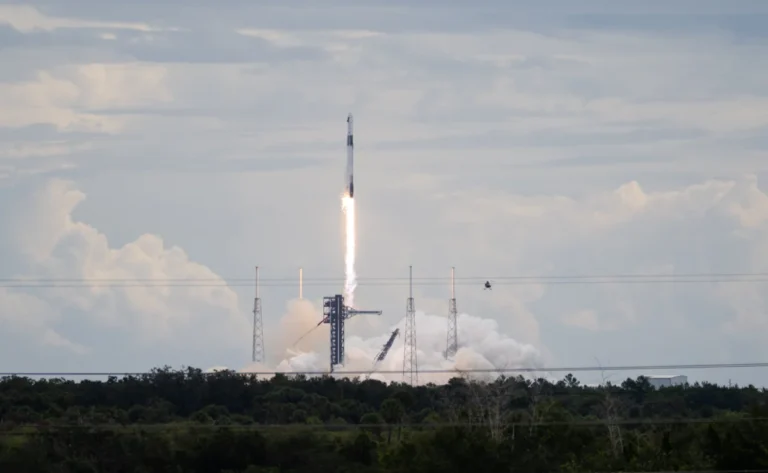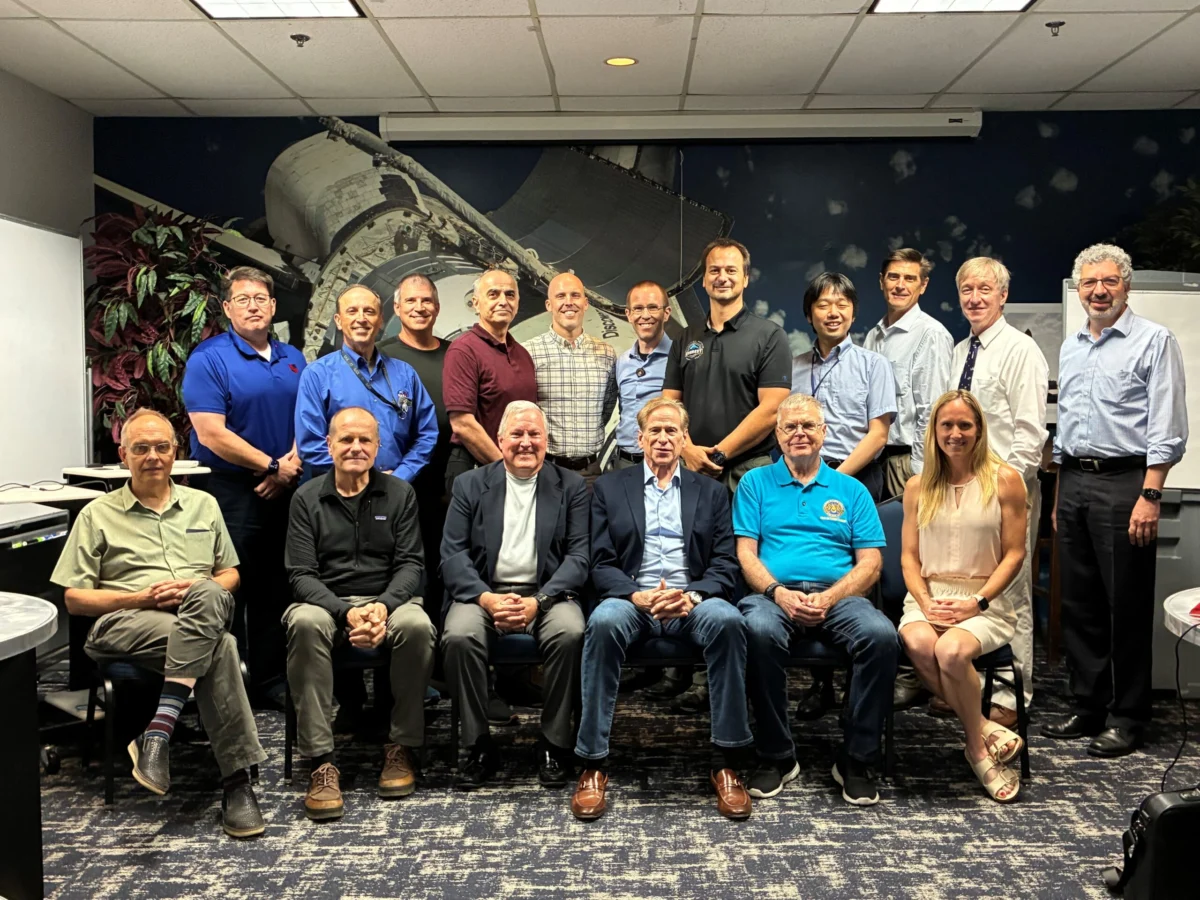
NASA has completed a comprehensive review by a dedicated working group focused on critical medical considerations for its ambitious Artemis lunar and deep-space exploration missions. This expert panel meticulously analyzed the most recent data concerning extravehicular activity (EVA) prebreathe testing, decompression sickness (DCS) events, in-flight occurrences of venous thromboembolism (VTE), and the implications of patent foramen ovale (PFO) for astronaut health. The findings, summarized by Kim Lowe, Human Systems Standards Integrator, underscore NASA’s proactive approach to safeguarding its astronauts as they venture further into space than ever before. The recommendations stemming from this extensive review are designed to integrate and build upon prior significant medical assessments, including reports on PFO and VTE in spaceflight and updated human factors standards. This collective effort specifically zeroes in on pivotal risk mitigation strategies, prominently featuring interventions such as PFO closure.
The Imperative of Astronaut Health for Deep Space Exploration
As NASA embarks on the Artemis program, charting humanity’s return to the Moon and laying the groundwork for eventual crewed missions to Mars, the physiological challenges of deep space travel have become a central focus. Unlike the relatively short-duration missions of the Apollo era or the continuously supported International Space Station (ISS), Artemis missions will involve extended periods away from Earth, greater distances, and a significantly reduced capacity for immediate return or resupply. This isolation, coupled with prolonged exposure to microgravity, altered radiation environments, and the rigorous demands of lunar surface extravehicular activities, introduces a complex array of medical risks that necessitate robust pre-mission planning and innovative in-flight mitigation strategies. The working group’s concentrated effort on DCS, VTE, and PFO directly addresses some of the most critical health concerns identified for these pioneering journeys.
Extravehicular activities, or spacewalks, are fundamental to lunar exploration, enabling scientific research, equipment deployment, habitat construction, and essential maintenance. These physically demanding operations require astronauts to transition from the pressurized environment of their spacecraft to the vacuum of space, protected only by their specialized spacesuits. The physiological adaptation required for this pressure differential is critical to prevent Decompression Sickness (DCS). Commonly known as "the bends," DCS occurs when inert gases, primarily nitrogen, dissolved in body tissues form bubbles during a rapid decrease in ambient pressure. These bubbles can manifest a spectrum of symptoms, from mild joint pain and skin rash to severe neurological impairment, pulmonary distress, and, in extreme cases, fatality. In the spaceflight context, DCS arises during EVAs when astronauts move from the relatively higher pressure of the spacecraft cabin (e.g., 14.7 psi on the ISS) to the significantly lower pressure of a spacesuit (e.g., 4.3 psi for the Extravehicular Mobility Unit, or EMU). To counteract this, astronauts undergo a "prebreathe" protocol, breathing 100% oxygen for a prescribed duration to "wash out" nitrogen from their bodies before an EVA. The effectiveness and duration of these protocols are under continuous review and refinement based on evolving data and mission profiles.
Venous Thromboembolism (VTE), which encompasses deep vein thrombosis (DVT) and pulmonary embolism (PE), has emerged as a serious concern in long-duration spaceflight. DVT involves the formation of blood clots, typically in the deep veins of the legs, while PE occurs when a portion of a clot detaches and travels to the lungs, potentially causing life-threatening blockages. Microgravity induces several physiological changes that elevate the risk of VTE, including altered blood flow (stasis), modifications to blood vessel structure, and changes in the body’s coagulation system. While infrequent, documented cases of VTE have occurred among astronauts on the ISS, prompting extensive research into preventive measures, screening protocols, and potential in-flight treatment options. For Artemis missions, where immediate medical evacuation is not feasible, a comprehensive understanding and proactive mitigation of VTE risk are paramount.
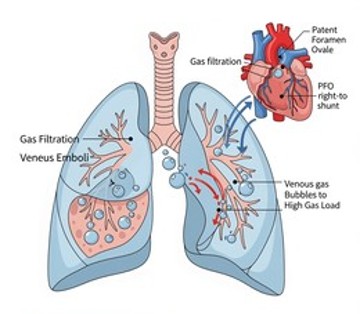
Patent Foramen Ovale (PFO) introduces another layer of medical complexity. A PFO is a small, flap-like opening between the two upper chambers of the heart (the atria) that typically closes shortly after birth. Approximately 25% of the general population retains a PFO. Although often asymptomatic and benign in terrestrial environments, a PFO can become medically significant under specific conditions, particularly those involving decompression. In the context of spaceflight and EVAs, if gas bubbles form in the venous circulation due to decompression, a PFO could allow these bubbles to bypass the lungs—which normally filter them—and enter the arterial circulation. This phenomenon, known as paradoxical embolism, could lead to severe consequences such as stroke, transient ischemic attack (TIA), or other systemic arterial gas embolisms, with potential impact on the brain or heart. The potential for a PFO to exacerbate DCS symptoms or lead to more severe outcomes has fueled extensive research and debate within the aerospace medical community.
A Foundation of Research: The Chronology of Scientific Review
The working group’s September 2026 deliberations were meticulously informed by a series of preceding scientific investigations and updated medical standards. This iterative process of review and refinement is a cornerstone of NASA’s unwavering commitment to astronaut safety.
A pivotal antecedent was the "Assessment of Patent Foramen Ovale (PFO) as Related to Decompression Sickness (DCS) in the Spaceflight Environment and During Ground Testing" (NASA/SP-20240010473), published in September 2024. This comprehensive report meticulously examined the current understanding of PFO prevalence among astronauts, its physiological implications during decompression events, and the historical data linking PFO to DCS incidence and severity. The 2024 PFO report established a crucial framework for understanding the mechanisms by which a PFO could heighten DCS risk and outlined potential screening methodologies and management strategies. Its conclusions served as a direct input for the 2026 working group, particularly informing discussions surrounding PFO closure as a risk mitigation intervention.
Subsequently, in April 2026, the "NASA Risk of Venous Thromboembolism in Spaceflight Working Group" published its findings (NASA/SP-20260005258/REV1). This document consolidated the latest research on VTE pathogenesis in microgravity, analyzed historical VTE occurrences in spaceflight, and evaluated current and prospective countermeasures. The 2026 VTE report provided essential insights into the factors contributing to clot formation in space, the efficacy of pharmacological prophylaxis (e.g., anticoagulants), and the development of non-pharmacological interventions. Its recommendations for VTE screening, monitoring, and management during long-duration missions directly informed the broader medical standards under consideration by the 2026 working group.
Concurrently, the foundational "NASA-STD-3001 Volume 2 Human Factors, Habitability, and Environmental Health" (NASA-STD-3001 Vol 2 Rev F) underwent significant updates. This standard serves as the bedrock for human health and performance requirements in spaceflight, dictating everything from air quality and waste management to medical capabilities and environmental controls. The specific updates reviewed by the DCS panel within this standard incorporated the latest scientific understanding of DCS prevention, reflecting lessons learned from decades of spaceflight experience and ground-based research. The integration of these updated DCS prevention standards into the working group’s review ensured that any new recommendations would be consistent with and enhance existing safety protocols.
Key Recommendations for Artemis Astronaut Safety
Based on the working group’s explicit focus and the foundational reports, several key recommendations can be inferred, all aimed at proactively addressing identified risks for Artemis astronauts:
-
Enhanced PFO Screening and Management: The working group likely advocated for more rigorous and standardized screening protocols for PFO in all prospective Artemis astronauts. This could involve advanced echocardiographic techniques, such as transcranial Doppler bubble studies or transesophageal echocardiography, to accurately detect and characterize PFOs. For astronauts identified with significant PFOs, particularly those deemed at higher risk for DCS or paradoxical embolism, the panel likely recommended the consideration of prophylactic PFO closure. This minimally invasive interventional procedure aims to permanently seal the PFO, thereby eliminating the potential pathway for venous gas bubbles to enter the arterial circulation. Such a recommendation would have significant implications for astronaut selection and pre-flight medical procedures.
-
Refined EVA Prebreathe Protocols: Building upon decades of experience and the updated DCS prevention standard, the working group likely proposed revisions to EVA prebreathe protocols specifically tailored for Artemis missions. These revisions could encompass:
- Extended Prebreathe Durations: Longer periods of 100% oxygen breathing, potentially combined with in-suit exercise, to achieve more thorough nitrogen washout.
- Optimized Spacesuit Pressures: Exploration of ideal spacesuit operating pressures that balance mobility, comfort, and DCS risk reduction for lunar surface operations.
- Personalized Protocols: Development of protocols that can be individualized based on an astronaut’s physiological characteristics, prior EVA experience, and specific mission profiles.
-
Advanced VTE Surveillance and Countermeasures: To effectively address the risk of VTE, recommendations would likely include:
- Routine In-flight Ultrasound Screening: Implementation of periodic ultrasound examinations to screen for DVT in deep veins, enabling early detection and intervention.
- Optimized Exercise Regimens: Development of targeted exercise protocols designed to promote venous return and mitigate blood stasis in microgravity.
- Nutritional and Hydration Strategies: Recommendations for specific dietary and fluid intake to support vascular health and blood coagulation balance.
- Pharmacological Options: Establishment of clear guidelines for the use of anticoagulants, either prophylactically for high-risk individuals or therapeutically in the event of confirmed VTE, considering the challenges of administering such medications in deep space.
-
Integrated Medical Monitoring and Diagnostic Capabilities: The panel likely underscored the necessity for advanced, autonomous medical monitoring systems for deep space missions. These could include:
- Continuous Physiological Monitoring: Sophisticated sensors to track vital signs, blood oxygen saturation, and early indicators of DCS or VTE.
- Miniaturized Diagnostic Tools: Development and deployment of portable ultrasound devices and blood analysis kits capable of diagnosing VTE and assessing overall physiological status in flight.
- Telemedicine and AI Support: Enhanced telemedicine capabilities and AI-driven diagnostic assistance to support astronauts and onboard medical officers in managing complex medical scenarios without immediate Earth-based specialist intervention.
-
Further Research and Individualized Risk Assessment: Acknowledging the inherent variability in human physiology, the working group would likely emphasize the importance of continued research into individual susceptibility to DCS and VTE. This could involve:
- Biomarker Identification: Research into genetic or biochemical markers that could predict an individual’s risk.
- Computational Modeling: Development of more sophisticated physiological models to simulate decompression stress and VTE risk under various mission parameters.
- Longitudinal Studies: Continued tracking of astronaut health post-flight to understand long-term effects and refine predictive models.
Diving Deeper into Decompression Sickness (DCS) Prevention
The history of human spaceflight is inextricably linked with the challenge of DCS prevention. Early Gemini and Apollo missions, with their pure oxygen cabin environments, largely circumvented the issue. However, with the advent of the Space Shuttle and later the ISS, which utilized a nitrogen-oxygen atmosphere similar to Earth’s, the problem of nitrogen washout became central to EVA planning. The Shuttle’s 8.3 psi cabin pressure for prebreathe, and the ISS’s standard 14.7 psi cabin, necessitated specific protocols to prepare astronauts for the 4