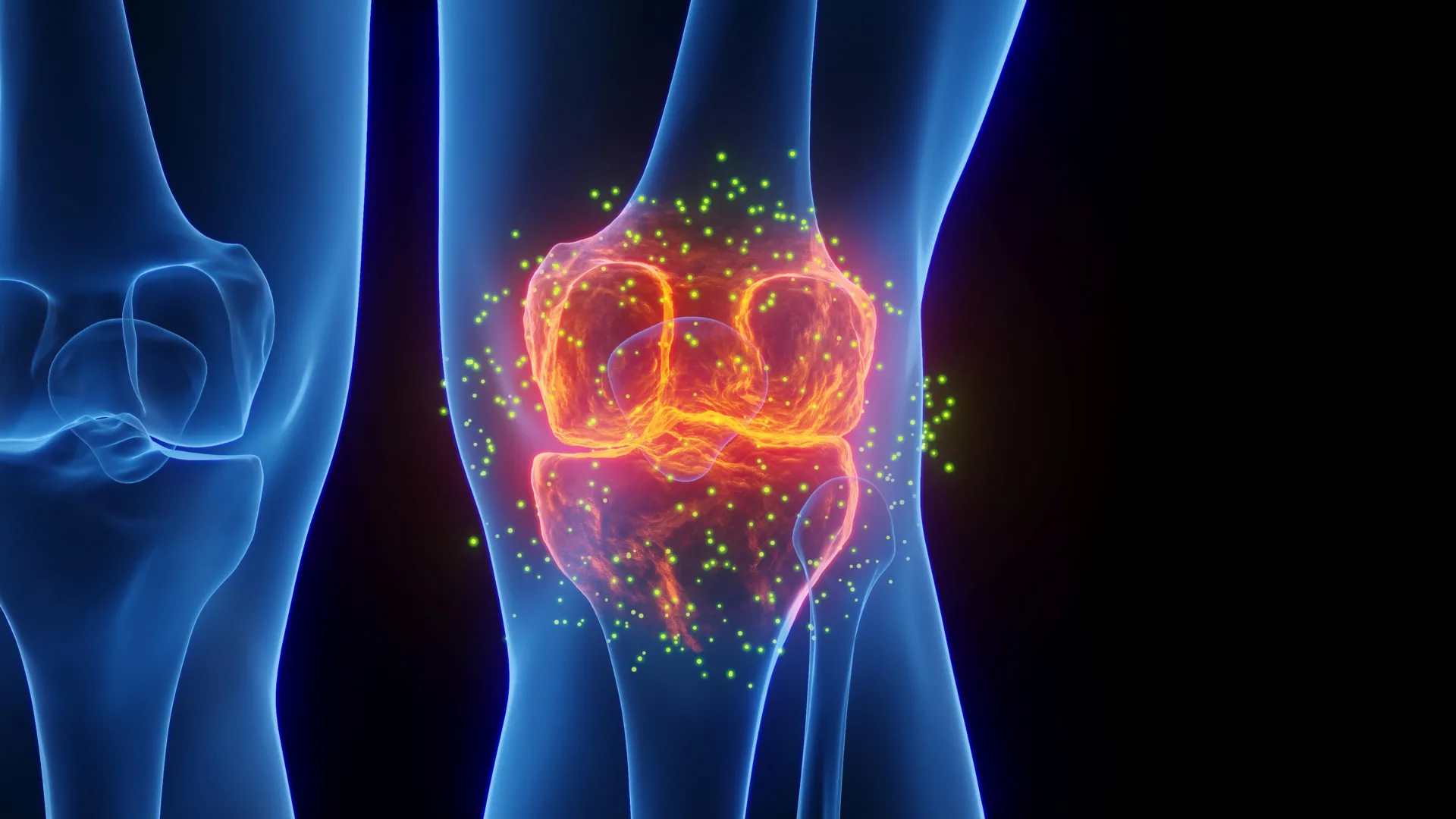
The procedure was "remarkably" successful. This is how 74-year-old Cynthia Schraf-Fletcher describes genicular artery embolization (GAE), a minimally invasive treatment designed to significantly reduce chronic knee pain. Nearly a year after undergoing this outpatient procedure on her right knee, she reports that the relief feels almost equivalent to the total knee replacement she previously experienced on her left knee. "I couldn’t be more pleased," Schraf-Fletcher stated, expressing her profound satisfaction with the outcome. She sought treatment from Leigh Casadaban, MD, MS, an assistant professor of radiology at the University of Colorado Anschutz School of Medicine, recognizing the potential of this innovative approach.
Schraf-Fletcher’s daily life has been dramatically improved. Activities that once entailed considerable discomfort are now manageable and even enjoyable. Gardening, which had become a painful chore, is now a source of pleasure again. Riding a stationary bicycle, a former staple of her exercise routine, is now undertaken with significantly less pain. Even other cherished pastimes are being pursued with renewed vigor and comfort. This personal success story is indicative of the growing promise GAE holds for individuals grappling with persistent knee discomfort.
A New Horizon in Knee Pain Management: Bridging the Gap Between Conservative Care and Surgery
Genicular artery embolization operates on a sophisticated yet straightforward principle: it aims to reduce blood flow to specific inflamed areas within the knee joint. By targeting the genicular arteries, which are small arteries supplying blood to the knee, the procedure effectively "calms" the inflammatory processes. This reduction in inflammation can, in turn, alleviate swelling and significantly decrease pain levels experienced by patients.
This targeted approach makes GAE a potentially invaluable option for individuals suffering from osteoarthritis who have found limited success with more conventional treatments, such as medication and physical therapy, but are not yet candidates or are hesitant to undergo major surgical intervention like a total knee replacement.
Dr. Casadaban, a vascular interventional radiologist, elaborated on the procedural niche: "For treating osteoarthritis in the knees, we often think of medications, physical therapy, maybe a steroid injection, and then on the far end of the spectrum is a total knee replacement. There really hasn’t been anything for patients in between. GAE is a promising minimally invasive procedure that may fill that spot for people who have failed conservative treatments but are not yet ready to have a major surgery." This statement highlights the critical unmet need that GAE appears poised to address within the landscape of orthopedic pain management.
Osteoarthritis, a pervasive degenerative joint disease, is characterized by the gradual breakdown of cartilage and other crucial structures within a joint. In the knee, this deterioration can manifest as pain, stiffness, inflammation, and a significant impediment to mobility, making everyday activities such as walking and exercising increasingly difficult. The American College of Rheumatology estimates that osteoarthritis affects over 32 million adults in the United States alone, with knee osteoarthritis being one of the most common forms.
According to Dr. Casadaban, patients with mild to moderate knee osteoarthritis are generally considered ideal candidates for GAE. While individuals with more advanced stages of the disease can also undergo the procedure, the longevity of the pain relief may be less predictable compared to those with less severe degeneration. "We find about 70% of patients have phenomenal results. They cut their pain scores in half, sometimes more. We have a few patients with no pain at all after the procedure," Dr. Casadaban reported, underscoring the procedure’s impressive efficacy. "Patients that have tried a lot of other treatments and haven’t had pain relief are happy to get back to their normal activities."
For Ms. Schraf-Fletcher, the prospect of avoiding another major knee operation was particularly compelling. Having experienced complications following her prior knee replacement surgery on her left knee, she was eager to explore GAE as a less invasive alternative for her right knee. Her positive experience validates the procedure’s potential to offer significant relief without the risks and extended recovery associated with major surgery.
Understanding the Genicular Artery Embolization Procedure
The GAE procedure is typically a swift and efficient intervention, lasting between one to two hours. It is performed under conscious sedation, a technique that ensures the patient remains relaxed and comfortable throughout the process, without the need for general anesthesia. This approach contributes to a smoother patient experience and a potentially quicker recovery.
The intervention is carried out by a specialized interventional radiology team. It commences with a small incision, usually made in the crease of the leg. Through this minimal entry point, a very thin, flexible tube known as a catheter is carefully guided. Utilizing advanced X-ray imaging and a contrast dye, which illuminates the blood vessels, physicians can precisely navigate the catheter through the femoral artery and towards the genicular arteries that supply blood to the knee.
Once the catheter reaches the target genicular arteries, the interventional team carefully releases microscopic beads. These beads are directed into abnormal blood vessels that are identified as contributing to the inflammation and pain within the knee joint. By blocking these vessels, the procedure effectively reduces blood flow to the inflamed areas, thereby mitigating the inflammatory response and associated pain.
A significant advantage of GAE over traditional knee replacement surgery is its minimally invasive nature. Because the procedure does not involve replacing the joint or making large surgical incisions, the recovery period is generally considerably shorter. Patients are typically monitored for several hours post-procedure and can usually return home the same day. They are advised to rest and take it easy for the subsequent few days, allowing their bodies to begin the healing process. This rapid return to daily life is a major draw for many patients seeking relief from chronic pain.
A Procedure Gaining Global Traction and FDA Recognition
Genicular artery embolization, though relatively new in widespread clinical application, has a history rooted in innovation. The procedure was first conceptualized and developed in Japan just over a decade ago. Since its inception, it has garnered increasing attention and adoption by medical professionals worldwide, signifying a growing recognition of its therapeutic potential.
In the United States, the significance of GAE has been acknowledged by the Food and Drug Administration (FDA). Since 2021, the FDA has granted "breakthrough device status" to several devices utilized in GAE procedures. This designation is a crucial regulatory pathway designed to expedite the development, review, and potential availability of certain medical technologies that demonstrate the potential to offer significant advantages over existing treatments for patients. This proactive stance by the FDA suggests a strong belief in the transformative capabilities of GAE.
Early research into the efficacy of GAE has yielded encouraging results, further bolstering its growing reputation. Dr. Casadaban highlighted the theoretical underpinnings and observed outcomes: "The theory is that GAE reduces inflammation inside the knee joint, and symptom relief can last years. Four-year data published in Japan shows that if you have one outpatient procedure, your pain relief can last for those four years. In the U.S., we now have two-year data, which shows that if you have a good response, pain relief can last two years. That really speaks to the theory that we’re hopefully modifying something in the joint."
This data suggests that a single, outpatient procedure could potentially provide pain relief lasting for several years, a prospect that has researchers keenly investigating the intricate biological changes occurring within the knee following GAE. The possibility of long-term relief without the need for repeat interventions or invasive surgery is a powerful motivator for ongoing scientific inquiry.
Cutting-Edge Research: Unraveling the Long-Term Impact of GAE
At the University of Colorado Anschutz Medical Campus, Dr. Casadaban is at the forefront of clinical trials aimed at deepening the understanding of GAE’s mechanisms and long-term effects. These research endeavors are critical for solidifying GAE’s place in the standard of care for knee osteoarthritis.
One significant study is meticulously examining the changes in the synovial fluid within the knee of individuals undergoing GAE. Synovial fluid acts as a lubricant and shock absorber for joints. By analyzing these changes, researchers hope to gain a more profound insight into how the procedure influences inflammation and other complex processes occurring within the joint environment. This research could unlock new avenues for optimizing GAE or developing related therapies.
Another ongoing study is evaluating the efficacy of a novel temporary treatment device named Nexsphere-F. This innovative device is designed to be placed within the arteries and temporarily occlude small blood vessels in the knee that are implicated in contributing to inflammation and pain. The temporary nature of this device suggests a potential for a more targeted and adaptable approach to managing vascular contributions to knee pain.
The broad impact of osteoarthritis cannot be overstated. It affects millions of individuals annually and can manifest in numerous joints throughout the body. While GAE is currently primarily utilized for treating knee osteoarthritis, the underlying principle of targeting aberrant blood flow to reduce inflammation is showing promise for other painful conditions. Medical professionals are beginning to explore similar embolization strategies for ailments such as frozen shoulder, tennis elbow, and plantar fasciitis, indicating a potential expansion of this therapeutic modality.
As ongoing studies continue to demonstrate the lasting benefits of GAE, it is poised to become an increasingly vital option for patients who find themselves at a crossroads, caught between the limitations of conservative treatments and the significant commitment of major joint surgery. The evolution of GAE represents a significant step forward in the quest for effective, less invasive solutions for chronic pain management, offering renewed hope and improved quality of life for countless individuals.