


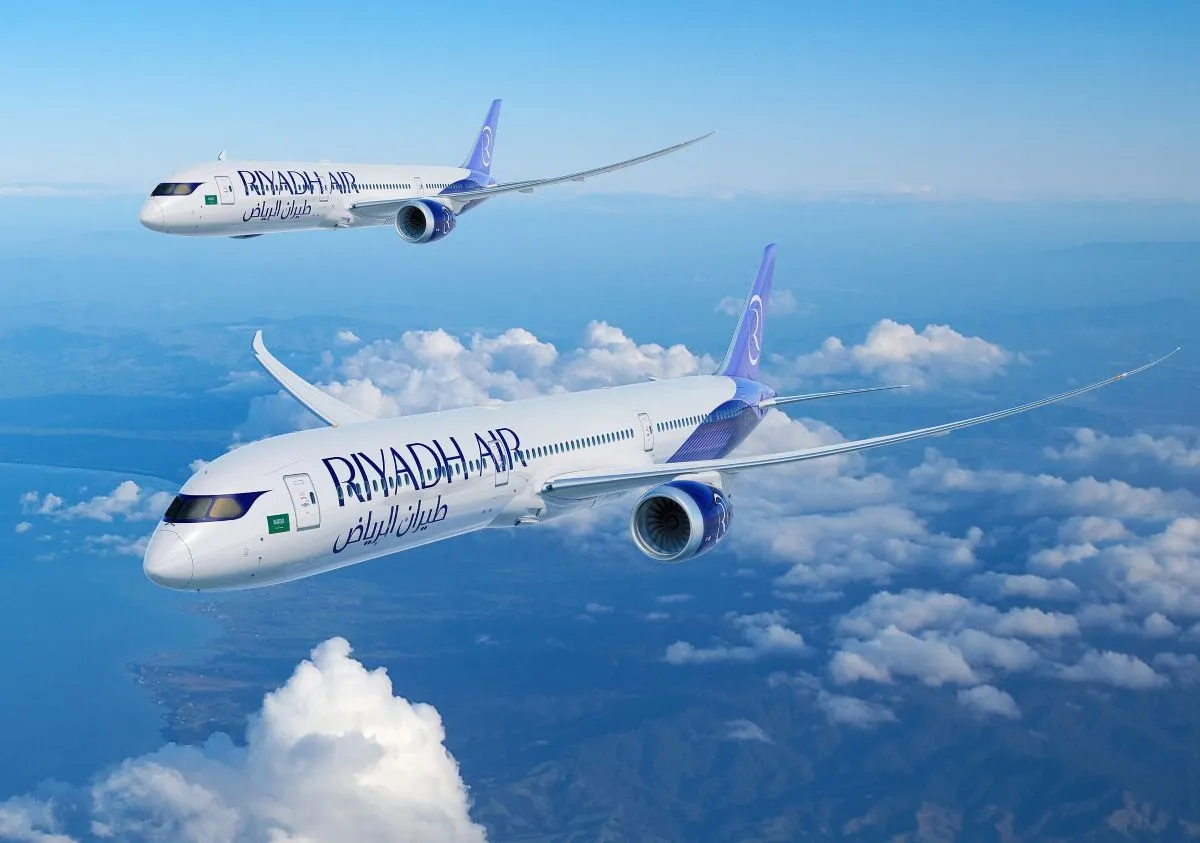
In a significant demonstration of operational scaling and logistical recovery, Riyadh Air, the Saudi Arabian startup carrier backed by the Public Investment Fund (PIF), has successfully taken delivery of six Boeing 787-9 Dreamliner widebody aircraft within a single 30-day window. This rapid influx of hardware marks a critical pivot for the airline, which is currently racing to absorb nearly a year’s worth of delayed Boeing deliveries in a matter of weeks. The announcement, made by CEO Tony Douglas during the Airline Leaders Summit at the Farnborough International Airshow, signals the end of a period of forced stagnation caused by global supply chain disruptions and complex cabin certification processes.
The delivery pace is virtually unprecedented in the history of commercial aviation for a startup carrier. According to Douglas, the six aircraft are currently being integrated into the airline’s preliminary service infrastructure, with an additional two jets expected to arrive within the next fortnight. This "famine to feast" scenario underscores the aggressive timeline Riyadh Air is following as it prepares for its scheduled commercial debut in mid-2025.
A Historic Milestone in Aviation Logistics
The arrival of six widebody aircraft in one month is a feat that Douglas believes has only been matched by a handful of established global legacy carriers throughout aviation history. For a startup that has yet to fly its first commercial passenger, the logistical challenge of accepting, inspecting, and housing such a large volume of long-haul aircraft is immense.
Historically, airlines phase in widebody deliveries over months or years to manage crew training, maintenance scheduling, and capital expenditure. However, Riyadh Air is operating under a unique set of pressures and opportunities. As a central pillar of Saudi Arabia’s Vision 2030 economic diversification plan, the airline is tasked with connecting Riyadh to over 100 destinations by the end of the decade. The recent delivery surge represents a "catch-up" phase after Boeing’s production and certification delays threatened to derail the airline’s meticulously planned launch window.
"We have gone from a period of famine, where we were waiting for the supply chain to stabilize, to a period of feast," Douglas noted at Farnborough. "Taking six widebodies in 30 days is a testament to the partnership we have with Boeing and our internal readiness to scale at a pace that few thought possible."
Overcoming Supply Chain and Certification Hurdles
The primary catalyst for the recent delivery cluster was a series of delays that had previously pushed back the airline’s launch timeline. Boeing has faced significant scrutiny over the past two years regarding production quality and supply chain bottlenecks, particularly concerning the 787 Dreamliner program. For Riyadh Air, these issues were compounded by the complexities of cabin certification.
As a premium-focused carrier, Riyadh Air has commissioned bespoke interior configurations that require rigorous safety testing and regulatory approval. Global shortages in high-end seat components and cabin electronics further delayed the final assembly of the aircraft. The recent breakthrough indicates that these certification bottlenecks have been largely cleared, allowing Boeing to release the backlog of aircraft destined for the Saudi capital.
The Boeing 787-9 Dreamliner was selected as the backbone of the startup’s long-haul fleet due to its fuel efficiency and range capabilities. In March 2023, Riyadh Air placed a massive order for 39 firm 787-9s, with options for an additional 33 aircraft. This multi-billion-dollar deal was one of the largest in the history of the Dreamliner program and established Riyadh Air as a major future player in the widebody market.
Chronology of Riyadh Air’s Development
To understand the significance of the recent six-aircraft delivery, it is necessary to look at the rapid timeline of Riyadh Air’s evolution:
- March 2023: Crown Prince Mohammed bin Salman officially announces the creation of Riyadh Air. The airline signs a deal with Boeing for up to 72 Dreamliners.
- June 2023: The airline unveils its first "Indigo" livery at the Paris Air Show, generating significant global buzz for its modern, digital-first branding.
- Late 2023: Reports surface of potential delays in aircraft deliveries due to Boeing’s production issues and cabin supply chain constraints.
- Early 2024: Riyadh Air focuses on building its digital infrastructure and recruitment, hiring hundreds of pilots and cabin crew from established global carriers.
- June-July 2024: The "feast" begins. Boeing clears the backlog, delivering six 787-9s in a 30-day period leading up to the Farnborough Airshow.
- Mid-2025 (Projected): Commercial operations are slated to begin, initially focusing on regional and high-demand international routes.
Supporting Data: The Scale of Ambition
Riyadh Air is not merely a new airline; it is a strategic investment designed to transform Saudi Arabia into a global logistics and tourism hub. The following data points highlight the scale of the operation:
- Economic Impact: The airline is expected to contribute $20 billion to Saudi Arabia’s non-oil GDP growth and create more than 200,000 direct and indirect jobs.
- Fleet Strategy: Beyond the 787-9 widebodies, the airline is currently in the final stages of a narrow-body aircraft order, likely involving the Boeing 737 MAX or the Airbus A321neo, to facilitate regional connectivity.
- Passenger Targets: By 2030, Saudi Arabia aims to attract 330 million annual passengers across all its airports, a significant portion of whom will be funneled through Riyadh Air’s hub at the upcoming King Salman International Airport.
- Sustainability: The 787-9 offers a 20% to 25% reduction in fuel consumption and CO2 emissions compared to previous-generation aircraft, aligning with the Saudi Green Initiative.
Official Responses and Strategic Partnerships
The rapid delivery schedule has elicited positive reactions from industry stakeholders, who view Riyadh Air’s momentum as a sign of the kingdom’s seriousness in challenging the regional dominance of the "ME3" (Emirates, Qatar Airways, and Etihad).
Boeing executives at Farnborough expressed confidence in their ability to meet Riyadh Air’s remaining order book, emphasizing that the 787 program has reached a more stable production rhythm. "Riyadh Air is a visionary customer," a Boeing spokesperson noted. "Delivering six aircraft in such a short window requires immense coordination on both sides, and it reflects our commitment to supporting Saudi Arabia’s aviation goals."
Tony Douglas has also emphasized that the airline is not just buying planes, but building an "ecosystem." This includes partnerships with Saudia (the kingdom’s existing national carrier) to ensure a "dual-hub" strategy where Saudia focuses on Jeddah and religious tourism (Hajj and Umrah), while Riyadh Air focuses on the capital as a business and global transit hub.
Impact and Implications for the Aviation Industry
The successful absorption of six widebody aircraft in a month has several far-reaching implications for the global aviation market:
1. Disrupting the Middle Eastern Status Quo
For decades, the "Big Three" Gulf carriers have dominated East-West transit. Riyadh Air’s aggressive fleet expansion suggests it intends to compete directly for this lucrative market. By launching with a brand-new fleet of efficient 787s, Riyadh Air avoids the legacy costs and older, less efficient aircraft that some of its competitors still operate.
2. Validation of the Startup Model
Riyadh Air is essentially a "well-funded startup." Its ability to handle the logistics of a rapid fleet buildup provides a blueprint for how state-backed entities can enter capital-intensive industries at scale. However, the true test will come in 2025 when the airline must fill these seats and achieve operational reliability.
3. Supply Chain Resilience
The fact that Riyadh Air was able to take six aircraft in 30 days suggests that the aerospace supply chain is beginning to heal. If Boeing can maintain this delivery cadence for other customers, it could signal a broader recovery for the commercial aviation sector, which has been plagued by delivery delays since the pandemic.
4. Digital and Customer Experience Innovation
Douglas has frequently stated that Riyadh Air will be a "digital native" airline, removing the friction of traditional travel through advanced AI and seamless mobile integration. The rapid delivery of the physical fleet now allows the airline to begin installing and testing these proprietary digital systems in a real-world environment.
The Road to 2025
As Riyadh Air continues to accept new aircraft, the focus now shifts from procurement to operational readiness. The airline must secure air operator certificates (AOCs) for each new tail number, finalize its route network, and complete the training of its flight and ground crews.
The six Boeing 787-9s currently in the airline’s possession are more than just machines; they are a statement of intent. For an airline that didn’t exist two years ago, having a fleet of widebody jets ready for service is a clear message to the industry: Riyadh Air is no longer a "paper airline." It is a tangible, rapidly growing force that is poised to reshape the skies over the Middle East and beyond.
With two more aircraft arriving in the coming weeks, the "feast" is set to continue. As the 2025 launch approaches, the aviation world will be watching closely to see if this unprecedented pace of growth can be translated into a world-class passenger experience that lives up to the lofty goals of Vision 2030.