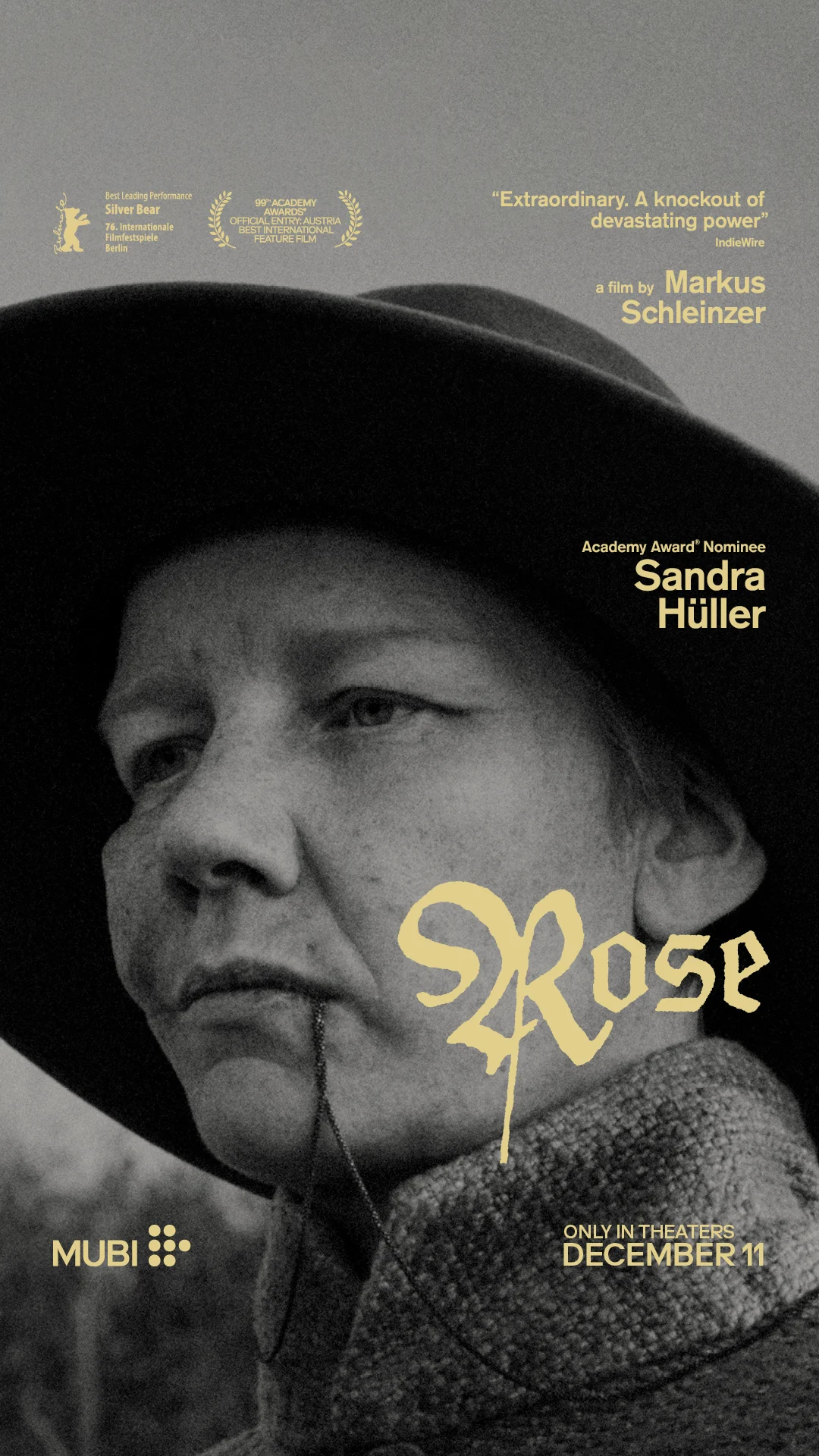
Rose, the critically acclaimed historical drama starring Sandra Hüller, is rapidly capturing the attention of cinephiles and awards prognosticators alike. The film, which premiered at the Berlin International Film Festival and recently screened at the New York Film Festival, centers on Hüller’s portrayal of a woman who disguises herself as a male soldier in the tumultuous aftermath of the Thirty Years’ War. Director Markus Schleinzer, whose meticulous approach to character and historical authenticity is a hallmark of his work, discussed the intricate preparation involved in crafting this complex role, revealing a creative process marked by both deep intellectual engagement and surprising moments of levity.
Hüller’s dedication to embodying Rose, a character forced to adopt a male identity for survival in a small Protestant village, was evident from the outset. Initial discussions between Hüller and Schleinzer involved exploring physical transformations, such as strength training, which were ultimately deemed anachronistic for the period. The focus then shifted to subtler, yet equally crucial, elements of performance. “She was wondering, ‘What should I do with my voice – should I lower it?’” Schleinzer recalled in an interview. This led to a moment of shared amusement that underscored their collaborative dynamic: “Then we started to laugh because then we found out that my voice, as a man, is higher than her voice as a woman. It would be a weird thing for her, to lower her voice to pretend to be a man, for a male director who has a much higher voice than hers.” This anecdote, while charming, highlights Hüller’s commitment to achieving an authentic and nuanced portrayal, eschewing easy or obvious choices in favor of a deeply considered performance.
The film’s journey to the screen has been a lengthy one, spanning several years of development and production. Schleinzer conceived the initial idea for Rose on his birthday, inspired by a historical account of a woman executed centuries prior for living as a man. This sparked a fascination that led him to research hundreds of similar cases from the 17th century and beyond. His background as a casting director for seventeen years, coupled with his tutelage under the renowned filmmaker Michael Haneke, provided him with a unique perspective on performance and storytelling. Schleinzer, who is openly queer, views these historical narratives as resonating with contemporary issues of marginalization and the need for visibility. "Every life, every day is a political act – so we cannot hide," Schleinzer stated, emphasizing the film’s thematic relevance. "We have to change things if we want to have a better life as a community."
Schleinzer first encountered Hüller on the set of Sisi & I (2023), where they both appeared as co-stars. By this time, he had already begun developing the script for Rose. "I was really bad in this movie because I was so keen to watch Sandra firsthand – I already had started writing Rose and started stalking her, watching all the things she was ever in, even the tiny television spots she had at the beginning of her career," Schleinzer admitted. He later sent Hüller the script, which was written in a more literary, prose-like style. Hüller, known for her fearless approach to challenging roles, embraced the opportunity, recognizing the depth and potential of the character.

Hüller’s performance in Rose has been lauded by critics as a career highlight, a testament to her extraordinary range and interpretive power. Her portrayal is described as a “moving, wondrously strange embodiment of a survivor in constant, subtle hiding.” David Rooney, chief film critic for The Hollywood Reporter, praised her work in his review, calling it "another extraordinary showcase for her gifts and a master class in the art of acting with rigor, honesty, physicality and zero showiness." This critical acclaim has been echoed at major film festivals, where Hüller’s performance has garnered significant accolades.
Festival Circuit and Critical Acclaim
Rose made its international debut at the Berlin International Film Festival in February, where Sandra Hüller was awarded the prestigious Silver Bear for Best Lead Performance. This recognition immediately signaled the film’s potential and Hüller’s commanding presence. Following its European premiere, the film made its North American debut at the Telluride Film Festival earlier this month, where Hüller was honored with a Tribute Medallion. The film’s screening in Telluride served as a crucial touchpoint for American critics and industry professionals, further amplifying the buzz surrounding the project.
The film’s subsequent presentation at the New York Film Festival this past weekend continued to garner rave reviews. Rose is slated for release in North American theaters by Mubi on December 11th, a release date that places it squarely within the awards season window. The timing of Rose‘s release is particularly noteworthy, coming on the heels of Hüller’s Oscar-nominated performance in Justine Triet’s Anatomy of a Fall. The production of Rose commenced less than two weeks after the conclusion of Hüller’s extensive promotional tour for Anatomy of a Fall, with filming taking place in smaller increments over several months. This demanding schedule underscores Hüller’s prolific output and her commitment to diverse cinematic projects.
Schleinzer’s Vision: Authenticity and Contemporary Resonance
Schleinzer’s directorial vision for Rose is deeply rooted in a desire for historical accuracy and thematic relevance. The film was shot on location near the East German border, utilizing original sets that Schleinzer meticulously scouted through extensive hiking expeditions. This commitment to environmental authenticity extends to the film’s aesthetic. Gerald Kerkletz’s black-and-white cinematography lends a stark, timeless quality to the visuals, while the exacting makeup and costume work further immerse the audience in the 17th-century setting. The inclusion of dry humor, which allows the inherent absurdity of certain situations to surface, serves to humanize the characters and prevent the narrative from becoming overly somber, even as it hurtles towards profound tragedy.
"My intention was to make something more about these days we are in than just a museum piece with some nostalgic images," Schleinzer explained. This statement reveals his ambition to connect the historical plight of his protagonist to contemporary struggles for identity and acceptance. The film’s exploration of a woman forced to conceal her true self for survival resonates with ongoing conversations about gender identity, societal constraints, and the courage required to live authentically in the face of adversity. Schleinzer’s own identity as a queer filmmaker imbues the project with a personal stake in these themes, adding another layer of depth to his directorial approach.

Hüller’s Approach to Performance: Rigor and Subtlety
When discussing what surprised him most about Hüller’s engagement with the role, Schleinzer pointed to a viral red-carpet clip where the actress pragmatically stated, "I really have to disappoint you, it’s not so much: I learned the lines." This seemingly simple declaration belies the profound complexity and impact of her performance. Schleinzer elaborated on this, drawing a distinction between actors who rely on extensive verbalization and those who embody their characters through a more internalized process.
"I was a casting director for 17 years and I always had the feeling that my main job was to get people out of being afraid, of having fear or discomfort – there is this type of actor who loves to talk, because talking means that they do not have to act, they can just talk, talk, talk, talk," the director observed. "Sandra is the complete opposite. She is someone who gets easily bored, so no take is the same: ‘Now I’ll become a little more boyish,’ ‘Now I’m the soldier.’ I had the big problem of choosing how to build up a character for the audience, then – but this was surprising, to see such life come alive in front of your eyes on the set every day." This suggests that Hüller’s process is one of constant discovery and reinvention within the framework of the character, allowing for a dynamic and organic portrayal that captivates the viewer.
Awards Prospects and Hüller’s Dominance
The conversation surrounding Rose inevitably turns to its awards potential, particularly for Sandra Hüller. Her performances in recent years have solidified her status as one of the most compelling actresses working today. Beyond her Oscar nomination for Anatomy of a Fall, she delivers a powerful performance in the Cannes-winning film Fatherland, also a Mubi release. Furthermore, her significant supporting roles in upcoming projects like Project Hail Mary and Digger indicate a remarkable breadth of work and a consistent ability to deliver memorable performances across genres.
Schleinzer, with a characteristic grin, expressed his fervent hope for Hüller’s recognition for Rose. "Sandra said I should not threaten people, but I have watched her career for the last 20 years and I’ve seen so many prizes taken away from her," he confessed. "If she’s not going to be nominated for this one, I’m going berserk." This sentiment reflects the widespread belief among critics and industry insiders that Rose represents another peak in Hüller’s already illustrious career. The film, with its compelling narrative, masterful direction, and Hüller’s transformative performance, is poised to be a significant contender in the upcoming awards season, further cementing its place in cinematic history. The film’s official poster has also been released, offering a visual representation of its evocative tone and thematic depth.