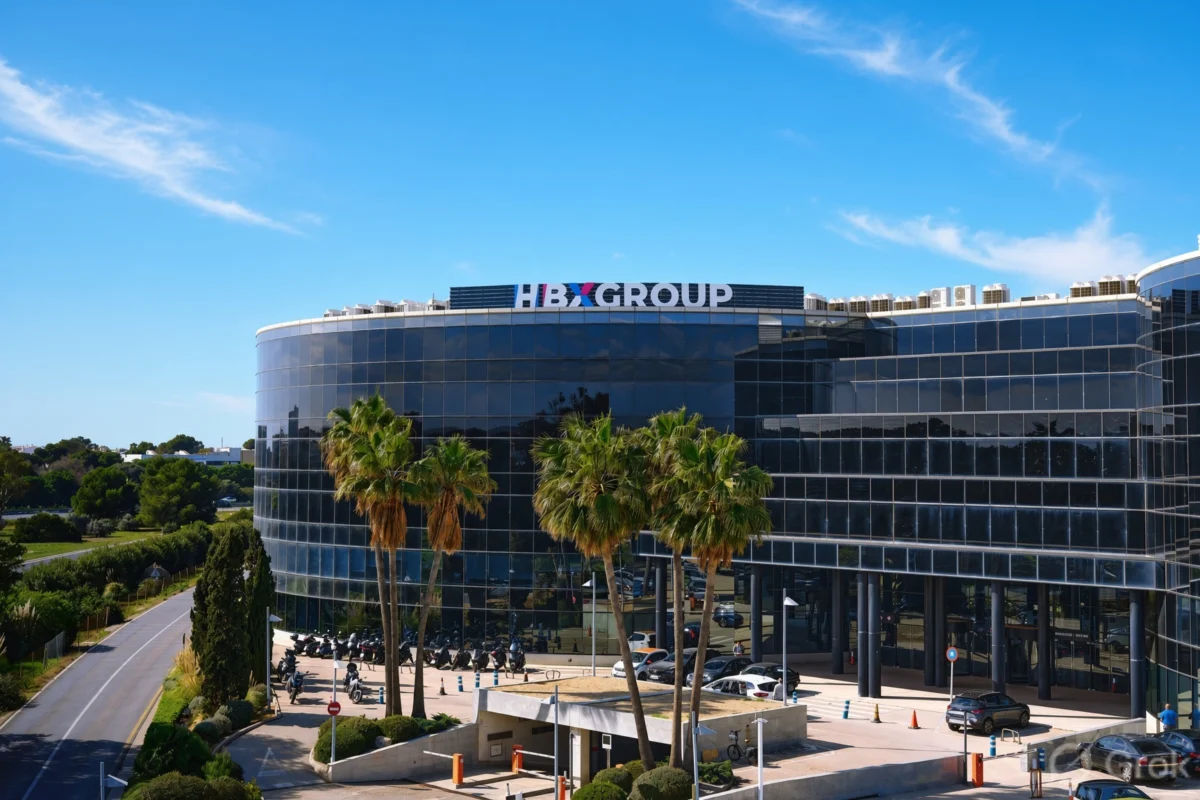
The traditional logic of the travel distribution industry suggests that volume is the ultimate defense against margin compression, yet the recent performance of HBX Group—the parent company of Hotelbeds—indicates that scale may no longer be a sufficient safeguard for the economics of the independent bed bank sector. Despite a significant increase in the total transaction value of travel services processed through its platform, HBX Group is navigating a challenging fiscal landscape where top-line growth is failing to translate into bottom-line profitability. The company currently expects to process more than EUR 1 billion of additional travel volume this year on a constant-currency basis, a feat of operational scale that would typically signal robust health. However, the internal projections for the current fiscal period suggest that this larger business footprint will produce no more revenue and a lower adjusted EBITDA (Earnings Before Interest, Taxes, Depreciation, and Amortization) than the previous year.
This divergence between volume and value has had a direct impact on investor confidence. Since its initial public offering in February 2025, the company’s share price has experienced a sharp decline, dropping nearly a third from its debut price of EUR 11.50. The situation highlights a systemic shift in the business-to-business (B2B) travel sector, where the "take-rate"—the percentage of the total transaction value that the intermediary retains as revenue—is under intense pressure from both suppliers and distributors.
Understanding the Role of the Modern Bed Bank
To understand the current predicament of HBX Group, it is essential to define the role of a bed bank within the global travel ecosystem. Most travelers are unfamiliar with the term, yet they frequently consume products sourced through these entities. Bed banks act as wholesale intermediaries, purchasing hotel room inventory in bulk and reselling it to travel agents, tour operators, airlines, and online travel agencies (OTAs).
For hotels, a bed bank like Hotelbeds provides access to a fragmented global distribution network that would be impossible to manage individually. For travel sellers, the bed bank offers a one-stop-shop for verified inventory with standardized booking protocols. HBX Group has spent decades consolidating this market, becoming the world’s largest independent hotel wholesaler through aggressive acquisitions and technological integration. However, as the industry matures, the value proposition of the middleman is being squeezed from both sides.
The Financial Paradox: Volume Growth vs. Margin Erosion
The primary challenge facing HBX Group is not a lack of demand. On the contrary, the company is successfully capturing a larger slice of the recovering global travel market. The issue lies in what HBX Group describes as "take-rate dynamics." In response to inquiries regarding the shift in their financial outlook, the company acknowledged that the impact of these dynamics has been greater than originally assumed during their IPO planning phases.
Several factors contribute to this take-rate compression:
- Supplier Empowerment: Major hotel chains have invested heavily in direct-to-consumer technology, reducing their reliance on wholesalers for high-demand periods. This forces bed banks to accept lower margins to remain competitive in the distribution mix.
- Market Transparency: The proliferation of real-time pricing data and API-driven distribution means that price discrepancies are quickly identified and closed. The "arbitrage" opportunity that once fueled high margins in the wholesale sector has largely evaporated.
- Client Concentration: As travel agencies and OTAs consolidate, the buyers of bed bank inventory have gained significant negotiating power, demanding lower prices and higher service levels.
A Chronology of Transformation: From Hotelbeds to HBX Group
The current state of the company is the result of a multi-year transformation strategy aimed at diversifying away from a pure-play bed bank model.
- 2016: Hotelbeds was acquired from TUI Group by private equity firms Cinven and the Canada Pension Plan Investment Board (CPPIB) for approximately EUR 1.165 billion. This marked the beginning of its journey as an independent entity.
- 2017-2019: The company underwent a period of rapid consolidation, acquiring key competitors such as Tourico Holidays and GTA. These moves were designed to create a global powerhouse with unrivaled scale.
- 2023: The company rebranded as HBX Group. The move was intended to signal a shift toward becoming a "travel technology ecosystem," encompassing not just hotel rooms but also ancillaries like car rentals, transfers, and experiences.
- February 2025: HBX Group launched its IPO at EUR 11.50 per share. The offering was positioned as an opportunity for investors to capitalize on the post-pandemic travel surge and the company’s dominant market position.
- Mid-2025: Financial disclosures revealed that despite processing EUR 1 billion in additional travel, revenue remained flat, leading to the current stock price correction.
The Impact of Take-Rate Dynamics on Adjusted EBITDA
The relationship between take-rate and adjusted EBITDA is critical for high-volume intermediaries. When the take-rate drops even by a few basis points, the impact on profitability is magnified. For HBX Group, processing an additional EUR 1 billion in travel volume requires significant operational expenditure, including cloud computing costs, customer service infrastructure, and payment processing fees.
If the revenue generated from that extra volume does not cover the incremental costs of processing it, the adjusted EBITDA inevitably shrinks. The company’s admission that it expects less adjusted EBITDA than last year, despite the higher volume, suggests that the cost of doing business is rising faster than the commissions it can extract from the market. This scenario has raised questions among analysts about whether the "scale play" that defined the last decade of travel distribution is still a viable path to premium valuations.
Industry Reactions and Competitive Landscape
The struggles of HBX Group are being closely watched by competitors such as WebBeds (owned by Webjet Limited) and the B2B divisions of major OTAs like Expedia Partner Solutions. While the entire sector is facing similar pressures, HBX Group’s status as an "independent" player—meaning it is not attached to a consumer-facing brand or a massive airline group—makes it more vulnerable to fluctuations in the wholesale market.
Industry analysts suggest that the market is currently re-evaluating the "multiple" it is willing to pay for B2B travel companies. "The market is no longer rewarding volume for volume’s sake," noted one senior travel sector analyst. "Investors are looking for ‘quality revenue’—transactions where the intermediary provides enough unique value to command a stable margin. When a company processes an extra billion euros and sees no profit from it, it signals that they may be losing their pricing power."
Strategic Shifts: Can Technology Offset Margin Pressure?
In response to the current economic climate, HBX Group is doubling down on its "TravelTech" identity. The company is attempting to pivot from being a simple distributor to a provider of technological solutions. This includes:
- AI-Driven Personalization: Using machine learning to better match inventory with the specific needs of travel agents, thereby increasing conversion rates and potentially justifying higher fees.
- Financial Services: Implementing fintech solutions to manage cross-border payments and currency fluctuations more efficiently, creating new revenue streams that are independent of the room-night commission.
- Ancillary Expansion: Increasing the share of non-hotel products (transfers, tours, and insurance) in the total sales mix. These products often carry higher margins than hotel rooms in highly competitive markets.
However, these pivots require significant capital investment, which becomes more difficult to justify when the share price is depressed and EBITDA is stagnant.
Broader Implications for the Travel Distribution Sector
The challenges facing HBX Group serve as a bellwether for the broader travel industry. They indicate that the "middleman" is being forced to evolve or face irrelevance. As hotels become more sophisticated in their digital marketing and as OTAs build their own direct supply chains, the space for independent wholesalers is narrowing.
The situation also reflects a broader trend in the global economy where "growth at all costs" is being replaced by a focus on sustainable profitability. For HBX Group, the task ahead is to prove that its massive scale can eventually be leveraged to create efficiencies that competitors cannot match. If the company cannot stabilize its take-rate, it may be forced to undergo further restructuring or seek a strategic partner to weather the current volatility.
Future Outlook and Investor Sentiment
As HBX Group moves into the latter half of the fiscal year, the focus will remain on its ability to control costs and improve the quality of its revenue. The company’s management remains optimistic that the current take-rate dynamics are a temporary hurdle related to specific market shifts rather than a permanent decline in the bed bank model.
For investors, the story of HBX Group is a cautionary tale about the limits of scale. The transition from a private-equity-backed growth engine to a public company requires a level of margin transparency that is currently testing the firm’s strategic foundations. Whether HBX Group can reclaim its IPO price will depend on its ability to turn that EUR 1 billion in "extra" travel into meaningful profit, proving that it can be both a giant in volume and a leader in value.
The travel industry continues to grow, with international arrivals approaching pre-pandemic records in many regions. However, as the HBX Group results show, participating in that growth is no longer a guarantee of financial success. The battle for the "take-rate" is the new frontline of travel distribution, and even the largest players are not immune to the pressure.